How To Build A Flutter App With Supabase Backend
Dec 3, 2025


Summary
Summary
Summary
Summary
This tutorial walks through creating a Supabase project, initializing supabase_flutter in a Flutter app, implementing authentication and RLS-secured database access, and wiring a simple UI with realtime updates. It emphasizes keeping keys secure, using repository patterns, and leveraging Supabase realtime and auth for mobile development.
Key insights:
Key insights:
Key insights:
Key insights:
Create A Supabase Project: Model tables and enable Row Level Security so the client uses the anon key safely for per-user data access.
Initialize The Flutter App And Packages: Initialize Supabase in main and use supabase_flutter for auth, realtime, and db access.
Implement Authentication And Database Access: Use supabase.auth for sessions and query tables with .from('table') while checking res.error.
Build A Simple UI And State Management: Encapsulate supabase calls in a repository, show auth states, and use realtime subscriptions to sync UI.
Security Best Practices: Never ship service_role keys, enforce RLS policies, and validate inputs server-side or via edge functions.
Introduction
This tutorial shows how to build a Flutter mobile app that uses Supabase as its backend. You will learn how to create a Supabase project, configure a Flutter client, implement authentication, read/write a table, and wire a minimal UI. The approach focuses on practical code and clear patterns you can extend for production mobile development.
Create A Supabase Project
1) Sign up at supabase.com and create a new project. 2) Create a new table via the Table Editor, for example a simple todos table:
id: uuid (primary key, default: gen_random_uuid())
user_id: uuid (foreign key, references auth.users)
title: text
is_done: boolean
inserted_at: timestamp with time zone (default: now())
3) Enable Row Level Security (RLS) and add a policy so authenticated users only access their rows:
Policy Example: Allow authenticated users to select/insert/update/delete where user_id = auth.uid()
4) Copy the API URL and anon/public key from Project Settings -> API. You will use these in the Flutter app.
Initialize The Flutter App And Packages
Create a new Flutter project and add packages. At minimum add supabase_flutter for integrated auth and realtime support.
pubspec.yaml dependencies:
supabase_flutter
flutter_riverpod or provider (optional; any state solution works)
Initialize Supabase at app startup. Keep keys out of source control; use native secret storage or environment files in CI. Example initialization in main:
import 'package:supabase_flutter/supabase_flutter.dart';
Future<void> main() async {
await Supabase.initialize(
url: 'https://your-project.supabase.co',
anonKey: 'public-anon-key',
);
runApp(MyApp());
}This creates a global Supabase.instance.client you can inject or read from anywhere.
Implement Authentication And Database Access
Supabase provides user sign-up/sign-in and session management. Use the Auth API to sign up, sign in, and listen for session changes. Protect private operations on the server with RLS and use the authenticated client's token for requests.
Authenticate users with email/password or OAuth providers. Example: sign-in, query todos for the current user, and insert a new todo.
final supabase = Supabase.instance.client;
Future<void> signIn(String email, String password) async {
final res = await supabase.auth.signInWithPassword(
email: email,
password: password,
);
}
Future<List<Map<String, dynamic>>> fetchTodos() async {
final userId = supabase.auth.currentUser!.id;
final res = await supabase
.from('todos')
.select()
.eq('user_id', userId)
.order('inserted_at', ascending: false)
.execute();
return res.data as List<Map<String, dynamic>>;
}Handle errors: check res.error and surface meaningful messages. Use supabase.auth.onAuthStateChange to react to session changes and persist session across app restarts.
Build A Simple UI And State Management
Design a minimal UI: a login screen, a list screen, and an add-todo input. Use a provider or Riverpod to expose the current user and todos list. Keep business logic out of widgets by creating a repository wrapper around supabase calls.
Key UI patterns:
Show a loading state while auth initializes.
Redirect to login when no session exists.
Use realtime subscriptions for live updates: subscribe to inserts/updates/deletes on the todos table filtered by user_id.
Realtime example: subscribe to changes and refresh local state when an event arrives. This keeps multiple devices in sync without polling.
Security and production considerations:
Never embed a service_role key in client apps. Use anon/public key and RLS policies.
Validate inputs server-side via database constraints and policies.
Rate-limit and audit critical endpoints with edge functions if needed.
Vibe Studio
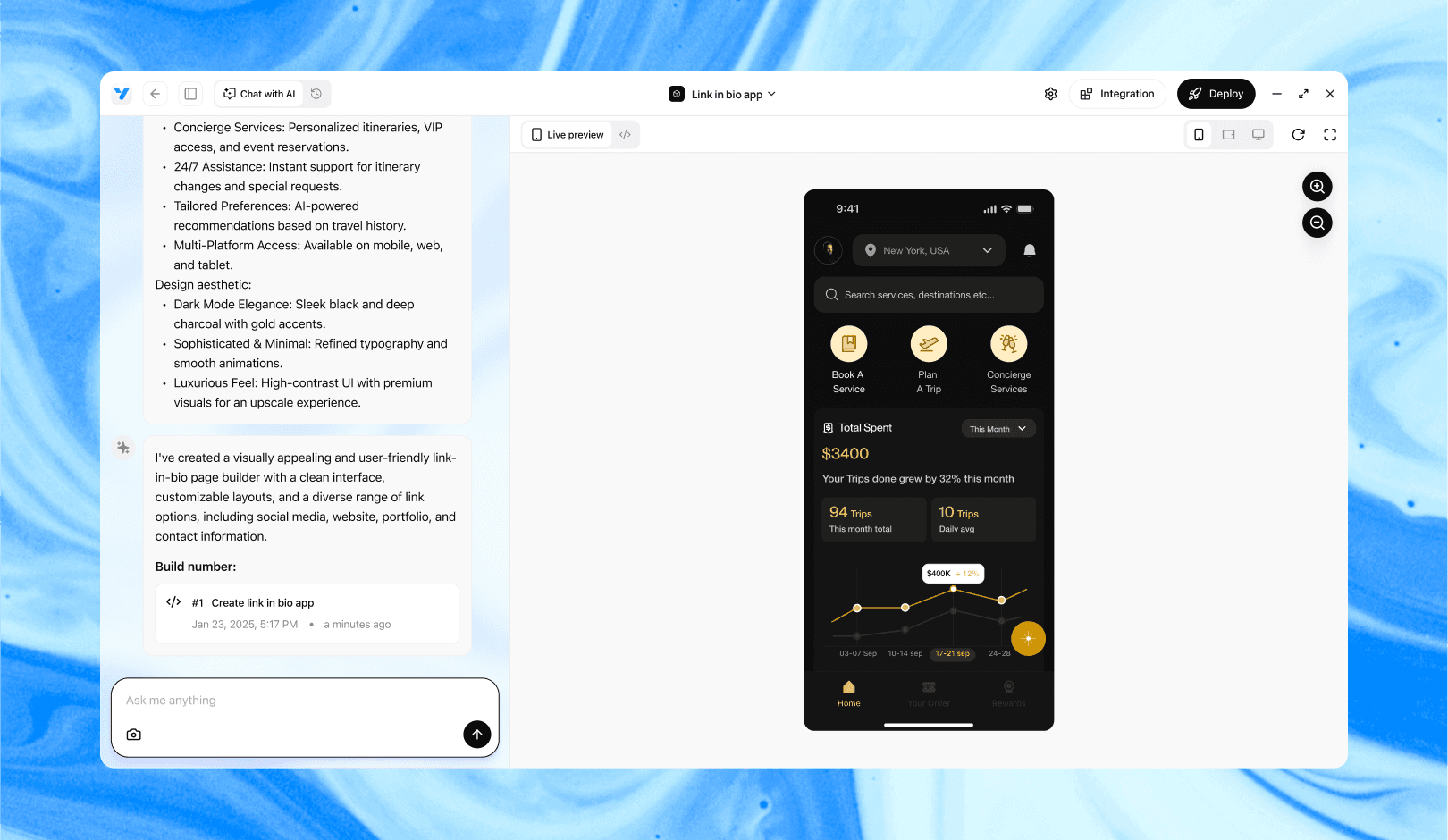
Vibe Studio, powered by Steve’s advanced AI agents, is a revolutionary no-code, conversational platform that empowers users to quickly and efficiently create full-stack Flutter applications integrated seamlessly with Firebase backend services. Ideal for solo founders, startups, and agile engineering teams, Vibe Studio allows users to visually manage and deploy Flutter apps, greatly accelerating the development process. The intuitive conversational interface simplifies complex development tasks, making app creation accessible even for non-coders.
Conclusion
Supabase pairs well with Flutter for rapid mobile development: auth, database, and realtime features are available through a single client package. Start by modeling your tables, enable RLS, initialize Supabase in main, and encapsulate auth and data calls in a repository layer. With simple UI patterns and realtime subscriptions you can build a responsive, secure mobile app quickly.
This pattern scales: replace the repository with a thin API or edge functions for complex server logic, and keep secrets secure on the server. Use the code patterns here as a foundation and extend them to match your app architecture and state management preferences.

Introduction
This tutorial shows how to build a Flutter mobile app that uses Supabase as its backend. You will learn how to create a Supabase project, configure a Flutter client, implement authentication, read/write a table, and wire a minimal UI. The approach focuses on practical code and clear patterns you can extend for production mobile development.
Create A Supabase Project
1) Sign up at supabase.com and create a new project. 2) Create a new table via the Table Editor, for example a simple todos table:
id: uuid (primary key, default: gen_random_uuid())
user_id: uuid (foreign key, references auth.users)
title: text
is_done: boolean
inserted_at: timestamp with time zone (default: now())
3) Enable Row Level Security (RLS) and add a policy so authenticated users only access their rows:
Policy Example: Allow authenticated users to select/insert/update/delete where user_id = auth.uid()
4) Copy the API URL and anon/public key from Project Settings -> API. You will use these in the Flutter app.
Initialize The Flutter App And Packages
Create a new Flutter project and add packages. At minimum add supabase_flutter for integrated auth and realtime support.
pubspec.yaml dependencies:
supabase_flutter
flutter_riverpod or provider (optional; any state solution works)
Initialize Supabase at app startup. Keep keys out of source control; use native secret storage or environment files in CI. Example initialization in main:
import 'package:supabase_flutter/supabase_flutter.dart';
Future<void> main() async {
await Supabase.initialize(
url: 'https://your-project.supabase.co',
anonKey: 'public-anon-key',
);
runApp(MyApp());
}This creates a global Supabase.instance.client you can inject or read from anywhere.
Implement Authentication And Database Access
Supabase provides user sign-up/sign-in and session management. Use the Auth API to sign up, sign in, and listen for session changes. Protect private operations on the server with RLS and use the authenticated client's token for requests.
Authenticate users with email/password or OAuth providers. Example: sign-in, query todos for the current user, and insert a new todo.
final supabase = Supabase.instance.client;
Future<void> signIn(String email, String password) async {
final res = await supabase.auth.signInWithPassword(
email: email,
password: password,
);
}
Future<List<Map<String, dynamic>>> fetchTodos() async {
final userId = supabase.auth.currentUser!.id;
final res = await supabase
.from('todos')
.select()
.eq('user_id', userId)
.order('inserted_at', ascending: false)
.execute();
return res.data as List<Map<String, dynamic>>;
}Handle errors: check res.error and surface meaningful messages. Use supabase.auth.onAuthStateChange to react to session changes and persist session across app restarts.
Build A Simple UI And State Management
Design a minimal UI: a login screen, a list screen, and an add-todo input. Use a provider or Riverpod to expose the current user and todos list. Keep business logic out of widgets by creating a repository wrapper around supabase calls.
Key UI patterns:
Show a loading state while auth initializes.
Redirect to login when no session exists.
Use realtime subscriptions for live updates: subscribe to inserts/updates/deletes on the todos table filtered by user_id.
Realtime example: subscribe to changes and refresh local state when an event arrives. This keeps multiple devices in sync without polling.
Security and production considerations:
Never embed a service_role key in client apps. Use anon/public key and RLS policies.
Validate inputs server-side via database constraints and policies.
Rate-limit and audit critical endpoints with edge functions if needed.
Vibe Studio

Vibe Studio, powered by Steve’s advanced AI agents, is a revolutionary no-code, conversational platform that empowers users to quickly and efficiently create full-stack Flutter applications integrated seamlessly with Firebase backend services. Ideal for solo founders, startups, and agile engineering teams, Vibe Studio allows users to visually manage and deploy Flutter apps, greatly accelerating the development process. The intuitive conversational interface simplifies complex development tasks, making app creation accessible even for non-coders.
Conclusion
Supabase pairs well with Flutter for rapid mobile development: auth, database, and realtime features are available through a single client package. Start by modeling your tables, enable RLS, initialize Supabase in main, and encapsulate auth and data calls in a repository layer. With simple UI patterns and realtime subscriptions you can build a responsive, secure mobile app quickly.
This pattern scales: replace the repository with a thin API or edge functions for complex server logic, and keep secrets secure on the server. Use the code patterns here as a foundation and extend them to match your app architecture and state management preferences.
Build Flutter Apps Faster with Vibe Studio
Vibe Studio is your AI-powered Flutter development companion. Skip boilerplate, build in real-time, and deploy without hassle. Start creating apps at lightning speed with zero setup.