How To Build A Flutter App Using MVC Architecture

Summary
Summary
Summary
Summary

This tutorial explains how to structure a Flutter mobile development project using MVC. It covers folder layout, model design, controller responsibilities (with ChangeNotifier example), view composition, async/error handling, and testing. Emphasis is on keeping widgets thin, controllers UI-free, and models testable to improve maintainability and scalability.

This tutorial explains how to structure a Flutter mobile development project using MVC. It covers folder layout, model design, controller responsibilities (with ChangeNotifier example), view composition, async/error handling, and testing. Emphasis is on keeping widgets thin, controllers UI-free, and models testable to improve maintainability and scalability.

This tutorial explains how to structure a Flutter mobile development project using MVC. It covers folder layout, model design, controller responsibilities (with ChangeNotifier example), view composition, async/error handling, and testing. Emphasis is on keeping widgets thin, controllers UI-free, and models testable to improve maintainability and scalability.

This tutorial explains how to structure a Flutter mobile development project using MVC. It covers folder layout, model design, controller responsibilities (with ChangeNotifier example), view composition, async/error handling, and testing. Emphasis is on keeping widgets thin, controllers UI-free, and models testable to improve maintainability and scalability.

Key insights:
Key insights:
Key insights:
Key insights:
  • Project Structure: Organize by models, controllers, and views to isolate concerns and simplify navigation of the codebase.

  • Model Implementation: Keep models simple and immutable where possible so parsing and data logic remain testable and predictable.

  • Controller And Business Logic: Controllers should encapsulate state, business rules, and async handling, notifying views via ChangeNotifier or Streams.

  • View And Widget Composition: Views remain thin and declarative; inject controllers and let them drive UI via state exposed by controllers.

  • Testing And Maintenance: Unit-test controllers and models in isolation; inject dependencies and keep controllers small for easier maintenance.

Introduction

This tutorial shows how to build a Flutter app using the Model-View-Controller (MVC) architecture. MVC is a proven pattern for organizing code in mobile development: models hold data, controllers handle business logic, and views render UI. Applying MVC in Flutter keeps widgets thin, isolates state changes, and simplifies testing. We'll implement a small counter app that demonstrates folder layout, model design, controller responsibilities, and view composition.

Project Structure

A clear folder layout improves maintainability. For MVC in Flutter, use a structure like:

  • lib/models/

  • lib/controllers/

  • lib/views/

  • lib/main.dart

Models are pure Dart classes representing data. Controllers encapsulate logic and expose methods the view calls. Views are Flutter widgets that subscribe to controller outputs. Avoid stuffing network or database code into widgets — place it in controllers or separate services used by controllers.

Model Implementation

Models should be immutable or have controlled mutation. Keep them simple and focused on data. For example, a counter model might only hold an integer value and convenience methods for serialization if needed.

class CounterModel {
  final int value;
  const CounterModel(this.value);

  CounterModel incremented() => CounterModel(value + 1);
}

This model is small, testable, and has no UI code. In larger apps, models represent entities from APIs or local storage and include parsing logic.

Controller And Business Logic

Controllers mediate between models and views. They handle events, update models, and notify views. In Flutter, controllers often extend ChangeNotifier or use Streams for updates. Keep controllers free of BuildContext to reduce coupling.

Example controller using ChangeNotifier:

import 'package:flutter/foundation.dart';

class CounterController extends ChangeNotifier {
  CounterModel _model = const CounterModel(0);
  CounterModel get model => _model;

  void increment() {
    _model = _model.incremented();
    notifyListeners();
  }
}

This controller owns state and exposes methods for views to call. It can wrap repository calls and map network responses to models. For asynchronous work, use async/await and notify listeners after state transitions (loading, success, error).

View And Widget Composition

Views are widgets that render model data and call controller methods in response to user interaction. Prefer stateless widgets when possible: let controllers manage state. Use Provider, Riverpod, or simple InheritedWidget to inject controllers into the widget tree. The view subscribes to controller changes and rebuilds accordingly.

Minimal view wiring with Provider (conceptual):

  • Provide the controller at app root.

  • Build widgets that read controller.model and call controller.increment().

Example widget usage (conceptual code):

  • Scaffold with a Text showing controller.model.value.

  • FloatingActionButton that calls controller.increment().

Keep widgets focused: layout and rendering only. Move formatting, validation, and transformation logic to controllers or helpers.

Error Handling And Asynchronous Operations

Controllers should encapsulate error handling for network or storage operations. Represent UI state with a simple enum or sealed classes (loading, data, error). The view reacts to state changes and shows loading indicators or error messages.

Example approach:

  • Controller exposes status and optional error message.

  • View shows CircularProgressIndicator when status == loading.

  • On error, display a SnackBar or inline message and allow retry via controller method.

This approach keeps mobile development flows consistent and testable: unit tests can drive controllers through success and failure scenarios without involving widgets.

Testing And Maintenance

Test controllers and models in isolation. Write unit tests that exercise controller methods, simulate repository responses, and verify notifyListeners is called or model changes as expected. Use widget tests for views that depend on controllers to verify UI reacts correctly to states.

Maintenance tips:

  • Keep controllers small and focused. Split responsibilities by feature rather than by layer when features grow.

  • Avoid putting navigation logic inside controllers that depend on BuildContext; instead, expose navigation intents the view interprets.

  • Use dependency injection for repositories to make controllers testable.

Vibe Studio
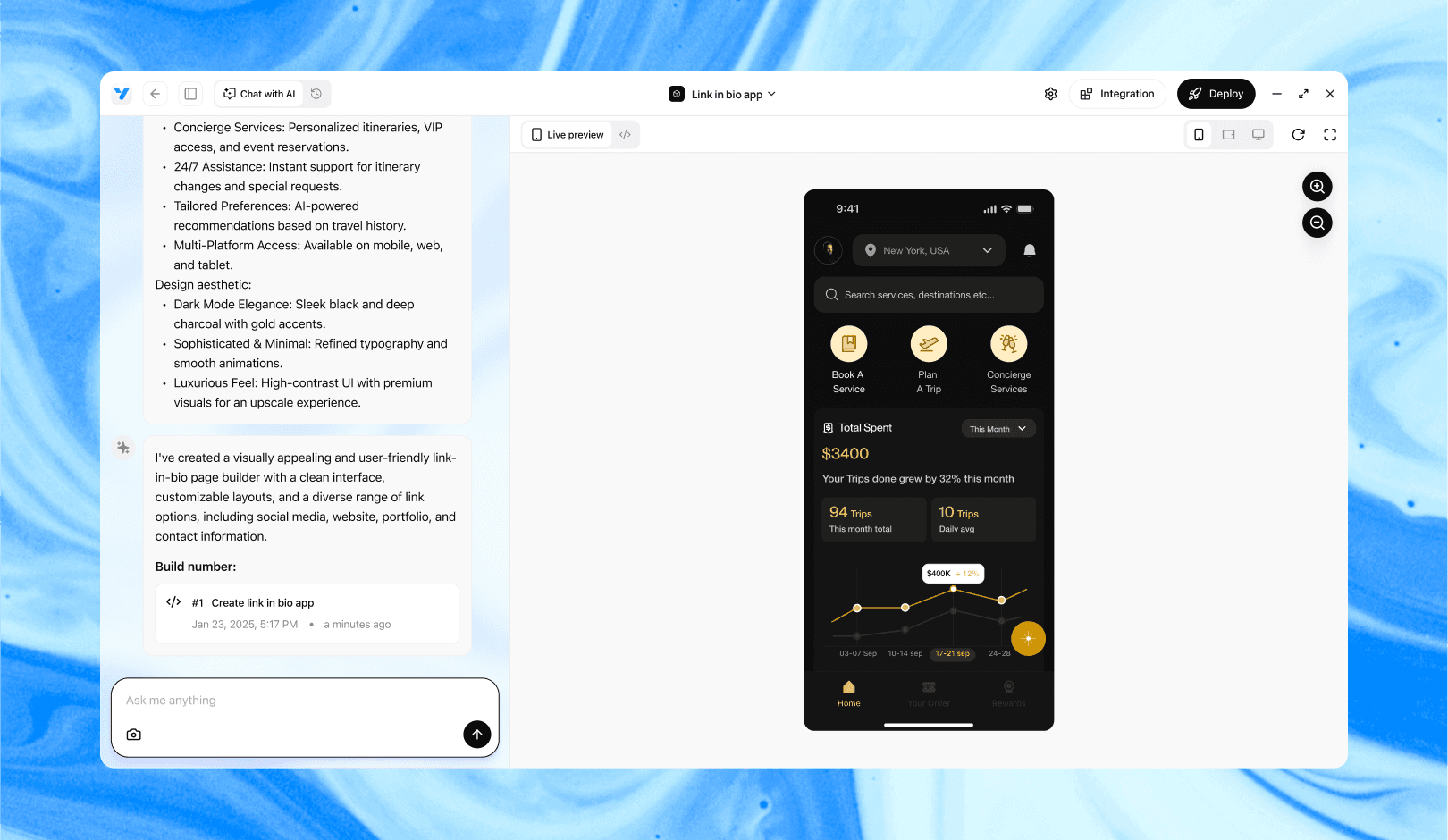
Vibe Studio, powered by Steve’s advanced AI agents, is a revolutionary no-code, conversational platform that empowers users to quickly and efficiently create full-stack Flutter applications integrated seamlessly with Firebase backend services. Ideal for solo founders, startups, and agile engineering teams, Vibe Studio allows users to visually manage and deploy Flutter apps, greatly accelerating the development process. The intuitive conversational interface simplifies complex development tasks, making app creation accessible even for non-coders.

Conclusion

Applying MVC in Flutter helps separate concerns: models hold data, controllers implement business logic and state transitions, and views render UI. For effective mobile development, keep controllers free of UI code, prefer immutable or controlled models, and compose small, focused widgets. Use Provider or another DI mechanism to inject controllers, unit test controllers, and keep the UI responsive to controller state. With these patterns, your Flutter app will be easier to maintain, test, and scale.


Introduction

This tutorial shows how to build a Flutter app using the Model-View-Controller (MVC) architecture. MVC is a proven pattern for organizing code in mobile development: models hold data, controllers handle business logic, and views render UI. Applying MVC in Flutter keeps widgets thin, isolates state changes, and simplifies testing. We'll implement a small counter app that demonstrates folder layout, model design, controller responsibilities, and view composition.

Project Structure

A clear folder layout improves maintainability. For MVC in Flutter, use a structure like:

  • lib/models/

  • lib/controllers/

  • lib/views/

  • lib/main.dart

Models are pure Dart classes representing data. Controllers encapsulate logic and expose methods the view calls. Views are Flutter widgets that subscribe to controller outputs. Avoid stuffing network or database code into widgets — place it in controllers or separate services used by controllers.

Model Implementation

Models should be immutable or have controlled mutation. Keep them simple and focused on data. For example, a counter model might only hold an integer value and convenience methods for serialization if needed.

class CounterModel {
  final int value;
  const CounterModel(this.value);

  CounterModel incremented() => CounterModel(value + 1);
}

This model is small, testable, and has no UI code. In larger apps, models represent entities from APIs or local storage and include parsing logic.

Controller And Business Logic

Controllers mediate between models and views. They handle events, update models, and notify views. In Flutter, controllers often extend ChangeNotifier or use Streams for updates. Keep controllers free of BuildContext to reduce coupling.

Example controller using ChangeNotifier:

import 'package:flutter/foundation.dart';

class CounterController extends ChangeNotifier {
  CounterModel _model = const CounterModel(0);
  CounterModel get model => _model;

  void increment() {
    _model = _model.incremented();
    notifyListeners();
  }
}

This controller owns state and exposes methods for views to call. It can wrap repository calls and map network responses to models. For asynchronous work, use async/await and notify listeners after state transitions (loading, success, error).

View And Widget Composition

Views are widgets that render model data and call controller methods in response to user interaction. Prefer stateless widgets when possible: let controllers manage state. Use Provider, Riverpod, or simple InheritedWidget to inject controllers into the widget tree. The view subscribes to controller changes and rebuilds accordingly.

Minimal view wiring with Provider (conceptual):

  • Provide the controller at app root.

  • Build widgets that read controller.model and call controller.increment().

Example widget usage (conceptual code):

  • Scaffold with a Text showing controller.model.value.

  • FloatingActionButton that calls controller.increment().

Keep widgets focused: layout and rendering only. Move formatting, validation, and transformation logic to controllers or helpers.

Error Handling And Asynchronous Operations

Controllers should encapsulate error handling for network or storage operations. Represent UI state with a simple enum or sealed classes (loading, data, error). The view reacts to state changes and shows loading indicators or error messages.

Example approach:

  • Controller exposes status and optional error message.

  • View shows CircularProgressIndicator when status == loading.

  • On error, display a SnackBar or inline message and allow retry via controller method.

This approach keeps mobile development flows consistent and testable: unit tests can drive controllers through success and failure scenarios without involving widgets.

Testing And Maintenance

Test controllers and models in isolation. Write unit tests that exercise controller methods, simulate repository responses, and verify notifyListeners is called or model changes as expected. Use widget tests for views that depend on controllers to verify UI reacts correctly to states.

Maintenance tips:

  • Keep controllers small and focused. Split responsibilities by feature rather than by layer when features grow.

  • Avoid putting navigation logic inside controllers that depend on BuildContext; instead, expose navigation intents the view interprets.

  • Use dependency injection for repositories to make controllers testable.

Vibe Studio

Vibe Studio, powered by Steve’s advanced AI agents, is a revolutionary no-code, conversational platform that empowers users to quickly and efficiently create full-stack Flutter applications integrated seamlessly with Firebase backend services. Ideal for solo founders, startups, and agile engineering teams, Vibe Studio allows users to visually manage and deploy Flutter apps, greatly accelerating the development process. The intuitive conversational interface simplifies complex development tasks, making app creation accessible even for non-coders.

Conclusion

Applying MVC in Flutter helps separate concerns: models hold data, controllers implement business logic and state transitions, and views render UI. For effective mobile development, keep controllers free of UI code, prefer immutable or controlled models, and compose small, focused widgets. Use Provider or another DI mechanism to inject controllers, unit test controllers, and keep the UI responsive to controller state. With these patterns, your Flutter app will be easier to maintain, test, and scale.

Build Flutter Apps Faster with Vibe Studio

Build Flutter Apps Faster with Vibe Studio

Build Flutter Apps Faster with Vibe Studio

Build Flutter Apps Faster with Vibe Studio

Vibe Studio is your AI-powered Flutter development companion. Skip boilerplate, build in real-time, and deploy without hassle. Start creating apps at lightning speed with zero setup.

Vibe Studio is your AI-powered Flutter development companion. Skip boilerplate, build in real-time, and deploy without hassle. Start creating apps at lightning speed with zero setup.

Vibe Studio is your AI-powered Flutter development companion. Skip boilerplate, build in real-time, and deploy without hassle. Start creating apps at lightning speed with zero setup.

Vibe Studio is your AI-powered Flutter development companion. Skip boilerplate, build in real-time, and deploy without hassle. Start creating apps at lightning speed with zero setup.

Other Insights

Other Insights

Other Insights

Other Insights

Join a growing community of builders today

Join a growing community of builders today

Join a growing community of builders today

Join a growing community of builders today

Join a growing community of builders today

28-07 Jackson Ave

Walturn

New York NY 11101 United States

© Steve • All Rights Reserved 2025

28-07 Jackson Ave

Walturn

New York NY 11101 United States

© Steve • All Rights Reserved 2025

28-07 Jackson Ave

Walturn

New York NY 11101 United States

© Steve • All Rights Reserved 2025

28-07 Jackson Ave

Walturn

New York NY 11101 United States

© Steve • All Rights Reserved 2025

28-07 Jackson Ave

Walturn

New York NY 11101 United States

© Steve • All Rights Reserved 2025

28-07 Jackson Ave

Walturn

New York NY 11101 United States

© Steve • All Rights Reserved 2025