Handling Push Notification Routing And State Restoration Correctly
Summary
Summary

Handle push notifications by queuing routing intents instead of navigating immediately, coordinate processing with Flutter's state restoration, ensure idempotence, and defer routing until required app state (auth, data, router restored) is ready. This produces predictable navigation across cold starts and resumes in Flutter mobile development.

Handle push notifications by queuing routing intents instead of navigating immediately, coordinate processing with Flutter's state restoration, ensure idempotence, and defer routing until required app state (auth, data, router restored) is ready. This produces predictable navigation across cold starts and resumes in Flutter mobile development.

Key insights:
Key insights:
  • Notification Entry Points: Treat initialMessage, onMessageOpenedApp, and foreground messages uniformly by enqueueing routing intents instead of navigating immediately.

  • Designing A Restoration-Compatible Router: Implement restoration-aware Router/Delegate and apply pending routes only after restoration completes to avoid breaking state restoration.

  • Coordinating State Restoration With Notifications: Defer notification routing until prerequisites (router ready, auth/data loaded) are met and ensure routing is idempotent.

  • Testing And Edge Cases: Simulate cold starts, background resumes, and repeated taps; prefer serializable route arguments and guard against duplicate pushes.

  • Implementation Pattern: Use a small orchestration layer (pending queue, restoration flag, prerequisites) to make notification-driven navigation robust and predictable.

Introduction

Push notifications are a primary entry point for users into your Flutter app. Routing correctly from a notification payload and restoring the correct application state after termination or backgrounding are distinct concerns that must be coordinated. This article explains a reliable pattern that keeps routing decisions robust, predictable, and compatible with Flutter's state restoration APIs — crucial for any serious mobile development project.

Notification Entry Points

There are three notification entry paths to handle: when the app is terminated (cold start), when the app is in background (resume), and when the app is foregrounded (message-only). Each path must capture the notification payload and translate it into a navigation intent (a route name or a deep link). Do not navigate immediately from the notification callback because the framework or Router might not be ready.

A better approach is to enqueue a routing intent. Use a small, single-purpose in-memory queue or a ValueNotifier/Stream that stores a pending route. The app's root widget — the one that owns your Router/Navigation logic — consumes that queue when it knows it has built and, when applicable, when it has restored its state.

Example: register a handler that sets pendingRoute instead of calling Navigator directly.

final ValueNotifier<String?> pendingRoute = ValueNotifier(null);
// In your messaging setup
messaging.onMessageOpenedApp.listen((msg) => pendingRoute.value = msg.data['route']);
final initial = await messaging.getInitialMessage();
if (initial != null) pendingRoute.value = initial.data['route'];

Designing A Restoration-Compatible Router

Flutter's state restoration APIs let you restore the navigation stack to a previous state. If you push notification-driven routes without coordinating restoration, you can break restoration or create duplicate pages. The router owner should implement state restoration (RouterDelegate can mix in RestorationMixin) and expose a restoration completion signal.

Keep routing idempotent: when a pending route arrives, compare it against the current route stack and skip if already present. Apply the pending route after restorationComplete is true. This requires a small orchestration layer: (1) restoration state boolean, (2) current route snapshot, (3) pending route queue.

When you apply a pending route, push it with route settings that can themselves be restored (use route names or serializable arguments). If you use nested navigators, make sure restorationScopeId values are consistent and that you push into the correct navigator instance.

Coordinating State Restoration With Notifications

Flow to implement:

  • On startup, read any initial notification (cold start) and set pendingRoute.

  • Let the Router/Delegate restore. Expose a callback or a RestorableBool that flips when restoration is complete.

  • When restoration is complete, process pendingRoute: validate, map to a restore-safe route object, then push or replace as required.

Avoid race conditions by using a microtask or scheduler callback to process pending routes after the first frame following restoration. This ensures context and navigator objects exist.

If your navigation depends on model state (e.g., user profile loaded), defer notification routing until those prerequisites are ready. Represent prerequisites as futures and await them in your orchestration code before applying the pending route.

// Pseudo-orchestration: run after Router restored
Future<void> applyPendingRoute() async {
  final route = pendingRoute.value;
  if (route == null) return;
  if (!await prerequisitesReady()) return; // e.g., auth state
  if (currentRoute == route) return; // idempotence
  navigatorKey.currentState!.pushNamed(route);
  pendingRoute.value = null;
}

Testing And Edge Cases

Test these scenarios explicitly: cold start from notification, background resume, repeated taps on the same notification, and navigation while restoration is running. Use integration tests to simulate notification intents by directly setting pendingRoute and restarting the widget tree.

Edge cases to watch:

  • Duplicate routing causing multiple copies of the same screen. Guard with idempotence checks.

  • Non-serializable route arguments that cannot be restored. Prefer serializable IDs in payloads and rehydrate objects from a repository.

  • Deep links that target screens that require initialization (show a loading intermediate screen until prerequisites are ready).

Logging and lightweight metrics around notification-driven navigation help diagnose user-facing routing bugs quickly.

Vibe Studio
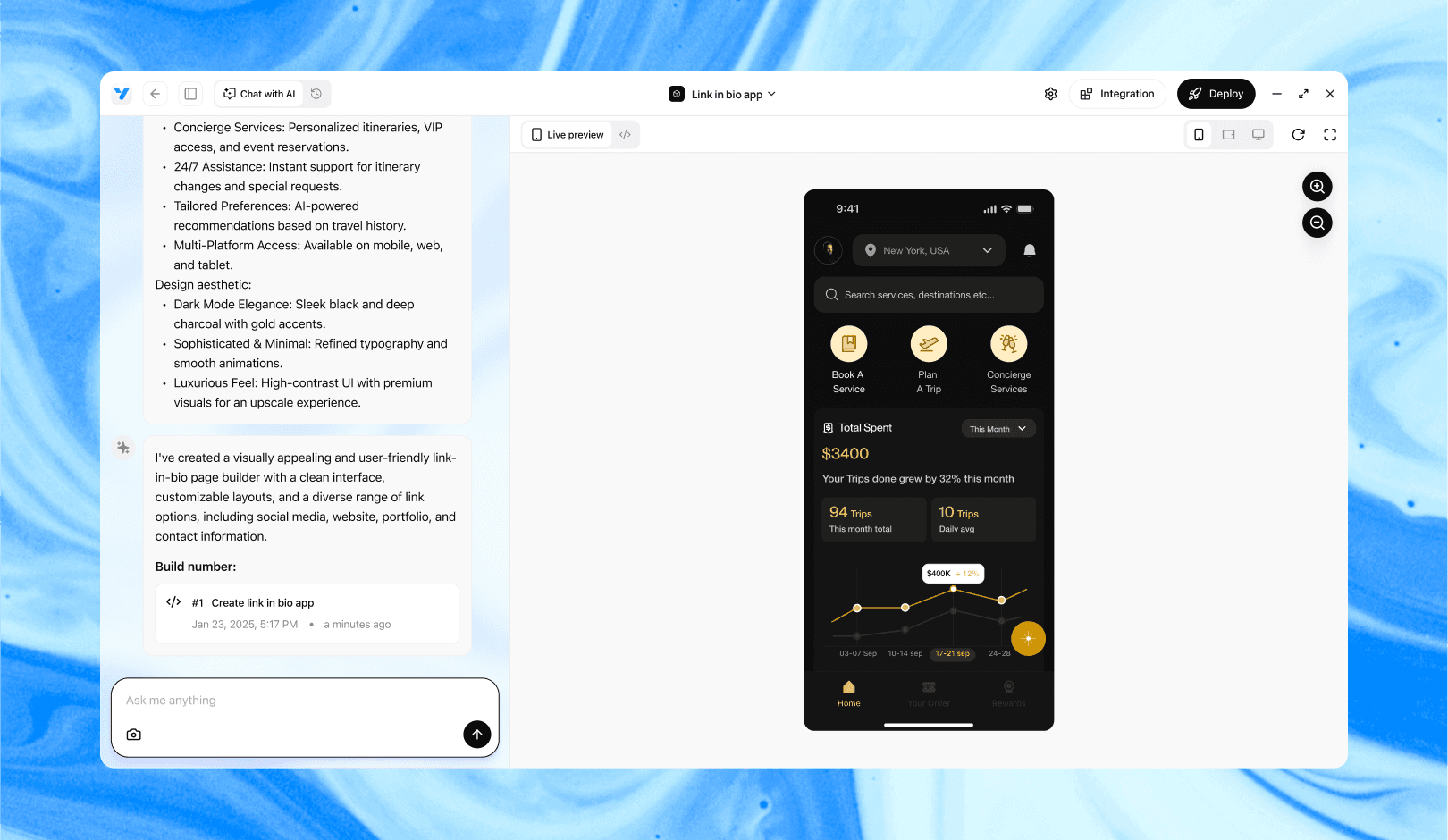
Vibe Studio, powered by Steve’s advanced AI agents, is a revolutionary no-code, conversational platform that empowers users to quickly and efficiently create full-stack Flutter applications integrated seamlessly with Firebase backend services. Ideal for solo founders, startups, and agile engineering teams, Vibe Studio allows users to visually manage and deploy Flutter apps, greatly accelerating the development process. The intuitive conversational interface simplifies complex development tasks, making app creation accessible even for non-coders.

Conclusion

Handling push notification routing correctly in Flutter requires deliberate separation between capturing notification intents and applying navigation. Enqueue notification routes, coordinate with Flutter state restoration, ensure idempotence, and defer routing until the router and required app state are ready. This pattern keeps navigation predictable across cold starts, background resumes, and foreground messages — an essential practice in robust mobile development.


Introduction

Push notifications are a primary entry point for users into your Flutter app. Routing correctly from a notification payload and restoring the correct application state after termination or backgrounding are distinct concerns that must be coordinated. This article explains a reliable pattern that keeps routing decisions robust, predictable, and compatible with Flutter's state restoration APIs — crucial for any serious mobile development project.

Notification Entry Points

There are three notification entry paths to handle: when the app is terminated (cold start), when the app is in background (resume), and when the app is foregrounded (message-only). Each path must capture the notification payload and translate it into a navigation intent (a route name or a deep link). Do not navigate immediately from the notification callback because the framework or Router might not be ready.

A better approach is to enqueue a routing intent. Use a small, single-purpose in-memory queue or a ValueNotifier/Stream that stores a pending route. The app's root widget — the one that owns your Router/Navigation logic — consumes that queue when it knows it has built and, when applicable, when it has restored its state.

Example: register a handler that sets pendingRoute instead of calling Navigator directly.

final ValueNotifier<String?> pendingRoute = ValueNotifier(null);
// In your messaging setup
messaging.onMessageOpenedApp.listen((msg) => pendingRoute.value = msg.data['route']);
final initial = await messaging.getInitialMessage();
if (initial != null) pendingRoute.value = initial.data['route'];

Designing A Restoration-Compatible Router

Flutter's state restoration APIs let you restore the navigation stack to a previous state. If you push notification-driven routes without coordinating restoration, you can break restoration or create duplicate pages. The router owner should implement state restoration (RouterDelegate can mix in RestorationMixin) and expose a restoration completion signal.

Keep routing idempotent: when a pending route arrives, compare it against the current route stack and skip if already present. Apply the pending route after restorationComplete is true. This requires a small orchestration layer: (1) restoration state boolean, (2) current route snapshot, (3) pending route queue.

When you apply a pending route, push it with route settings that can themselves be restored (use route names or serializable arguments). If you use nested navigators, make sure restorationScopeId values are consistent and that you push into the correct navigator instance.

Coordinating State Restoration With Notifications

Flow to implement:

  • On startup, read any initial notification (cold start) and set pendingRoute.

  • Let the Router/Delegate restore. Expose a callback or a RestorableBool that flips when restoration is complete.

  • When restoration is complete, process pendingRoute: validate, map to a restore-safe route object, then push or replace as required.

Avoid race conditions by using a microtask or scheduler callback to process pending routes after the first frame following restoration. This ensures context and navigator objects exist.

If your navigation depends on model state (e.g., user profile loaded), defer notification routing until those prerequisites are ready. Represent prerequisites as futures and await them in your orchestration code before applying the pending route.

// Pseudo-orchestration: run after Router restored
Future<void> applyPendingRoute() async {
  final route = pendingRoute.value;
  if (route == null) return;
  if (!await prerequisitesReady()) return; // e.g., auth state
  if (currentRoute == route) return; // idempotence
  navigatorKey.currentState!.pushNamed(route);
  pendingRoute.value = null;
}

Testing And Edge Cases

Test these scenarios explicitly: cold start from notification, background resume, repeated taps on the same notification, and navigation while restoration is running. Use integration tests to simulate notification intents by directly setting pendingRoute and restarting the widget tree.

Edge cases to watch:

  • Duplicate routing causing multiple copies of the same screen. Guard with idempotence checks.

  • Non-serializable route arguments that cannot be restored. Prefer serializable IDs in payloads and rehydrate objects from a repository.

  • Deep links that target screens that require initialization (show a loading intermediate screen until prerequisites are ready).

Logging and lightweight metrics around notification-driven navigation help diagnose user-facing routing bugs quickly.

Vibe Studio

Vibe Studio, powered by Steve’s advanced AI agents, is a revolutionary no-code, conversational platform that empowers users to quickly and efficiently create full-stack Flutter applications integrated seamlessly with Firebase backend services. Ideal for solo founders, startups, and agile engineering teams, Vibe Studio allows users to visually manage and deploy Flutter apps, greatly accelerating the development process. The intuitive conversational interface simplifies complex development tasks, making app creation accessible even for non-coders.

Conclusion

Handling push notification routing correctly in Flutter requires deliberate separation between capturing notification intents and applying navigation. Enqueue notification routes, coordinate with Flutter state restoration, ensure idempotence, and defer routing until the router and required app state are ready. This pattern keeps navigation predictable across cold starts, background resumes, and foreground messages — an essential practice in robust mobile development.

Build Flutter Apps Faster with Vibe Studio

Vibe Studio is your AI-powered Flutter development companion. Skip boilerplate, build in real-time, and deploy without hassle. Start creating apps at lightning speed with zero setup.

Other Insights

Join a growing community of builders today

Join a growing community of builders today

Join a growing community of builders today

Join a growing community of builders today

Join a growing community of builders today

28-07 Jackson Ave

Walturn

New York NY 11101 United States

© Steve • All Rights Reserved 2025

28-07 Jackson Ave

Walturn

New York NY 11101 United States

© Steve • All Rights Reserved 2025

28-07 Jackson Ave

Walturn

New York NY 11101 United States

© Steve • All Rights Reserved 2025

28-07 Jackson Ave

Walturn

New York NY 11101 United States

© Steve • All Rights Reserved 2025

28-07 Jackson Ave

Walturn

New York NY 11101 United States

© Steve • All Rights Reserved 2025

28-07 Jackson Ave

Walturn

New York NY 11101 United States

© Steve • All Rights Reserved 2025