Handling Large Lists With Pagination Caching And Smooth Scrolling
Jan 21, 2026


Summary
Summary
Summary
Summary
This tutorial shows how to handle large lists in Flutter mobile development by using pagination (page-based or cursor-based), caching strategies (in-memory and persistent), and performance techniques (ListView.builder, itemExtent, cacheExtent, controlled prefetching). It includes code patterns for scroll listeners, guarded fetches, and cache writes to deliver smooth scrolling and reduced network load.
Key insights:
Key insights:
Key insights:
Key insights:
Understanding Pagination Strategies: Trigger paged loads on near-end scrolls, debounce requests, and prefer cursor pagination for dynamic datasets.
Implementing Caching For Lists: Use in-memory cache for instant reads and persistent storage with expiry to speed cold starts and reduce network calls.
Smooth Scrolling And Performance Tips: Use ListView.builder, itemExtent, cacheExtent, const widgets, and isolate parsing to minimize frame work.
Practical Example: Combine a ScrollController listener, guarded fetchNextPage, and page-by-page cache writes to keep UI responsive.
State Management Considerations: Keep minimal state (items, isLoading, hasMore, cursor) and limit rebuilds with selective listeners or providers.
Introduction
Handling large lists is a common challenge in Flutter mobile development. Users expect instant, smooth scrolling and near-infinite data sets without massive memory usage. This tutorial covers practical patterns: pagination strategies to limit network load, caching to reduce repeated work, and UI techniques to keep scrolling fluid. We'll focus on pragmatic code patterns you can apply to real apps.
Understanding Pagination Strategies
Pagination prevents loading thousands of items at once. Two common approaches: page-based (offset + limit) and cursor-based (last-id or next-token). Page-based is simple but can produce duplicates or skips if the dataset changes. Cursor-based is more robust for dynamic feeds.
Key implementation points:
Trigger loading when the user approaches the end of the list (e.g., within 200–400 px).
Debounce or throttle requests to avoid duplicate fetches.
Keep a loading state and a hasMore boolean so you stop requesting when data is exhausted.
A minimal scroll listener pattern:
final controller = ScrollController(); controller.addListener(() { if (controller.position.pixels >= controller.position.maxScrollExtent - 300) { if (!isLoading && hasMore) fetchNextPage(); } });
This pattern is lightweight and works with ListView.builder to load subsequent pages on demand.
Implementing Caching For Lists
Caching reduces network usage and improves perceived performance. Combine an in-memory cache for instant reads and a persistent cache (shared_preferences, sqflite, Hive) for cold starts. Cache strategies:
Short-lived memory cache: holds the current session data, invalidated on logout.
Persistent cache with timestamps: store fetched pages with metadata and an expiry policy.
Evict or compact old pages to avoid unbounded disk usage.
Example cache flow:
On app start, read persistent cache and display it immediately.
Kick off a background refresh for the first page to validate freshness.
When fetching a page, write it to persistent storage and update in-memory list.
Avoid over-caching: store only items you’ll reuse. Use lightweight serialization (JSON) and parse on background isolates for very large payloads (compute()).
Smooth Scrolling And Performance Tips
Smooth scrolling requires reducing per-frame work. Use these techniques:
Use ListView.builder with itemCount and itemBuilder, not ListView(children:).
Provide itemExtent or a fixed-height item whenever possible; this enables efficient viewport calculations.
Keep widgets as const and reduce subtree rebuilds. Use ValueListenableBuilder, StreamBuilder, or Provider selectors to limit rebuild scope.
Use cacheExtent to load items slightly ahead of the viewport, balancing memory and prefetching.
If items contain images, use a package that supports efficient caching and place lower-resolution placeholders.
For stateful list items that should survive when scrolled off-screen, use AutomaticKeepAliveClientMixin sparingly — it increases memory use.
Example performance tweaks:
itemExtent: gives the engine a chance to compute scroll offsets without measuring child widgets.
cacheExtent: set to one or two screens worth of pixels to prefetch.
Practical Example
Combine the above into a concise flow:
UI: ListView.builder with a ScrollController. Use itemExtent if possible and a PageStorageKey to persist scroll position across navigation.
State: maintain a List items, bool isLoading, bool hasMore, and currentCursor.
Networking: on near-end scroll, call fetchNextPage() that sets isLoading, calls API, appends items, updates hasMore, writes pages to cache, and clears isLoading.
Small implementation notes:
Debounce fetchNextPage with a 300ms guard to prevent rapid duplicate calls.
On pull-to-refresh, clear in-memory list, read first page from network, then update persistent cache.
When restoring an archived list, read the persistent cache and render immediately while refreshing in the background.
Future<void> fetchNextPage() async { if (isLoading || !hasMore) return; isLoading = true; final response = await api.fetch(cursor: currentCursor); items.addAll(response.items); currentCursor = response.nextCursor; hasMore = response.hasMore; cache.writePage(response.pageKey, response.items); isLoading = false; }
This keeps the UI responsive and ensures subsequent visits are fast.
Vibe Studio
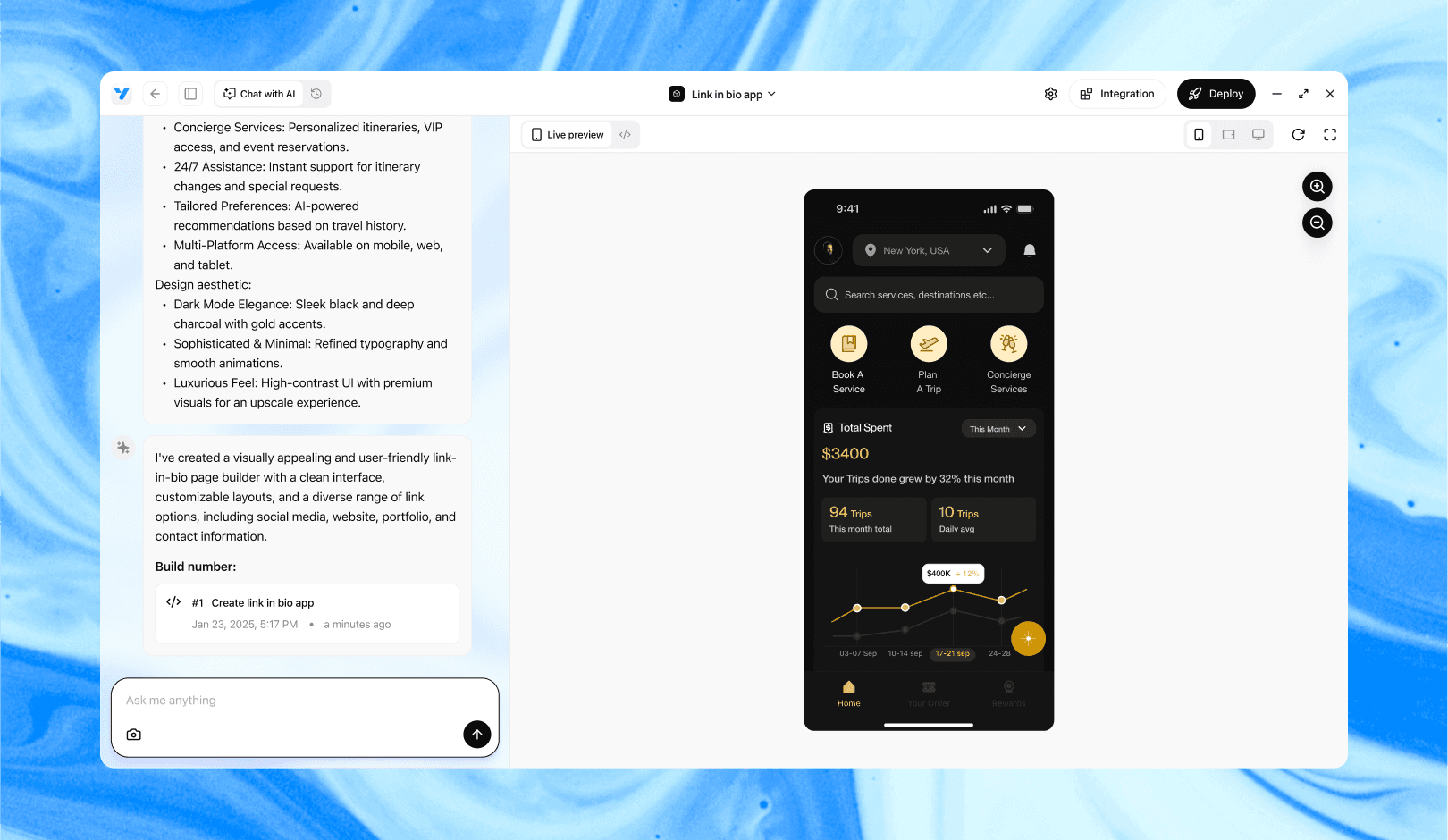
Vibe Studio, powered by Steve’s advanced AI agents, is a revolutionary no-code, conversational platform that empowers users to quickly and efficiently create full-stack Flutter applications integrated seamlessly with Firebase backend services. Ideal for solo founders, startups, and agile engineering teams, Vibe Studio allows users to visually manage and deploy Flutter apps, greatly accelerating the development process. The intuitive conversational interface simplifies complex development tasks, making app creation accessible even for non-coders.
Conclusion
For Flutter mobile development, combining efficient pagination, pragmatic caching, and rendering optimizations yields lists that feel fast and scale well. Prioritize minimal per-frame work, sensible prefetching, and robust network guards. Start with page/cursor loading, add a lightweight persistent cache, and tune ListView parameters (itemExtent, cacheExtent) to match your content. These patterns will make large list handling predictable and performant in production apps.

Introduction
Handling large lists is a common challenge in Flutter mobile development. Users expect instant, smooth scrolling and near-infinite data sets without massive memory usage. This tutorial covers practical patterns: pagination strategies to limit network load, caching to reduce repeated work, and UI techniques to keep scrolling fluid. We'll focus on pragmatic code patterns you can apply to real apps.
Understanding Pagination Strategies
Pagination prevents loading thousands of items at once. Two common approaches: page-based (offset + limit) and cursor-based (last-id or next-token). Page-based is simple but can produce duplicates or skips if the dataset changes. Cursor-based is more robust for dynamic feeds.
Key implementation points:
Trigger loading when the user approaches the end of the list (e.g., within 200–400 px).
Debounce or throttle requests to avoid duplicate fetches.
Keep a loading state and a hasMore boolean so you stop requesting when data is exhausted.
A minimal scroll listener pattern:
final controller = ScrollController(); controller.addListener(() { if (controller.position.pixels >= controller.position.maxScrollExtent - 300) { if (!isLoading && hasMore) fetchNextPage(); } });
This pattern is lightweight and works with ListView.builder to load subsequent pages on demand.
Implementing Caching For Lists
Caching reduces network usage and improves perceived performance. Combine an in-memory cache for instant reads and a persistent cache (shared_preferences, sqflite, Hive) for cold starts. Cache strategies:
Short-lived memory cache: holds the current session data, invalidated on logout.
Persistent cache with timestamps: store fetched pages with metadata and an expiry policy.
Evict or compact old pages to avoid unbounded disk usage.
Example cache flow:
On app start, read persistent cache and display it immediately.
Kick off a background refresh for the first page to validate freshness.
When fetching a page, write it to persistent storage and update in-memory list.
Avoid over-caching: store only items you’ll reuse. Use lightweight serialization (JSON) and parse on background isolates for very large payloads (compute()).
Smooth Scrolling And Performance Tips
Smooth scrolling requires reducing per-frame work. Use these techniques:
Use ListView.builder with itemCount and itemBuilder, not ListView(children:).
Provide itemExtent or a fixed-height item whenever possible; this enables efficient viewport calculations.
Keep widgets as const and reduce subtree rebuilds. Use ValueListenableBuilder, StreamBuilder, or Provider selectors to limit rebuild scope.
Use cacheExtent to load items slightly ahead of the viewport, balancing memory and prefetching.
If items contain images, use a package that supports efficient caching and place lower-resolution placeholders.
For stateful list items that should survive when scrolled off-screen, use AutomaticKeepAliveClientMixin sparingly — it increases memory use.
Example performance tweaks:
itemExtent: gives the engine a chance to compute scroll offsets without measuring child widgets.
cacheExtent: set to one or two screens worth of pixels to prefetch.
Practical Example
Combine the above into a concise flow:
UI: ListView.builder with a ScrollController. Use itemExtent if possible and a PageStorageKey to persist scroll position across navigation.
State: maintain a List items, bool isLoading, bool hasMore, and currentCursor.
Networking: on near-end scroll, call fetchNextPage() that sets isLoading, calls API, appends items, updates hasMore, writes pages to cache, and clears isLoading.
Small implementation notes:
Debounce fetchNextPage with a 300ms guard to prevent rapid duplicate calls.
On pull-to-refresh, clear in-memory list, read first page from network, then update persistent cache.
When restoring an archived list, read the persistent cache and render immediately while refreshing in the background.
Future<void> fetchNextPage() async { if (isLoading || !hasMore) return; isLoading = true; final response = await api.fetch(cursor: currentCursor); items.addAll(response.items); currentCursor = response.nextCursor; hasMore = response.hasMore; cache.writePage(response.pageKey, response.items); isLoading = false; }
This keeps the UI responsive and ensures subsequent visits are fast.
Vibe Studio

Vibe Studio, powered by Steve’s advanced AI agents, is a revolutionary no-code, conversational platform that empowers users to quickly and efficiently create full-stack Flutter applications integrated seamlessly with Firebase backend services. Ideal for solo founders, startups, and agile engineering teams, Vibe Studio allows users to visually manage and deploy Flutter apps, greatly accelerating the development process. The intuitive conversational interface simplifies complex development tasks, making app creation accessible even for non-coders.
Conclusion
For Flutter mobile development, combining efficient pagination, pragmatic caching, and rendering optimizations yields lists that feel fast and scale well. Prioritize minimal per-frame work, sensible prefetching, and robust network guards. Start with page/cursor loading, add a lightweight persistent cache, and tune ListView parameters (itemExtent, cacheExtent) to match your content. These patterns will make large list handling predictable and performant in production apps.

Build Flutter Apps Faster with Vibe Studio
Vibe Studio is your AI-powered Flutter development companion. Skip boilerplate, build in real-time, and deploy without hassle. Start creating apps at lightning speed with zero setup.
Other Insights