Golden Testing Strategy For Responsive UIs Across Breakpoints
Summary
Summary
Summary
Summary

This guide outlines a practical golden testing strategy for responsive Flutter UIs: choose representative breakpoints, enforce deterministic rendering (fonts, size, text scale), write reusable pump helpers, use golden_toolkit or matchesGoldenFile to capture snapshots, and automate baseline checks in CI to catch regressions in mobile development.

This guide outlines a practical golden testing strategy for responsive Flutter UIs: choose representative breakpoints, enforce deterministic rendering (fonts, size, text scale), write reusable pump helpers, use golden_toolkit or matchesGoldenFile to capture snapshots, and automate baseline checks in CI to catch regressions in mobile development.

This guide outlines a practical golden testing strategy for responsive Flutter UIs: choose representative breakpoints, enforce deterministic rendering (fonts, size, text scale), write reusable pump helpers, use golden_toolkit or matchesGoldenFile to capture snapshots, and automate baseline checks in CI to catch regressions in mobile development.

This guide outlines a practical golden testing strategy for responsive Flutter UIs: choose representative breakpoints, enforce deterministic rendering (fonts, size, text scale), write reusable pump helpers, use golden_toolkit or matchesGoldenFile to capture snapshots, and automate baseline checks in CI to catch regressions in mobile development.

Key insights:
Key insights:
Key insights:
Key insights:
  • Why Golden Tests For Responsive UIs: Golden tests detect pixel-level regressions across breakpoints that unit tests miss.

  • Designing Breakpoint Test Matrix: Test a small representative set of logical pixel sizes covering key layout transitions.

  • Implementing Golden Tests In Flutter: Make tests deterministic by fixing fonts, text scale, surface size, and freezing animations.

  • Automating Across Devices And CI: Run golden checks in CI with bundled fonts and consistent environments; review baseline updates.

  • Test Maintenance And Flakiness Reduction: Use helpers, limit matrix size, and separate platform-specific baselines to minimize false positives.

Why Golden Tests For Responsive UIs

Golden tests validate final pixels, making them ideal for responsive layouts where small spacing or alignment shifts break the UX. In mobile development you must validate multiple widths and densities: a widget that looks correct at 360dp can fail at 600dp. Golden tests force designers and developers to keep components deterministic and guard against regressions introduced by theme, layout changes, or font differences.

Designing Breakpoint Test Matrix

Decide which widths and orientations represent your product’s meaningful breakpoints. Typical matrix for Flutter mobile development:

  • Narrow phone (e.g., 360×800)

  • Large phone (e.g., 412×914)

  • Compact tablet (e.g., 800×1280)

  • Tablet/landscape if your app supports it Focus on representative breakpoints, not every possible size. Create a small matrix that covers critical layout transitions: stacked -> two-column, compact -> expanded navigation, etc.

Practical tips:

  • Test logical pixels (dp) rather than device names.

  • Include one high-DPI density to catch rendering differences.

  • If widgets adapt to container constraints, test both constrained and unconstrained contexts (wrapped in a SizedBox or full-screen).

Implementing Golden Tests In Flutter

Make your golden tests deterministic:

  • Lock fonts by bundling app fonts and calling loadAppFonts (golden_toolkit) or ensure consistent font rendering.

  • Fix text scale factor and locale in the test harness.

  • Freeze animations by setting timeDilation or using pumpAndSettle.

  • Set a fixed surface size before pumping widgets so the test renders at the target breakpoint.

Use helpers to reduce boilerplate. Example helper to pump a widget at a specific size:

Future<void> pumpAtSize(WidgetTester tester, Widget widget, Size size) async {
  await tester.binding.setSurfaceSize(size);
  await tester.pumpWidget(MaterialApp(home: Scaffold(body: widget)));
  await tester.pumpAndSettle();
}

Use golden_toolkit or flutter_test's matchesGoldenFile. A minimal test that produces golden files across breakpoints looks like this:

testGoldens('MyWidget responsive', (tester) async {
  await pumpAtSize(tester, MyResponsiveWidget(), Size(360, 800));
  await expectLater(find.byType(MyResponsiveWidget), matchesGoldenFile('my_widget_360.png'));

  await pumpAtSize(tester, MyResponsiveWidget(), Size(800, 1280));
  await expectLater(find.byType(MyResponsiveWidget), matchesGoldenFile('my_widget_800.png'));
});

Prefer golden_toolkit's multiScreenGolden for compact tests that produce one combined golden showing several device renderings.

Automating Across Devices And CI

CI is where golden tests provide maximal value. Configure your CI to:

  • Use the same Flutter version and dependency locks as local dev.

  • Run tests in a consistent environment (Docker images or hosted runners) with fonts installed or bundled in the test assets.

  • Store golden baselines in the repo and treat updates as deliberate: require a review for golden updates.

Strategies to reduce CI flakiness:

  • Run tests in headless mode on the same OS that developers use (macOS for iOS-like rendering if applicable).

  • Avoid system fonts; bundle all app fonts into the repo and load them in test setup.

  • If pixel-perfect consistency across OSes is impossible, generate platform-specific baselines and run the corresponding comparisons only on that platform.

Include a job that re-generates golden images behind a flag or dedicated pipeline so reviewers can approve visual diffs. Use CI artifacts to display golden diffs to reviewers.

Vibe Studio
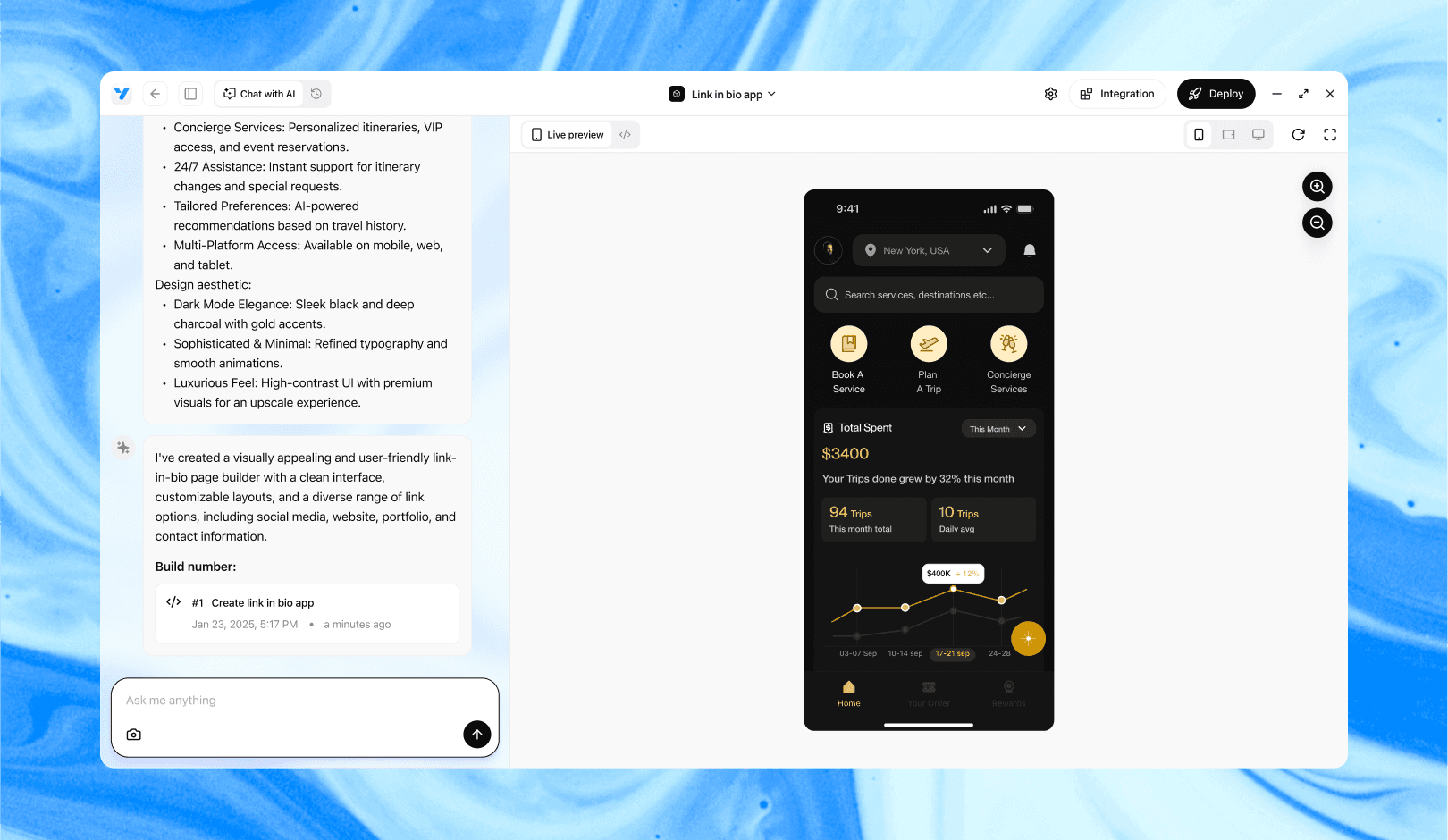
Vibe Studio, powered by Steve’s advanced AI agents, is a revolutionary no-code, conversational platform that empowers users to quickly and efficiently create full-stack Flutter applications integrated seamlessly with Firebase backend services. Ideal for solo founders, startups, and agile engineering teams, Vibe Studio allows users to visually manage and deploy Flutter apps, greatly accelerating the development process. The intuitive conversational interface simplifies complex development tasks, making app creation accessible even for non-coders.

Conclusion

A focused golden testing strategy for responsive UIs reduces visual regressions in Flutter mobile development. Choose a representative breakpoint matrix, make tests deterministic (fonts, surface size, text scale), use helpers to sweep breakpoints, and integrate golden tests into CI with strict review for baseline changes. With disciplined baselines and small, targeted matrices, golden tests become a reliable safety net that preserves pixel intent across breakpoints and screen densities.


Why Golden Tests For Responsive UIs

Golden tests validate final pixels, making them ideal for responsive layouts where small spacing or alignment shifts break the UX. In mobile development you must validate multiple widths and densities: a widget that looks correct at 360dp can fail at 600dp. Golden tests force designers and developers to keep components deterministic and guard against regressions introduced by theme, layout changes, or font differences.

Designing Breakpoint Test Matrix

Decide which widths and orientations represent your product’s meaningful breakpoints. Typical matrix for Flutter mobile development:

  • Narrow phone (e.g., 360×800)

  • Large phone (e.g., 412×914)

  • Compact tablet (e.g., 800×1280)

  • Tablet/landscape if your app supports it Focus on representative breakpoints, not every possible size. Create a small matrix that covers critical layout transitions: stacked -> two-column, compact -> expanded navigation, etc.

Practical tips:

  • Test logical pixels (dp) rather than device names.

  • Include one high-DPI density to catch rendering differences.

  • If widgets adapt to container constraints, test both constrained and unconstrained contexts (wrapped in a SizedBox or full-screen).

Implementing Golden Tests In Flutter

Make your golden tests deterministic:

  • Lock fonts by bundling app fonts and calling loadAppFonts (golden_toolkit) or ensure consistent font rendering.

  • Fix text scale factor and locale in the test harness.

  • Freeze animations by setting timeDilation or using pumpAndSettle.

  • Set a fixed surface size before pumping widgets so the test renders at the target breakpoint.

Use helpers to reduce boilerplate. Example helper to pump a widget at a specific size:

Future<void> pumpAtSize(WidgetTester tester, Widget widget, Size size) async {
  await tester.binding.setSurfaceSize(size);
  await tester.pumpWidget(MaterialApp(home: Scaffold(body: widget)));
  await tester.pumpAndSettle();
}

Use golden_toolkit or flutter_test's matchesGoldenFile. A minimal test that produces golden files across breakpoints looks like this:

testGoldens('MyWidget responsive', (tester) async {
  await pumpAtSize(tester, MyResponsiveWidget(), Size(360, 800));
  await expectLater(find.byType(MyResponsiveWidget), matchesGoldenFile('my_widget_360.png'));

  await pumpAtSize(tester, MyResponsiveWidget(), Size(800, 1280));
  await expectLater(find.byType(MyResponsiveWidget), matchesGoldenFile('my_widget_800.png'));
});

Prefer golden_toolkit's multiScreenGolden for compact tests that produce one combined golden showing several device renderings.

Automating Across Devices And CI

CI is where golden tests provide maximal value. Configure your CI to:

  • Use the same Flutter version and dependency locks as local dev.

  • Run tests in a consistent environment (Docker images or hosted runners) with fonts installed or bundled in the test assets.

  • Store golden baselines in the repo and treat updates as deliberate: require a review for golden updates.

Strategies to reduce CI flakiness:

  • Run tests in headless mode on the same OS that developers use (macOS for iOS-like rendering if applicable).

  • Avoid system fonts; bundle all app fonts into the repo and load them in test setup.

  • If pixel-perfect consistency across OSes is impossible, generate platform-specific baselines and run the corresponding comparisons only on that platform.

Include a job that re-generates golden images behind a flag or dedicated pipeline so reviewers can approve visual diffs. Use CI artifacts to display golden diffs to reviewers.

Vibe Studio

Vibe Studio, powered by Steve’s advanced AI agents, is a revolutionary no-code, conversational platform that empowers users to quickly and efficiently create full-stack Flutter applications integrated seamlessly with Firebase backend services. Ideal for solo founders, startups, and agile engineering teams, Vibe Studio allows users to visually manage and deploy Flutter apps, greatly accelerating the development process. The intuitive conversational interface simplifies complex development tasks, making app creation accessible even for non-coders.

Conclusion

A focused golden testing strategy for responsive UIs reduces visual regressions in Flutter mobile development. Choose a representative breakpoint matrix, make tests deterministic (fonts, surface size, text scale), use helpers to sweep breakpoints, and integrate golden tests into CI with strict review for baseline changes. With disciplined baselines and small, targeted matrices, golden tests become a reliable safety net that preserves pixel intent across breakpoints and screen densities.

Build Flutter Apps Faster with Vibe Studio

Vibe Studio is your AI-powered Flutter development companion. Skip boilerplate, build in real-time, and deploy without hassle. Start creating apps at lightning speed with zero setup.

Other Insights

Join a growing community of builders today

Join a growing community of builders today

Join a growing community of builders today

Join a growing community of builders today

Join a growing community of builders today

28-07 Jackson Ave

Walturn

New York NY 11101 United States

© Steve • All Rights Reserved 2025

28-07 Jackson Ave

Walturn

New York NY 11101 United States

© Steve • All Rights Reserved 2025

28-07 Jackson Ave

Walturn

New York NY 11101 United States

© Steve • All Rights Reserved 2025

28-07 Jackson Ave

Walturn

New York NY 11101 United States

© Steve • All Rights Reserved 2025

28-07 Jackson Ave

Walturn

New York NY 11101 United States

© Steve • All Rights Reserved 2025

28-07 Jackson Ave

Walturn

New York NY 11101 United States

© Steve • All Rights Reserved 2025