Rapid Prototyping
Speed starts with a tight feedback loop between design and a running app. Vibe Studio accelerates prototyping by providing live previews and editable templates that map directly to Flutter widgets. Instead of translating designs into static specs, teams iterate on a running UI with hot reload, component variants, and real data stubs.
Practical pattern: keep a small set of screens in a dev-only module that uses mocked services and real widgets. That means you can test navigation flows and animation timing before wiring backend logic. Use Flutter's hot reload along with a dev-config flag to switch between mocks and real implementations so prototypes remain runnable as the app grows.
Reusable Component Library
Consistency is a multiplier: one well-designed component reused across 30 screens reduces implementation time and QA surface area. Vibe Studio encourages building a curated component library (buttons, cards, spacing tokens, typography). Components are packaged with clear props and small examples so product designers and engineers can reuse them without guesswork.
Code-first example — a compact, reusable button you can place in the component library:
import 'package:flutter/material.dart';

class PrimaryButton extends StatelessWidget {
  final String label;
  final VoidCallback onTap;
  const PrimaryButton({Key? key, required this.label, required this.onTap}) : super(key: key);
  @override
  Widget build(BuildContext context) => ElevatedButton(onPressed: onTap, child: Text(label));
}
When teams commit to small, composable widgets like this, new features become wiring and configuration instead of rewriting UI. Vibe Studio adds searchable documentation and usage examples so engineers find the right widget fast.
CI/CD and App Store Deployment
Automating build, test, and release is essential to frequent shipping. Vibe Studio integrates CI templates for Flutter projects that run unit and widget tests, perform static analysis, and produce signed binaries for both iOS and Android. By standardizing signing profiles, provisioning, and store metadata, teams eliminate common release delays.
Key practices to adopt: keep build flavors for dev/staging/prod, gate merges with fast tests, and use reproducible artifacts so a failing release can be rebuilt reliably. Integrate crash and distribution pipelines so QA receives builds automatically — this shortens the feedback cycle from days to hours.
Minimal screen example to exercise a component during CI-friendly widget tests:
class ExampleScreen extends StatelessWidget {
  @override
  Widget build(BuildContext c) => Scaffold(body: Center(child: PrimaryButton(label: 'Ship', onTap: () => print('ship'))));
}
CI should also package release notes and screenshots for App Store Connect and Google Play. Vibe Studio streamlines metadata templates so each new release follows the same checklist: versioning, release notes, privacy strings, and screenshots.
Instrumentation and QA
Faster shipping without instrumentation is reckless. Vibe Studio embeds lightweight telemetry and crash reporting hooks in feature templates so every build provides actionable signals. Add performance markers around heavy flows (cold start, list render) and use feature flags to toggle risky changes.
QA is faster when automation is aligned with product intent. Vibe Studio encourages a triad: unit/widget tests that check behavior, lightweight integration tests for critical flows, and exploratory test builds distributed to real devices. Device farm automation gives quick coverage across form factors without maintaining a physical lab.
Operationalizing feedback means linking crash traces back to releases and committing to short remediation SLAs. When teams can trace a regression to a specific component or commit, rollbacks or hotfixes take hours, not days.
Vibe Studio
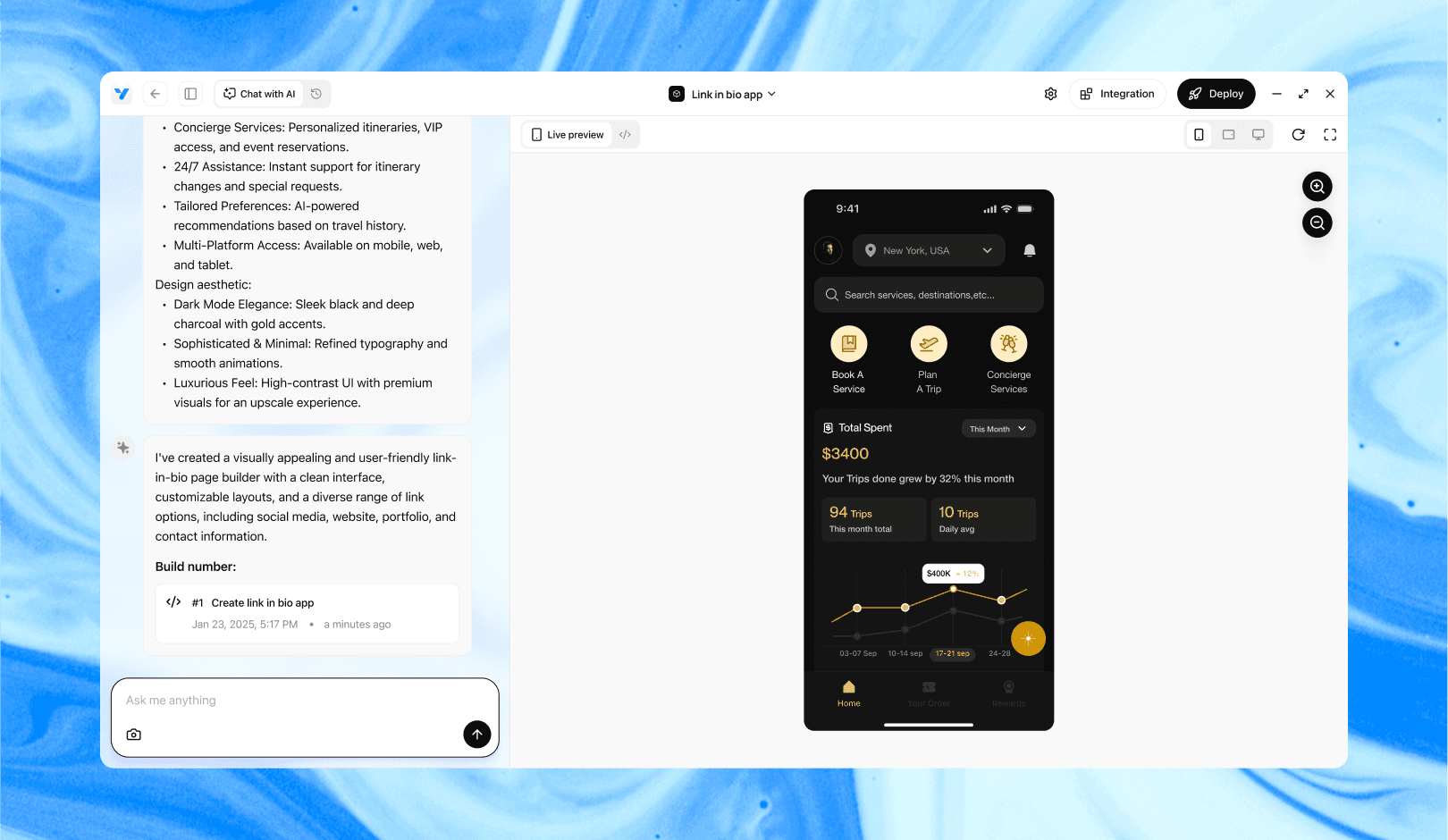
Vibe Studio, powered by Steve’s advanced AI agents, is a revolutionary no-code, conversational platform that empowers users to quickly and efficiently create full-stack Flutter applications integrated seamlessly with Firebase backend services. Ideal for solo founders, startups, and agile engineering teams, Vibe Studio allows users to visually manage and deploy Flutter apps, greatly accelerating the development process. The intuitive conversational interface simplifies complex development tasks, making app creation accessible even for non-coders.
Conclusion
Shipping Flutter apps faster is a systems problem: you must optimize prototyping, reuse, automation, and observability together. Vibe Studio packages these practices—live previews, documented component libraries, CI/CD release automation, and telemetry—so teams spend less time on process and more time delivering features. Apply the patterns above: isolate prototypes, standardize components, automate releases, and instrument everything. The result is predictable, repeatable mobile development velocity from idea to App Store.