Flutter WebAssembly Integration for High-Performance Logic

Summary
Summary
Summary
Summary

This tutorial explains integrating WebAssembly into Flutter Web to accelerate CPU-heavy logic. It covers building Wasm modules, integrating them via JavaScript glue and Dart interop, performance patterns (batch calls, linear memory), debugging, and deployment best practices for mobile development teams targeting web.

This tutorial explains integrating WebAssembly into Flutter Web to accelerate CPU-heavy logic. It covers building Wasm modules, integrating them via JavaScript glue and Dart interop, performance patterns (batch calls, linear memory), debugging, and deployment best practices for mobile development teams targeting web.

This tutorial explains integrating WebAssembly into Flutter Web to accelerate CPU-heavy logic. It covers building Wasm modules, integrating them via JavaScript glue and Dart interop, performance patterns (batch calls, linear memory), debugging, and deployment best practices for mobile development teams targeting web.

This tutorial explains integrating WebAssembly into Flutter Web to accelerate CPU-heavy logic. It covers building Wasm modules, integrating them via JavaScript glue and Dart interop, performance patterns (batch calls, linear memory), debugging, and deployment best practices for mobile development teams targeting web.

Key insights:
Key insights:
Key insights:
Key insights:
  • Why Use WebAssembly With Flutter: Wasm yields near-native speed for compute-heavy tasks and is ideal for reusing C/Rust libraries in Flutter Web.

  • Building A WebAssembly Module: Expose buffer-based APIs (allocate/process/free) to minimize call overhead and enable efficient bulk transfers.

  • Integrating Wasm In Flutter Web: Load Wasm via JS glue in web/, call it from Dart with dart:js/package:js, and keep interop coarse-grained.

  • Performance Considerations: Reduce round trips, use contiguous memory, pool allocations, and be mindful of thread limitations and memory costs.

  • Debugging, Tooling, And Deployment: Include wasm artifacts in CI, use debug builds for testing, provide fallbacks, and follow CSP/security guidance.

Introduction

Flutter is primarily known for building beautiful cross-platform UI for mobile development. For CPU-bound logic — heavy math, cryptography, signal processing, or large-scale parsing — JavaScript on the web or Dart on Flutter can be a bottleneck. WebAssembly (Wasm) lets you run near-native code in the browser and can be integrated into Flutter Web builds to offload performance-critical logic. This tutorial shows pragmatic steps to integrate Wasm into a Flutter Web app, trade-offs to consider, and code patterns to minimize interop costs.

Why Use WebAssembly With Flutter

Wasm is a compact binary format executed by the browser’s runtime with performance much closer to native C/C++/Rust than to JavaScript. For mobile development teams targeting web with Flutter, Wasm helps when:

  • Algorithms are CPU bound and repeatedly executed (e.g., codecs, simulations).

  • You have existing C/C++/Rust libraries you don’t want to rewrite in Dart.

Expect large wins for raw compute; expect smaller wins when the workload is dominated by DOM or Flutter UI operations. The interop cost between Dart and Wasm (via JavaScript) matters — batch calls and pass contiguous memories to avoid repeated crossing.

Building A WebAssembly Module

Choose your source language. Rust (wasm-bindgen), C/C++ (Emscripten), and AssemblyScript are common choices. For Rust:

  • Mark exported functions with #[wasm_bindgen].

  • Use wasm-pack or cargo to build a release wasm bundle.

Focus on an efficient API surface: expose functions that operate on linear memory (pointers and lengths) or operate on buffers rather than many small calls. Example Rust pseudo-API:

  • allocate_buffer(size) -> pointer

  • process(pointer, length)

  • free(pointer)

This allows Dart to write bytes into a single ArrayBuffer and call a single exported function for processing.

Integrating Wasm In Flutter Web

Wasm runs in the JavaScript environment for Flutter Web. Typical flow:

  1. Build your wasm and accompanying JavaScript glue (wasm-bindgen or Emscripten output).

  2. Place the wasm and glue in the web/ folder of your Flutter project so they are included in the build.

  3. Provide a small JS initializer that fetches and instantiates the module and attaches high-level functions to window.

  4. From Dart, use dart:js or package:js to call those JS functions. Keep calls coarse-grained — copy big buffers once, then call compute functions that return results or status codes.

Minimal Dart interop example (calling a JS wrapper function attached to window):

import 'dart:js' as js;

int callWasmAdd(int a, int b) {
  final result = js.context.callMethod('wasm_add', [a, b]);
  return result as int;
}

For bulk data, use JS typed arrays and share memory via the module’s exported memory. A common pattern:

  • JS exposes allocate(size) and pointerToArray(ptr, len).

  • Dart uses js context to call allocate, then writes bytes via JS typed array and calls process(ptr, len).

Keep the JS glue minimal and predictable; treat JS as the bridge but keep business logic in Wasm.

Performance Considerations

  • Minimize Dart↔JS↔Wasm round trips. Combine operations into larger calls where possible.

  • Use contiguous memory buffers for bulk data. Copying many small objects is expensive.

  • Profile both CPU and memory. Wasm will reduce CPU for arithmetic-heavy workloads but may increase memory usage.

  • Avoid frequent allocations in Wasm that require Dart to repeatedly fetch or free memory; implement pooled buffers in Wasm.

  • Be mindful of threading: Wasm threads (via SharedArrayBuffer) are not universally supported in browsers and are not directly available in Flutter Web’s single-threaded environment. For parallelism, use worker-based patterns and message passing.

Debugging, Tooling, And Deployment

  • Source maps and debug information: wasm-bindgen and Emscripten can emit debug-friendly artifacts. Include them during testing; strip them in production.

  • CI: include wasm builds in your web CI pipeline. The flutter build web step will copy files from web/ to build/web/, so ensure the JS glue and wasm files are present.

  • Fallbacks: provide a Dart fallback for browsers or environments without Wasm support or when strict CSP prevents wasm loading.

  • Security: validate or sandbox any untrusted input before handing it to native code. Wasm runs with the privileges of the page.

Vibe Studio
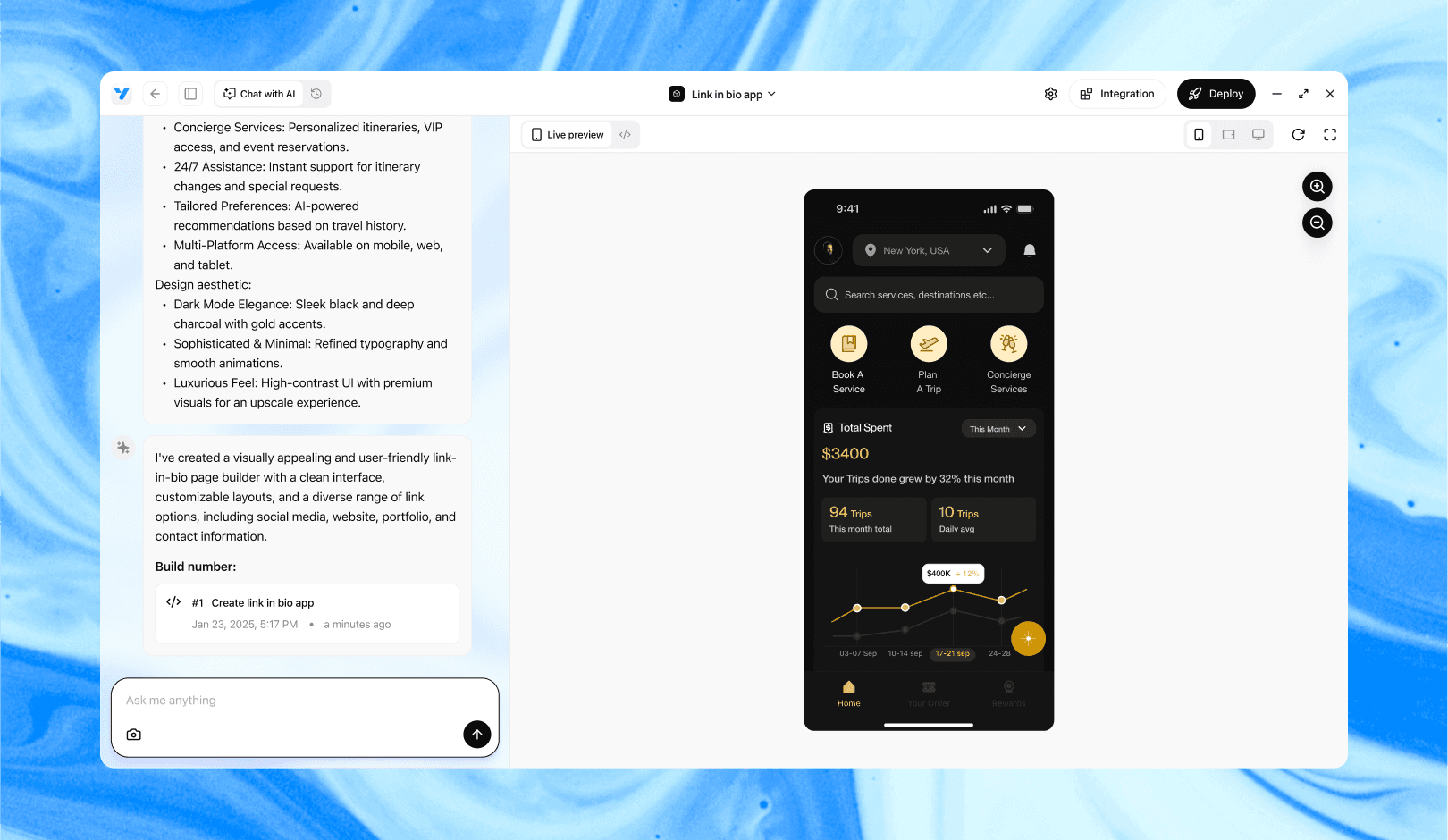
Vibe Studio, powered by Steve’s advanced AI agents, is a revolutionary no-code, conversational platform that empowers users to quickly and efficiently create full-stack Flutter applications integrated seamlessly with Firebase backend services. Ideal for solo founders, startups, and agile engineering teams, Vibe Studio allows users to visually manage and deploy Flutter apps, greatly accelerating the development process. The intuitive conversational interface simplifies complex development tasks, making app creation accessible even for non-coders.

Conclusion

Integrating WebAssembly into a Flutter Web workflow gives mobile development teams a powerful tool to accelerate CPU-bound logic while preserving Flutter’s UI productivity. The best results come from designing a small, efficient interop surface, using linear memory for bulk transfers, and treating JavaScript as a thin loader/bridge. With careful API design, Wasm can provide orders-of-magnitude improvements for specific workloads without disrupting your Flutter architecture.


Introduction

Flutter is primarily known for building beautiful cross-platform UI for mobile development. For CPU-bound logic — heavy math, cryptography, signal processing, or large-scale parsing — JavaScript on the web or Dart on Flutter can be a bottleneck. WebAssembly (Wasm) lets you run near-native code in the browser and can be integrated into Flutter Web builds to offload performance-critical logic. This tutorial shows pragmatic steps to integrate Wasm into a Flutter Web app, trade-offs to consider, and code patterns to minimize interop costs.

Why Use WebAssembly With Flutter

Wasm is a compact binary format executed by the browser’s runtime with performance much closer to native C/C++/Rust than to JavaScript. For mobile development teams targeting web with Flutter, Wasm helps when:

  • Algorithms are CPU bound and repeatedly executed (e.g., codecs, simulations).

  • You have existing C/C++/Rust libraries you don’t want to rewrite in Dart.

Expect large wins for raw compute; expect smaller wins when the workload is dominated by DOM or Flutter UI operations. The interop cost between Dart and Wasm (via JavaScript) matters — batch calls and pass contiguous memories to avoid repeated crossing.

Building A WebAssembly Module

Choose your source language. Rust (wasm-bindgen), C/C++ (Emscripten), and AssemblyScript are common choices. For Rust:

  • Mark exported functions with #[wasm_bindgen].

  • Use wasm-pack or cargo to build a release wasm bundle.

Focus on an efficient API surface: expose functions that operate on linear memory (pointers and lengths) or operate on buffers rather than many small calls. Example Rust pseudo-API:

  • allocate_buffer(size) -> pointer

  • process(pointer, length)

  • free(pointer)

This allows Dart to write bytes into a single ArrayBuffer and call a single exported function for processing.

Integrating Wasm In Flutter Web

Wasm runs in the JavaScript environment for Flutter Web. Typical flow:

  1. Build your wasm and accompanying JavaScript glue (wasm-bindgen or Emscripten output).

  2. Place the wasm and glue in the web/ folder of your Flutter project so they are included in the build.

  3. Provide a small JS initializer that fetches and instantiates the module and attaches high-level functions to window.

  4. From Dart, use dart:js or package:js to call those JS functions. Keep calls coarse-grained — copy big buffers once, then call compute functions that return results or status codes.

Minimal Dart interop example (calling a JS wrapper function attached to window):

import 'dart:js' as js;

int callWasmAdd(int a, int b) {
  final result = js.context.callMethod('wasm_add', [a, b]);
  return result as int;
}

For bulk data, use JS typed arrays and share memory via the module’s exported memory. A common pattern:

  • JS exposes allocate(size) and pointerToArray(ptr, len).

  • Dart uses js context to call allocate, then writes bytes via JS typed array and calls process(ptr, len).

Keep the JS glue minimal and predictable; treat JS as the bridge but keep business logic in Wasm.

Performance Considerations

  • Minimize Dart↔JS↔Wasm round trips. Combine operations into larger calls where possible.

  • Use contiguous memory buffers for bulk data. Copying many small objects is expensive.

  • Profile both CPU and memory. Wasm will reduce CPU for arithmetic-heavy workloads but may increase memory usage.

  • Avoid frequent allocations in Wasm that require Dart to repeatedly fetch or free memory; implement pooled buffers in Wasm.

  • Be mindful of threading: Wasm threads (via SharedArrayBuffer) are not universally supported in browsers and are not directly available in Flutter Web’s single-threaded environment. For parallelism, use worker-based patterns and message passing.

Debugging, Tooling, And Deployment

  • Source maps and debug information: wasm-bindgen and Emscripten can emit debug-friendly artifacts. Include them during testing; strip them in production.

  • CI: include wasm builds in your web CI pipeline. The flutter build web step will copy files from web/ to build/web/, so ensure the JS glue and wasm files are present.

  • Fallbacks: provide a Dart fallback for browsers or environments without Wasm support or when strict CSP prevents wasm loading.

  • Security: validate or sandbox any untrusted input before handing it to native code. Wasm runs with the privileges of the page.

Vibe Studio

Vibe Studio, powered by Steve’s advanced AI agents, is a revolutionary no-code, conversational platform that empowers users to quickly and efficiently create full-stack Flutter applications integrated seamlessly with Firebase backend services. Ideal for solo founders, startups, and agile engineering teams, Vibe Studio allows users to visually manage and deploy Flutter apps, greatly accelerating the development process. The intuitive conversational interface simplifies complex development tasks, making app creation accessible even for non-coders.

Conclusion

Integrating WebAssembly into a Flutter Web workflow gives mobile development teams a powerful tool to accelerate CPU-bound logic while preserving Flutter’s UI productivity. The best results come from designing a small, efficient interop surface, using linear memory for bulk transfers, and treating JavaScript as a thin loader/bridge. With careful API design, Wasm can provide orders-of-magnitude improvements for specific workloads without disrupting your Flutter architecture.

Build Flutter Apps Faster with Vibe Studio

Build Flutter Apps Faster with Vibe Studio

Build Flutter Apps Faster with Vibe Studio

Build Flutter Apps Faster with Vibe Studio

Vibe Studio is your AI-powered Flutter development companion. Skip boilerplate, build in real-time, and deploy without hassle. Start creating apps at lightning speed with zero setup.

Vibe Studio is your AI-powered Flutter development companion. Skip boilerplate, build in real-time, and deploy without hassle. Start creating apps at lightning speed with zero setup.

Vibe Studio is your AI-powered Flutter development companion. Skip boilerplate, build in real-time, and deploy without hassle. Start creating apps at lightning speed with zero setup.

Vibe Studio is your AI-powered Flutter development companion. Skip boilerplate, build in real-time, and deploy without hassle. Start creating apps at lightning speed with zero setup.

Other Insights

Other Insights

Other Insights

Other Insights

Join a growing community of builders today

Join a growing community of builders today

Join a growing community of builders today

Join a growing community of builders today

Join a growing community of builders today

28-07 Jackson Ave

Walturn

New York NY 11101 United States

© Steve • All Rights Reserved 2025

28-07 Jackson Ave

Walturn

New York NY 11101 United States

© Steve • All Rights Reserved 2025

28-07 Jackson Ave

Walturn

New York NY 11101 United States

© Steve • All Rights Reserved 2025

28-07 Jackson Ave

Walturn

New York NY 11101 United States

© Steve • All Rights Reserved 2025

28-07 Jackson Ave

Walturn

New York NY 11101 United States

© Steve • All Rights Reserved 2025

28-07 Jackson Ave

Walturn

New York NY 11101 United States

© Steve • All Rights Reserved 2025