Flutter Testing Strategies for Fast-Moving Teams
Dec 9, 2025


Summary
Summary
Summary
Summary
This tutorial explains pragmatic Flutter testing strategies for fast-moving teams: use the testing pyramid, optimize for fast feedback, design for DI and small fakes, and structure CI to parallelize fast suites while quarantining flaky tests to keep delivery velocity high.
Key insights:
Key insights:
Key insights:
Key insights:
Testing Pyramid For Flutter: Favor many fast unit tests, a moderate number of widget tests, and minimal integration tests to preserve speed and coverage.
Fast Feedback Techniques: Use watch mode, selective test runs, and in-IDE execution to shorten the edit-test loop for developers.
Mocks And Dependency Injection: Design for testability with constructor injection and small fakes; avoid hidden singletons and over-mocking UI internals.
CI And Flaky Test Management: Parallelize and shard tests, split pipelines by speed, quarantine flakes, and capture artifacts for debugging.
Test Determinism And Data Management: Keep tests deterministic by controlling time, randomness, and external data; prefer fixed fixtures and deterministic fakes.
Introduction
Fast-moving Flutter teams need tests that provide confidence without slowing delivery. The right testing strategy balances speed, coverage, and maintainability. This article presents practical patterns you can adopt immediately: how to structure tests, get fast feedback on edits, design for mocks and dependency injection, and keep CI lean while handling flaky tests.
Testing Pyramid For Flutter
Adopt the testing pyramid: many fast unit tests at the base, a moderate number of widget tests in the middle, and a few end-to-end integration tests at the top. For Flutter mobile development, treat widget tests as cheap UI verification and integration tests as slow, environment-dependent checks.
Unit Tests: Logic-only classes (formatters, validators, bloc/cubit reducers) should be pure and executed with dart test. Keep these fast (<50ms each).
Widget Tests: Use flutter_test to pump widgets with mocked dependencies. Test UI behavior, layout, and interactions without real network or platform services.
Integration Tests: Run on devices or emulators for real user flows. Minimize count and run them in nightly or gated CI only when necessary.
Aim for a practical distribution: ~70% unit tests, 25% widget tests, 5% integration tests. Track test execution time per suite and cap PR runs to a fast subset.
Fast Feedback Techniques
Prioritize developer feedback velocity. Techniques that make tests quick and useful:
Watch Mode: Use flutter test --watch or dart test --watch for TDD-style loops.
Test Selection: Group slow tests with @Tags or custom test suites. Run only unit and widget tests on each PR; schedule integration tests separately.
In-IDE Runs: Configure the editor to run the current test or group rather than the whole suite.
Snapshot/Golden Tests Sparingly: Golden tests are valuable for regressions but brittle. Use them for critical visuals and store approved images in CI artifacts.
Example: run widget tests only on PRs. Label integration tests with @Tags(['integration']) and exclude them from default runs.
Mocks And Dependency Injection
Design for testability. Use constructor injection or a lightweight service locator to replace real services with fakes. Avoid static singletons that hide dependencies.
Use small hand-written fakes where possible — they’re easier to reason about than generated mocks. For external clients, use packages like mocktail or Mockito for behavior verification.
Example: a minimal fake service and injection via constructor.
class WeatherService {
Future<int> fetchTemperature() async => 20; // production
}
class FakeWeatherService implements WeatherService {
@override
Future<int> fetchTemperature() async => 25; // deterministic test value
}
// In test:
final widget = MyWidget(weatherService: FakeWeatherService());Keep test doubles focused: one behavior per fake. Avoid over-mocking UI internals; prefer asserting on rendered text and events.
CI And Flaky Test Management
CI must be fast and reliable. Key tactics:
Parallelize Tests: Shard test suites across runners. Cache pub packages and build artifacts to reduce overhead.
Split Pipelines: Run fast suites (unit + widget) on every push; schedule integration and golden validations on nightly or release branches.
Quarantine Flaky Tests: Detect flakes by re-running failures automatically. Move persistent flakes into a quarantine job and fix root causes (timing, async handling, real network usage).
Use Emulators Efficiently: Reuse emulator instances, keep images minimal, and prefer headless Linux emulators for speed when possible.
Record Artifacts: Capture test logs, screenshots, and video for failing integration tests to speed debugging.
On flaky tests, prefer deterministic fixes (timeouts, better synchronization, removing non-determinism) over increasing retry counts. Retries hide instability and erode trust.
Vibe Studio
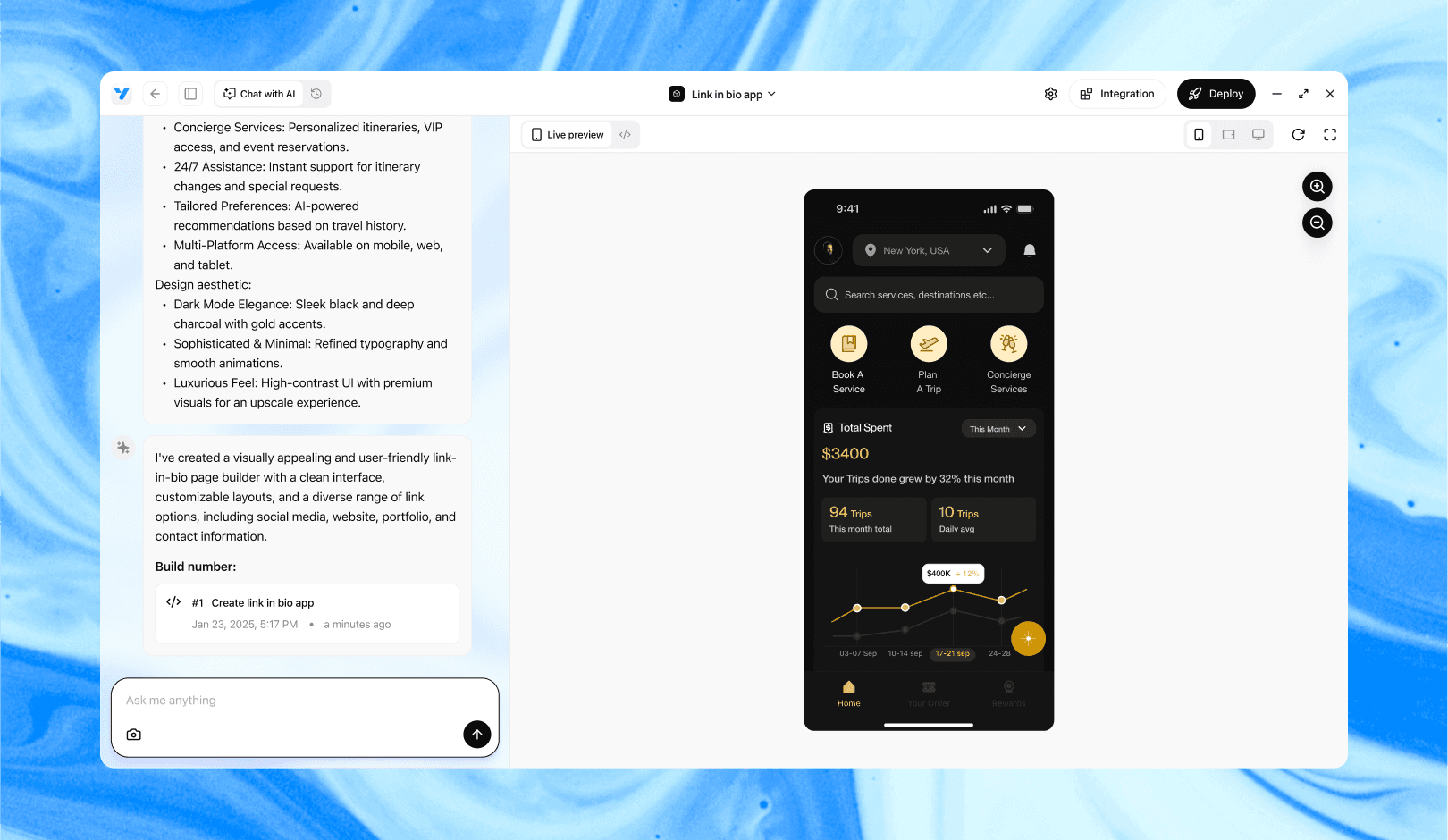
Vibe Studio, powered by Steve’s advanced AI agents, is a revolutionary no-code, conversational platform that empowers users to quickly and efficiently create full-stack Flutter applications integrated seamlessly with Firebase backend services. Ideal for solo founders, startups, and agile engineering teams, Vibe Studio allows users to visually manage and deploy Flutter apps, greatly accelerating the development process. The intuitive conversational interface simplifies complex development tasks, making app creation accessible even for non-coders.
Conclusion
Fast-moving teams must make tests an accelerator, not a bottleneck. Follow a pragmatic pyramid, optimize for quick feedback, design code for testability with DI and small fakes, and structure CI to prioritize reliability and speed. Track test execution times, quarantine flakes, and reserve slow integration checks for scheduled pipelines. When tests are fast, deterministic, and well-scoped, they become a force multiplier for mobile development with Flutter.

Introduction
Fast-moving Flutter teams need tests that provide confidence without slowing delivery. The right testing strategy balances speed, coverage, and maintainability. This article presents practical patterns you can adopt immediately: how to structure tests, get fast feedback on edits, design for mocks and dependency injection, and keep CI lean while handling flaky tests.
Testing Pyramid For Flutter
Adopt the testing pyramid: many fast unit tests at the base, a moderate number of widget tests in the middle, and a few end-to-end integration tests at the top. For Flutter mobile development, treat widget tests as cheap UI verification and integration tests as slow, environment-dependent checks.
Unit Tests: Logic-only classes (formatters, validators, bloc/cubit reducers) should be pure and executed with dart test. Keep these fast (<50ms each).
Widget Tests: Use flutter_test to pump widgets with mocked dependencies. Test UI behavior, layout, and interactions without real network or platform services.
Integration Tests: Run on devices or emulators for real user flows. Minimize count and run them in nightly or gated CI only when necessary.
Aim for a practical distribution: ~70% unit tests, 25% widget tests, 5% integration tests. Track test execution time per suite and cap PR runs to a fast subset.
Fast Feedback Techniques
Prioritize developer feedback velocity. Techniques that make tests quick and useful:
Watch Mode: Use flutter test --watch or dart test --watch for TDD-style loops.
Test Selection: Group slow tests with @Tags or custom test suites. Run only unit and widget tests on each PR; schedule integration tests separately.
In-IDE Runs: Configure the editor to run the current test or group rather than the whole suite.
Snapshot/Golden Tests Sparingly: Golden tests are valuable for regressions but brittle. Use them for critical visuals and store approved images in CI artifacts.
Example: run widget tests only on PRs. Label integration tests with @Tags(['integration']) and exclude them from default runs.
Mocks And Dependency Injection
Design for testability. Use constructor injection or a lightweight service locator to replace real services with fakes. Avoid static singletons that hide dependencies.
Use small hand-written fakes where possible — they’re easier to reason about than generated mocks. For external clients, use packages like mocktail or Mockito for behavior verification.
Example: a minimal fake service and injection via constructor.
class WeatherService {
Future<int> fetchTemperature() async => 20; // production
}
class FakeWeatherService implements WeatherService {
@override
Future<int> fetchTemperature() async => 25; // deterministic test value
}
// In test:
final widget = MyWidget(weatherService: FakeWeatherService());Keep test doubles focused: one behavior per fake. Avoid over-mocking UI internals; prefer asserting on rendered text and events.
CI And Flaky Test Management
CI must be fast and reliable. Key tactics:
Parallelize Tests: Shard test suites across runners. Cache pub packages and build artifacts to reduce overhead.
Split Pipelines: Run fast suites (unit + widget) on every push; schedule integration and golden validations on nightly or release branches.
Quarantine Flaky Tests: Detect flakes by re-running failures automatically. Move persistent flakes into a quarantine job and fix root causes (timing, async handling, real network usage).
Use Emulators Efficiently: Reuse emulator instances, keep images minimal, and prefer headless Linux emulators for speed when possible.
Record Artifacts: Capture test logs, screenshots, and video for failing integration tests to speed debugging.
On flaky tests, prefer deterministic fixes (timeouts, better synchronization, removing non-determinism) over increasing retry counts. Retries hide instability and erode trust.
Vibe Studio

Vibe Studio, powered by Steve’s advanced AI agents, is a revolutionary no-code, conversational platform that empowers users to quickly and efficiently create full-stack Flutter applications integrated seamlessly with Firebase backend services. Ideal for solo founders, startups, and agile engineering teams, Vibe Studio allows users to visually manage and deploy Flutter apps, greatly accelerating the development process. The intuitive conversational interface simplifies complex development tasks, making app creation accessible even for non-coders.
Conclusion
Fast-moving teams must make tests an accelerator, not a bottleneck. Follow a pragmatic pyramid, optimize for quick feedback, design code for testability with DI and small fakes, and structure CI to prioritize reliability and speed. Track test execution times, quarantine flakes, and reserve slow integration checks for scheduled pipelines. When tests are fast, deterministic, and well-scoped, they become a force multiplier for mobile development with Flutter.
Build Flutter Apps Faster with Vibe Studio
Vibe Studio is your AI-powered Flutter development companion. Skip boilerplate, build in real-time, and deploy without hassle. Start creating apps at lightning speed with zero setup.