Flutter Layout Essentials Align Stack Expanded Flexible Explained
Jan 19, 2026


Summary
Summary
Summary
Summary
This tutorial explains Flutter's layout primitives—Align, Stack, Expanded, and Flexible—focusing on the constraint model, positioning vs. overlapping, and how Expanded and Flexible allocate space inside Row/Column for predictable mobile development layouts.
Key insights:
Key insights:
Key insights:
Key insights:
Understanding Flutter Layout Constraints: Parent-driven constraints determine child size; mastering this flow avoids layout surprises.
Align And Stack: Positioning And Overlap: Use Align for simple placement and Stack (+Positioned) for layering and precise offsets.
Expanded Vs Flexible: Space Allocation: Expanded enforces a tight fill of remaining space; Flexible offers a loose, optional fill.
Practical Patterns And Pitfalls: Constrain flex children in unbounded parents, prefer Row/Column for linear layouts, and use Stack sparingly.
Performance And Debugging: Use Inspector and visual debugging (ColoredBox) to inspect sizes and avoid costly layout rebuilds.
Introduction
This tutorial explains core Flutter layout primitives—Align, Stack, Expanded, and Flexible—and how they interact with the Flutter constraint system. These widgets are essential for responsive layouts in mobile development. The explanations below are concise, code-focused, and aimed at showing when and how to use each widget correctly.
Understanding Flutter Layout Constraints
Flutter uses a parent-driven constraint model: parents tell children the bounds they may occupy; children choose sizes within those bounds and then parents position children. Understanding this flow is critical: Align and Stack deal primarily with positioning; Expanded and Flexible affect how children claim available space within flex containers (Row/Column).
Key points:
A parent gives constraints (min/max width/height).
A child returns a size that satisfies those constraints.
The parent uses that size to position the child.
This model explains why some widgets (e.g., Align) can shrink-wrap their child, while others (e.g., Expanded) force them to fill remaining space.
Align And Stack: Positioning And Overlap
Align positions a single child within itself according to an Alignment (e.g., Alignment.centerRight). If Align has unconstrained space, it will expand to fit the parent and position its child inside. When you need overlap or layer multiple widgets, use Stack. Stack paints children in order and can use Positioned to place a child at an offset from the stack’s edges.
Use Align when you need simple alignment without overlap. Use Stack when elements must layer or be positioned relative to the stack's edges.
Example: Align inside a fixed-size container; Stack with Positioned children.
Container( width: 200, height: 200, color: Colors.grey[200], child: Align(alignment: Alignment.topRight, child: Text('Top Right')), )
Stack(children: [ Image.network('...'), Positioned(bottom: 8, right: 8, child: Icon(Icons.favorite)), ])
Common pitfalls:
Stack without sized parent takes the size of the largest non-positioned child or expands to fit parent if constrained.
Positioned children ignore Align; they are placed by offsets, not by alignment.
Expanded Vs Flexible: Space Allocation
Both Expanded and Flexible are used inside Row, Column, or Flex. They control how children consume available space, but with a crucial difference:
Expanded forces its child to fill the remaining available space (tight constraint).
Flexible lets its child have flexibility to be smaller than the available space (loose constraint), letting the child size itself up to the available space.
Use Expanded when you want the child to grow and fill; use Flexible when you want the child to take remaining space only if it needs to, or when you want to wrap content while still participating in flex distribution.
Example: Two children in a Row where one fills rest and the other sizes to content.
Row(children: [ Text('Label'), Expanded(child: Container(color: Colors.blue, height: 40)), ])
If you replace Expanded with Flexible(fit: FlexFit.loose), the container may be only as wide as its content rather than filling the remaining width.
Other tips:
Use flex values to allocate weighted space: Expanded(flex: 2) vs Expanded(flex: 1).
Avoid nesting Expanded directly inside widgets that impose unbounded constraints (like ListView) unless wrapped properly.
Practical Patterns And Pitfalls
Practical patterns:
Header with aligned action: Use Row with Expanded for title and Align for right-aligned action inside a fixed-height AppBar-like container.
Overlay badges: Use Stack with Positioned for badges on avatars or images.
Responsive columns: Use Flexible children with different flex values to create adaptive layouts.
Pitfalls to watch:
Unbounded constraints: Placing Expanded in a ListView will error because ListView provides infinite main axis constraints. Wrap with SizedBox or constrain parent.
Mixing Align and Positioned: A Positioned child in a Stack will not respond to Align; choose one positioning mechanism.
Overusing Stack: prefer layout widgets (Row/Column) for simple linear layouts; Stack is for layering.
Debugging tools:
Use Flutter Inspector to view constraints and sizes.
Wrap troublesome widgets with ColoredBox to visualize their bounds.
Vibe Studio
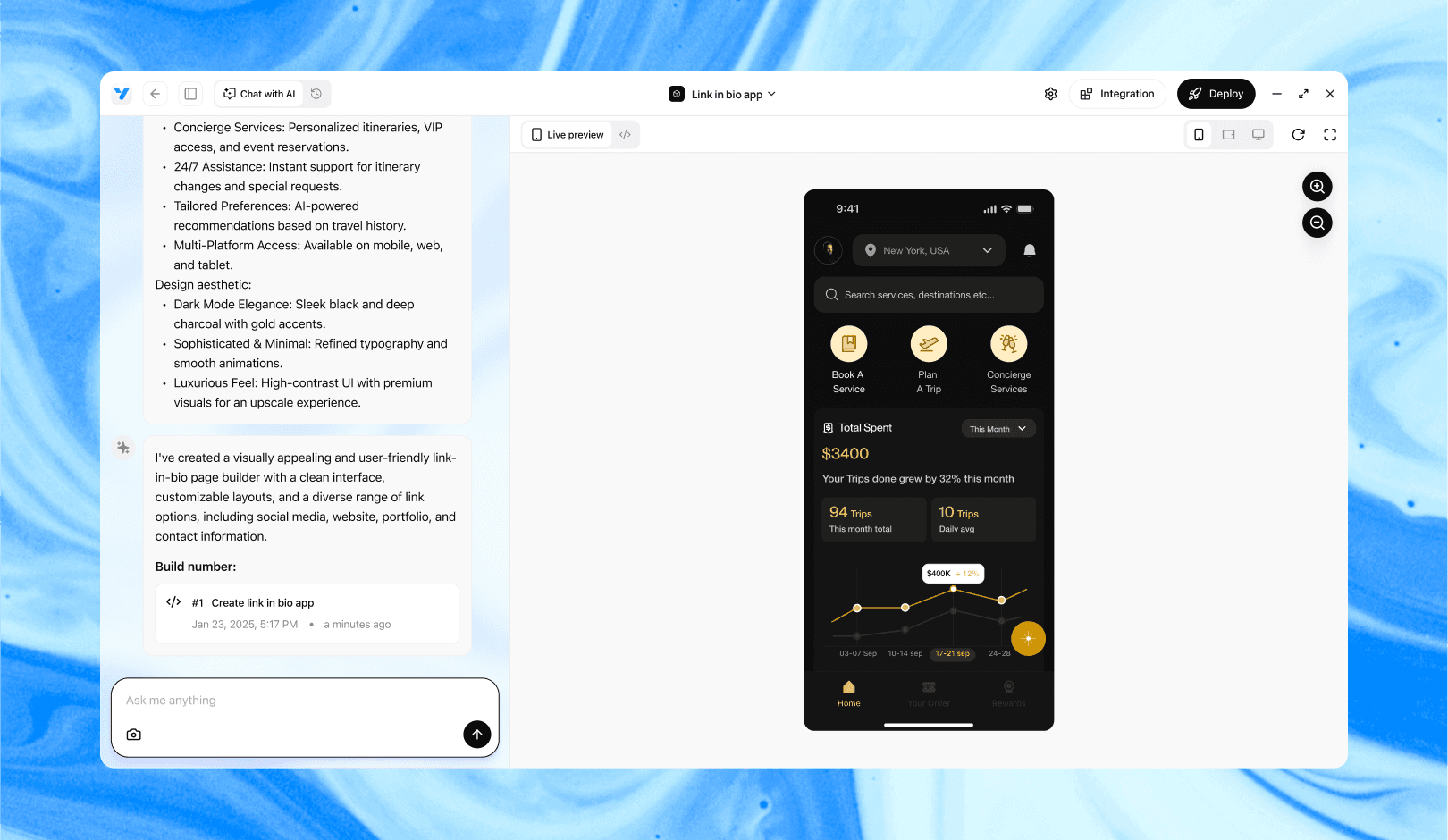
Vibe Studio, powered by Steve’s advanced AI agents, is a revolutionary no-code, conversational platform that empowers users to quickly and efficiently create full-stack Flutter applications integrated seamlessly with Firebase backend services. Ideal for solo founders, startups, and agile engineering teams, Vibe Studio allows users to visually manage and deploy Flutter apps, greatly accelerating the development process. The intuitive conversational interface simplifies complex development tasks, making app creation accessible even for non-coders.
Conclusion
Align, Stack, Expanded, and Flexible are fundamental to creating robust Flutter UIs. Align and Stack control positioning and layering; Expanded and Flexible determine how children claim space inside flex containers. Master the constraint-flow model (parent constraints → child size → parent positions child), and these widgets become predictable tools for responsive mobile development.

Introduction
This tutorial explains core Flutter layout primitives—Align, Stack, Expanded, and Flexible—and how they interact with the Flutter constraint system. These widgets are essential for responsive layouts in mobile development. The explanations below are concise, code-focused, and aimed at showing when and how to use each widget correctly.
Understanding Flutter Layout Constraints
Flutter uses a parent-driven constraint model: parents tell children the bounds they may occupy; children choose sizes within those bounds and then parents position children. Understanding this flow is critical: Align and Stack deal primarily with positioning; Expanded and Flexible affect how children claim available space within flex containers (Row/Column).
Key points:
A parent gives constraints (min/max width/height).
A child returns a size that satisfies those constraints.
The parent uses that size to position the child.
This model explains why some widgets (e.g., Align) can shrink-wrap their child, while others (e.g., Expanded) force them to fill remaining space.
Align And Stack: Positioning And Overlap
Align positions a single child within itself according to an Alignment (e.g., Alignment.centerRight). If Align has unconstrained space, it will expand to fit the parent and position its child inside. When you need overlap or layer multiple widgets, use Stack. Stack paints children in order and can use Positioned to place a child at an offset from the stack’s edges.
Use Align when you need simple alignment without overlap. Use Stack when elements must layer or be positioned relative to the stack's edges.
Example: Align inside a fixed-size container; Stack with Positioned children.
Container( width: 200, height: 200, color: Colors.grey[200], child: Align(alignment: Alignment.topRight, child: Text('Top Right')), )
Stack(children: [ Image.network('...'), Positioned(bottom: 8, right: 8, child: Icon(Icons.favorite)), ])
Common pitfalls:
Stack without sized parent takes the size of the largest non-positioned child or expands to fit parent if constrained.
Positioned children ignore Align; they are placed by offsets, not by alignment.
Expanded Vs Flexible: Space Allocation
Both Expanded and Flexible are used inside Row, Column, or Flex. They control how children consume available space, but with a crucial difference:
Expanded forces its child to fill the remaining available space (tight constraint).
Flexible lets its child have flexibility to be smaller than the available space (loose constraint), letting the child size itself up to the available space.
Use Expanded when you want the child to grow and fill; use Flexible when you want the child to take remaining space only if it needs to, or when you want to wrap content while still participating in flex distribution.
Example: Two children in a Row where one fills rest and the other sizes to content.
Row(children: [ Text('Label'), Expanded(child: Container(color: Colors.blue, height: 40)), ])
If you replace Expanded with Flexible(fit: FlexFit.loose), the container may be only as wide as its content rather than filling the remaining width.
Other tips:
Use flex values to allocate weighted space: Expanded(flex: 2) vs Expanded(flex: 1).
Avoid nesting Expanded directly inside widgets that impose unbounded constraints (like ListView) unless wrapped properly.
Practical Patterns And Pitfalls
Practical patterns:
Header with aligned action: Use Row with Expanded for title and Align for right-aligned action inside a fixed-height AppBar-like container.
Overlay badges: Use Stack with Positioned for badges on avatars or images.
Responsive columns: Use Flexible children with different flex values to create adaptive layouts.
Pitfalls to watch:
Unbounded constraints: Placing Expanded in a ListView will error because ListView provides infinite main axis constraints. Wrap with SizedBox or constrain parent.
Mixing Align and Positioned: A Positioned child in a Stack will not respond to Align; choose one positioning mechanism.
Overusing Stack: prefer layout widgets (Row/Column) for simple linear layouts; Stack is for layering.
Debugging tools:
Use Flutter Inspector to view constraints and sizes.
Wrap troublesome widgets with ColoredBox to visualize their bounds.
Vibe Studio

Vibe Studio, powered by Steve’s advanced AI agents, is a revolutionary no-code, conversational platform that empowers users to quickly and efficiently create full-stack Flutter applications integrated seamlessly with Firebase backend services. Ideal for solo founders, startups, and agile engineering teams, Vibe Studio allows users to visually manage and deploy Flutter apps, greatly accelerating the development process. The intuitive conversational interface simplifies complex development tasks, making app creation accessible even for non-coders.
Conclusion
Align, Stack, Expanded, and Flexible are fundamental to creating robust Flutter UIs. Align and Stack control positioning and layering; Expanded and Flexible determine how children claim space inside flex containers. Master the constraint-flow model (parent constraints → child size → parent positions child), and these widgets become predictable tools for responsive mobile development.

Build Flutter Apps Faster with Vibe Studio
Vibe Studio is your AI-powered Flutter development companion. Skip boilerplate, build in real-time, and deploy without hassle. Start creating apps at lightning speed with zero setup.
Other Insights