Flutter Layout Best Practices for Clean and Maintainable UI

Summary
Summary
Summary
Summary

Practical layout best practices for Flutter mobile development: break UIs into small composable widgets, prefer layout widgets over hacks, build reusable presentational components, and adapt using constraints and LayoutBuilder to create maintainable, responsive interfaces.

Practical layout best practices for Flutter mobile development: break UIs into small composable widgets, prefer layout widgets over hacks, build reusable presentational components, and adapt using constraints and LayoutBuilder to create maintainable, responsive interfaces.

Practical layout best practices for Flutter mobile development: break UIs into small composable widgets, prefer layout widgets over hacks, build reusable presentational components, and adapt using constraints and LayoutBuilder to create maintainable, responsive interfaces.

Practical layout best practices for Flutter mobile development: break UIs into small composable widgets, prefer layout widgets over hacks, build reusable presentational components, and adapt using constraints and LayoutBuilder to create maintainable, responsive interfaces.

Key insights:
Key insights:
Key insights:
Key insights:
  • Use Composition Over Nesting: Break complex widgets into focused, testable components and prefer const constructors to reduce rebuilds.

  • Prefer Layout Widgets Over Padding Tricks: Use Row/Column/Flex/Align/Expanded to express intent; avoid forcing sizes with multiple Containers.

  • Create Reusable Presentational Widgets: Encapsulate visuals and spacing, accept configuration via parameters, and centralize design tokens for consistency.

  • Leverage Constraints And Responsive Design: Use LayoutBuilder/MediaQuery and relative sizing rather than hard-coded dimensions to adapt to screens.

  • Optimize For Performance: Minimize rebuilds with const widgets, avoid Intrinsic* widgets when possible, and keep build methods concise.

Introduction

Clean, maintainable UI code is essential in Flutter mobile development. Flutter’s composition model encourages small widgets, but that can lead to deep, hard-to-read widget trees. This tutorial presents pragmatic layout best practices to keep your UI code readable, testable, and performant while producing consistent, responsive interfaces.

Use Composition Over Nesting

Favor small, single-responsibility widgets instead of deeply nested anonymous widget trees. Break complex layouts into named widgets with clear responsibilities (presentation vs. behavior). This makes debug output, hot-reload iteration, and unit/widget testing easier.

Example: extract a card’s header into its own stateless widget.

class ProfileHeader extends StatelessWidget {
  final String name;
  const ProfileHeader({Key? key, required this.name}) : super(key: key);

  @override
  Widget build(BuildContext context) => Row(
    children: [CircleAvatar(), SizedBox(width: 12), Text(name)],
  );
}

Using const constructors where possible reduces rebuild costs and signals immutability. Keep behavioral code (state, event handlers) at a higher widget level; keep presentational widgets pure.

Prefer Layout Widgets Over Padding Tricks

Rely on layout primitives (Row, Column, Flex, Expanded, Spacer, Align, ConstrainedBox) rather than crafting ad-hoc padding and sized boxes to force positioning. They communicate intent and are more robust across screen sizes.

  • Use Expanded/Flexible to distribute space inside Flex containers instead of calculating widths.

  • Use Align and FractionallySizedBox to position elements relative to parent bounds.

  • Avoid multiple nested Containers for spacing — use Padding and SizedBox where semantic.

Be cautious with IntrinsicWidth/IntrinsicHeight; they measure twice and hurt performance. Prefer constraints via ConstrainedBox or LayoutBuilder.

Create Reusable Presentational Widgets

Design widgets that are easy to reuse and test by isolating visual concerns: colors, typography, spacing, and layout. Accept configuration via parameters (for contents, callbacks, style overrides) and provide sensible defaults using Theme data.

  • Centralize spacing and typography in a design system file or via Theme extensions.

  • Prefer composition of smaller presentational widgets (Icon + Label, Badge) over copying layout code.

  • Keep build() methods short and declarative — if a widget’s build grows beyond ~20–30 lines, extract a child widget.

Reusable widgets also simplify accessibility: manage semantics and focus handling once inside the reusable component.

Leverage Constraints And Responsive Design

Understand Flutter’s box model: parents impose constraints, children pick sizes. Use LayoutBuilder or MediaQuery to adapt layouts for different screen sizes and orientations. Avoid hard-coded sizes where possible; prefer relative sizing or constrained maximums.

Example using LayoutBuilder to switch layout for narrow widths:

Widget build(BuildContext context) {
  return LayoutBuilder(builder: (context, constraints) {
    if (constraints.maxWidth < 600) {
      return Column(children: children);
    }
    return Row(children: children);
  });
}

For truly responsive apps, create breakpoints in one place and reuse them. Use Flexible widgets to gracefully adapt within a range instead of rigid size thresholds.

Vibe Studio
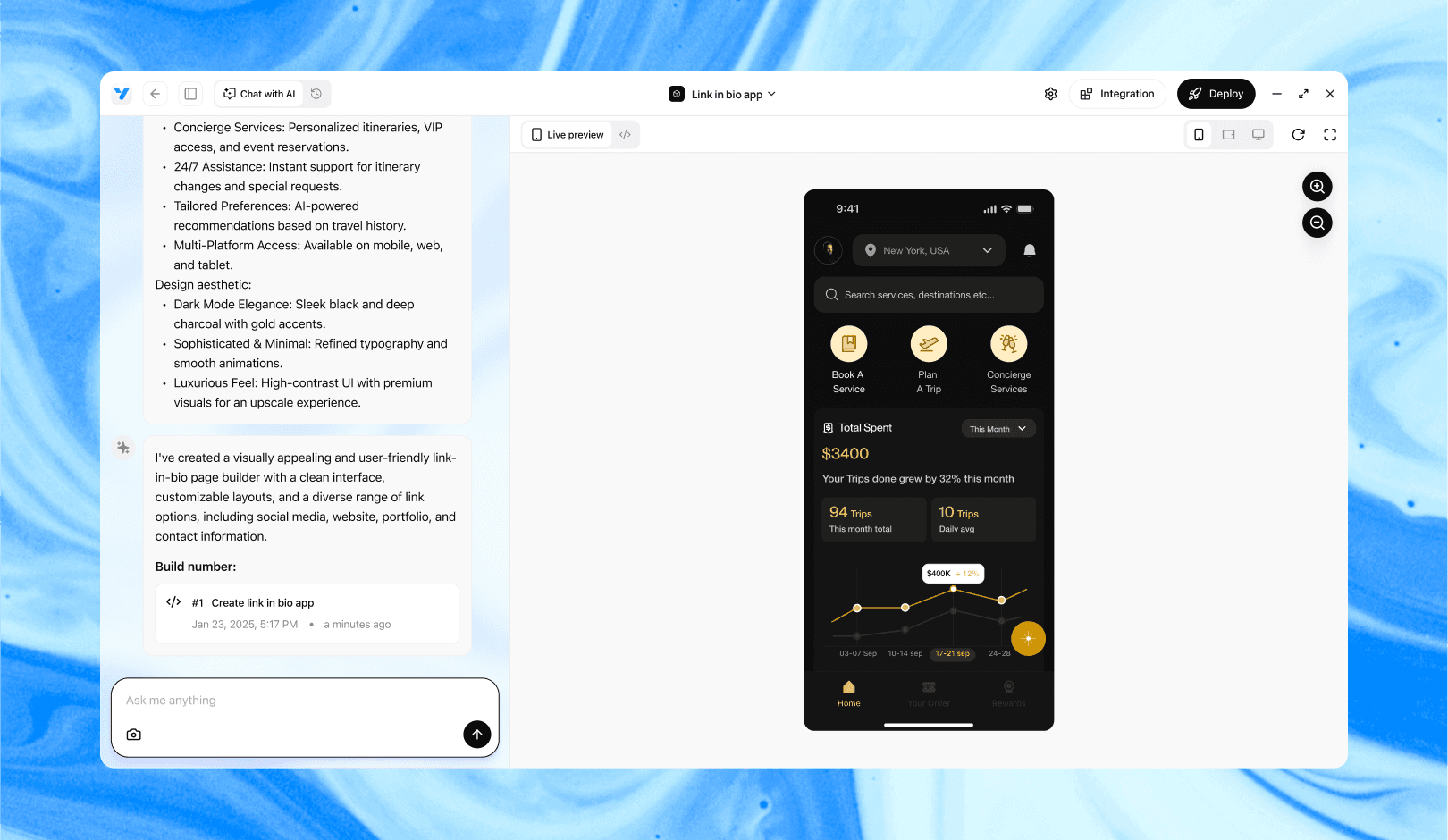
Vibe Studio, powered by Steve’s advanced AI agents, is a revolutionary no-code, conversational platform that empowers users to quickly and efficiently create full-stack Flutter applications integrated seamlessly with Firebase backend services. Ideal for solo founders, startups, and agile engineering teams, Vibe Studio allows users to visually manage and deploy Flutter apps, greatly accelerating the development process. The intuitive conversational interface simplifies complex development tasks, making app creation accessible even for non-coders.

Conclusion

Maintaining clean, scalable Flutter UIs is about discipline: prefer composition, use the right layout primitives, create small reusable presentational widgets, and design with constraints and responsiveness in mind. Apply const constructors, minimize rebuilds, and centralize design tokens (spacing, colors, typography) to keep codebases consistent as they grow. These practices improve collaboration, testing, and the long-term health of your Flutter mobile development projects.

Introduction

Clean, maintainable UI code is essential in Flutter mobile development. Flutter’s composition model encourages small widgets, but that can lead to deep, hard-to-read widget trees. This tutorial presents pragmatic layout best practices to keep your UI code readable, testable, and performant while producing consistent, responsive interfaces.

Use Composition Over Nesting

Favor small, single-responsibility widgets instead of deeply nested anonymous widget trees. Break complex layouts into named widgets with clear responsibilities (presentation vs. behavior). This makes debug output, hot-reload iteration, and unit/widget testing easier.

Example: extract a card’s header into its own stateless widget.

class ProfileHeader extends StatelessWidget {
  final String name;
  const ProfileHeader({Key? key, required this.name}) : super(key: key);

  @override
  Widget build(BuildContext context) => Row(
    children: [CircleAvatar(), SizedBox(width: 12), Text(name)],
  );
}

Using const constructors where possible reduces rebuild costs and signals immutability. Keep behavioral code (state, event handlers) at a higher widget level; keep presentational widgets pure.

Prefer Layout Widgets Over Padding Tricks

Rely on layout primitives (Row, Column, Flex, Expanded, Spacer, Align, ConstrainedBox) rather than crafting ad-hoc padding and sized boxes to force positioning. They communicate intent and are more robust across screen sizes.

  • Use Expanded/Flexible to distribute space inside Flex containers instead of calculating widths.

  • Use Align and FractionallySizedBox to position elements relative to parent bounds.

  • Avoid multiple nested Containers for spacing — use Padding and SizedBox where semantic.

Be cautious with IntrinsicWidth/IntrinsicHeight; they measure twice and hurt performance. Prefer constraints via ConstrainedBox or LayoutBuilder.

Create Reusable Presentational Widgets

Design widgets that are easy to reuse and test by isolating visual concerns: colors, typography, spacing, and layout. Accept configuration via parameters (for contents, callbacks, style overrides) and provide sensible defaults using Theme data.

  • Centralize spacing and typography in a design system file or via Theme extensions.

  • Prefer composition of smaller presentational widgets (Icon + Label, Badge) over copying layout code.

  • Keep build() methods short and declarative — if a widget’s build grows beyond ~20–30 lines, extract a child widget.

Reusable widgets also simplify accessibility: manage semantics and focus handling once inside the reusable component.

Leverage Constraints And Responsive Design

Understand Flutter’s box model: parents impose constraints, children pick sizes. Use LayoutBuilder or MediaQuery to adapt layouts for different screen sizes and orientations. Avoid hard-coded sizes where possible; prefer relative sizing or constrained maximums.

Example using LayoutBuilder to switch layout for narrow widths:

Widget build(BuildContext context) {
  return LayoutBuilder(builder: (context, constraints) {
    if (constraints.maxWidth < 600) {
      return Column(children: children);
    }
    return Row(children: children);
  });
}

For truly responsive apps, create breakpoints in one place and reuse them. Use Flexible widgets to gracefully adapt within a range instead of rigid size thresholds.

Vibe Studio

Vibe Studio, powered by Steve’s advanced AI agents, is a revolutionary no-code, conversational platform that empowers users to quickly and efficiently create full-stack Flutter applications integrated seamlessly with Firebase backend services. Ideal for solo founders, startups, and agile engineering teams, Vibe Studio allows users to visually manage and deploy Flutter apps, greatly accelerating the development process. The intuitive conversational interface simplifies complex development tasks, making app creation accessible even for non-coders.

Conclusion

Maintaining clean, scalable Flutter UIs is about discipline: prefer composition, use the right layout primitives, create small reusable presentational widgets, and design with constraints and responsiveness in mind. Apply const constructors, minimize rebuilds, and centralize design tokens (spacing, colors, typography) to keep codebases consistent as they grow. These practices improve collaboration, testing, and the long-term health of your Flutter mobile development projects.

Build Flutter Apps Faster with Vibe Studio

Build Flutter Apps Faster with Vibe Studio

Build Flutter Apps Faster with Vibe Studio

Build Flutter Apps Faster with Vibe Studio

Vibe Studio is your AI-powered Flutter development companion. Skip boilerplate, build in real-time, and deploy without hassle. Start creating apps at lightning speed with zero setup.

Vibe Studio is your AI-powered Flutter development companion. Skip boilerplate, build in real-time, and deploy without hassle. Start creating apps at lightning speed with zero setup.

Vibe Studio is your AI-powered Flutter development companion. Skip boilerplate, build in real-time, and deploy without hassle. Start creating apps at lightning speed with zero setup.

Vibe Studio is your AI-powered Flutter development companion. Skip boilerplate, build in real-time, and deploy without hassle. Start creating apps at lightning speed with zero setup.

Other Insights

Other Insights

Other Insights

Other Insights

Join a growing community of builders today

Join a growing community of builders today

Join a growing community of builders today

Join a growing community of builders today

Join a growing community of builders today

28-07 Jackson Ave

Walturn

New York NY 11101 United States

© Steve • All Rights Reserved 2025

28-07 Jackson Ave

Walturn

New York NY 11101 United States

© Steve • All Rights Reserved 2025

28-07 Jackson Ave

Walturn

New York NY 11101 United States

© Steve • All Rights Reserved 2025

28-07 Jackson Ave

Walturn

New York NY 11101 United States

© Steve • All Rights Reserved 2025

28-07 Jackson Ave

Walturn

New York NY 11101 United States

© Steve • All Rights Reserved 2025

28-07 Jackson Ave

Walturn

New York NY 11101 United States

© Steve • All Rights Reserved 2025