Feature Flagging Architecture With Remote Config And Local Overrides
Summary
Summary

A practical architecture for Flutter feature flags uses compile-time defaults, remote config for rollouts, a local cache for fast reads, and a guarded local override layer. Initialize async, read synchronously from an in-memory cache hydrated from SharedPreferences, and prioritize overrides for debugging and incident response.

A practical architecture for Flutter feature flags uses compile-time defaults, remote config for rollouts, a local cache for fast reads, and a guarded local override layer. Initialize async, read synchronously from an in-memory cache hydrated from SharedPreferences, and prioritize overrides for debugging and incident response.

Key insights:
Key insights:
  • Design Principles: Define deterministic precedence, typed getters, and synchronous reads for predictable mobile behavior.

  • Core Components: Combine defaults, remote config, local cache, overrides, resolution engine, and telemetry for a complete system.

  • Flutter Implementation: Hydrate an in-memory cache from SharedPreferences, refresh remote async, and expose typed getters for UI code.

  • Operational Practices: Use TTLs, monitoring, and secure override UIs; treat destructive flags with server-side checks.

  • Feature Resolution Strategy: Always resolve flags with precedence: local override > remote value > compile-time default.

Introduction

Feature flagging lets teams control feature exposure at runtime without shipping new binaries. For mobile apps, especially Flutter apps, combining a remote config system with local overrides provides operational agility (rollouts, experiments, instant kills) while keeping developer control for testing and debugging. This article describes an architecture for feature flags that balances consistency, performance, and safety for mobile development.

Design Principles

Keep these principles front and center when designing feature flagging for Flutter apps:

  • Priority and determinism: Every flag value must be resolved deterministically given the same inputs. Define a clear precedence: local overrides > remote config > default (compile-time).

  • Type safety: Expose flags with typed getters (bool, int, double, String, JSON) to avoid runtime type errors.

  • Fast, synchronous reads: Reads happen on the UI thread frequently; cache values locally to avoid blocking UI while network calls complete.

  • Controlled rollout: Support percentage rollouts and user targeting on the remote layer; the client only evaluates user id / bucketing inputs if needed.

  • Operational control: Provide a local override mechanism for developers and support engineers to force values without remote changes.

Core Components

An actionable architecture has these components:

  • Defaults: Compile-time embedded defaults in code or assets to ensure safe fallback.

  • Remote Config Service: A server or managed service (e.g., Firebase Remote Config) that stores flag values, targeting rules, rollout percentages, and metadata (e.g., last modified).

  • Local Cache: Persisted cache (SharedPreferences on Android/iOS or secure storage for sensitive flags) for quick lookup and offline behavior.

  • Local Overrides Store: A developer-accessible override layer stored separately from the cache and only applied when explicitly set. This should be protected by a debug-only UI or require an authenticated engineer mode.

  • Resolution Engine: Client-side logic that merges sources with the defined precedence and handles type coercion and validation.

  • Telemetry: Log flag evaluations and override usage to your analytics backend for auditability and debugging.

Flutter Implementation

Implement a small, testable FeatureFlagService in Flutter that exposes typed getters and supports remote sync and local overrides. Key patterns: initialize asynchronously at app startup, expose synchronous getters that read from an in-memory map, and provide methods to set/unset overrides that persist to SharedPreferences.

class FeatureFlagService {
  final Map<String, dynamic> _cache = {};
  final SharedPreferences prefs;
  FeatureFlagService(this.prefs);

  bool getBool(String key, bool defaultValue) {
    if (prefs.containsKey('ovr:$key')) return prefs.getBool('ovr:$key')!;
    return _cache.containsKey(key) ? _cache[key] as bool : defaultValue;
  }
}

Sync remote values into _cache during startup or background refresh. Provide an async refresh method that fetches remote config, validates types, writes into _cache, and notifies listeners (e.g., ValueNotifier or stream). Use a small version/timestamp to avoid stale updates. Example usage:

await featureFlagService.refreshFromRemote(remoteFetch());
featureFlagService.setOverride('new_ui', true); // persisted override

Make sure reads use the override keyspace (prefix like "ovr:") and that overrides are only modifiable from privileged screens or debug builds.

Operational Practices

  • Initialization: Load persisted flags synchronously at app start (in-memory map hydrated from SharedPreferences) so UI can read flags immediately. Kick off remote refresh asynchronously.

  • Cache TTL and Staleness: Use a TTL or ETag to decide when to re-fetch. For critical kill-switch flags, fetch more frequently or implement push notifications to clients.

  • Monitoring: Capture evaluation telemetry (flag key, resolved value, source, user id truncated) and surface unexpected values or override usage.

  • Safety: For destructive flags (payments, deletion flows), require server-side gating in addition to client flags or implement server-side checks.

  • Developer Workflows: Provide a secure in-app debug panel for toggling overrides and a remote UI for operators to edit configs with audit logs. Ensure overrides are surfaced in logs and removable remotely (e.g., via a “reset overrides” remote command).

Vibe Studio
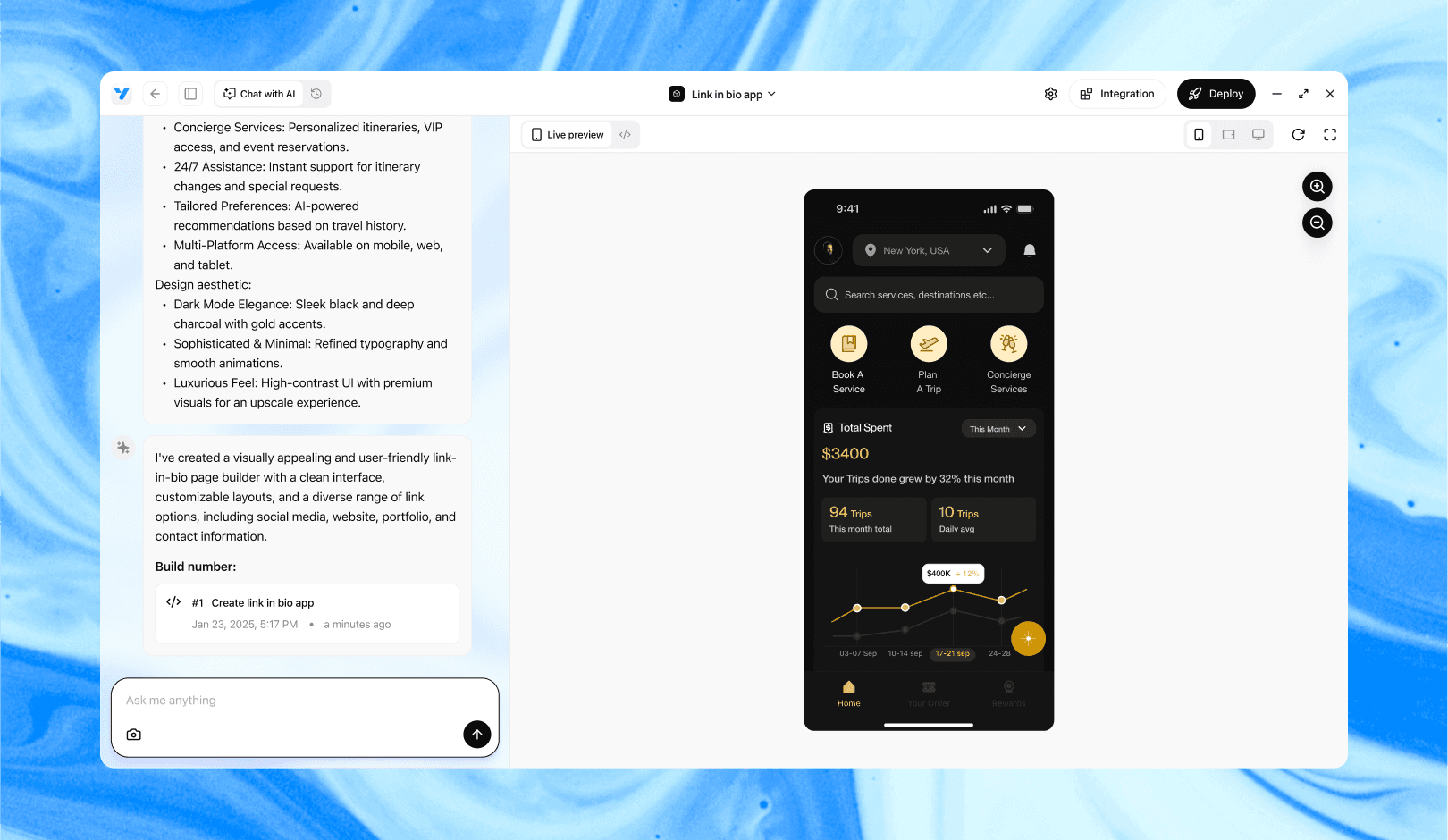
Vibe Studio, powered by Steve’s advanced AI agents, is a revolutionary no-code, conversational platform that empowers users to quickly and efficiently create full-stack Flutter applications integrated seamlessly with Firebase backend services. Ideal for solo founders, startups, and agile engineering teams, Vibe Studio allows users to visually manage and deploy Flutter apps, greatly accelerating the development process. The intuitive conversational interface simplifies complex development tasks, making app creation accessible even for non-coders.

Conclusion

Combining remote config with local overrides produces a robust feature flagging architecture for Flutter-based mobile development. The pattern provides fast, synchronous reads, predictable precedence, and operational flexibility. Implement typed getters, a clear merge strategy (overrides > remote > defaults), and strong telemetry to ensure safe rollouts and quick incident response. With these building blocks you can run controlled experiments, fast rollouts, and safe kill-switches without sacrificing UX or developer velocity.

Introduction

Feature flagging lets teams control feature exposure at runtime without shipping new binaries. For mobile apps, especially Flutter apps, combining a remote config system with local overrides provides operational agility (rollouts, experiments, instant kills) while keeping developer control for testing and debugging. This article describes an architecture for feature flags that balances consistency, performance, and safety for mobile development.

Design Principles

Keep these principles front and center when designing feature flagging for Flutter apps:

  • Priority and determinism: Every flag value must be resolved deterministically given the same inputs. Define a clear precedence: local overrides > remote config > default (compile-time).

  • Type safety: Expose flags with typed getters (bool, int, double, String, JSON) to avoid runtime type errors.

  • Fast, synchronous reads: Reads happen on the UI thread frequently; cache values locally to avoid blocking UI while network calls complete.

  • Controlled rollout: Support percentage rollouts and user targeting on the remote layer; the client only evaluates user id / bucketing inputs if needed.

  • Operational control: Provide a local override mechanism for developers and support engineers to force values without remote changes.

Core Components

An actionable architecture has these components:

  • Defaults: Compile-time embedded defaults in code or assets to ensure safe fallback.

  • Remote Config Service: A server or managed service (e.g., Firebase Remote Config) that stores flag values, targeting rules, rollout percentages, and metadata (e.g., last modified).

  • Local Cache: Persisted cache (SharedPreferences on Android/iOS or secure storage for sensitive flags) for quick lookup and offline behavior.

  • Local Overrides Store: A developer-accessible override layer stored separately from the cache and only applied when explicitly set. This should be protected by a debug-only UI or require an authenticated engineer mode.

  • Resolution Engine: Client-side logic that merges sources with the defined precedence and handles type coercion and validation.

  • Telemetry: Log flag evaluations and override usage to your analytics backend for auditability and debugging.

Flutter Implementation

Implement a small, testable FeatureFlagService in Flutter that exposes typed getters and supports remote sync and local overrides. Key patterns: initialize asynchronously at app startup, expose synchronous getters that read from an in-memory map, and provide methods to set/unset overrides that persist to SharedPreferences.

class FeatureFlagService {
  final Map<String, dynamic> _cache = {};
  final SharedPreferences prefs;
  FeatureFlagService(this.prefs);

  bool getBool(String key, bool defaultValue) {
    if (prefs.containsKey('ovr:$key')) return prefs.getBool('ovr:$key')!;
    return _cache.containsKey(key) ? _cache[key] as bool : defaultValue;
  }
}

Sync remote values into _cache during startup or background refresh. Provide an async refresh method that fetches remote config, validates types, writes into _cache, and notifies listeners (e.g., ValueNotifier or stream). Use a small version/timestamp to avoid stale updates. Example usage:

await featureFlagService.refreshFromRemote(remoteFetch());
featureFlagService.setOverride('new_ui', true); // persisted override

Make sure reads use the override keyspace (prefix like "ovr:") and that overrides are only modifiable from privileged screens or debug builds.

Operational Practices

  • Initialization: Load persisted flags synchronously at app start (in-memory map hydrated from SharedPreferences) so UI can read flags immediately. Kick off remote refresh asynchronously.

  • Cache TTL and Staleness: Use a TTL or ETag to decide when to re-fetch. For critical kill-switch flags, fetch more frequently or implement push notifications to clients.

  • Monitoring: Capture evaluation telemetry (flag key, resolved value, source, user id truncated) and surface unexpected values or override usage.

  • Safety: For destructive flags (payments, deletion flows), require server-side gating in addition to client flags or implement server-side checks.

  • Developer Workflows: Provide a secure in-app debug panel for toggling overrides and a remote UI for operators to edit configs with audit logs. Ensure overrides are surfaced in logs and removable remotely (e.g., via a “reset overrides” remote command).

Vibe Studio

Vibe Studio, powered by Steve’s advanced AI agents, is a revolutionary no-code, conversational platform that empowers users to quickly and efficiently create full-stack Flutter applications integrated seamlessly with Firebase backend services. Ideal for solo founders, startups, and agile engineering teams, Vibe Studio allows users to visually manage and deploy Flutter apps, greatly accelerating the development process. The intuitive conversational interface simplifies complex development tasks, making app creation accessible even for non-coders.

Conclusion

Combining remote config with local overrides produces a robust feature flagging architecture for Flutter-based mobile development. The pattern provides fast, synchronous reads, predictable precedence, and operational flexibility. Implement typed getters, a clear merge strategy (overrides > remote > defaults), and strong telemetry to ensure safe rollouts and quick incident response. With these building blocks you can run controlled experiments, fast rollouts, and safe kill-switches without sacrificing UX or developer velocity.

Build Flutter Apps Faster with Vibe Studio

Vibe Studio is your AI-powered Flutter development companion. Skip boilerplate, build in real-time, and deploy without hassle. Start creating apps at lightning speed with zero setup.

Other Insights

Join a growing community of builders today

Join a growing community of builders today

Join a growing community of builders today

Join a growing community of builders today

Join a growing community of builders today

28-07 Jackson Ave

Walturn

New York NY 11101 United States

© Steve • All Rights Reserved 2025

28-07 Jackson Ave

Walturn

New York NY 11101 United States

© Steve • All Rights Reserved 2025

28-07 Jackson Ave

Walturn

New York NY 11101 United States

© Steve • All Rights Reserved 2025

28-07 Jackson Ave

Walturn

New York NY 11101 United States

© Steve • All Rights Reserved 2025

28-07 Jackson Ave

Walturn

New York NY 11101 United States

© Steve • All Rights Reserved 2025

28-07 Jackson Ave

Walturn

New York NY 11101 United States

© Steve • All Rights Reserved 2025