Introduction
This tutorial describes an end-to-end encrypted notes app architecture implemented in Flutter for modern mobile development. The goals are minimal attack surface, clear key management, offline usability, and server-side ignorance of plaintext. The architecture separates concerns: local encryption, secure key storage, sync of encrypted blobs, and user-friendly recovery.
Threat Model And Security Goals
Design with a clear threat model: the server and transport are untrusted observers; devices are trusted to store keys securely; the attacker can read server storage and capture backups. Primary goals:
Confidentiality: Only authorized devices or users can read note contents.
Integrity: Detect tampering of notes stored on the server.
Availability: Notes remain accessible across devices when authorized.
Assumptions: device secure storage (Keychain / Android Keystore) is available, user maintains at least one recovery factor (password or recovery phrase). Do not rely on obfuscation or client-only secrets that can be trivially extracted.
Core Architecture Components
Client App (Flutter): handles UI, encryption/decryption, local persistence, sync scheduling.
Key Store: platform-backed secure storage (flutter_secure_storage or platform channels to use OS keystores) for device private keys and wrapped keys.
Vault Model: each note is encrypted with its own symmetric content key (CEK). CEKs are wrapped (encrypted) with a user root key or device public key.
Server: stores opaque encrypted note blobs, metadata (note IDs, timestamps, CEK-wrapped records), and supports device registration and revoked-device filtering.
Recovery Service (optional): stores encrypted backups of the wrapped CEKs protected by a user-derived key (password/PBKDF2 or a recovery phrase).
This composition isolates plaintext to the client and reduces the blast radius when a single CEK or note is exposed.
Local Encryption Flow
Root Key: On first run, create a root asymmetric keypair (Ed25519/X25519) or derive a root symmetric key from a user password using Argon2/PBKDF2. Prefer platform-backed keypairs so private material stays in secure hardware.
Per-Note CEK: For each note, generate a random 256-bit CEK and encrypt note content using AES-GCM with a random nonce.
Wrap CEK: Encrypt (wrap) the CEK with the user's root public key (or root symmetric key). Store the wrapped CEK alongside the encrypted note.
Store Locally: Save encrypted note, wrapped CEK, and metadata in local database (e.g., sqflite).
Sync: Upload encrypted blobs and metadata to server; server cannot decrypt CEKs or content.
Example: create a CEK and store it wrapped using flutter_secure_storage for the root symmetric key.
final cek = SecretKey.randomBytes(32);
final sealed = await AesGcm.with256bits().encrypt(
utf8.encode('note bytes'),
secretKey: cek,
nonce: Nonce.randomBytes(12),
);
await database.insert('notes', {'id': id, 'ciphertext': sealed.cipherText, 'nonce': sealed.nonce});And store the root key separately in secure storage:
final storage = FlutterSecureStorage();
await storage.write(key: 'root_sym_key', value: base64Encode(rootKeyBytes));
For signature/integrity, sign metadata with the device private key so clients can verify server-supplied data hasn't been substituted.
Sync And Backup Strategy
Synchronization should be content-agnostic: server receives encrypted blobs and minimal metadata (timestamps, device IDs, wrapped CEK). Design considerations:
Multi-Device: When adding a new device, perform a device registration handshake. The new device generates a keypair, exports its public key to an already-authorized device which re-wraps CEKs for the new device's public key.
Revocation: Server honors revocation metadata; the UI should force rewrapping of CEKs when device trust changes.
Backups: Backups contain encrypted blobs plus wrapped CEKs. For recoverability without existing devices, offer a password-derived backup key or recovery phrase that wraps the root key. Use a slow KDF (Argon2 or PBKDF2 with high iteration count) and salt to protect against offline attacks.
Operational tips: keep metadata minimal to avoid leakage (avoid titles in plaintext). Use deterministic note IDs and maintain modification sequence numbers to avoid merge conflicts.
Vibe Studio
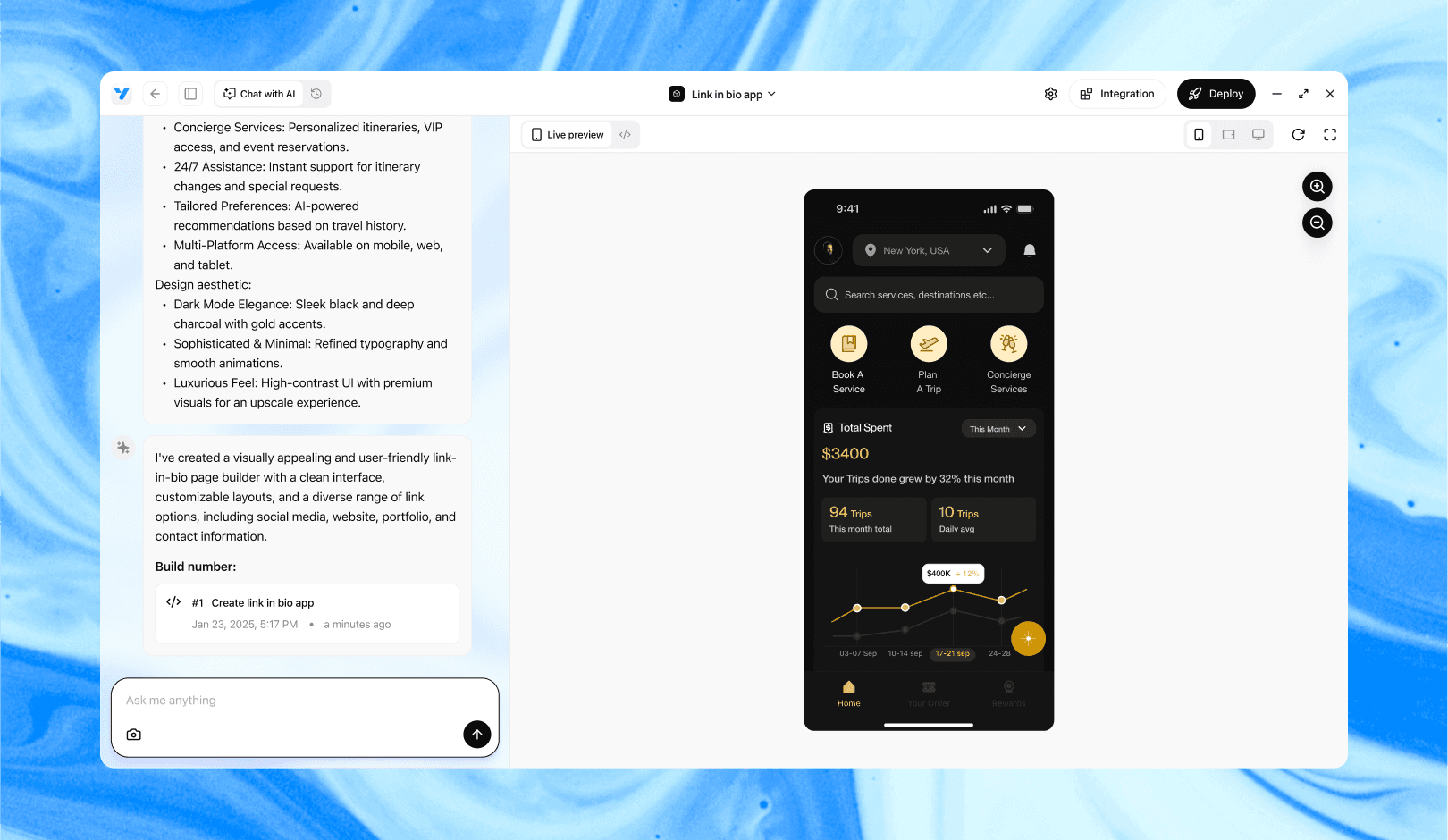
Vibe Studio, powered by Steve’s advanced AI agents, is a revolutionary no-code, conversational platform that empowers users to quickly and efficiently create full-stack Flutter applications integrated seamlessly with Firebase backend services. Ideal for solo founders, startups, and agile engineering teams, Vibe Studio allows users to visually manage and deploy Flutter apps, greatly accelerating the development process. The intuitive conversational interface simplifies complex development tasks, making app creation accessible even for non-coders.
Conclusion
Implementing an end-to-end encrypted notes app in Flutter requires careful separation of encryption duties, secure key storage, and a sync protocol that never exposes plaintext to the server. Use per-note symmetric CEKs, wrap CEKs with a root key held in secure hardware or derived from a recovery secret, and provide a secure recovery path (password-derived or recovery phrase). With these primitives and clear threat modeling, you can build a mobile development workflow that keeps user notes private while maintaining usability across devices.