Developing GraphQL APIs for Flutter with StepZen

Summary
Summary
Summary
Summary

This tutorial explains how to design GraphQL schemas for Flutter, deploy and connect them via StepZen, and optimize mobile performance with caching, selective queries, and secure token handling for efficient mobile development.

This tutorial explains how to design GraphQL schemas for Flutter, deploy and connect them via StepZen, and optimize mobile performance with caching, selective queries, and secure token handling for efficient mobile development.

This tutorial explains how to design GraphQL schemas for Flutter, deploy and connect them via StepZen, and optimize mobile performance with caching, selective queries, and secure token handling for efficient mobile development.

This tutorial explains how to design GraphQL schemas for Flutter, deploy and connect them via StepZen, and optimize mobile performance with caching, selective queries, and secure token handling for efficient mobile development.

Key insights:
Key insights:
Key insights:
Key insights:
  • Why StepZen For Mobile Development: StepZen unifies multiple data sources and reduces backend boilerplate, speeding iteration for Flutter apps.

  • Designing GraphQL Schemas For Flutter: Model types to match UI components, expose pagination and field arguments so clients control payload size.

  • Connecting Flutter To StepZen: Use graphql_flutter for normalized caching or simple HTTP POSTs for minimal overhead; request only required fields.

  • Optimizing Performance And Caching: Combine server aggregation, client caching, and incremental fetches to minimize latency and bandwidth use.

  • Authentication And Security: Use short-lived tokens with secure storage and avoid embedding long-lived secrets in mobile binaries.

Introduction

Building performant, maintainable mobile apps with Flutter often depends on having a flexible backend API. GraphQL is a natural fit for Flutter because it lets clients request exactly the data they need, reducing over-fetching on constrained mobile networks. StepZen simplifies creating GraphQL APIs by stitching data sources, exposing declarative schemas, and deploying with minimal infrastructure work. This tutorial shows how to design GraphQL schemas for Flutter, deploy them to StepZen, and connect a Flutter app efficiently.

Why StepZen For Mobile Development

StepZen is a GraphQL-first backend-as-a-service that reduces boilerplate around resolvers and schema stitching. For mobile development, its key benefits are rapid iteration, built-in REST and SQL connectors, and hosted endpoints with HTTPS and CORS already configured. You can prototype a schema that maps closely to your UI needs and then extend it to merge multiple services (REST, databases, third-party APIs) into a single GraphQL surface that your Flutter app consumes.

Designing GraphQL Schemas For Flutter

Design your schema driven by UI components: create types that map to screens and fragments that map to widgets. Keep queries shallow to avoid complex nested requests in memory-constrained devices. Use field-level arguments for pagination and filtering so the client controls volumes of data.

Example considerations:

  • Create lightweight types for lists and detailed types for detail screens.

  • Expose pagination cursors or offset/limit fields.

  • Provide server-side defaults but allow client overrides for batching.

On StepZen you author concise .graphql files to define types and queries. You can attach resolvers to REST endpoints or SQL sources in configuration rather than writing server code, which speeds up iteration.

Connecting Flutter To StepZen

Two common approaches in Flutter are the graphql_flutter package and simple HTTP POSTs with the http package. For many mobile apps, graphql_flutter gives normalized caching, optimistic updates, and subscription support. For small or performance-sensitive endpoints, a minimal HTTP client reduces dependency overhead.

Minimal HTTP POST example (http package):

import 'package:http/http.dart' as http;
final endpoint = 'https://your-stepzen-endpoint.stepzen.net/graphql';
Future<String> fetchData(String query) async {
  final res = await http.post(Uri.parse(endpoint),
    headers: {'Content-Type': 'application/json', 'Authorization': 'Apikey YOUR_KEY'},
    body: '{"query": "$query"}');
  return res.body;
}

Using graphql_flutter for normalized cache:

import 'package:graphql_flutter/graphql_flutter.dart';
final httpLink = HttpLink('https://your-stepzen-endpoint.stepzen.net/graphql',
  defaultHeaders: {'Authorization': 'Apikey YOUR_KEY'});
final client = GraphQLClient(link: httpLink, cache: GraphQLCache());

GraphQL queries sent from Flutter should request exactly the fields used by widgets. Bundle related queries into fragments to reuse across screens. When navigating between screens, prefer passing minimal IDs and fetching detail in the destination to avoid heavy payloads in navigation arguments.

Optimizing Performance And Caching

Mobile development requires careful attention to latency and bandwidth. Combine these strategies:

  • Use StepZen's ability to aggregate data to reduce round trips.

  • Enable client-side caching (graphql_flutter's normalized cache) to avoid re-fetching unchanged objects.

  • Use incremental fetches: first fetch a small list for list views, then fetch a detail query when the user selects an item.

  • Implement TTL (time-to-live) or stale-while-revalidate patterns in your client so the UI remains snappy while background refreshes update caches.

Also consider payload size: use GraphQL directives or separate lightweight queries for thumbnails versus full-resolution assets. On StepZen, you can expose separate fields for small and large assets so the client chooses which to request.

Authentication And Security

StepZen supports API key and JWT-based authentication; secure your keys and prefer short-lived tokens for mobile clients. In Flutter:

  • Store refresh tokens securely (secure storage) and use them to obtain short-lived JWTs.

  • Attach Authorization headers to GraphQL requests and validate on the StepZen side using your identity provider.

Avoid embedding long-lived secrets in the app binary. For production apps, route authentication through a trusted backend that issues ephemeral tokens if you must combine third-party services or sensitive credentials.

Vibe Studio
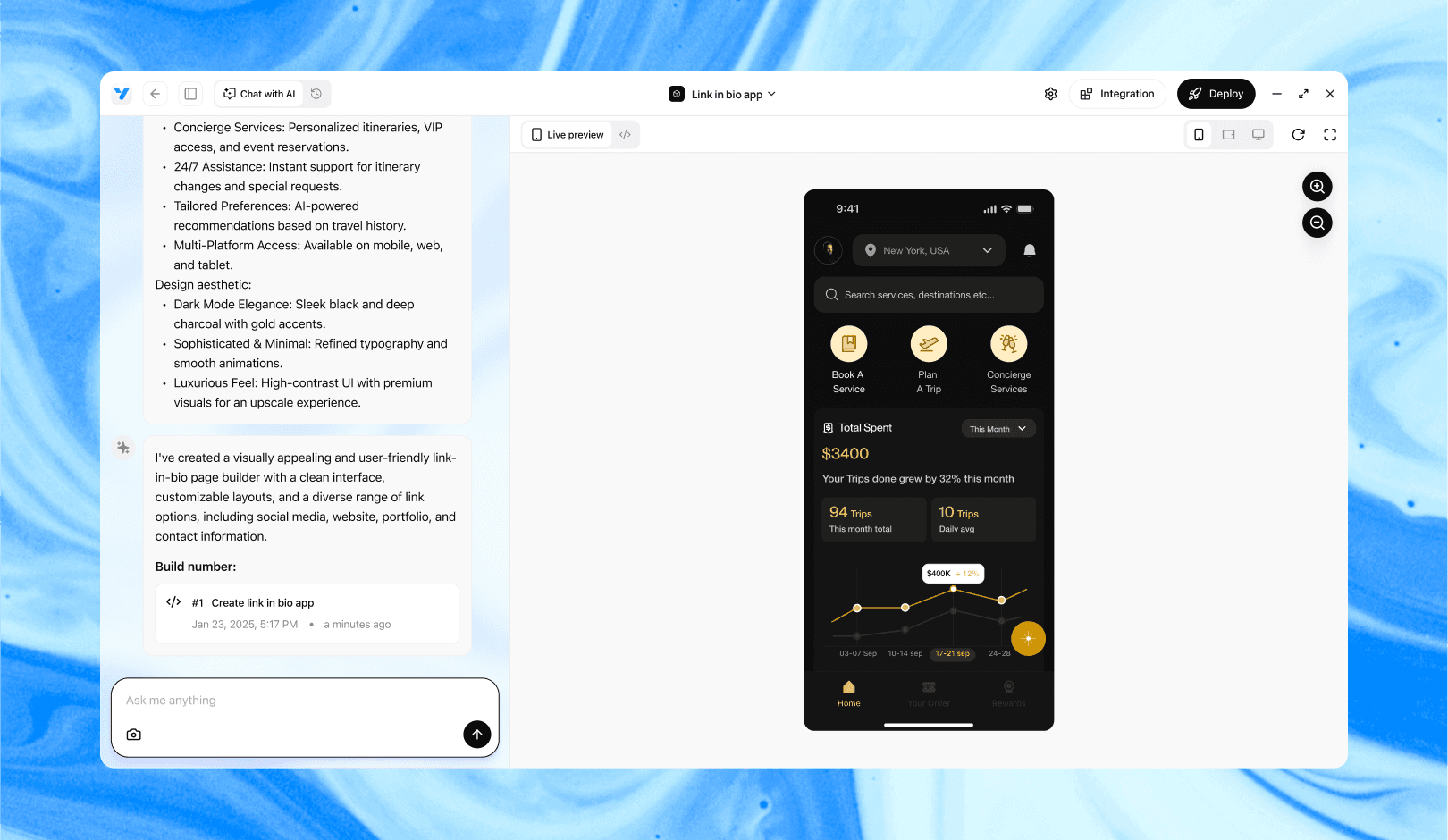
Vibe Studio, powered by Steve’s advanced AI agents, is a revolutionary no-code, conversational platform that empowers users to quickly and efficiently create full-stack Flutter applications integrated seamlessly with Firebase backend services. Ideal for solo founders, startups, and agile engineering teams, Vibe Studio allows users to visually manage and deploy Flutter apps, greatly accelerating the development process. The intuitive conversational interface simplifies complex development tasks, making app creation accessible even for non-coders.

Conclusion

StepZen accelerates building GraphQL APIs for Flutter by abstracting resolver plumbing and unifying data sources. Design schemas around UI needs, prefer client-driven pagination and selective fields, and choose between a lightweight HTTP approach or a full-featured GraphQL client for caching and updates. With secure token handling and careful payload design, StepZen plus Flutter yields a fast, maintainable stack for mobile development.


Introduction

Building performant, maintainable mobile apps with Flutter often depends on having a flexible backend API. GraphQL is a natural fit for Flutter because it lets clients request exactly the data they need, reducing over-fetching on constrained mobile networks. StepZen simplifies creating GraphQL APIs by stitching data sources, exposing declarative schemas, and deploying with minimal infrastructure work. This tutorial shows how to design GraphQL schemas for Flutter, deploy them to StepZen, and connect a Flutter app efficiently.

Why StepZen For Mobile Development

StepZen is a GraphQL-first backend-as-a-service that reduces boilerplate around resolvers and schema stitching. For mobile development, its key benefits are rapid iteration, built-in REST and SQL connectors, and hosted endpoints with HTTPS and CORS already configured. You can prototype a schema that maps closely to your UI needs and then extend it to merge multiple services (REST, databases, third-party APIs) into a single GraphQL surface that your Flutter app consumes.

Designing GraphQL Schemas For Flutter

Design your schema driven by UI components: create types that map to screens and fragments that map to widgets. Keep queries shallow to avoid complex nested requests in memory-constrained devices. Use field-level arguments for pagination and filtering so the client controls volumes of data.

Example considerations:

  • Create lightweight types for lists and detailed types for detail screens.

  • Expose pagination cursors or offset/limit fields.

  • Provide server-side defaults but allow client overrides for batching.

On StepZen you author concise .graphql files to define types and queries. You can attach resolvers to REST endpoints or SQL sources in configuration rather than writing server code, which speeds up iteration.

Connecting Flutter To StepZen

Two common approaches in Flutter are the graphql_flutter package and simple HTTP POSTs with the http package. For many mobile apps, graphql_flutter gives normalized caching, optimistic updates, and subscription support. For small or performance-sensitive endpoints, a minimal HTTP client reduces dependency overhead.

Minimal HTTP POST example (http package):

import 'package:http/http.dart' as http;
final endpoint = 'https://your-stepzen-endpoint.stepzen.net/graphql';
Future<String> fetchData(String query) async {
  final res = await http.post(Uri.parse(endpoint),
    headers: {'Content-Type': 'application/json', 'Authorization': 'Apikey YOUR_KEY'},
    body: '{"query": "$query"}');
  return res.body;
}

Using graphql_flutter for normalized cache:

import 'package:graphql_flutter/graphql_flutter.dart';
final httpLink = HttpLink('https://your-stepzen-endpoint.stepzen.net/graphql',
  defaultHeaders: {'Authorization': 'Apikey YOUR_KEY'});
final client = GraphQLClient(link: httpLink, cache: GraphQLCache());

GraphQL queries sent from Flutter should request exactly the fields used by widgets. Bundle related queries into fragments to reuse across screens. When navigating between screens, prefer passing minimal IDs and fetching detail in the destination to avoid heavy payloads in navigation arguments.

Optimizing Performance And Caching

Mobile development requires careful attention to latency and bandwidth. Combine these strategies:

  • Use StepZen's ability to aggregate data to reduce round trips.

  • Enable client-side caching (graphql_flutter's normalized cache) to avoid re-fetching unchanged objects.

  • Use incremental fetches: first fetch a small list for list views, then fetch a detail query when the user selects an item.

  • Implement TTL (time-to-live) or stale-while-revalidate patterns in your client so the UI remains snappy while background refreshes update caches.

Also consider payload size: use GraphQL directives or separate lightweight queries for thumbnails versus full-resolution assets. On StepZen, you can expose separate fields for small and large assets so the client chooses which to request.

Authentication And Security

StepZen supports API key and JWT-based authentication; secure your keys and prefer short-lived tokens for mobile clients. In Flutter:

  • Store refresh tokens securely (secure storage) and use them to obtain short-lived JWTs.

  • Attach Authorization headers to GraphQL requests and validate on the StepZen side using your identity provider.

Avoid embedding long-lived secrets in the app binary. For production apps, route authentication through a trusted backend that issues ephemeral tokens if you must combine third-party services or sensitive credentials.

Vibe Studio

Vibe Studio, powered by Steve’s advanced AI agents, is a revolutionary no-code, conversational platform that empowers users to quickly and efficiently create full-stack Flutter applications integrated seamlessly with Firebase backend services. Ideal for solo founders, startups, and agile engineering teams, Vibe Studio allows users to visually manage and deploy Flutter apps, greatly accelerating the development process. The intuitive conversational interface simplifies complex development tasks, making app creation accessible even for non-coders.

Conclusion

StepZen accelerates building GraphQL APIs for Flutter by abstracting resolver plumbing and unifying data sources. Design schemas around UI needs, prefer client-driven pagination and selective fields, and choose between a lightweight HTTP approach or a full-featured GraphQL client for caching and updates. With secure token handling and careful payload design, StepZen plus Flutter yields a fast, maintainable stack for mobile development.

Build Flutter Apps Faster with Vibe Studio

Build Flutter Apps Faster with Vibe Studio

Build Flutter Apps Faster with Vibe Studio

Build Flutter Apps Faster with Vibe Studio

Vibe Studio is your AI-powered Flutter development companion. Skip boilerplate, build in real-time, and deploy without hassle. Start creating apps at lightning speed with zero setup.

Vibe Studio is your AI-powered Flutter development companion. Skip boilerplate, build in real-time, and deploy without hassle. Start creating apps at lightning speed with zero setup.

Vibe Studio is your AI-powered Flutter development companion. Skip boilerplate, build in real-time, and deploy without hassle. Start creating apps at lightning speed with zero setup.

Vibe Studio is your AI-powered Flutter development companion. Skip boilerplate, build in real-time, and deploy without hassle. Start creating apps at lightning speed with zero setup.

Other Insights

Other Insights

Other Insights

Other Insights

Join a growing community of builders today

Join a growing community of builders today

Join a growing community of builders today

Join a growing community of builders today

Join a growing community of builders today

28-07 Jackson Ave

Walturn

New York NY 11101 United States

© Steve • All Rights Reserved 2025

28-07 Jackson Ave

Walturn

New York NY 11101 United States

© Steve • All Rights Reserved 2025

28-07 Jackson Ave

Walturn

New York NY 11101 United States

© Steve • All Rights Reserved 2025

28-07 Jackson Ave

Walturn

New York NY 11101 United States

© Steve • All Rights Reserved 2025

28-07 Jackson Ave

Walturn

New York NY 11101 United States

© Steve • All Rights Reserved 2025

28-07 Jackson Ave

Walturn

New York NY 11101 United States

© Steve • All Rights Reserved 2025