Designing Micro-Interactions in Flutter Using Tween Animations

Summary
Summary
Summary
Summary

This tutorial demonstrates how to design micro-interactions in Flutter using Tween animations. It covers principles, quick patterns with TweenAnimationBuilder, complex sequences with AnimationController and TweenSequence, practical examples for buttons, toggles, and lists, and performance and accessibility considerations for mobile development.

This tutorial demonstrates how to design micro-interactions in Flutter using Tween animations. It covers principles, quick patterns with TweenAnimationBuilder, complex sequences with AnimationController and TweenSequence, practical examples for buttons, toggles, and lists, and performance and accessibility considerations for mobile development.

This tutorial demonstrates how to design micro-interactions in Flutter using Tween animations. It covers principles, quick patterns with TweenAnimationBuilder, complex sequences with AnimationController and TweenSequence, practical examples for buttons, toggles, and lists, and performance and accessibility considerations for mobile development.

This tutorial demonstrates how to design micro-interactions in Flutter using Tween animations. It covers principles, quick patterns with TweenAnimationBuilder, complex sequences with AnimationController and TweenSequence, practical examples for buttons, toggles, and lists, and performance and accessibility considerations for mobile development.

Key insights:
Key insights:
Key insights:
Key insights:
  • Principles Of Effective Micro-Interactions: Short durations, appropriate easing, and minimal property changes make micro-interactions effective and non-distracting.

  • Using TweenAnimationBuilder For Quick Micro-Interactions: TweenAnimationBuilder provides concise, controller-free animations ideal for local, immediate feedback patterns like press or toggle.

  • Creating Complex Micro-Interactions With AnimationController: AnimationController plus TweenSequence enables coordinated, sequential, and staggered micro-interactions with precise timing.

  • Practical Examples And Patterns: Reusable widgets for pressable scale, color transition, and slide/opacity combos simplify consistent micro-interaction design across an app.

  • Performance And Accessibility Considerations: Animate only composited properties, respect reduced-motion settings, and ensure color transitions preserve contrast for accessibility.

Introduction

Micro-interactions are the tiny, focused moments of feedback and motion that make apps feel alive. In flutter mobile development, well-crafted micro-interactions guide users, confirm actions, and provide delight without distracting from primary tasks. This article shows practical techniques for designing micro-interactions using Tween animations in Flutter—from fast affordances to coordinated multi-property transitions—so you can add polish to buttons, toggles, and lists.

Principles Of Effective Micro-Interactions

Keep micro-interactions short, meaningful, and contextually appropriate. Typical durations range from 100–400ms depending on purpose: faster for confirmation taps, slower for state changes. Use easing curves that match intent: Curves.easeOut for settling, Curves.easeInOut for neutral transitions, and custom Cubic curves for bouncy or elastic behavior. Animate only what matters—opacity, scale, position, color—and avoid animating large layout changes unless necessary. Maintain accessibility: respect reduced-motion user settings and ensure color transitions preserve contrast.

Using TweenAnimationBuilder For Quick Micro-Interactions

TweenAnimationBuilder is ideal for small, self-contained micro-interactions. It’s concise, requires no explicit AnimationController, and handles cleanup for you. Use it where state is local (button press, icon toggle) and when the animation lifecycle is tied to a widget rebuild.

Example: a tap scale + color micro-interaction for a custom button.

TweenAnimationBuilder<double>(
  tween: Tween(begin: 1.0, end: isPressed ? 0.92 : 1.0),
  duration: Duration(milliseconds: 120),
  curve: Curves.easeOut,
  builder: (context, scale, child) => Transform.scale(
    scale: scale,
    child: GestureDetector(onTap: onTap, child: child),
  ),
  child: Container(width: 56, height: 56, decoration: BoxDecoration(color: color, shape: BoxShape.circle)),
)

This pattern gives immediate tactile feedback with minimal code. Combine multiple tweened properties by using a composite Tween (e.g., Tween for scale and Tween for color) or a Tween for an object like Offset and apply both in the builder.

Creating Complex Micro-Interactions With AnimationController

For coordinated sequences, staggered transitions, or nontrivial timing, use AnimationController with Tweens, CurvedAnimation, and TweenSequence. AnimationController provides precise control over direction, speed, and status listeners—useful for onboarding hints, pull-to-refresh affordances, or animated checkmarks.

Example: animate a check icon that scales up, overshoots, and settles while fading in a color.

final controller = AnimationController(vsync: this, duration: Duration(milliseconds: 420));
final scale = TweenSequence([TweenSequenceItem(tween: Tween(begin: .0, end: 1.2), weight: 60), TweenSequenceItem(tween: Tween(begin: 1.2, end: 1.0), weight: 40)]).animate(CurvedAnimation(parent: controller, curve: Curves.easeOut));
final color = ColorTween(begin: Colors.grey, end: Colors.green).animate(controller);
controller.forward();

Use status listeners to chain state changes (e.g., collapse a panel after the success animation completes). Keep controllers disposed in State.dispose to avoid leaks.

Practical Examples And Patterns

Tap Confirmation: Use a brief scale + opacity animation with TweenAnimationBuilder for immediate feedback. Button state toggles often map to color and icon transitions—try animating color with ColorTween and icon rotation with Tween.

Toggle Switches: Animate position using AlignmentTween or FractionalTranslation. Combine with a color crossfade to reinforce state.

List Insertions/Removals: Use SizeTransition or AnimatedSize for layout, and animate item opacity/slide with SlideTransition driven by an AnimationController.

Affordance Hints: For non-critical hints (e.g., a subtle nudge to swipe), loop a short translation animation but reduce motion for users who request reduced motion.

Patterns

  • Single-property micro-interactions: TweenAnimationBuilder. Minimal boilerplate.

  • Coordinated or sequential interactions: AnimationController + TweenSequence.

  • Reusable micro-interaction widgets: wrap a common pattern (e.g., PressableScale) into a widget with parameters for duration and curve.

  • Respect platform conventions in mobile development: Android Material and iOS Cupertino have distinct motion patterns—match user expectations.

Performance And Accessibility Considerations

Keep animations cheap: prefer composited transforms (opacity, scale, translation) to avoid relayout. Profile with Flutter DevTools to spot jank. Provide a way to disable or simplify animations when MediaQuery.of(context).disableAnimations is true (or check platform-specific accessibility APIs). Ensure color transitions maintain contrast ratios and don't rely on motion alone to convey critical state changes.

Vibe Studio
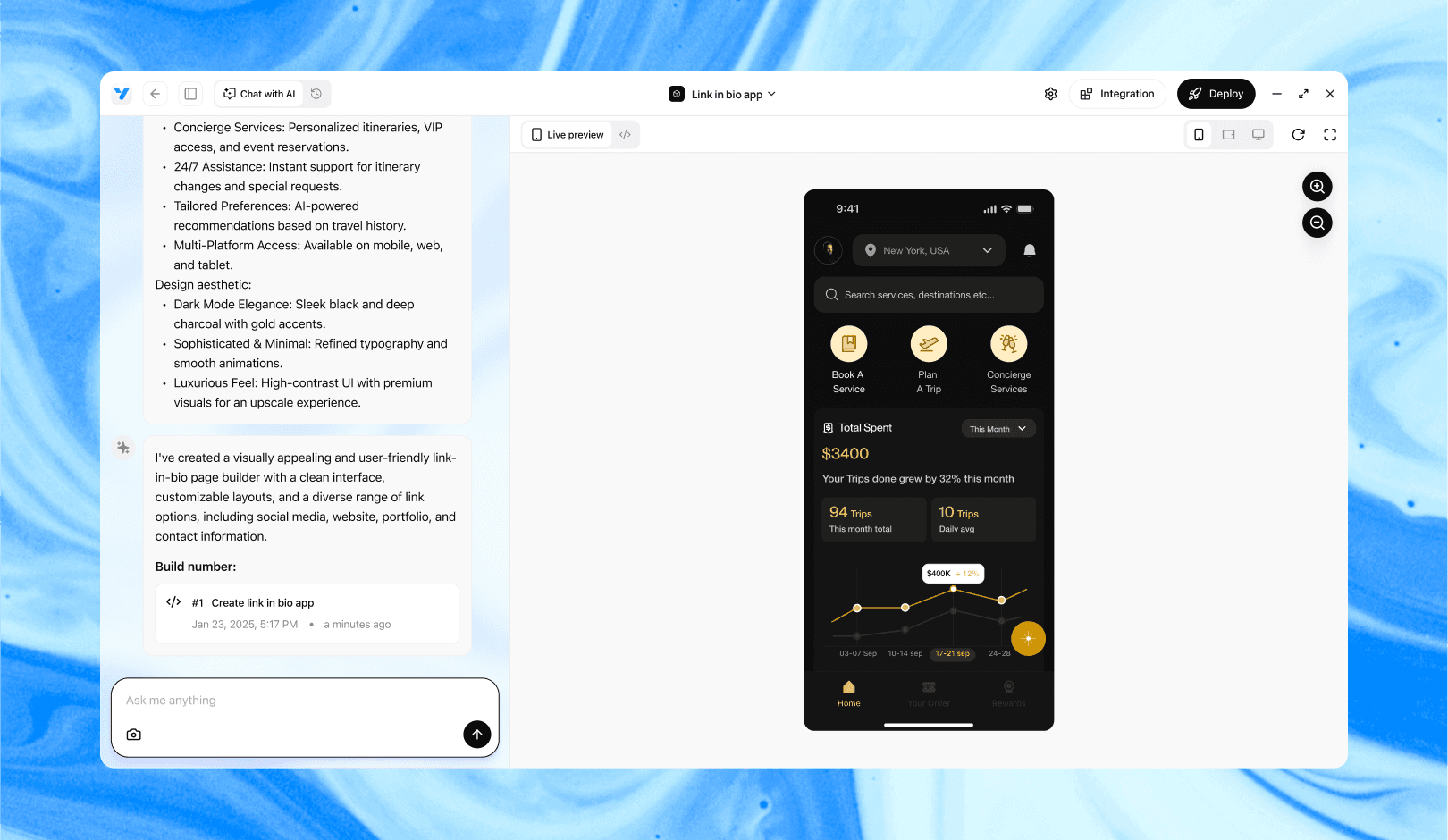
Vibe Studio, powered by Steve’s advanced AI agents, is a revolutionary no-code, conversational platform that empowers users to quickly and efficiently create full-stack Flutter applications integrated seamlessly with Firebase backend services. Ideal for solo founders, startups, and agile engineering teams, Vibe Studio allows users to visually manage and deploy Flutter apps, greatly accelerating the development process. The intuitive conversational interface simplifies complex development tasks, making app creation accessible even for non-coders.

Conclusion

Tween-based animations in Flutter offer a spectrum from quick, declarative micro-interactions with TweenAnimationBuilder to finely controlled, sequenced animations using AnimationController. Apply short durations, thoughtful curves, and single-purpose motion to enhance usability. In flutter mobile development, micro-interactions are a small investment that yields disproportionately large improvements in perceived quality and clarity.

Introduction

Micro-interactions are the tiny, focused moments of feedback and motion that make apps feel alive. In flutter mobile development, well-crafted micro-interactions guide users, confirm actions, and provide delight without distracting from primary tasks. This article shows practical techniques for designing micro-interactions using Tween animations in Flutter—from fast affordances to coordinated multi-property transitions—so you can add polish to buttons, toggles, and lists.

Principles Of Effective Micro-Interactions

Keep micro-interactions short, meaningful, and contextually appropriate. Typical durations range from 100–400ms depending on purpose: faster for confirmation taps, slower for state changes. Use easing curves that match intent: Curves.easeOut for settling, Curves.easeInOut for neutral transitions, and custom Cubic curves for bouncy or elastic behavior. Animate only what matters—opacity, scale, position, color—and avoid animating large layout changes unless necessary. Maintain accessibility: respect reduced-motion user settings and ensure color transitions preserve contrast.

Using TweenAnimationBuilder For Quick Micro-Interactions

TweenAnimationBuilder is ideal for small, self-contained micro-interactions. It’s concise, requires no explicit AnimationController, and handles cleanup for you. Use it where state is local (button press, icon toggle) and when the animation lifecycle is tied to a widget rebuild.

Example: a tap scale + color micro-interaction for a custom button.

TweenAnimationBuilder<double>(
  tween: Tween(begin: 1.0, end: isPressed ? 0.92 : 1.0),
  duration: Duration(milliseconds: 120),
  curve: Curves.easeOut,
  builder: (context, scale, child) => Transform.scale(
    scale: scale,
    child: GestureDetector(onTap: onTap, child: child),
  ),
  child: Container(width: 56, height: 56, decoration: BoxDecoration(color: color, shape: BoxShape.circle)),
)

This pattern gives immediate tactile feedback with minimal code. Combine multiple tweened properties by using a composite Tween (e.g., Tween for scale and Tween for color) or a Tween for an object like Offset and apply both in the builder.

Creating Complex Micro-Interactions With AnimationController

For coordinated sequences, staggered transitions, or nontrivial timing, use AnimationController with Tweens, CurvedAnimation, and TweenSequence. AnimationController provides precise control over direction, speed, and status listeners—useful for onboarding hints, pull-to-refresh affordances, or animated checkmarks.

Example: animate a check icon that scales up, overshoots, and settles while fading in a color.

final controller = AnimationController(vsync: this, duration: Duration(milliseconds: 420));
final scale = TweenSequence([TweenSequenceItem(tween: Tween(begin: .0, end: 1.2), weight: 60), TweenSequenceItem(tween: Tween(begin: 1.2, end: 1.0), weight: 40)]).animate(CurvedAnimation(parent: controller, curve: Curves.easeOut));
final color = ColorTween(begin: Colors.grey, end: Colors.green).animate(controller);
controller.forward();

Use status listeners to chain state changes (e.g., collapse a panel after the success animation completes). Keep controllers disposed in State.dispose to avoid leaks.

Practical Examples And Patterns

Tap Confirmation: Use a brief scale + opacity animation with TweenAnimationBuilder for immediate feedback. Button state toggles often map to color and icon transitions—try animating color with ColorTween and icon rotation with Tween.

Toggle Switches: Animate position using AlignmentTween or FractionalTranslation. Combine with a color crossfade to reinforce state.

List Insertions/Removals: Use SizeTransition or AnimatedSize for layout, and animate item opacity/slide with SlideTransition driven by an AnimationController.

Affordance Hints: For non-critical hints (e.g., a subtle nudge to swipe), loop a short translation animation but reduce motion for users who request reduced motion.

Patterns

  • Single-property micro-interactions: TweenAnimationBuilder. Minimal boilerplate.

  • Coordinated or sequential interactions: AnimationController + TweenSequence.

  • Reusable micro-interaction widgets: wrap a common pattern (e.g., PressableScale) into a widget with parameters for duration and curve.

  • Respect platform conventions in mobile development: Android Material and iOS Cupertino have distinct motion patterns—match user expectations.

Performance And Accessibility Considerations

Keep animations cheap: prefer composited transforms (opacity, scale, translation) to avoid relayout. Profile with Flutter DevTools to spot jank. Provide a way to disable or simplify animations when MediaQuery.of(context).disableAnimations is true (or check platform-specific accessibility APIs). Ensure color transitions maintain contrast ratios and don't rely on motion alone to convey critical state changes.

Vibe Studio

Vibe Studio, powered by Steve’s advanced AI agents, is a revolutionary no-code, conversational platform that empowers users to quickly and efficiently create full-stack Flutter applications integrated seamlessly with Firebase backend services. Ideal for solo founders, startups, and agile engineering teams, Vibe Studio allows users to visually manage and deploy Flutter apps, greatly accelerating the development process. The intuitive conversational interface simplifies complex development tasks, making app creation accessible even for non-coders.

Conclusion

Tween-based animations in Flutter offer a spectrum from quick, declarative micro-interactions with TweenAnimationBuilder to finely controlled, sequenced animations using AnimationController. Apply short durations, thoughtful curves, and single-purpose motion to enhance usability. In flutter mobile development, micro-interactions are a small investment that yields disproportionately large improvements in perceived quality and clarity.

Build Flutter Apps Faster with Vibe Studio

Build Flutter Apps Faster with Vibe Studio

Build Flutter Apps Faster with Vibe Studio

Build Flutter Apps Faster with Vibe Studio

Vibe Studio is your AI-powered Flutter development companion. Skip boilerplate, build in real-time, and deploy without hassle. Start creating apps at lightning speed with zero setup.

Vibe Studio is your AI-powered Flutter development companion. Skip boilerplate, build in real-time, and deploy without hassle. Start creating apps at lightning speed with zero setup.

Vibe Studio is your AI-powered Flutter development companion. Skip boilerplate, build in real-time, and deploy without hassle. Start creating apps at lightning speed with zero setup.

Vibe Studio is your AI-powered Flutter development companion. Skip boilerplate, build in real-time, and deploy without hassle. Start creating apps at lightning speed with zero setup.

Other Insights

Other Insights

Other Insights

Other Insights

Join a growing community of builders today

Join a growing community of builders today

Join a growing community of builders today

Join a growing community of builders today

Join a growing community of builders today

28-07 Jackson Ave

Walturn

New York NY 11101 United States

© Steve • All Rights Reserved 2025

28-07 Jackson Ave

Walturn

New York NY 11101 United States

© Steve • All Rights Reserved 2025

28-07 Jackson Ave

Walturn

New York NY 11101 United States

© Steve • All Rights Reserved 2025

28-07 Jackson Ave

Walturn

New York NY 11101 United States

© Steve • All Rights Reserved 2025

28-07 Jackson Ave

Walturn

New York NY 11101 United States

© Steve • All Rights Reserved 2025

28-07 Jackson Ave

Walturn

New York NY 11101 United States

© Steve • All Rights Reserved 2025