Designing Custom Loaders And Progress Indicators In Flutter

Summary
Summary
Summary
Summary

This tutorial covers principles for loaders in Flutter, when to use built-in widgets, how to build a custom animated loader with AnimationController, connecting progress with Streams or ValueNotifier, and performance/accessibility best practices for mobile development.

This tutorial covers principles for loaders in Flutter, when to use built-in widgets, how to build a custom animated loader with AnimationController, connecting progress with Streams or ValueNotifier, and performance/accessibility best practices for mobile development.

This tutorial covers principles for loaders in Flutter, when to use built-in widgets, how to build a custom animated loader with AnimationController, connecting progress with Streams or ValueNotifier, and performance/accessibility best practices for mobile development.

This tutorial covers principles for loaders in Flutter, when to use built-in widgets, how to build a custom animated loader with AnimationController, connecting progress with Streams or ValueNotifier, and performance/accessibility best practices for mobile development.

Key insights:
Key insights:
Key insights:
Key insights:
  • Principles Of Effective Loaders: Use determinate progress for long tasks, minimize distraction, and show loaders only when meaningful.

  • Built-In Widgets And When To Use Them: Circular/LinearProgressIndicator are performant and accessible defaults; customize before building from scratch.

  • Building A Custom Animated Loader: Use AnimationController and AnimatedBuilder for smooth, efficient animations that avoid unnecessary rebuilds.

  • Progress Indicators With Streams And ValueNotifier: Drive determinate indicators with Stream or ValueNotifier to minimize UI churn.

  • Performance And Accessibility Considerations: Prefer composited transforms, throttle updates, and provide semantic labels and announcements for screen readers.

Introduction

Loaders and progress indicators are a core UX element in mobile development. In Flutter, the default CircularProgressIndicator and LinearProgressIndicator cover many use cases, but custom loaders convey brand, provide contextual feedback, and can improve perceived performance. This article shows principles, built-in options, how to build a lightweight custom animated loader, how to drive progress from streams or ValueNotifiers, and practical performance and accessibility tips.

Principles Of Effective Loaders

Keep loaders purposeful: show them only when work is happening or when the user expects a delay. Avoid indefinite spinners for long operations — give measurable progress where possible. Design considerations:

  • Communicate state: use determinate progress for long tasks; indeterminate for short/unknown-length tasks.

  • Minimize cognitive load: animations should be smooth but not distracting.

  • Respect context: a small inline indicator differs from a full-screen loading state.

These principles guide whether you use built-in widgets or create a custom one.

Built-In Widgets And When To Use Them

Flutter provides CircularProgressIndicator and LinearProgressIndicator. They are simple, performant, follow material guidelines, and accept customization via color, strokeWidth, and value (for determinate progress).

Use them when:

  • You need standard behavior and accessibility out of the box.

  • Determinate progress is available: set value from 0.0 to 1.0.

  • You want minimal code and predictable performance.

Example: a determinate linear progress bar that reacts to a percentage value is often sufficient for file uploads or download progress.

Building A Custom Animated Loader

Custom loaders can be composed from low-level primitives (AnimatedBuilder, CustomPaint, AnimationController). Keep animations efficient: rely on the GPU, avoid rebuilding expensive widgets, and prefer shaders/painting for complex visuals.

Below is a small rotating loader using an AnimationController and AnimatedBuilder. It rotates a child widget smoothly:

class RotatingLoader extends StatefulWidget {
  @override State createState() => _RotatingLoaderState();
}
class _RotatingLoaderState extends State<RotatingLoader>
    with SingleTickerProviderStateMixin {
  late final controller = AnimationController(vsync: this, duration: Duration(seconds: 1))..repeat();
  @override Widget build(BuildContext c) => AnimatedBuilder(
    animation: controller,
    builder: (_, __) => Transform.rotate(
      angle: controller.value * 2 * 3.1416,
      child: Icon(Icons.sync, size: 36),
    ),
  );
  @override void dispose() { controller.dispose(); super.dispose(); }
}

This pattern is lightweight, easy to theme, and avoids rebuilding child widgets unnecessarily.

Progress Indicators With Streams And ValueNotifier

For determinate progress driven by async operations, connect progress UI to reactive primitives. Streams and ValueNotifier are both simple and efficient for mobile development.

  • Use a Stream when progress is emitted over time (downloads, socket transfers).

  • Use ValueNotifier for local state that updates frequently and needs little boilerplate.

Example using ValueListenableBuilder and a ValueNotifier to drive a LinearProgressIndicator:

final progress = ValueNotifier<double>(0.0);
// update progress.value = newPct; from async code
ValueListenableBuilder<double>(
  valueListenable: progress,
  builder: (_, val, __) => LinearProgressIndicator(value: val),
);

This avoids setState churn and keeps rebuilds minimal — only dependent widgets update.

Performance And Accessibility Considerations

Performance

  • Prefer composited animations (Transform, Opacity) rather than heavy rebuilds.

  • Avoid large continuous repaints from CustomPaint; cache where possible and draw only the parts that change.

  • Throttle progress updates: when progress emits extremely frequently, coalesce updates to 30–60fps to keep UI responsive.

Accessibility

  • Provide semantic labels: wrap custom loaders with Semantics(label: 'Loading', value: '50%') or use ExcludeSemantics appropriately.

  • Announce state changes for screen readers when determinate progress crosses meaningful thresholds.

  • Respect platform contrast and color accessibility; allow colors to be overridden by theme or high-contrast modes.

UX

  • For network operations, consider optimistic UX (show partial UI while background tasks continue). Use non-blocking loaders for parts of the UI rather than global full-screen spinners when possible.

Vibe Studio
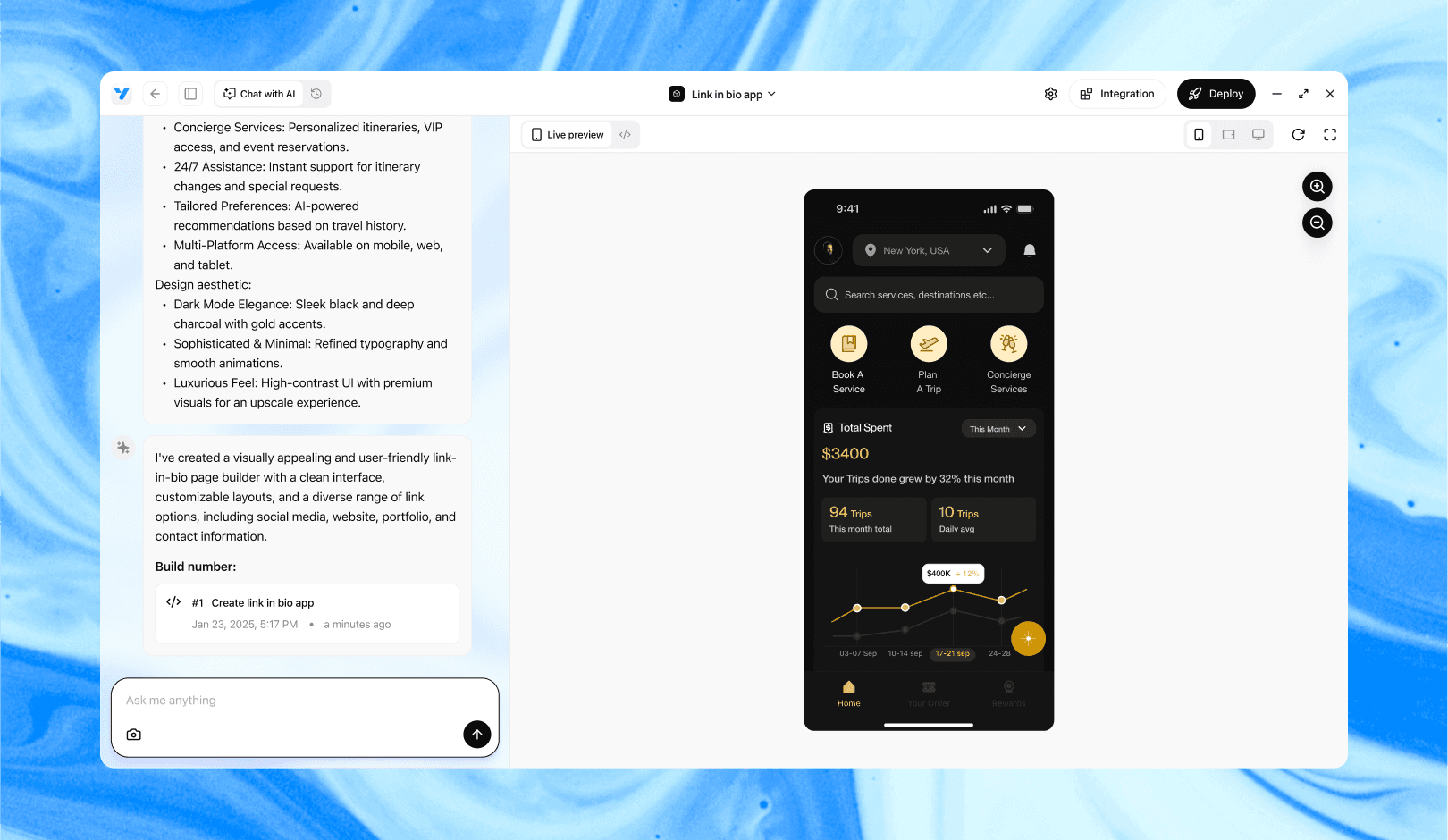
Vibe Studio, powered by Steve’s advanced AI agents, is a revolutionary no-code, conversational platform that empowers users to quickly and efficiently create full-stack Flutter applications integrated seamlessly with Firebase backend services. Ideal for solo founders, startups, and agile engineering teams, Vibe Studio allows users to visually manage and deploy Flutter apps, greatly accelerating the development process. The intuitive conversational interface simplifies complex development tasks, making app creation accessible even for non-coders.

Conclusion

Designing custom loaders in Flutter is about balancing clarity, performance, and brand. Start with built-in widgets for standard behavior, wire determinable work to reactive primitives (Streams, ValueNotifier), and create custom animations only when they add meaning. Keep animations efficient, honor accessibility, and provide clear determinate progress for long-running tasks — these practices improve perceived performance and make mobile apps feel more polished.

Introduction

Loaders and progress indicators are a core UX element in mobile development. In Flutter, the default CircularProgressIndicator and LinearProgressIndicator cover many use cases, but custom loaders convey brand, provide contextual feedback, and can improve perceived performance. This article shows principles, built-in options, how to build a lightweight custom animated loader, how to drive progress from streams or ValueNotifiers, and practical performance and accessibility tips.

Principles Of Effective Loaders

Keep loaders purposeful: show them only when work is happening or when the user expects a delay. Avoid indefinite spinners for long operations — give measurable progress where possible. Design considerations:

  • Communicate state: use determinate progress for long tasks; indeterminate for short/unknown-length tasks.

  • Minimize cognitive load: animations should be smooth but not distracting.

  • Respect context: a small inline indicator differs from a full-screen loading state.

These principles guide whether you use built-in widgets or create a custom one.

Built-In Widgets And When To Use Them

Flutter provides CircularProgressIndicator and LinearProgressIndicator. They are simple, performant, follow material guidelines, and accept customization via color, strokeWidth, and value (for determinate progress).

Use them when:

  • You need standard behavior and accessibility out of the box.

  • Determinate progress is available: set value from 0.0 to 1.0.

  • You want minimal code and predictable performance.

Example: a determinate linear progress bar that reacts to a percentage value is often sufficient for file uploads or download progress.

Building A Custom Animated Loader

Custom loaders can be composed from low-level primitives (AnimatedBuilder, CustomPaint, AnimationController). Keep animations efficient: rely on the GPU, avoid rebuilding expensive widgets, and prefer shaders/painting for complex visuals.

Below is a small rotating loader using an AnimationController and AnimatedBuilder. It rotates a child widget smoothly:

class RotatingLoader extends StatefulWidget {
  @override State createState() => _RotatingLoaderState();
}
class _RotatingLoaderState extends State<RotatingLoader>
    with SingleTickerProviderStateMixin {
  late final controller = AnimationController(vsync: this, duration: Duration(seconds: 1))..repeat();
  @override Widget build(BuildContext c) => AnimatedBuilder(
    animation: controller,
    builder: (_, __) => Transform.rotate(
      angle: controller.value * 2 * 3.1416,
      child: Icon(Icons.sync, size: 36),
    ),
  );
  @override void dispose() { controller.dispose(); super.dispose(); }
}

This pattern is lightweight, easy to theme, and avoids rebuilding child widgets unnecessarily.

Progress Indicators With Streams And ValueNotifier

For determinate progress driven by async operations, connect progress UI to reactive primitives. Streams and ValueNotifier are both simple and efficient for mobile development.

  • Use a Stream when progress is emitted over time (downloads, socket transfers).

  • Use ValueNotifier for local state that updates frequently and needs little boilerplate.

Example using ValueListenableBuilder and a ValueNotifier to drive a LinearProgressIndicator:

final progress = ValueNotifier<double>(0.0);
// update progress.value = newPct; from async code
ValueListenableBuilder<double>(
  valueListenable: progress,
  builder: (_, val, __) => LinearProgressIndicator(value: val),
);

This avoids setState churn and keeps rebuilds minimal — only dependent widgets update.

Performance And Accessibility Considerations

Performance

  • Prefer composited animations (Transform, Opacity) rather than heavy rebuilds.

  • Avoid large continuous repaints from CustomPaint; cache where possible and draw only the parts that change.

  • Throttle progress updates: when progress emits extremely frequently, coalesce updates to 30–60fps to keep UI responsive.

Accessibility

  • Provide semantic labels: wrap custom loaders with Semantics(label: 'Loading', value: '50%') or use ExcludeSemantics appropriately.

  • Announce state changes for screen readers when determinate progress crosses meaningful thresholds.

  • Respect platform contrast and color accessibility; allow colors to be overridden by theme or high-contrast modes.

UX

  • For network operations, consider optimistic UX (show partial UI while background tasks continue). Use non-blocking loaders for parts of the UI rather than global full-screen spinners when possible.

Vibe Studio

Vibe Studio, powered by Steve’s advanced AI agents, is a revolutionary no-code, conversational platform that empowers users to quickly and efficiently create full-stack Flutter applications integrated seamlessly with Firebase backend services. Ideal for solo founders, startups, and agile engineering teams, Vibe Studio allows users to visually manage and deploy Flutter apps, greatly accelerating the development process. The intuitive conversational interface simplifies complex development tasks, making app creation accessible even for non-coders.

Conclusion

Designing custom loaders in Flutter is about balancing clarity, performance, and brand. Start with built-in widgets for standard behavior, wire determinable work to reactive primitives (Streams, ValueNotifier), and create custom animations only when they add meaning. Keep animations efficient, honor accessibility, and provide clear determinate progress for long-running tasks — these practices improve perceived performance and make mobile apps feel more polished.

Build Flutter Apps Faster with Vibe Studio

Build Flutter Apps Faster with Vibe Studio

Build Flutter Apps Faster with Vibe Studio

Build Flutter Apps Faster with Vibe Studio

Vibe Studio is your AI-powered Flutter development companion. Skip boilerplate, build in real-time, and deploy without hassle. Start creating apps at lightning speed with zero setup.

Vibe Studio is your AI-powered Flutter development companion. Skip boilerplate, build in real-time, and deploy without hassle. Start creating apps at lightning speed with zero setup.

Vibe Studio is your AI-powered Flutter development companion. Skip boilerplate, build in real-time, and deploy without hassle. Start creating apps at lightning speed with zero setup.

Vibe Studio is your AI-powered Flutter development companion. Skip boilerplate, build in real-time, and deploy without hassle. Start creating apps at lightning speed with zero setup.

Other Insights

Other Insights

Other Insights

Other Insights

Join a growing community of builders today

Join a growing community of builders today

Join a growing community of builders today

Join a growing community of builders today

Join a growing community of builders today

28-07 Jackson Ave

Walturn

New York NY 11101 United States

© Steve • All Rights Reserved 2025

28-07 Jackson Ave

Walturn

New York NY 11101 United States

© Steve • All Rights Reserved 2025

28-07 Jackson Ave

Walturn

New York NY 11101 United States

© Steve • All Rights Reserved 2025

28-07 Jackson Ave

Walturn

New York NY 11101 United States

© Steve • All Rights Reserved 2025

28-07 Jackson Ave

Walturn

New York NY 11101 United States

© Steve • All Rights Reserved 2025

28-07 Jackson Ave

Walturn

New York NY 11101 United States

© Steve • All Rights Reserved 2025