Dart Collections Deep Dive Lists Sets Maps And Performance Tips
Summary
Summary
Summary
Summary

This tutorial explains Dart's List, Set, and Map with practical guidance for Flutter mobile development. It covers complexity, copying behavior, common patterns (List.of, putIfAbsent), immutability strategies, lazy construction, typed lists for numeric data, and profiling tips to reduce allocations and improve frame performance.

This tutorial explains Dart's List, Set, and Map with practical guidance for Flutter mobile development. It covers complexity, copying behavior, common patterns (List.of, putIfAbsent), immutability strategies, lazy construction, typed lists for numeric data, and profiling tips to reduce allocations and improve frame performance.

This tutorial explains Dart's List, Set, and Map with practical guidance for Flutter mobile development. It covers complexity, copying behavior, common patterns (List.of, putIfAbsent), immutability strategies, lazy construction, typed lists for numeric data, and profiling tips to reduce allocations and improve frame performance.

This tutorial explains Dart's List, Set, and Map with practical guidance for Flutter mobile development. It covers complexity, copying behavior, common patterns (List.of, putIfAbsent), immutability strategies, lazy construction, typed lists for numeric data, and profiling tips to reduce allocations and improve frame performance.

Key insights:
Key insights:
Key insights:
Key insights:
  • Lists: Usage And Features: Use List for ordered data and index access; cloning is shallow with List.of, and insert/remove in the middle is O(n).

  • Sets: Uniqueness And Performance: Sets provide O(1) membership; use them for deduplication and set algebra; prefer LinkedHashSet if order matters.

  • Maps: Keyed Access And Patterns: Maps offer O(1) keyed lookup; use putIfAbsent for caching and avoid unstable objects as keys.

  • Performance Tips For Mobile Development: Minimize per-frame allocations, prefer lazy builders, use const/unmodifiable collections, and profile with DevTools.

  • Copying And Immutability: List.of/Map.from perform shallow copies; use deep copy strategies or immutable collections to avoid unintended aliasing.

Introduction

Dart collections—List, Set, and Map—are the backbone of data handling in Flutter mobile development. Understanding their semantics, time complexities, copying behavior, and memory characteristics helps you write predictable, performant apps. This article is a compact, code-driven deep dive that focuses on practical choices and micro-optimizations for mobile scenarios.

Lists: Usage And Features

List is an ordered collection with index-based access. Dart provides fixed-length and growable lists. Use List when order matters, you need slicing or index access, or you expect many ordered traversals. Common operations:

  • index access: O(1)

  • add (growable): amortized O(1)

  • insert/remove at arbitrary index: O(n)

Prefer List.of or spread (...) to clone a list instead of manual loops. For UI updates in Flutter, avoid rebuilding large lists unnecessarily; use ListView.builder for lazily built widgets.

Example: basic operations and copying


Sets: Uniqueness And Performance

Set enforces uniqueness and offers fast membership tests. A default Set is a hash-based implementation, so:

  • lookup/insert/remove: average O(1)

  • iteration order: unspecified for default HashSet (LinkedHashSet preserves insertion order)

Use Set when membership, deduplication, or set algebra (union/intersection/difference) matter. For small collections and when order matters, prefer LinkedHashSet (the default literal {}). If you need a sorted set, maintain a separate data structure or use package:collection for helpers.

Maps: Keyed Access And Patterns

Map is a key-value store with average O(1) lookup. Keys must be unique; equality and hashCode determine key identity. Dart maps are generally hash-based; LinkedHashMap preserves insertion order which is useful for consistent UI rendering.

Common patterns:

  • Use map literals for small static maps.

  • Use putIfAbsent when constructing or caching values lazily.

  • Avoid using complex objects as keys unless stable hashCode/== are implemented.

Example: caching with putIfAbsent

final cache = <String, int>{};
int computeLen(String s) => s.length;
int len = cache.putIfAbsent('hello', () => computeLen('hello'));

Performance Tips For Mobile Development

Prefer the right collection for the job: List for sequence+index, Set for membership/deduplication, Map for keyed access. Choosing incorrectly often incurs O(n) penalties.

Minimize allocations on frames: avoid creating new large Lists/Maps inside build() or per-frame loops. Reuse or cache immutable copies where possible.

Use const and unmodifiable views: const collections are canonicalized and reduce GC churn. For runtime immutability, use UnmodifiableListView/Map from dart:collection to signal intent and prevent accidental mutation.

Favor lazy construction: ListView.builder, Iterable.map (lazy until consumed), and generators avoid building full intermediate collections.

Shallow vs deep copies: List.of and Map.from do shallow copies—references to contained objects remain shared. For complex objects, implement clone methods or use serialization when you need deep copies.

Choose equality carefully: overriding == and hashCode for map keys affects lookup performance. Use primitive keys (int, String) when possible for predictable behavior.

Use profiling tools: the Flutter DevTools memory and performance tabs show allocation hotspots and GC activity; fix hot paths by reducing churn or switching algorithms (e.g., index lists vs maps).

Consider typed lists for performance-sensitive numerical data: Uint8List, Float64List reduce memory and improve native interop, especially when manipulating binary data.

Vibe Studio
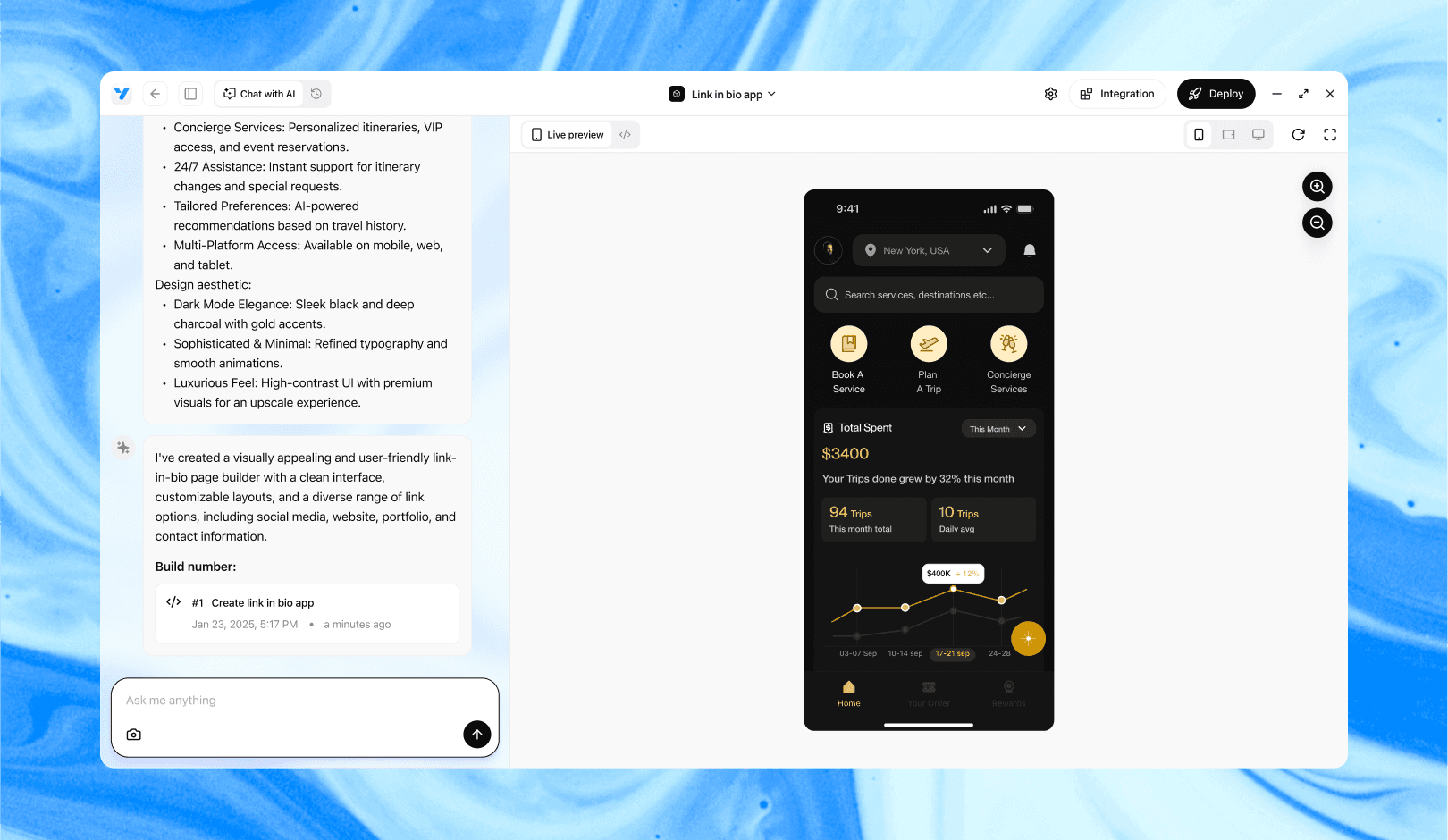
Vibe Studio, powered by Steve’s advanced AI agents, is a revolutionary no-code, conversational platform that empowers users to quickly and efficiently create full-stack Flutter applications integrated seamlessly with Firebase backend services. Ideal for solo founders, startups, and agile engineering teams, Vibe Studio allows users to visually manage and deploy Flutter apps, greatly accelerating the development process. The intuitive conversational interface simplifies complex development tasks, making app creation accessible even for non-coders.

Conclusion

Mastering Dart collections requires knowing semantics, complexity, and copying behavior. In Flutter mobile development, small choices—List vs Set vs Map, const vs growable, shallow vs deep copy—affect frame budgets and memory pressure. Use the right collection, minimize allocations in the render path, prefer lazy constructs, and profile to validate optimizations. These practices produce more responsive, efficient mobile apps.

Introduction

Dart collections—List, Set, and Map—are the backbone of data handling in Flutter mobile development. Understanding their semantics, time complexities, copying behavior, and memory characteristics helps you write predictable, performant apps. This article is a compact, code-driven deep dive that focuses on practical choices and micro-optimizations for mobile scenarios.

Lists: Usage And Features

List is an ordered collection with index-based access. Dart provides fixed-length and growable lists. Use List when order matters, you need slicing or index access, or you expect many ordered traversals. Common operations:

  • index access: O(1)

  • add (growable): amortized O(1)

  • insert/remove at arbitrary index: O(n)

Prefer List.of or spread (...) to clone a list instead of manual loops. For UI updates in Flutter, avoid rebuilding large lists unnecessarily; use ListView.builder for lazily built widgets.

Example: basic operations and copying


Sets: Uniqueness And Performance

Set enforces uniqueness and offers fast membership tests. A default Set is a hash-based implementation, so:

  • lookup/insert/remove: average O(1)

  • iteration order: unspecified for default HashSet (LinkedHashSet preserves insertion order)

Use Set when membership, deduplication, or set algebra (union/intersection/difference) matter. For small collections and when order matters, prefer LinkedHashSet (the default literal {}). If you need a sorted set, maintain a separate data structure or use package:collection for helpers.

Maps: Keyed Access And Patterns

Map is a key-value store with average O(1) lookup. Keys must be unique; equality and hashCode determine key identity. Dart maps are generally hash-based; LinkedHashMap preserves insertion order which is useful for consistent UI rendering.

Common patterns:

  • Use map literals for small static maps.

  • Use putIfAbsent when constructing or caching values lazily.

  • Avoid using complex objects as keys unless stable hashCode/== are implemented.

Example: caching with putIfAbsent

final cache = <String, int>{};
int computeLen(String s) => s.length;
int len = cache.putIfAbsent('hello', () => computeLen('hello'));

Performance Tips For Mobile Development

Prefer the right collection for the job: List for sequence+index, Set for membership/deduplication, Map for keyed access. Choosing incorrectly often incurs O(n) penalties.

Minimize allocations on frames: avoid creating new large Lists/Maps inside build() or per-frame loops. Reuse or cache immutable copies where possible.

Use const and unmodifiable views: const collections are canonicalized and reduce GC churn. For runtime immutability, use UnmodifiableListView/Map from dart:collection to signal intent and prevent accidental mutation.

Favor lazy construction: ListView.builder, Iterable.map (lazy until consumed), and generators avoid building full intermediate collections.

Shallow vs deep copies: List.of and Map.from do shallow copies—references to contained objects remain shared. For complex objects, implement clone methods or use serialization when you need deep copies.

Choose equality carefully: overriding == and hashCode for map keys affects lookup performance. Use primitive keys (int, String) when possible for predictable behavior.

Use profiling tools: the Flutter DevTools memory and performance tabs show allocation hotspots and GC activity; fix hot paths by reducing churn or switching algorithms (e.g., index lists vs maps).

Consider typed lists for performance-sensitive numerical data: Uint8List, Float64List reduce memory and improve native interop, especially when manipulating binary data.

Vibe Studio

Vibe Studio, powered by Steve’s advanced AI agents, is a revolutionary no-code, conversational platform that empowers users to quickly and efficiently create full-stack Flutter applications integrated seamlessly with Firebase backend services. Ideal for solo founders, startups, and agile engineering teams, Vibe Studio allows users to visually manage and deploy Flutter apps, greatly accelerating the development process. The intuitive conversational interface simplifies complex development tasks, making app creation accessible even for non-coders.

Conclusion

Mastering Dart collections requires knowing semantics, complexity, and copying behavior. In Flutter mobile development, small choices—List vs Set vs Map, const vs growable, shallow vs deep copy—affect frame budgets and memory pressure. Use the right collection, minimize allocations in the render path, prefer lazy constructs, and profile to validate optimizations. These practices produce more responsive, efficient mobile apps.

Build Flutter Apps Faster with Vibe Studio

Vibe Studio is your AI-powered Flutter development companion. Skip boilerplate, build in real-time, and deploy without hassle. Start creating apps at lightning speed with zero setup.

Other Insights

Join a growing community of builders today

Join a growing community of builders today

Join a growing community of builders today

Join a growing community of builders today

Join a growing community of builders today

28-07 Jackson Ave

Walturn

New York NY 11101 United States

© Steve • All Rights Reserved 2025

28-07 Jackson Ave

Walturn

New York NY 11101 United States

© Steve • All Rights Reserved 2025

28-07 Jackson Ave

Walturn

New York NY 11101 United States

© Steve • All Rights Reserved 2025

28-07 Jackson Ave

Walturn

New York NY 11101 United States

© Steve • All Rights Reserved 2025

28-07 Jackson Ave

Walturn

New York NY 11101 United States

© Steve • All Rights Reserved 2025

28-07 Jackson Ave

Walturn

New York NY 11101 United States

© Steve • All Rights Reserved 2025