Creating Multi-Platform Flutter Apps for Mobile
Dec 1, 2025


Summary
Summary
Summary
Summary
This insight explains how to structure a Flutter project for multi-platform mobile development: configure platform targets, design adaptive UIs with LayoutBuilder and breakpoints, encapsulate native integrations via plugins or MethodChannels, and apply testing and release best practices. Emphasize composable widgets, platform-appropriate controls, CI for builds, and performance profiling to deliver polished apps.
Key insights:
Key insights:
Key insights:
Key insights:
Project Setup And Configuration: Centralize platform differences with flavors/schemes and keep platform files minimal to maintain a single source of truth.
Adaptive UI And Layout: Use LayoutBuilder, breakpoints, and scalable typography to build UIs that adapt across phones, tablets, and foldables.
Platform Integration And Plugins: Prefer community plugins; encapsulate native calls behind Dart interfaces and use MethodChannel when necessary.
Testing, Performance, And Release: Combine unit, widget, and integration tests; profile with DevTools and automate releases with CI/CD.
Cross-Platform Mobile Considerations: Account for permissions, input differences, localization, and accessibility to deliver native-feeling experiences.
Introduction
Flutter is an efficient SDK for building high-quality mobile apps that run on Android and iOS from a single codebase. Creating multi-platform mobile apps means more than compiling for two OS targets: it requires adaptive layouts, platform-specific integrations, testing across form factors, and careful performance tuning. This tutorial walks through a pragmatic approach to building mobile-first multi-platform Flutter apps with concrete techniques and short code examples.
Project Setup And Configuration
Start with a single Flutter project and configure it for both Android and iOS. Use flavors (Android) and schemes (iOS) to produce different builds (dev, staging, prod). Keep platform-specific configuration minimal and centralized:
Use Flutter's pubspec.yaml to manage dependencies.
Maintain per-platform files in android/ and ios/ only for OS integration (push, deep links, permissions).
Use platform-specific Gradle or Xcode settings to configure signing, app icons, and entitlements.
Use package_info_plus and device_info_plus to detect runtime platform and environment where needed. For CI, set up fastlane for iOS and Gradle for Android to automate signing and deployment.
Adaptive UI And Layout
Responsive design is essential for multi-platform mobile apps: phone vs. tablet vs. foldable. Prefer composable responsive widgets over hard-coded dimensions. Use LayoutBuilder and MediaQuery to adapt layouts at runtime and design for breakpoints.
Example: responsive two-column layout for wide screens and single column for narrow screens.
Widget build(BuildContext context) {
return LayoutBuilder(builder: (context, constraints) {
if (constraints.maxWidth > 600) {
return Row(children: [Expanded(child: Master()), Expanded(child: Detail())]);
}
return Column(children: [Master(), Detail()]);
});
}Design patterns to follow:
Adaptive widgets: show platform-appropriate controls (Cupertino vs Material) where UX expectations differ.
Breakpoints: pick sensible breakpoints (e.g., 600dp) and test on multiple simulated device sizes.
Scalable typography and spacing: use ThemeData.textTheme and relative units based on MediaQuery.textScaleFactor.
Platform Integration And Plugins
Most platform APIs are available via plugins. Evaluate community packages first (camera, geolocator, local_auth). For cases not covered, use MethodChannel for native code.
Best practices:
Encapsulate platform logic behind a Dart interface; keep platform channels in a single file per feature.
Use existing federated plugin architectures for maintainability.
Handle runtime permissions gracefully and explain why permissions are needed.
Short example of a simple abstraction for invoking native code (conceptual):
static const _channel = MethodChannel('com.example/native');
Future<String> getNativeValue() async => await _channel.invokeMethod('getValue');Keep platform-specific UI small; prefer Flutter UI unless deep native UI is required for a feature.
Testing, Performance, And Release
Testing across platforms and form factors reduces regressions:
Unit tests for business logic.
Widget tests for UI behavior with different screen sizes.
Integration tests for end-to-end flows using flutter_driver or integration_test.
Profiling and performance:
Use DevTools for CPU and memory profiling.
Optimize builds: split debug and release behaviors, avoid excessive rebuilds (use const widgets, value equality, and keys correctly).
Reduce package bloat: prefer lightweight libraries and tree-shakable code.
Release checklist:
Build release artifacts for both platforms.
Verify app size and remove unused assets.
Configure platform-specific privacy strings, permissions, and background modes.
Use CI/CD to automate tests and deployments.
Vibe Studio
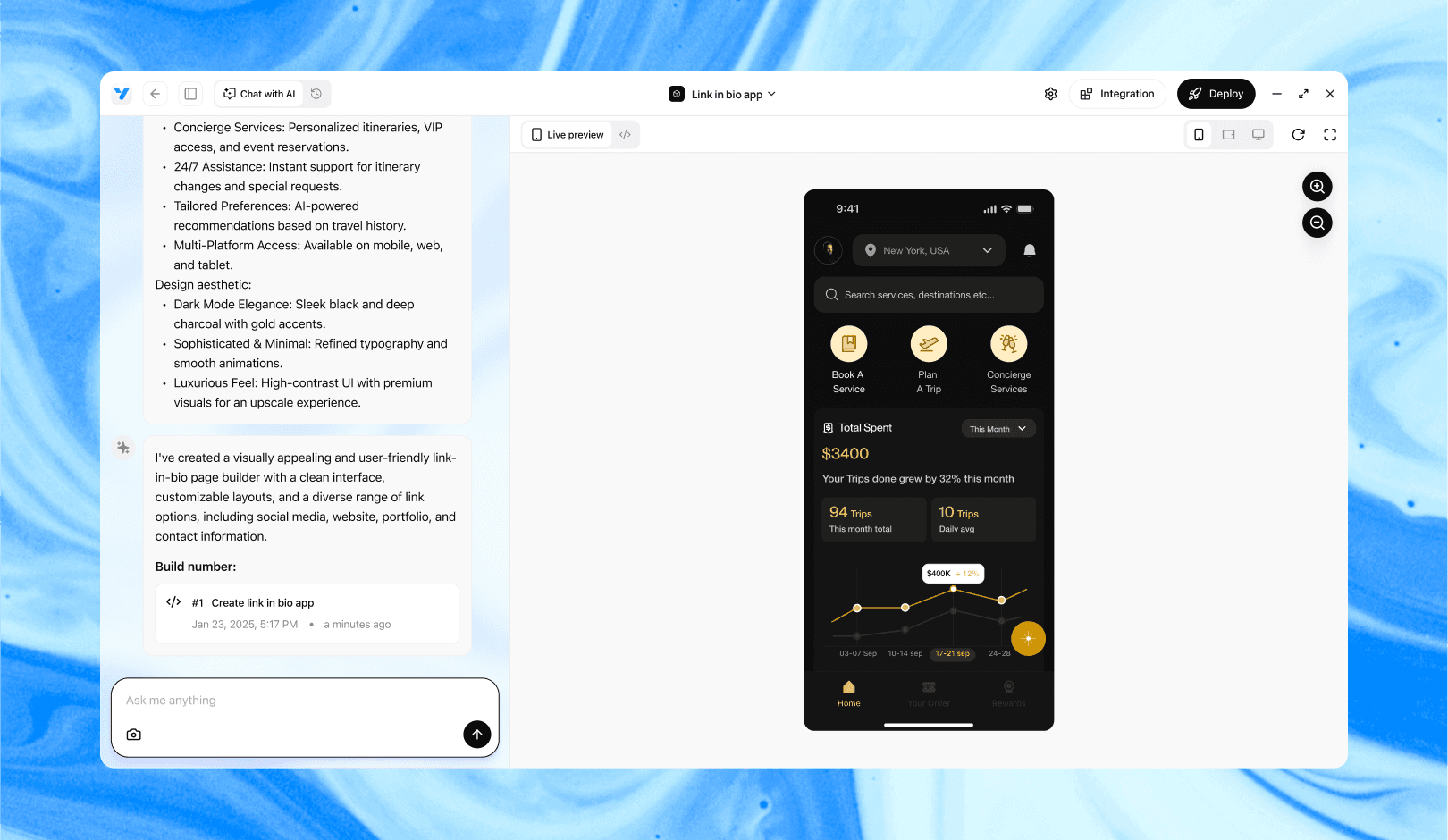
Vibe Studio, powered by Steve’s advanced AI agents, is a revolutionary no-code, conversational platform that empowers users to quickly and efficiently create full-stack Flutter applications integrated seamlessly with Firebase backend services. Ideal for solo founders, startups, and agile engineering teams, Vibe Studio allows users to visually manage and deploy Flutter apps, greatly accelerating the development process. The intuitive conversational interface simplifies complex development tasks, making app creation accessible even for non-coders.
Conclusion
Creating multi-platform Flutter apps for mobile requires a deliberate approach: set up a single project with clear platform boundaries, build adaptive UIs that respond to screen size and input methods, encapsulate native integrations, and establish robust testing and CI workflows. Focus on composable, testable widgets and small, well-contained native interfaces. This yields maintainable apps that provide native-feeling experiences on both Android and iOS without duplicated code.

Introduction
Flutter is an efficient SDK for building high-quality mobile apps that run on Android and iOS from a single codebase. Creating multi-platform mobile apps means more than compiling for two OS targets: it requires adaptive layouts, platform-specific integrations, testing across form factors, and careful performance tuning. This tutorial walks through a pragmatic approach to building mobile-first multi-platform Flutter apps with concrete techniques and short code examples.
Project Setup And Configuration
Start with a single Flutter project and configure it for both Android and iOS. Use flavors (Android) and schemes (iOS) to produce different builds (dev, staging, prod). Keep platform-specific configuration minimal and centralized:
Use Flutter's pubspec.yaml to manage dependencies.
Maintain per-platform files in android/ and ios/ only for OS integration (push, deep links, permissions).
Use platform-specific Gradle or Xcode settings to configure signing, app icons, and entitlements.
Use package_info_plus and device_info_plus to detect runtime platform and environment where needed. For CI, set up fastlane for iOS and Gradle for Android to automate signing and deployment.
Adaptive UI And Layout
Responsive design is essential for multi-platform mobile apps: phone vs. tablet vs. foldable. Prefer composable responsive widgets over hard-coded dimensions. Use LayoutBuilder and MediaQuery to adapt layouts at runtime and design for breakpoints.
Example: responsive two-column layout for wide screens and single column for narrow screens.
Widget build(BuildContext context) {
return LayoutBuilder(builder: (context, constraints) {
if (constraints.maxWidth > 600) {
return Row(children: [Expanded(child: Master()), Expanded(child: Detail())]);
}
return Column(children: [Master(), Detail()]);
});
}Design patterns to follow:
Adaptive widgets: show platform-appropriate controls (Cupertino vs Material) where UX expectations differ.
Breakpoints: pick sensible breakpoints (e.g., 600dp) and test on multiple simulated device sizes.
Scalable typography and spacing: use ThemeData.textTheme and relative units based on MediaQuery.textScaleFactor.
Platform Integration And Plugins
Most platform APIs are available via plugins. Evaluate community packages first (camera, geolocator, local_auth). For cases not covered, use MethodChannel for native code.
Best practices:
Encapsulate platform logic behind a Dart interface; keep platform channels in a single file per feature.
Use existing federated plugin architectures for maintainability.
Handle runtime permissions gracefully and explain why permissions are needed.
Short example of a simple abstraction for invoking native code (conceptual):
static const _channel = MethodChannel('com.example/native');
Future<String> getNativeValue() async => await _channel.invokeMethod('getValue');Keep platform-specific UI small; prefer Flutter UI unless deep native UI is required for a feature.
Testing, Performance, And Release
Testing across platforms and form factors reduces regressions:
Unit tests for business logic.
Widget tests for UI behavior with different screen sizes.
Integration tests for end-to-end flows using flutter_driver or integration_test.
Profiling and performance:
Use DevTools for CPU and memory profiling.
Optimize builds: split debug and release behaviors, avoid excessive rebuilds (use const widgets, value equality, and keys correctly).
Reduce package bloat: prefer lightweight libraries and tree-shakable code.
Release checklist:
Build release artifacts for both platforms.
Verify app size and remove unused assets.
Configure platform-specific privacy strings, permissions, and background modes.
Use CI/CD to automate tests and deployments.
Vibe Studio

Vibe Studio, powered by Steve’s advanced AI agents, is a revolutionary no-code, conversational platform that empowers users to quickly and efficiently create full-stack Flutter applications integrated seamlessly with Firebase backend services. Ideal for solo founders, startups, and agile engineering teams, Vibe Studio allows users to visually manage and deploy Flutter apps, greatly accelerating the development process. The intuitive conversational interface simplifies complex development tasks, making app creation accessible even for non-coders.
Conclusion
Creating multi-platform Flutter apps for mobile requires a deliberate approach: set up a single project with clear platform boundaries, build adaptive UIs that respond to screen size and input methods, encapsulate native integrations, and establish robust testing and CI workflows. Focus on composable, testable widgets and small, well-contained native interfaces. This yields maintainable apps that provide native-feeling experiences on both Android and iOS without duplicated code.

Build Flutter Apps Faster with Vibe Studio
Vibe Studio is your AI-powered Flutter development companion. Skip boilerplate, build in real-time, and deploy without hassle. Start creating apps at lightning speed with zero setup.