Creating High-Fidelity UI Mockups With Flutter Widgets
Jan 15, 2026


Summary
Summary
Summary
Summary
This tutorial explains how to build high-fidelity UI mockups in Flutter by centralizing a design system, using precise layout widgets (SizedBox, Stack, Positioned), applying accurate typography and styling, and prototyping interactions with animation primitives. The approach emphasizes reusable tokens, pixel-precision, and quick iteration for mobile development.
Key insights:
Key insights:
Key insights:
Key insights:
Design System Implementation: Centralize tokens (colors, spacing, text styles) into ThemeData so updates propagate across mockups.
Pixel-Perfect Layouts With Widgets: Use SizedBox, ConstrainedBox, Stack, and Positioned to match exact layout constraints without hacks.
Styling And Typography: Define TextTheme and font assets; tweak letterSpacing and height to align with the baseline grid for fidelity.
Prototyping Interactions: Use AnimatedContainer, AnimatedPositioned, and PageRouteBuilder to prototype realistic transitions and micro-interactions.
Reusable Components: Build small, named widgets that reflect design patterns so mockups can evolve into production components.
Introduction
High-fidelity mockups are essential for communicating visual detail, motion, and interaction in mobile development. Flutter's widget-first architecture maps directly to UI primitives, making it an excellent tool for building mockups that are both pixel-accurate and interactive. This tutorial shows pragmatic techniques to convert design artifacts into reusable Flutter widgets, preserve visual fidelity, and prototype realistic behavior quickly.
Design System Implementation
Start by encoding the design system as Flutter primitives: colors, spacing, text styles, elevation tokens, and component variants. Centralize these values so every mockup reuses the same base definitions. That ensures consistent color usage, typography scale, and spacing rhythm across screens.
Create a lightweight theme file with named constants and ThemeData overrides. Keep tokens descriptive (brandPrimary, surfaceElev1) rather than numeric. When the design updates, change the token once and the whole mockup updates.
// theme_tokens.dart final brandPrimary = Color(0xFF0066FF); final spacingS = 8.0; // use multiples for layout final heading1 = TextStyle(fontSize: 28, fontWeight: FontWeight.w700); final appTheme = ThemeData( primaryColor: brandPrimary, textTheme: TextTheme(headline1: heading1), );
Pixel-Perfect Layouts With Widgets
Pixel accuracy comes from choosing the right layout widgets and respecting constraints. Use SizedBox and ConstrainedBox to lock dimensions; use EdgeInsets with precise values from your spacing tokens. For complex layered visuals, Stack with Positioned gives exact control over overlapping elements.
When translating artboard assets, avoid hardcoding scale factors. Instead, base sizes on design tokens and device breakpoints. Use MediaQuery to adapt, but keep base constraints identical to the target device when producing a device-specific mockup.
Use Container with decoration for borders and shadows rather than third-party image-based effects. Shadows in BoxDecoration map to the real rendering model and are editable for quick iteration.
// header_mockup.dart Widget headerMockup() => SizedBox( height: 120, child: Stack(children: [ Positioned(left: 16, top: 24, child: Text('Title', style: heading1)), Positioned(right: 16, top: 28, child: Icon(Icons.search)), ]), );
Styling And Typography
Typography is critical for perceived fidelity. Use TextStyle copies so you can tweak weight, letterSpacing, and lineHeight without changing the base token. Where the design uses custom fonts, include those font files in pubspec and define them in TextTheme so sizes and metrics match.
For micro-typography, Flutter supports letterSpacing and height. Use them to match the baseline grid. When the mockup requires subtle emphasis, prefer color and weight changes over scaling font sizes—this maintains rhythm.
Extend ThemeData with custom widget themes for buttons, chips, and cards. Prefer ElevatedButton.styleFrom and InputDecorationTheme so components across screens remain consistent.
Prototyping Interactions
High-fidelity mockups benefit from realistic interactions: hover, press, and transitions. Use GestureDetector or InkWell for tap feedback; wrap animated changes in AnimatedContainer, AnimatedPositioned, or implicit animation widgets for quick prototypes.
For route transitions that mirror the design, create PageRouteBuilder with custom transitions. Use AnimationController and Tween to choreograph micro-interactions like card expansion or scaffold motion.
State can remain local for mockups—ValueNotifier and AnimatedBuilder are lightweight and fast for iteration. If you need to demo complex flows, integrate a minimal bloc or provider, but keep the implementation simple and focused on the interaction rather than architecture.
Practical tips:
Use asset placeholders during early iterations and swap in SVGs or high-res images later.
Keep widgets small and descriptive; a well-named small widget doubles as documentation for the design intent.
Capture screenshots from an actual device or emulator to compare against artboards and correct pixel drift.
Vibe Studio
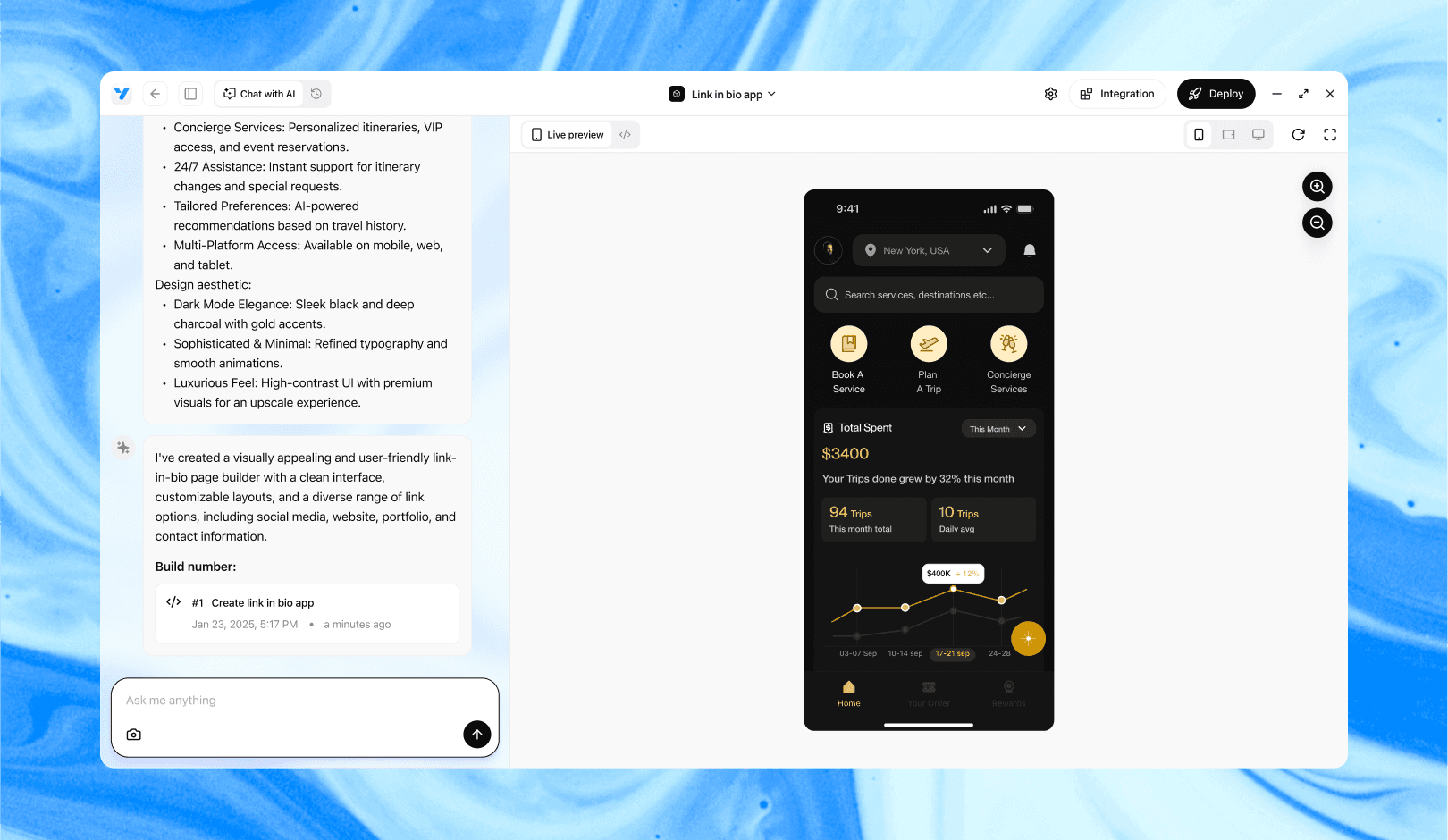
Vibe Studio, powered by Steve’s advanced AI agents, is a revolutionary no-code, conversational platform that empowers users to quickly and efficiently create full-stack Flutter applications integrated seamlessly with Firebase backend services. Ideal for solo founders, startups, and agile engineering teams, Vibe Studio allows users to visually manage and deploy Flutter apps, greatly accelerating the development process. The intuitive conversational interface simplifies complex development tasks, making app creation accessible even for non-coders.
Conclusion
Creating high-fidelity mockups in Flutter is about encoding design intent into reusable tokens and widgets, choosing the right layout primitives for precision, and adding interaction with animation primitives. Centralize your design system, prefer widget composition over pixel-level hacks, and iterate with live previews. The same widgets you build for mockups often evolve directly into production components, shrinking the gap between design and development in mobile development.

Introduction
High-fidelity mockups are essential for communicating visual detail, motion, and interaction in mobile development. Flutter's widget-first architecture maps directly to UI primitives, making it an excellent tool for building mockups that are both pixel-accurate and interactive. This tutorial shows pragmatic techniques to convert design artifacts into reusable Flutter widgets, preserve visual fidelity, and prototype realistic behavior quickly.
Design System Implementation
Start by encoding the design system as Flutter primitives: colors, spacing, text styles, elevation tokens, and component variants. Centralize these values so every mockup reuses the same base definitions. That ensures consistent color usage, typography scale, and spacing rhythm across screens.
Create a lightweight theme file with named constants and ThemeData overrides. Keep tokens descriptive (brandPrimary, surfaceElev1) rather than numeric. When the design updates, change the token once and the whole mockup updates.
// theme_tokens.dart final brandPrimary = Color(0xFF0066FF); final spacingS = 8.0; // use multiples for layout final heading1 = TextStyle(fontSize: 28, fontWeight: FontWeight.w700); final appTheme = ThemeData( primaryColor: brandPrimary, textTheme: TextTheme(headline1: heading1), );
Pixel-Perfect Layouts With Widgets
Pixel accuracy comes from choosing the right layout widgets and respecting constraints. Use SizedBox and ConstrainedBox to lock dimensions; use EdgeInsets with precise values from your spacing tokens. For complex layered visuals, Stack with Positioned gives exact control over overlapping elements.
When translating artboard assets, avoid hardcoding scale factors. Instead, base sizes on design tokens and device breakpoints. Use MediaQuery to adapt, but keep base constraints identical to the target device when producing a device-specific mockup.
Use Container with decoration for borders and shadows rather than third-party image-based effects. Shadows in BoxDecoration map to the real rendering model and are editable for quick iteration.
// header_mockup.dart Widget headerMockup() => SizedBox( height: 120, child: Stack(children: [ Positioned(left: 16, top: 24, child: Text('Title', style: heading1)), Positioned(right: 16, top: 28, child: Icon(Icons.search)), ]), );
Styling And Typography
Typography is critical for perceived fidelity. Use TextStyle copies so you can tweak weight, letterSpacing, and lineHeight without changing the base token. Where the design uses custom fonts, include those font files in pubspec and define them in TextTheme so sizes and metrics match.
For micro-typography, Flutter supports letterSpacing and height. Use them to match the baseline grid. When the mockup requires subtle emphasis, prefer color and weight changes over scaling font sizes—this maintains rhythm.
Extend ThemeData with custom widget themes for buttons, chips, and cards. Prefer ElevatedButton.styleFrom and InputDecorationTheme so components across screens remain consistent.
Prototyping Interactions
High-fidelity mockups benefit from realistic interactions: hover, press, and transitions. Use GestureDetector or InkWell for tap feedback; wrap animated changes in AnimatedContainer, AnimatedPositioned, or implicit animation widgets for quick prototypes.
For route transitions that mirror the design, create PageRouteBuilder with custom transitions. Use AnimationController and Tween to choreograph micro-interactions like card expansion or scaffold motion.
State can remain local for mockups—ValueNotifier and AnimatedBuilder are lightweight and fast for iteration. If you need to demo complex flows, integrate a minimal bloc or provider, but keep the implementation simple and focused on the interaction rather than architecture.
Practical tips:
Use asset placeholders during early iterations and swap in SVGs or high-res images later.
Keep widgets small and descriptive; a well-named small widget doubles as documentation for the design intent.
Capture screenshots from an actual device or emulator to compare against artboards and correct pixel drift.
Vibe Studio

Vibe Studio, powered by Steve’s advanced AI agents, is a revolutionary no-code, conversational platform that empowers users to quickly and efficiently create full-stack Flutter applications integrated seamlessly with Firebase backend services. Ideal for solo founders, startups, and agile engineering teams, Vibe Studio allows users to visually manage and deploy Flutter apps, greatly accelerating the development process. The intuitive conversational interface simplifies complex development tasks, making app creation accessible even for non-coders.
Conclusion
Creating high-fidelity mockups in Flutter is about encoding design intent into reusable tokens and widgets, choosing the right layout primitives for precision, and adding interaction with animation primitives. Centralize your design system, prefer widget composition over pixel-level hacks, and iterate with live previews. The same widgets you build for mockups often evolve directly into production components, shrinking the gap between design and development in mobile development.
Build Flutter Apps Faster with Vibe Studio
Vibe Studio is your AI-powered Flutter development companion. Skip boilerplate, build in real-time, and deploy without hassle. Start creating apps at lightning speed with zero setup.
Other Insights