Creating High Fidelity Skeleton Loaders With Shimmer And Slivers
Jan 21, 2026


Summary
Summary
Summary
Summary
This tutorial explains how to build realistic skeleton loaders in Flutter by designing accurate placeholder layouts, applying a subtle shimmer effect, and composing them inside slivers for scalable performance. It includes a ShaderMask shimmer wrapper and examples showing SliverFixedExtentList usage, plus accessibility and optimization tips.
Key insights:
Key insights:
Key insights:
Key insights:
Designing The Skeleton Layout: Match placeholder sizes, spacing, and grouping to the real UI to minimize layout shift and improve perceived continuity.
Implementing Shimmer Effects: Use a subtle ShaderMask or the shimmer package with slow speed and low contrast to communicate progress without distraction.
Combining With Slivers For Performance: Use SliverFixedExtentList/SliverGrid with builders so only visible placeholders are instantiated, keeping memory and CPU usage low.
Performance Optimization: Keep skeleton widgets cheap (simple Containers, BoxDecoration), use const where possible, and avoid decoding images during loading.
Accessibility And Polishing: Respect reduce-motion settings, match corner radii and spacing, and vary text-line widths for realism.
Introduction
Skeleton loaders are an essential UX pattern in mobile development to communicate progress without layout shifts. In Flutter, combining a shimmer effect with sliver-based scrollables gives you both a high-fidelity placeholder and the performance needed for large lists. This article shows how to design realistic skeleton shapes, implement shimmer animations, and embed them inside slivers for efficient, responsive loading screens.
Designing The Skeleton Layout
Start by matching the skeletons to the real UI: approximate sizes, spacing, and element grouping. A good skeleton uses simple primitives — rectangles for text blocks, circles for avatars, and rounded rectangles for cards. Keep the same padding and alignment as the final layout so the transition feels natural.
Decide on variation: static single shape per item is cheap but looks fake. Multiple lines with differing widths, a small avatar, and a hero image placeholder make the loader believable. Extract a small widget, e.g., ItemSkeleton, that accepts a shape configuration so you can reuse it across list items and grids.
Implementing Shimmer Effects
Shimmer gives skeletons motion and depth. Use the popular shimmer package or create a ShaderMask-based shimmer. The shimmer should be subtle: low contrast and slow speed (around 800–1200ms) so it doesn’t distract users.
Example lightweight shimmer wrapper (custom ShaderMask approach) that you can drop around any skeleton widget:
import 'package:flutter/material.dart'; class SimpleShimmer extends StatelessWidget { final Widget child; const SimpleShimmer({required this.child}); @override Widget build(BuildContext context) => ShaderMask( shaderCallback: (rect) => LinearGradient( colors: [Colors.grey.shade300, Colors.grey.shade100, Colors.grey.shade300], stops: [0.1, 0.5, 0.9], begin: Alignment(-1.0, -0.3), end: Alignment(1.0, 0.3), ).createShader(rect), blendMode: BlendMode.srcATop, child: child, ); }
Wrap your skeletons with this shimmer and animate the gradient offset using an AnimationController if you need continuous motion. The shimmer package handles animation for you and is simpler for production use.
Combining With Slivers For Performance
Slivers are the right tool when your placeholder list can be long or combined with other scroll effects (app bars, headers, infinite loaders). Use SliverList, SliverFixedExtentList, or SliverGrid to avoid building all placeholders at once — the framework will only build what’s visible.
Below is a concise pattern creating a sliver-based skeleton list. It uses a fixedExtent list for consistent item heights and a small builder to generate placeholders:
SliverFixedExtentList( itemExtent: 100, delegate: SliverChildBuilderDelegate( (context, index) => Padding( padding: const EdgeInsets.symmetric(horizontal: 16, vertical: 8), child: SimpleShimmer( child: Container(decoration: BoxDecoration(color: Colors.grey.shade300, borderRadius: BorderRadius.circular(8))), ), ), childCount: 8, ), )
For mixed content (headers + lists + grids), compose multiple slivers: a SliverToBoxAdapter for a top hero skeleton, followed by SliverPadding and SliverGrid for card placeholders. Use SliverFixedExtentList when items share height (better for recycling) and SliverChildBuilderDelegate when you want late instantiation.
Performance tips: keep skeleton widgets cheap (Containers with BoxDecoration), avoid expensive layouts inside them, and use const where possible. If the real UI uses images, grayscale rectangles suffice as placeholders — decoding images behind skeletons wastes CPU.
Accessibility And Visual Polishing
Respect accessibility: disable shimmer for reduce-motion settings. You can read MediaQuery.platformBrightness and platform accessibility flags or use WidgetsBinding.instance.window.accessibilityFeatures.reduceMotion to adapt. Also ensure contrast is adequate: skeletons should be distinguishable from the background but not overpowering.
Small details improve perceived quality: rounded corners that match the real controls, small subtle separators, and slight width variation in text lines. Test on multiple device sizes to ensure spacing scales correctly and that slivers produce no jumpy behavior on fast scroll.
Vibe Studio
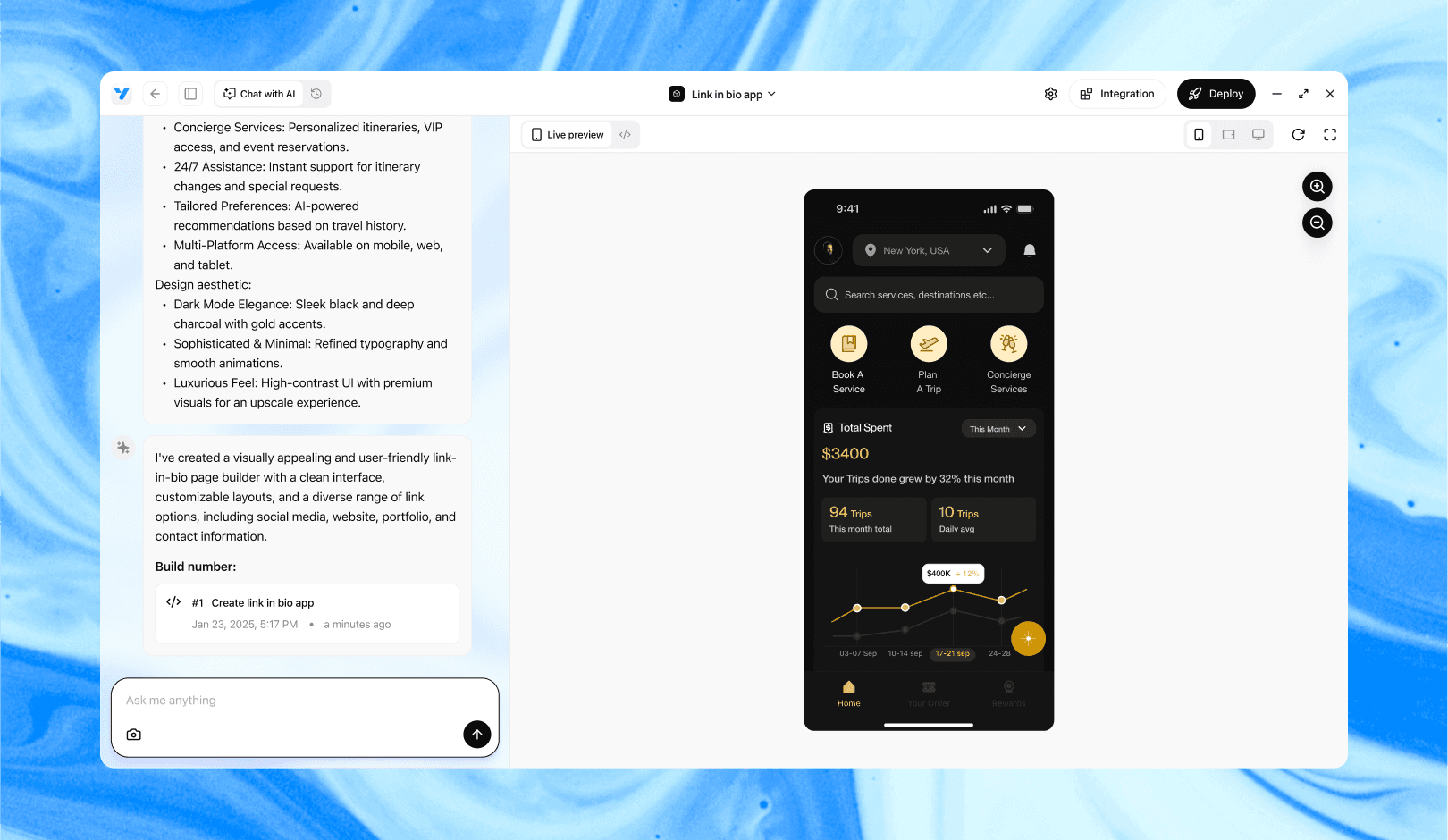
Vibe Studio, powered by Steve’s advanced AI agents, is a revolutionary no-code, conversational platform that empowers users to quickly and efficiently create full-stack Flutter applications integrated seamlessly with Firebase backend services. Ideal for solo founders, startups, and agile engineering teams, Vibe Studio allows users to visually manage and deploy Flutter apps, greatly accelerating the development process. The intuitive conversational interface simplifies complex development tasks, making app creation accessible even for non-coders.
Conclusion
High-fidelity skeleton loaders in Flutter require three complementary things: accurate placeholder shapes, a subtle shimmer for perceived progress, and sliver-based composition for performance. Extract reusable skeleton widgets, choose an appropriate shimmer implementation (package vs. custom ShaderMask), and use SliverLists/SliverGrids to keep your app responsive even with long placeholder lists. These techniques create a polished loading experience that closely matches your final UI and keeps users engaged during network delays.

Introduction
Skeleton loaders are an essential UX pattern in mobile development to communicate progress without layout shifts. In Flutter, combining a shimmer effect with sliver-based scrollables gives you both a high-fidelity placeholder and the performance needed for large lists. This article shows how to design realistic skeleton shapes, implement shimmer animations, and embed them inside slivers for efficient, responsive loading screens.
Designing The Skeleton Layout
Start by matching the skeletons to the real UI: approximate sizes, spacing, and element grouping. A good skeleton uses simple primitives — rectangles for text blocks, circles for avatars, and rounded rectangles for cards. Keep the same padding and alignment as the final layout so the transition feels natural.
Decide on variation: static single shape per item is cheap but looks fake. Multiple lines with differing widths, a small avatar, and a hero image placeholder make the loader believable. Extract a small widget, e.g., ItemSkeleton, that accepts a shape configuration so you can reuse it across list items and grids.
Implementing Shimmer Effects
Shimmer gives skeletons motion and depth. Use the popular shimmer package or create a ShaderMask-based shimmer. The shimmer should be subtle: low contrast and slow speed (around 800–1200ms) so it doesn’t distract users.
Example lightweight shimmer wrapper (custom ShaderMask approach) that you can drop around any skeleton widget:
import 'package:flutter/material.dart'; class SimpleShimmer extends StatelessWidget { final Widget child; const SimpleShimmer({required this.child}); @override Widget build(BuildContext context) => ShaderMask( shaderCallback: (rect) => LinearGradient( colors: [Colors.grey.shade300, Colors.grey.shade100, Colors.grey.shade300], stops: [0.1, 0.5, 0.9], begin: Alignment(-1.0, -0.3), end: Alignment(1.0, 0.3), ).createShader(rect), blendMode: BlendMode.srcATop, child: child, ); }
Wrap your skeletons with this shimmer and animate the gradient offset using an AnimationController if you need continuous motion. The shimmer package handles animation for you and is simpler for production use.
Combining With Slivers For Performance
Slivers are the right tool when your placeholder list can be long or combined with other scroll effects (app bars, headers, infinite loaders). Use SliverList, SliverFixedExtentList, or SliverGrid to avoid building all placeholders at once — the framework will only build what’s visible.
Below is a concise pattern creating a sliver-based skeleton list. It uses a fixedExtent list for consistent item heights and a small builder to generate placeholders:
SliverFixedExtentList( itemExtent: 100, delegate: SliverChildBuilderDelegate( (context, index) => Padding( padding: const EdgeInsets.symmetric(horizontal: 16, vertical: 8), child: SimpleShimmer( child: Container(decoration: BoxDecoration(color: Colors.grey.shade300, borderRadius: BorderRadius.circular(8))), ), ), childCount: 8, ), )
For mixed content (headers + lists + grids), compose multiple slivers: a SliverToBoxAdapter for a top hero skeleton, followed by SliverPadding and SliverGrid for card placeholders. Use SliverFixedExtentList when items share height (better for recycling) and SliverChildBuilderDelegate when you want late instantiation.
Performance tips: keep skeleton widgets cheap (Containers with BoxDecoration), avoid expensive layouts inside them, and use const where possible. If the real UI uses images, grayscale rectangles suffice as placeholders — decoding images behind skeletons wastes CPU.
Accessibility And Visual Polishing
Respect accessibility: disable shimmer for reduce-motion settings. You can read MediaQuery.platformBrightness and platform accessibility flags or use WidgetsBinding.instance.window.accessibilityFeatures.reduceMotion to adapt. Also ensure contrast is adequate: skeletons should be distinguishable from the background but not overpowering.
Small details improve perceived quality: rounded corners that match the real controls, small subtle separators, and slight width variation in text lines. Test on multiple device sizes to ensure spacing scales correctly and that slivers produce no jumpy behavior on fast scroll.
Vibe Studio

Vibe Studio, powered by Steve’s advanced AI agents, is a revolutionary no-code, conversational platform that empowers users to quickly and efficiently create full-stack Flutter applications integrated seamlessly with Firebase backend services. Ideal for solo founders, startups, and agile engineering teams, Vibe Studio allows users to visually manage and deploy Flutter apps, greatly accelerating the development process. The intuitive conversational interface simplifies complex development tasks, making app creation accessible even for non-coders.
Conclusion
High-fidelity skeleton loaders in Flutter require three complementary things: accurate placeholder shapes, a subtle shimmer for perceived progress, and sliver-based composition for performance. Extract reusable skeleton widgets, choose an appropriate shimmer implementation (package vs. custom ShaderMask), and use SliverLists/SliverGrids to keep your app responsive even with long placeholder lists. These techniques create a polished loading experience that closely matches your final UI and keeps users engaged during network delays.
Build Flutter Apps Faster with Vibe Studio
Vibe Studio is your AI-powered Flutter development companion. Skip boilerplate, build in real-time, and deploy without hassle. Start creating apps at lightning speed with zero setup.
Other Insights