Creating Flutter Apps With Offline-First Architecture

Summary
Summary
Summary
Summary

This tutorial explains how to build offline-first Flutter mobile apps by prioritizing local reads/writes, using a repository pattern, durable command queues, and reliable synchronization with conflict resolution. It covers storage choices, connectivity handling, testing, and performance tips.

This tutorial explains how to build offline-first Flutter mobile apps by prioritizing local reads/writes, using a repository pattern, durable command queues, and reliable synchronization with conflict resolution. It covers storage choices, connectivity handling, testing, and performance tips.

This tutorial explains how to build offline-first Flutter mobile apps by prioritizing local reads/writes, using a repository pattern, durable command queues, and reliable synchronization with conflict resolution. It covers storage choices, connectivity handling, testing, and performance tips.

This tutorial explains how to build offline-first Flutter mobile apps by prioritizing local reads/writes, using a repository pattern, durable command queues, and reliable synchronization with conflict resolution. It covers storage choices, connectivity handling, testing, and performance tips.

Key insights:
Key insights:
Key insights:
Key insights:
  • Core Principles Of Offline-First: Read/write locally first, use a single source of truth, and queue commands for later sync.

  • Local Storage And Synchronization Patterns: Separate local and remote data sources with a repository; persist actions before network calls.

  • Conflict Resolution And Data Modeling: Use client-generated IDs, timestamps, and explicit conflict strategies; provide user resolution when needed.

  • Connectivity, Retry, And Backoff: Trigger sync on connectivity but handle errors with exponential backoff and capped retries.

  • Testing And Performance Considerations: Unit and integration test sync flows, batch operations, and stream data to limit memory use.

Introduction

Offline-first architecture means designing your Flutter apps so they work reliably without constant network access, synchronizing when connectivity is available. For mobile development this is critical: users expect instant responses, minimal data loss, and predictable behavior on flaky networks. This guide shows pragmatic patterns, storage choices, synchronization strategies, and testing considerations to build robust offline-first Flutter apps.

Core Principles Of Offline-First

Adopt these principles at the start of your project:

  • Local-First UX: Read and write to a local store first. Network calls are secondary and asynchronous.

  • Deterministic State: Keep a single source of truth (repository or store) so UI code never queries network directly.

  • Queue Writes: Persist user actions (commands/events) to a durable queue that can be replayed when online.

  • Idempotent Sync: Ensure server endpoints handle replayed actions without duplication.

These principles reduce complexity in UI layers and make testing easier.

Local Storage And Synchronization Patterns

Choose a local storage based on data shape and query needs. For relational data and complex queries use sqflite or sembast; for document or syncable data consider Hive or Isar. A common repository pattern separates data sources:

  • Local Data Source: A small CRUD API backed by your chosen DB.

  • Remote Data Source: Network client (Dio/http) for server sync.

  • Repository: Exposes streams and methods that merge local state with remote reconciliation.

Keep writes local and append a sync-command to a durable queue. A background synchronizer consumes the queue when connectivity is available and applies changes to the remote API. Example repository write:

Future<void> addNote(Note note) async {
  await localDb.insert('notes', note.toMap());
  await commandsQueue.add({'type':'create','payload':note.toMap()});
  notifyListeners();
}

Conflict Resolution And Data Modeling

Design data with a conflict strategy: last-write-wins (timestamp), mergeable fields, or application-level resolution workflows. Prefer stable identifiers (UUIDs) generated on the client for offline creation so objects are addressable before sync.

Timestamps should be UTC and monotonic where possible. For complex conflicts, model an audit log or per-field vector clocks. In many mobile apps, a pragmatic approach is:

  • Use server-authoritative fields for critical data.

  • Provide user-facing conflict UIs when automatic merges are unsafe.

Schema versioning: include a migration plan for local DB changes; run migrations before opening the DB to avoid corrupt states.

Connectivity, Retry, And Backoff

Detect connectivity but do not rely on it as absolute truth. Use the network status to trigger sync attempts but always handle network errors gracefully. Implement exponential backoff for retries and cap total attempts to avoid battery drain.

A simple sync loop:

  • Observe connectivity and app lifecycle events.

  • When online, lock the queue and process commands sequentially.

  • On failure, mark command with retry metadata and schedule according to backoff.

Testing And Performance Considerations

Unit test the repository by mocking local and remote sources. Integration tests should exercise full sync cycles using an in-memory DB or test container. Test these cases explicitly:

  • Offline write then later sync.

  • Partial sync with intermittent failures.

  • Conflict scenarios and resolution UI.

Performance tips:

  • Batch network operations to reduce round trips.

  • Use differential sync (only changed records) and compact queued commands periodically.

  • Limit memory usage by streaming large query results rather than loading entire tables.

Implementation Tips And Libraries

  • Use packages: sqflite, sembast, hive, dio/http, connectivity_plus, workmanager/background_fetch for long-running sync tasks.

  • Keep networking in an isolated service so you can swap implementations for testing.

  • UI should be reactive to repository streams (Stream, ValueNotifier, Riverpod, or Bloc) so it updates instantly from local DB changes.

Example of a simple connectivity-triggered sync worker:

void onConnectivityChanged(bool online) {
  if (online && !syncInProgress) {
    syncInProgress = true;
    processQueue().whenComplete(() => syncInProgress = false);
  }
}

Vibe Studio
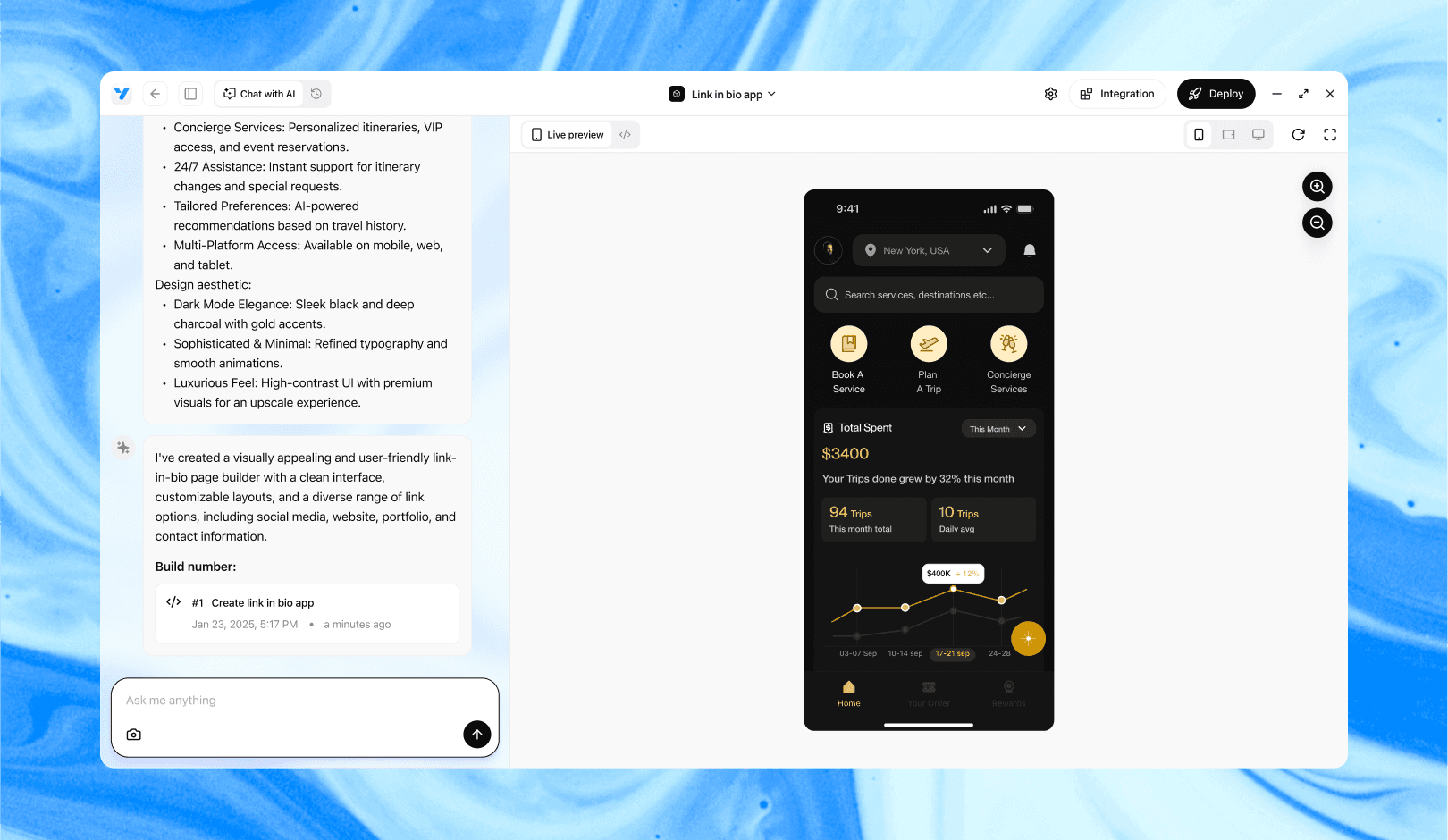
Vibe Studio, powered by Steve’s advanced AI agents, is a revolutionary no-code, conversational platform that empowers users to quickly and efficiently create full-stack Flutter applications integrated seamlessly with Firebase backend services. Ideal for solo founders, startups, and agile engineering teams, Vibe Studio allows users to visually manage and deploy Flutter apps, greatly accelerating the development process. The intuitive conversational interface simplifies complex development tasks, making app creation accessible even for non-coders.

Conclusion

Offline-first is a mindset: local-first UX, a single source of truth, durable queues, and careful sync/conflict strategies. In Flutter mobile development, composition of a local store, a reliable command queue, and an efficient synchronizer yields apps that feel instant and resilient. Start small: implement local reads/writes, queue writes, add a sync worker, then iterate on conflict handling and optimization.


Introduction

Offline-first architecture means designing your Flutter apps so they work reliably without constant network access, synchronizing when connectivity is available. For mobile development this is critical: users expect instant responses, minimal data loss, and predictable behavior on flaky networks. This guide shows pragmatic patterns, storage choices, synchronization strategies, and testing considerations to build robust offline-first Flutter apps.

Core Principles Of Offline-First

Adopt these principles at the start of your project:

  • Local-First UX: Read and write to a local store first. Network calls are secondary and asynchronous.

  • Deterministic State: Keep a single source of truth (repository or store) so UI code never queries network directly.

  • Queue Writes: Persist user actions (commands/events) to a durable queue that can be replayed when online.

  • Idempotent Sync: Ensure server endpoints handle replayed actions without duplication.

These principles reduce complexity in UI layers and make testing easier.

Local Storage And Synchronization Patterns

Choose a local storage based on data shape and query needs. For relational data and complex queries use sqflite or sembast; for document or syncable data consider Hive or Isar. A common repository pattern separates data sources:

  • Local Data Source: A small CRUD API backed by your chosen DB.

  • Remote Data Source: Network client (Dio/http) for server sync.

  • Repository: Exposes streams and methods that merge local state with remote reconciliation.

Keep writes local and append a sync-command to a durable queue. A background synchronizer consumes the queue when connectivity is available and applies changes to the remote API. Example repository write:

Future<void> addNote(Note note) async {
  await localDb.insert('notes', note.toMap());
  await commandsQueue.add({'type':'create','payload':note.toMap()});
  notifyListeners();
}

Conflict Resolution And Data Modeling

Design data with a conflict strategy: last-write-wins (timestamp), mergeable fields, or application-level resolution workflows. Prefer stable identifiers (UUIDs) generated on the client for offline creation so objects are addressable before sync.

Timestamps should be UTC and monotonic where possible. For complex conflicts, model an audit log or per-field vector clocks. In many mobile apps, a pragmatic approach is:

  • Use server-authoritative fields for critical data.

  • Provide user-facing conflict UIs when automatic merges are unsafe.

Schema versioning: include a migration plan for local DB changes; run migrations before opening the DB to avoid corrupt states.

Connectivity, Retry, And Backoff

Detect connectivity but do not rely on it as absolute truth. Use the network status to trigger sync attempts but always handle network errors gracefully. Implement exponential backoff for retries and cap total attempts to avoid battery drain.

A simple sync loop:

  • Observe connectivity and app lifecycle events.

  • When online, lock the queue and process commands sequentially.

  • On failure, mark command with retry metadata and schedule according to backoff.

Testing And Performance Considerations

Unit test the repository by mocking local and remote sources. Integration tests should exercise full sync cycles using an in-memory DB or test container. Test these cases explicitly:

  • Offline write then later sync.

  • Partial sync with intermittent failures.

  • Conflict scenarios and resolution UI.

Performance tips:

  • Batch network operations to reduce round trips.

  • Use differential sync (only changed records) and compact queued commands periodically.

  • Limit memory usage by streaming large query results rather than loading entire tables.

Implementation Tips And Libraries

  • Use packages: sqflite, sembast, hive, dio/http, connectivity_plus, workmanager/background_fetch for long-running sync tasks.

  • Keep networking in an isolated service so you can swap implementations for testing.

  • UI should be reactive to repository streams (Stream, ValueNotifier, Riverpod, or Bloc) so it updates instantly from local DB changes.

Example of a simple connectivity-triggered sync worker:

void onConnectivityChanged(bool online) {
  if (online && !syncInProgress) {
    syncInProgress = true;
    processQueue().whenComplete(() => syncInProgress = false);
  }
}

Vibe Studio

Vibe Studio, powered by Steve’s advanced AI agents, is a revolutionary no-code, conversational platform that empowers users to quickly and efficiently create full-stack Flutter applications integrated seamlessly with Firebase backend services. Ideal for solo founders, startups, and agile engineering teams, Vibe Studio allows users to visually manage and deploy Flutter apps, greatly accelerating the development process. The intuitive conversational interface simplifies complex development tasks, making app creation accessible even for non-coders.

Conclusion

Offline-first is a mindset: local-first UX, a single source of truth, durable queues, and careful sync/conflict strategies. In Flutter mobile development, composition of a local store, a reliable command queue, and an efficient synchronizer yields apps that feel instant and resilient. Start small: implement local reads/writes, queue writes, add a sync worker, then iterate on conflict handling and optimization.

Build Flutter Apps Faster with Vibe Studio

Build Flutter Apps Faster with Vibe Studio

Build Flutter Apps Faster with Vibe Studio

Build Flutter Apps Faster with Vibe Studio

Vibe Studio is your AI-powered Flutter development companion. Skip boilerplate, build in real-time, and deploy without hassle. Start creating apps at lightning speed with zero setup.

Vibe Studio is your AI-powered Flutter development companion. Skip boilerplate, build in real-time, and deploy without hassle. Start creating apps at lightning speed with zero setup.

Vibe Studio is your AI-powered Flutter development companion. Skip boilerplate, build in real-time, and deploy without hassle. Start creating apps at lightning speed with zero setup.

Vibe Studio is your AI-powered Flutter development companion. Skip boilerplate, build in real-time, and deploy without hassle. Start creating apps at lightning speed with zero setup.

Other Insights

Other Insights

Other Insights

Other Insights

Join a growing community of builders today

Join a growing community of builders today

Join a growing community of builders today

Join a growing community of builders today

Join a growing community of builders today

28-07 Jackson Ave

Walturn

New York NY 11101 United States

© Steve • All Rights Reserved 2025

28-07 Jackson Ave

Walturn

New York NY 11101 United States

© Steve • All Rights Reserved 2025

28-07 Jackson Ave

Walturn

New York NY 11101 United States

© Steve • All Rights Reserved 2025

28-07 Jackson Ave

Walturn

New York NY 11101 United States

© Steve • All Rights Reserved 2025

28-07 Jackson Ave

Walturn

New York NY 11101 United States

© Steve • All Rights Reserved 2025

28-07 Jackson Ave

Walturn

New York NY 11101 United States

© Steve • All Rights Reserved 2025