Creating Flutter Apps That Scale Using Clean Architecture

Summary
Summary
Summary
Summary

This tutorial shows how to apply Clean Architecture to Flutter mobile development: organize Presentation, Domain, and Data layers; define repository interfaces in Domain and implement them in Data; use dependency injection (get_it) to wire components; and test boundaries with unit and integration tests. The approach improves maintainability, testability, and team scalability.

This tutorial shows how to apply Clean Architecture to Flutter mobile development: organize Presentation, Domain, and Data layers; define repository interfaces in Domain and implement them in Data; use dependency injection (get_it) to wire components; and test boundaries with unit and integration tests. The approach improves maintainability, testability, and team scalability.

This tutorial shows how to apply Clean Architecture to Flutter mobile development: organize Presentation, Domain, and Data layers; define repository interfaces in Domain and implement them in Data; use dependency injection (get_it) to wire components; and test boundaries with unit and integration tests. The approach improves maintainability, testability, and team scalability.

This tutorial shows how to apply Clean Architecture to Flutter mobile development: organize Presentation, Domain, and Data layers; define repository interfaces in Domain and implement them in Data; use dependency injection (get_it) to wire components; and test boundaries with unit and integration tests. The approach improves maintainability, testability, and team scalability.

Key insights:
Key insights:
Key insights:
Key insights:
  • Architecture Overview: Use layered separation (Presentation, Domain, Data) to isolate business logic and reduce coupling.

  • Separation Of Concerns: Keep Widgets thin and move business rules to Use Cases and Domain entities for clearer responsibilities.

  • Dependency Inversion And DI: Define repository abstractions in Domain and implement them in Data; wire with a DI container.

  • Testing And Maintainability: Test each boundary—Use Cases, Repositories, Widgets—using mocks and fakes to ensure reliability.

  • Practical Patterns: Use mappers, immutable entities, and constructor injection to keep code predictable and easy to refactor.

Introduction

Scaling a Flutter mobile development project means more than optimizing performance — it requires a maintainable structure, clear separation of responsibilities, and testable boundaries. Clean Architecture gives you layered rules and guiding principles that help teams ship features faster while keeping technical debt low. This article explains how to organize Flutter apps using Clean Architecture with concrete patterns and short code examples.

Architecture Overview

Clean Architecture divides an app into layers with explicit dependencies pointing inward. Typical layers for a Flutter app are: Presentation (Widgets, State), Domain (Entities, Use Cases), Data (Repositories, Sources), and External (APIs, databases). Presentation depends on Domain; Domain is independent of frameworks and UI; Data implements Domain contracts. This arrangement isolates business logic and simplifies change: swap a data source or UI without rewriting core rules.

Key decisions:

  • Keep Entities and Use Cases pure Dart, no Flutter imports.

  • Define Repository interfaces in Domain; implement them in Data.

  • Ensure only Data knows about networking and persistence.

Separation Of Concerns

Start by splitting folders by layer, not by feature. A common layout:

lib/ 
  domain/
    entities/
    repositories/
    usecases/
  data/
    models/
    sources/
    repositories/
  presentation/
    pages/
    blocs

Separation of concerns reduces coupling and enables parallel work: designers and frontend engineers can work on Presentation, backend engineers can extend Data, and product logic remains in Domain.

Tip: Keep your Widgets thin. Business rules belong in Use Cases, not inside Widgets or BLoCs. BLoCs or ChangeNotifiers should orchestrate Use Cases and map results to UI states.

Dependency Inversion And DI

The Dependency Inversion Principle is central: higher-level modules (Domain) must not depend on lower-level modules (Data); both depend on abstractions. Create repository interfaces in Domain and implement them in Data.

Example repository interface and implementation:

abstract class WeatherRepository {
  Future<Weather> fetchWeather(String city);
}

class WeatherRepositoryImpl implements WeatherRepository {
  final RemoteDataSource remote;
  WeatherRepositoryImpl(this.remote);
  Future<Weather> fetchWeather(String city) => remote.getWeather(city);
}

Use a DI container (get_it) or constructor injection at the app root to wire implementations to interfaces. Register Use Cases and repositories once during app startup; resolve them in BLoCs or ViewModels.

final getIt = GetIt.instance;
void setup() {
  getIt.registerLazySingleton<RemoteDataSource>(() => RemoteApi());
  getIt.registerLazySingleton<WeatherRepository>(() => WeatherRepositoryImpl(getIt()));
  getIt.registerFactory(() => FetchWeatherUseCase(getIt()));
}

Constructor injection keeps classes testable and avoids hidden global state.

Testing And Maintainability

Clean Architecture makes testing straightforward:

  • Unit test Use Cases by mocking Repositories.

  • Test Repositories with fake data sources (in-memory DB, stubbed API clients).

  • Widget tests should inject fake Use Cases to render predictable UI states.

Write tests at each boundary. A small habit that scales: every Use Case has at least one unit test; every repository has integration tests against a test double for external APIs.

Practical tips:

  • Keep mapping between Data models and Domain entities explicit; create mappers in Data.

  • Avoid platform APIs inside Domain. If you need platform features (permissions, sensors), wrap them in an interface and implement them in Data/External.

  • Favor immutability for Entities and value objects to make tests deterministic.

Vibe Studio
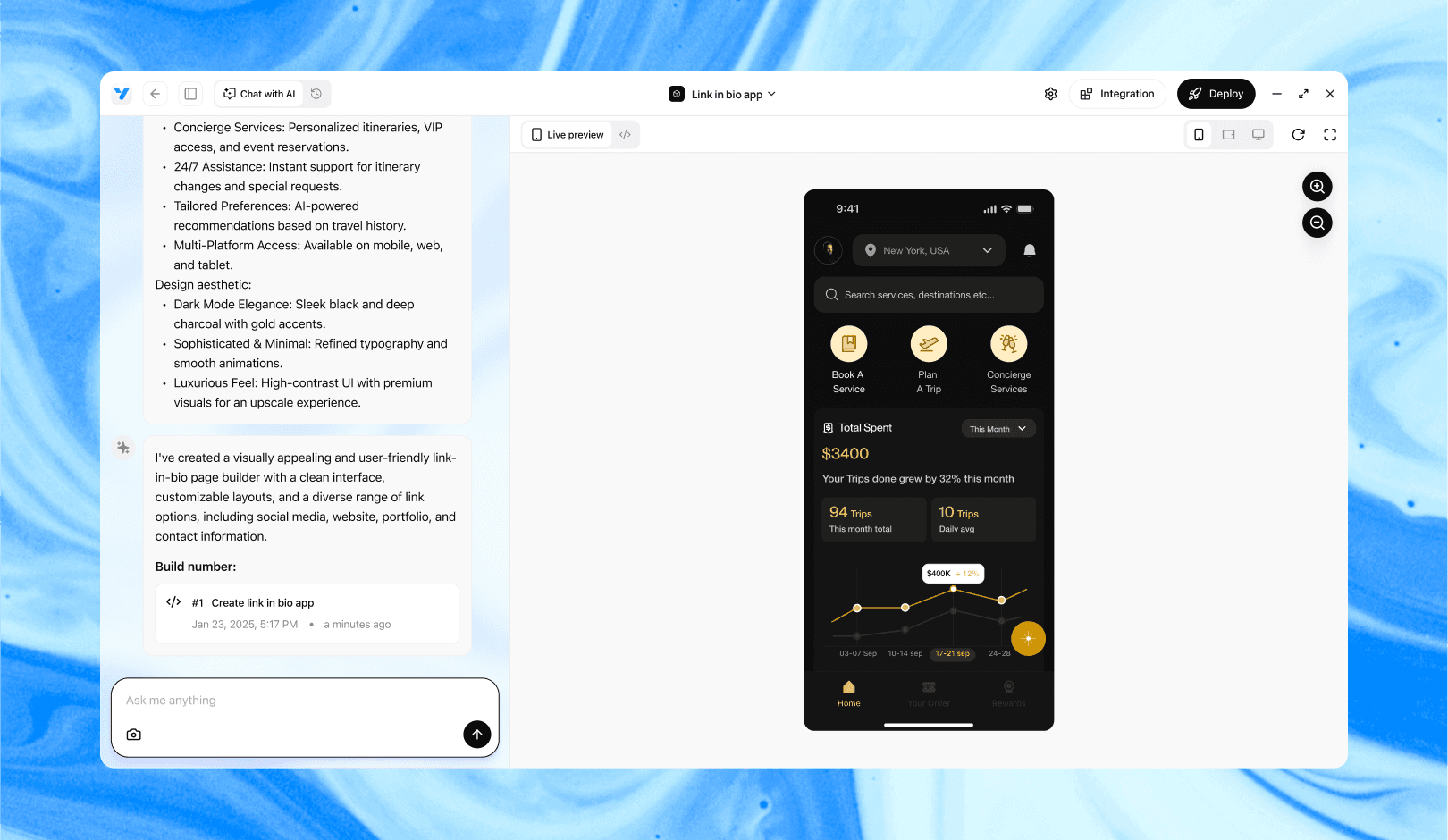
Vibe Studio, powered by Steve’s advanced AI agents, is a revolutionary no-code, conversational platform that empowers users to quickly and efficiently create full-stack Flutter applications integrated seamlessly with Firebase backend services. Ideal for solo founders, startups, and agile engineering teams, Vibe Studio allows users to visually manage and deploy Flutter apps, greatly accelerating the development process. The intuitive conversational interface simplifies complex development tasks, making app creation accessible even for non-coders.

Conclusion

Adopting Clean Architecture in Flutter projects reduces coupling, improves testability, and lets teams scale without exponential complexity. The core steps are: separate layers, invert dependencies using interfaces, wire implementations with DI, and enforce small, well-tested Use Cases. Start by refactoring a single feature into Domain/Data/Presentation folders and grow the structure consistently. This pattern preserves the flexibility of Flutter for mobile development while adding the discipline required for long-lived, scalable apps.


Introduction

Scaling a Flutter mobile development project means more than optimizing performance — it requires a maintainable structure, clear separation of responsibilities, and testable boundaries. Clean Architecture gives you layered rules and guiding principles that help teams ship features faster while keeping technical debt low. This article explains how to organize Flutter apps using Clean Architecture with concrete patterns and short code examples.

Architecture Overview

Clean Architecture divides an app into layers with explicit dependencies pointing inward. Typical layers for a Flutter app are: Presentation (Widgets, State), Domain (Entities, Use Cases), Data (Repositories, Sources), and External (APIs, databases). Presentation depends on Domain; Domain is independent of frameworks and UI; Data implements Domain contracts. This arrangement isolates business logic and simplifies change: swap a data source or UI without rewriting core rules.

Key decisions:

  • Keep Entities and Use Cases pure Dart, no Flutter imports.

  • Define Repository interfaces in Domain; implement them in Data.

  • Ensure only Data knows about networking and persistence.

Separation Of Concerns

Start by splitting folders by layer, not by feature. A common layout:

lib/ 
  domain/
    entities/
    repositories/
    usecases/
  data/
    models/
    sources/
    repositories/
  presentation/
    pages/
    blocs

Separation of concerns reduces coupling and enables parallel work: designers and frontend engineers can work on Presentation, backend engineers can extend Data, and product logic remains in Domain.

Tip: Keep your Widgets thin. Business rules belong in Use Cases, not inside Widgets or BLoCs. BLoCs or ChangeNotifiers should orchestrate Use Cases and map results to UI states.

Dependency Inversion And DI

The Dependency Inversion Principle is central: higher-level modules (Domain) must not depend on lower-level modules (Data); both depend on abstractions. Create repository interfaces in Domain and implement them in Data.

Example repository interface and implementation:

abstract class WeatherRepository {
  Future<Weather> fetchWeather(String city);
}

class WeatherRepositoryImpl implements WeatherRepository {
  final RemoteDataSource remote;
  WeatherRepositoryImpl(this.remote);
  Future<Weather> fetchWeather(String city) => remote.getWeather(city);
}

Use a DI container (get_it) or constructor injection at the app root to wire implementations to interfaces. Register Use Cases and repositories once during app startup; resolve them in BLoCs or ViewModels.

final getIt = GetIt.instance;
void setup() {
  getIt.registerLazySingleton<RemoteDataSource>(() => RemoteApi());
  getIt.registerLazySingleton<WeatherRepository>(() => WeatherRepositoryImpl(getIt()));
  getIt.registerFactory(() => FetchWeatherUseCase(getIt()));
}

Constructor injection keeps classes testable and avoids hidden global state.

Testing And Maintainability

Clean Architecture makes testing straightforward:

  • Unit test Use Cases by mocking Repositories.

  • Test Repositories with fake data sources (in-memory DB, stubbed API clients).

  • Widget tests should inject fake Use Cases to render predictable UI states.

Write tests at each boundary. A small habit that scales: every Use Case has at least one unit test; every repository has integration tests against a test double for external APIs.

Practical tips:

  • Keep mapping between Data models and Domain entities explicit; create mappers in Data.

  • Avoid platform APIs inside Domain. If you need platform features (permissions, sensors), wrap them in an interface and implement them in Data/External.

  • Favor immutability for Entities and value objects to make tests deterministic.

Vibe Studio

Vibe Studio, powered by Steve’s advanced AI agents, is a revolutionary no-code, conversational platform that empowers users to quickly and efficiently create full-stack Flutter applications integrated seamlessly with Firebase backend services. Ideal for solo founders, startups, and agile engineering teams, Vibe Studio allows users to visually manage and deploy Flutter apps, greatly accelerating the development process. The intuitive conversational interface simplifies complex development tasks, making app creation accessible even for non-coders.

Conclusion

Adopting Clean Architecture in Flutter projects reduces coupling, improves testability, and lets teams scale without exponential complexity. The core steps are: separate layers, invert dependencies using interfaces, wire implementations with DI, and enforce small, well-tested Use Cases. Start by refactoring a single feature into Domain/Data/Presentation folders and grow the structure consistently. This pattern preserves the flexibility of Flutter for mobile development while adding the discipline required for long-lived, scalable apps.

Build Flutter Apps Faster with Vibe Studio

Build Flutter Apps Faster with Vibe Studio

Build Flutter Apps Faster with Vibe Studio

Build Flutter Apps Faster with Vibe Studio

Vibe Studio is your AI-powered Flutter development companion. Skip boilerplate, build in real-time, and deploy without hassle. Start creating apps at lightning speed with zero setup.

Vibe Studio is your AI-powered Flutter development companion. Skip boilerplate, build in real-time, and deploy without hassle. Start creating apps at lightning speed with zero setup.

Vibe Studio is your AI-powered Flutter development companion. Skip boilerplate, build in real-time, and deploy without hassle. Start creating apps at lightning speed with zero setup.

Vibe Studio is your AI-powered Flutter development companion. Skip boilerplate, build in real-time, and deploy without hassle. Start creating apps at lightning speed with zero setup.

Other Insights

Other Insights

Other Insights

Other Insights

Join a growing community of builders today

Join a growing community of builders today

Join a growing community of builders today

Join a growing community of builders today

Join a growing community of builders today

28-07 Jackson Ave

Walturn

New York NY 11101 United States

© Steve • All Rights Reserved 2025

28-07 Jackson Ave

Walturn

New York NY 11101 United States

© Steve • All Rights Reserved 2025

28-07 Jackson Ave

Walturn

New York NY 11101 United States

© Steve • All Rights Reserved 2025

28-07 Jackson Ave

Walturn

New York NY 11101 United States

© Steve • All Rights Reserved 2025

28-07 Jackson Ave

Walturn

New York NY 11101 United States

© Steve • All Rights Reserved 2025

28-07 Jackson Ave

Walturn

New York NY 11101 United States

© Steve • All Rights Reserved 2025