Creating Flutter Apps for Automotive and Embedded Systems
Dec 11, 2025


Summary
Summary
Summary
Summary
This tutorial explains how to apply Flutter and mobile development practices to automotive and embedded systems: assess platform constraints, integrate hardware via MethodChannel/EventChannel or FFI, optimize rendering and real-time behavior, design glanceable UIs, and deploy with OTA/update strategies. Emphasizes AOT builds, native bridging, and performance patterns.
Key insights:
Key insights:
Key insights:
Key insights:
Platform Constraints And Requirements: Document hardware, GPU, and latency needs; use AOT and compatible graphics stacks for target platforms.
Hardware Integration And Communication: Bridge to vehicle buses with MethodChannel/EventChannel for control and streams, and use FFI for low-latency C libraries.
Performance Optimization And Real-Time: Offload work to native threads or isolates, use raster caching, and process critical signals natively to guarantee predictable latency.
UI/UX For Automotive And Embedded: Design glanceable, high-contrast layouts, support hardware inputs, and minimize distractions while driving.
Deployment And Maintenance: Build signed, reproducible artifacts for OTA delivery, instrument telemetry responsibly, and automate hardware-in-the-loop testing.
Introduction
Flutter is known for mobile development, but its portable rendering engine and single-codebase approach make it a strong candidate for automotive and embedded GUIs. This tutorial focuses on practical considerations: platform constraints, hardware integration, UI patterns for constrained screens, and deployment strategies. It assumes familiarity with Flutter fundamentals and native tooling on your target platform (Linux, Android Automotive, QNX, etc.).
Platform Constraints And Requirements
Embedded and automotive platforms impose constraints different from consumer mobile devices: limited CPU/GPU resources, real-time requirements, longer lifecycles, and specialized input methods (rotary knobs, CAN-based controls, touch with gloves). Start by documenting hardware specs (CPU architecture, memory, GPU capabilities, OS kernel version, available APIs) and non-functional requirements (latency, uptime, thermal budget).
Development choices:
Use AOT compilation for ARM targets to minimize startup time and maximize performance.
Prefer hardware-accelerated graphics stacks supported by the platform (EGL, Vulkan, OpenGL ES). Verify Flutter Engine compatibility.
For headless or kiosk modes, embed Flutter into the native shell rather than relying on a full Android stack.
Link your CI to build artifacts for the target architecture and run smoke tests on representative hardware early.
Hardware Integration And Communication
Embedded apps often need sensor data, vehicle bus access, or custom peripherals. Flutter itself runs in Dart; bridge to native or system libraries using MethodChannel, EventChannel, or FFI.
Use MethodChannel for control commands and simple RPC. Use EventChannel for continuous streams (sensor telemetry). For low-latency or high-throughput access to C libraries (e.g., CAN libs), prefer Dart FFI to avoid JNI/marshalling overhead.
Example: MethodChannel used to request a native API and receive telemetry via an EventChannel.
// Dart side: request and stream
final method = MethodChannel('vehicle/control');
final events = EventChannel('vehicle/telemetry');
Future<void> requestLock() async => await method.invokeMethod('lockDoors');
events.receiveBroadcastStream().listen((data) { print('Telemetry: $data'); });On the native side, implement handlers that translate to your bus APIs (SocketCAN, ioctl, vendor SDKs). Always validate and sanitize data crossing the boundary.
Performance Optimization And Real-Time
Performance is critical: UI should stay responsive while handling I/O and controls. Strategies:
Offload heavy processing to native threads or isolate-heavy Dart isolates for CPU-bound tasks.
Use raster cache, const widgets, and RepaintBoundary to minimize redraw cost.
Reduce frame workload: avoid large widget trees that change every frame. Use partial build patterns and granular ChangeNotifier providers.
For deterministic update loops (e.g., instrument clusters), avoid relying solely on Flutter's rebuild cadence. Use a custom compositor or layer-based painting if sub-frame control is required.
For real-time inputs (steering wheel buttons), process critical signals on the native side and only send filtered, debounced events to Flutter to ensure predictable latency.
UI/UX For Automotive And Embedded
Design for glanceability and limited interaction time. Automotive screens need larger targets, minimal text, and prioritized content. Consider adaptive layouts for multiple orientations and multi-display setups (cluster, center stack, HUD).
Use platform-safe color palettes, high-contrast modes, and scalable text. Implement a headless or simplified mode for when the vehicle is in motion (reduce distractions). For control widgets, prefer tactile feedback or hardware haptics where possible.
Technical tips:
Use Texture widgets or PlatformViews to host native video or custom rendering surfaces when integrating vendor-specific displays.
Use semantic labeling and hardware input handlers for rotary encoders and steering-wheel buttons.
Deployment And Maintenance
Deployment in automotive/embedded differs from app stores. You’ll likely integrate with OEM update systems or use over-the-air (OTA) mechanisms. Build reproducible, signed artifacts per target. Maintain multiple release channels (stable, integration, QA) and support remote logging/diagnostics.
Instrument the app with telemetry (performance counters, crash reports) but respect privacy and safety constraints. Automate hardware-in-the-loop tests in CI to catch regressions early.
Vibe Studio
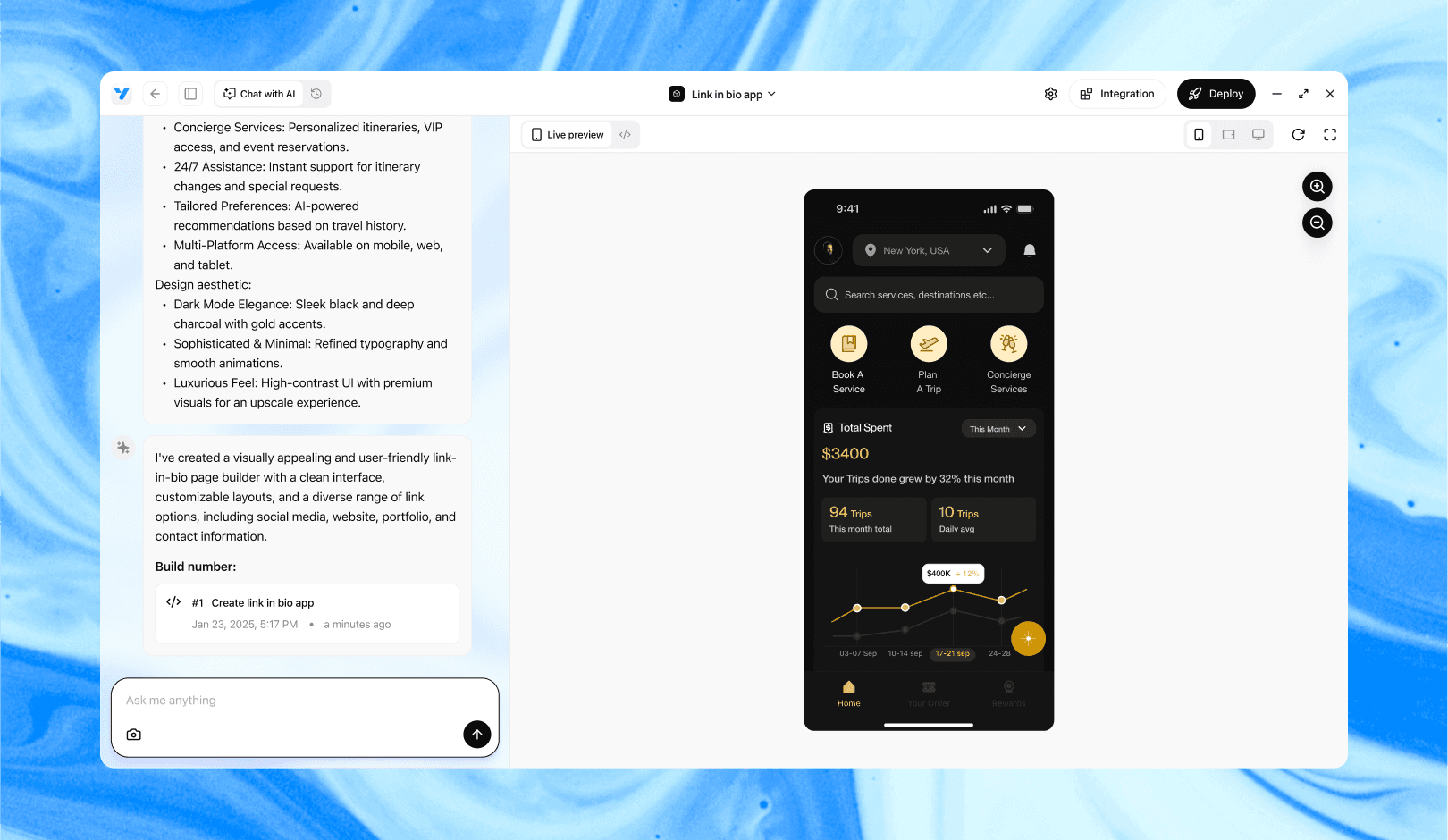
Vibe Studio, powered by Steve’s advanced AI agents, is a revolutionary no-code, conversational platform that empowers users to quickly and efficiently create full-stack Flutter applications integrated seamlessly with Firebase backend services. Ideal for solo founders, startups, and agile engineering teams, Vibe Studio allows users to visually manage and deploy Flutter apps, greatly accelerating the development process. The intuitive conversational interface simplifies complex development tasks, making app creation accessible even for non-coders.
Conclusion
Building automotive and embedded apps with Flutter leverages your mobile development skills while demanding attention to hardware constraints, native integration, and real-time behavior. Use MethodChannel/EventChannel/FFI to bridge to platform services, optimize rendering patterns for constrained GPUs, and design UIs for glance-first interactions. With disciplined architecture and platform-aware builds, Flutter can deliver consistent, maintainable interfaces across diverse embedded targets.

Introduction
Flutter is known for mobile development, but its portable rendering engine and single-codebase approach make it a strong candidate for automotive and embedded GUIs. This tutorial focuses on practical considerations: platform constraints, hardware integration, UI patterns for constrained screens, and deployment strategies. It assumes familiarity with Flutter fundamentals and native tooling on your target platform (Linux, Android Automotive, QNX, etc.).
Platform Constraints And Requirements
Embedded and automotive platforms impose constraints different from consumer mobile devices: limited CPU/GPU resources, real-time requirements, longer lifecycles, and specialized input methods (rotary knobs, CAN-based controls, touch with gloves). Start by documenting hardware specs (CPU architecture, memory, GPU capabilities, OS kernel version, available APIs) and non-functional requirements (latency, uptime, thermal budget).
Development choices:
Use AOT compilation for ARM targets to minimize startup time and maximize performance.
Prefer hardware-accelerated graphics stacks supported by the platform (EGL, Vulkan, OpenGL ES). Verify Flutter Engine compatibility.
For headless or kiosk modes, embed Flutter into the native shell rather than relying on a full Android stack.
Link your CI to build artifacts for the target architecture and run smoke tests on representative hardware early.
Hardware Integration And Communication
Embedded apps often need sensor data, vehicle bus access, or custom peripherals. Flutter itself runs in Dart; bridge to native or system libraries using MethodChannel, EventChannel, or FFI.
Use MethodChannel for control commands and simple RPC. Use EventChannel for continuous streams (sensor telemetry). For low-latency or high-throughput access to C libraries (e.g., CAN libs), prefer Dart FFI to avoid JNI/marshalling overhead.
Example: MethodChannel used to request a native API and receive telemetry via an EventChannel.
// Dart side: request and stream
final method = MethodChannel('vehicle/control');
final events = EventChannel('vehicle/telemetry');
Future<void> requestLock() async => await method.invokeMethod('lockDoors');
events.receiveBroadcastStream().listen((data) { print('Telemetry: $data'); });On the native side, implement handlers that translate to your bus APIs (SocketCAN, ioctl, vendor SDKs). Always validate and sanitize data crossing the boundary.
Performance Optimization And Real-Time
Performance is critical: UI should stay responsive while handling I/O and controls. Strategies:
Offload heavy processing to native threads or isolate-heavy Dart isolates for CPU-bound tasks.
Use raster cache, const widgets, and RepaintBoundary to minimize redraw cost.
Reduce frame workload: avoid large widget trees that change every frame. Use partial build patterns and granular ChangeNotifier providers.
For deterministic update loops (e.g., instrument clusters), avoid relying solely on Flutter's rebuild cadence. Use a custom compositor or layer-based painting if sub-frame control is required.
For real-time inputs (steering wheel buttons), process critical signals on the native side and only send filtered, debounced events to Flutter to ensure predictable latency.
UI/UX For Automotive And Embedded
Design for glanceability and limited interaction time. Automotive screens need larger targets, minimal text, and prioritized content. Consider adaptive layouts for multiple orientations and multi-display setups (cluster, center stack, HUD).
Use platform-safe color palettes, high-contrast modes, and scalable text. Implement a headless or simplified mode for when the vehicle is in motion (reduce distractions). For control widgets, prefer tactile feedback or hardware haptics where possible.
Technical tips:
Use Texture widgets or PlatformViews to host native video or custom rendering surfaces when integrating vendor-specific displays.
Use semantic labeling and hardware input handlers for rotary encoders and steering-wheel buttons.
Deployment And Maintenance
Deployment in automotive/embedded differs from app stores. You’ll likely integrate with OEM update systems or use over-the-air (OTA) mechanisms. Build reproducible, signed artifacts per target. Maintain multiple release channels (stable, integration, QA) and support remote logging/diagnostics.
Instrument the app with telemetry (performance counters, crash reports) but respect privacy and safety constraints. Automate hardware-in-the-loop tests in CI to catch regressions early.
Vibe Studio

Vibe Studio, powered by Steve’s advanced AI agents, is a revolutionary no-code, conversational platform that empowers users to quickly and efficiently create full-stack Flutter applications integrated seamlessly with Firebase backend services. Ideal for solo founders, startups, and agile engineering teams, Vibe Studio allows users to visually manage and deploy Flutter apps, greatly accelerating the development process. The intuitive conversational interface simplifies complex development tasks, making app creation accessible even for non-coders.
Conclusion
Building automotive and embedded apps with Flutter leverages your mobile development skills while demanding attention to hardware constraints, native integration, and real-time behavior. Use MethodChannel/EventChannel/FFI to bridge to platform services, optimize rendering patterns for constrained GPUs, and design UIs for glance-first interactions. With disciplined architecture and platform-aware builds, Flutter can deliver consistent, maintainable interfaces across diverse embedded targets.

Build Flutter Apps Faster with Vibe Studio
Vibe Studio is your AI-powered Flutter development companion. Skip boilerplate, build in real-time, and deploy without hassle. Start creating apps at lightning speed with zero setup.