Creating Flutter Animations Using Implicit Animations
Dec 1, 2025


Summary
Summary
Summary
Summary
Implicit animations in Flutter let you animate property changes declaratively without managing controllers. Use widgets like AnimatedContainer, AnimatedOpacity, and AnimatedAlign for concise, performant UI transitions in mobile development. Reserve explicit animations for complex choreography.
Key insights:
Key insights:
Key insights:
Key insights:
Why Use Implicit Animations: Great for short, state-driven transitions without controller boilerplate, improving developer velocity.
Common Implicit Widgets: AnimatedContainer, AnimatedOpacity, AnimatedAlign, and AnimatedDefaultTextStyle cover most UI needs.
Practical Example: AnimatedContainer: A single AnimatedContainer can animate size, color, and shape by changing state values.
Combining Implicit Widgets: Nesting implicit widgets runs animations concurrently and keeps code readable but monitor rebuild costs.
Tips And Best Practices: Use short durations/standard curves, prefer composited properties, and use explicit animations when you need fine control.
Introduction
Implicit animations in Flutter let you animate common property changes with minimal code. For mobile development, this reduces boilerplate compared to explicit AnimationController-based approaches and is ideal for UI transitions, hover effects, and simple state-driven motion. This article explains the core concepts, highlights common widgets, and shows concise examples you can drop into a Flutter app.
Why Use Implicit Animations
Implicit animations are widget-driven: when a property value changes, the framework animates from the old value to the new value using an internally managed AnimationController. Use implicit animations when you want predictable, easy-to-add motion without manual lifecycle management. Advantages:
Concise code: no controllers, tickers, or listeners.
Declarative style: your widget tree describes the end state and Flutter animates automatically.
Good for stateful UI polish: size, color, opacity, alignment and more.
Limitations:
Less control: you cannot get fine-grained timing callbacks during the animation.
Not suitable for complex choreography: use explicit animations for path-based motion, sequenced timelines, or complex tweens.
Common Implicit Widgets
Flutter provides a suite of implicit animation widgets. The most used include:
AnimatedContainer: animates size, padding, color, borderRadius, and more.
AnimatedOpacity: fades a child in or out by animating the opacity property.
AnimatedAlign / AnimatedPositioned: animate alignment and position within layout constraints.
AnimatedCrossFade: switches between two children with a fade and size animation.
AnimatedDefaultTextStyle: transitions text style properties like color and font size.
Each widget accepts a duration and an optional curve. Changing the StatefulWidget state to a new target value triggers the animation.
Practical Example: AnimatedContainer
AnimatedContainer is the go-to implicit widget for layout and decoration changes. It’s useful for toggling card states, expanding panels, and animating background color. The code below demonstrates toggling a square's size, color, and border radius with a single setState call.
AnimatedContainer(
width: isExpanded ? 200 : 100,
height: isExpanded ? 200 : 100,
decoration: BoxDecoration(
color: isExpanded ? Colors.blue : Colors.grey,
borderRadius: BorderRadius.circular(isExpanded ? 24 : 8),
),
duration: Duration(milliseconds: 400),
curve: Curves.easeInOut,
)Use setState to flip isExpanded. AnimatedContainer interpolates numeric values and Colors. For non-interpolable properties, provide explicit tweening via an AnimatedBuilder or switch to explicit animations.
Combining Implicit Widgets
You can nest implicit widgets to animate multiple properties independently. For example, wrap a child with AnimatedOpacity and place that inside an AnimatedAlign. Because each widget manages its own controller, they run concurrently and remain easy to reason about. However, keep an eye on rebuilds: excessive nesting can increase build times for complex trees.
Tips And Best Practices
Prefer implicit widgets for simple transitions: toggles, focus changes, and card lifts.
Use short durations (150–500ms) and standard curves (easeInOut, fastOutSlowIn) to match platform expectations in mobile development.
For gesture-driven animations (drag to dismiss), implicit widgets can work but explicit animations often provide better control and smoother interaction.
When animating frequently changing values, throttle state changes to avoid many short animations that feel jittery.
If you need animation status callbacks (completed, dismissed), wrap an implicit animation in an AnimatedWidget or use explicit animations.
Performance Considerations
Implicit animations are efficient for most UI use cases because they reuse platform compositing. Still, profile your app when animating many elements simultaneously. Prefer animating composited properties (opacity, transforms) where possible to avoid layout passes. AnimatedContainer can trigger layout changes; if you only need visual transforms, consider AnimatedScale or AnimatedRotation.
Conclusion
Implicit animations in Flutter provide a fast, readable way to add motion to your mobile development projects. Use them for state-driven transitions, quick UI polish, and to keep codebase complexity low. Reserve explicit animations for complex choreography or when you need direct control over timing and callbacks. Start with AnimatedContainer, AnimatedOpacity, and AnimatedAlign — they cover the majority of common UI needs and significantly improve perceived quality with minimal code.
Vibe Studio
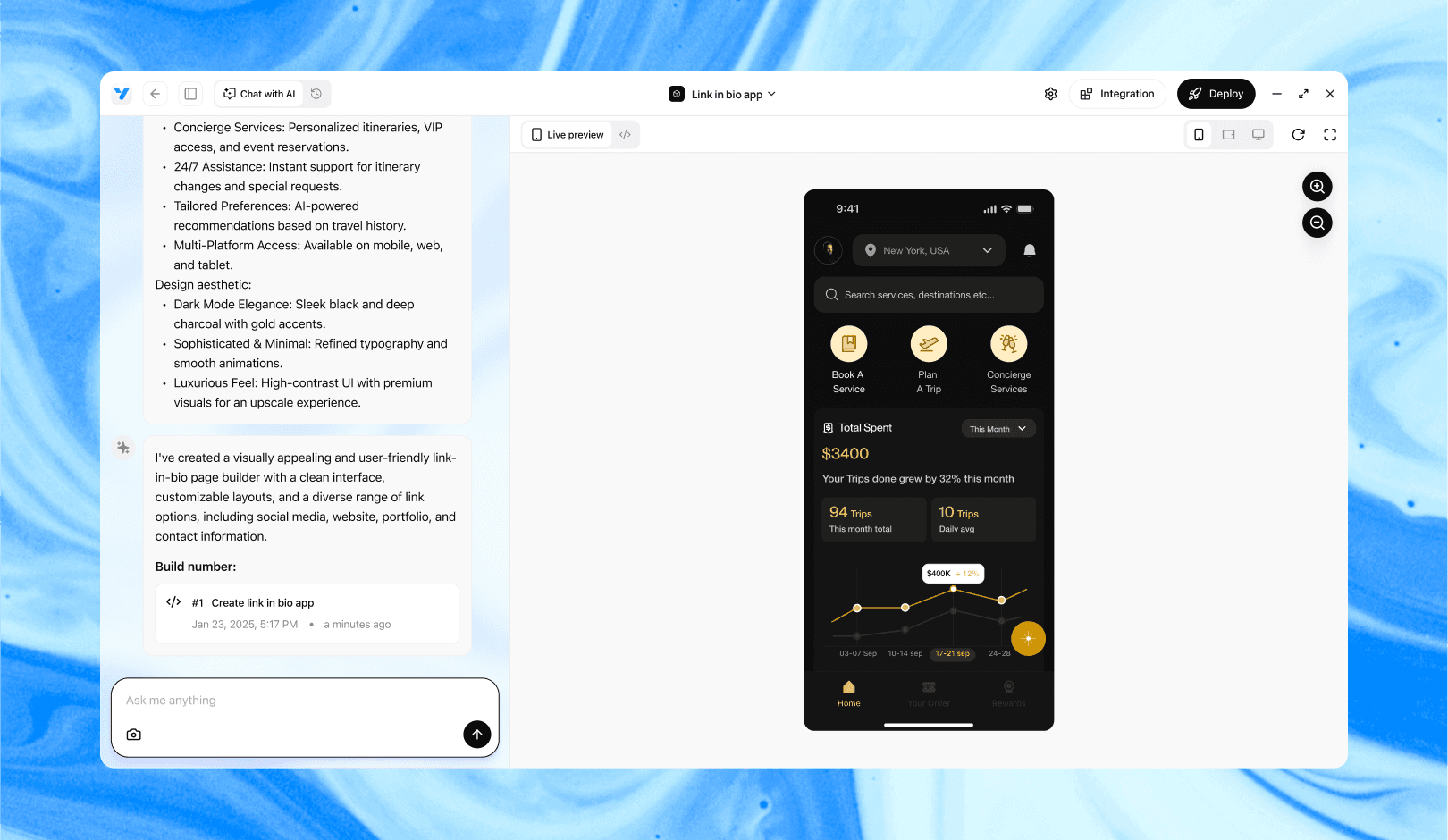
Vibe Studio, powered by Steve’s advanced AI agents, is a revolutionary no-code, conversational platform that empowers users to quickly and efficiently create full-stack Flutter applications integrated seamlessly with Firebase backend services. Ideal for solo founders, startups, and agile engineering teams, Vibe Studio allows users to visually manage and deploy Flutter apps, greatly accelerating the development process. The intuitive conversational interface simplifies complex development tasks, making app creation accessible even for non-coders.

Introduction
Implicit animations in Flutter let you animate common property changes with minimal code. For mobile development, this reduces boilerplate compared to explicit AnimationController-based approaches and is ideal for UI transitions, hover effects, and simple state-driven motion. This article explains the core concepts, highlights common widgets, and shows concise examples you can drop into a Flutter app.
Why Use Implicit Animations
Implicit animations are widget-driven: when a property value changes, the framework animates from the old value to the new value using an internally managed AnimationController. Use implicit animations when you want predictable, easy-to-add motion without manual lifecycle management. Advantages:
Concise code: no controllers, tickers, or listeners.
Declarative style: your widget tree describes the end state and Flutter animates automatically.
Good for stateful UI polish: size, color, opacity, alignment and more.
Limitations:
Less control: you cannot get fine-grained timing callbacks during the animation.
Not suitable for complex choreography: use explicit animations for path-based motion, sequenced timelines, or complex tweens.
Common Implicit Widgets
Flutter provides a suite of implicit animation widgets. The most used include:
AnimatedContainer: animates size, padding, color, borderRadius, and more.
AnimatedOpacity: fades a child in or out by animating the opacity property.
AnimatedAlign / AnimatedPositioned: animate alignment and position within layout constraints.
AnimatedCrossFade: switches between two children with a fade and size animation.
AnimatedDefaultTextStyle: transitions text style properties like color and font size.
Each widget accepts a duration and an optional curve. Changing the StatefulWidget state to a new target value triggers the animation.
Practical Example: AnimatedContainer
AnimatedContainer is the go-to implicit widget for layout and decoration changes. It’s useful for toggling card states, expanding panels, and animating background color. The code below demonstrates toggling a square's size, color, and border radius with a single setState call.
AnimatedContainer(
width: isExpanded ? 200 : 100,
height: isExpanded ? 200 : 100,
decoration: BoxDecoration(
color: isExpanded ? Colors.blue : Colors.grey,
borderRadius: BorderRadius.circular(isExpanded ? 24 : 8),
),
duration: Duration(milliseconds: 400),
curve: Curves.easeInOut,
)Use setState to flip isExpanded. AnimatedContainer interpolates numeric values and Colors. For non-interpolable properties, provide explicit tweening via an AnimatedBuilder or switch to explicit animations.
Combining Implicit Widgets
You can nest implicit widgets to animate multiple properties independently. For example, wrap a child with AnimatedOpacity and place that inside an AnimatedAlign. Because each widget manages its own controller, they run concurrently and remain easy to reason about. However, keep an eye on rebuilds: excessive nesting can increase build times for complex trees.
Tips And Best Practices
Prefer implicit widgets for simple transitions: toggles, focus changes, and card lifts.
Use short durations (150–500ms) and standard curves (easeInOut, fastOutSlowIn) to match platform expectations in mobile development.
For gesture-driven animations (drag to dismiss), implicit widgets can work but explicit animations often provide better control and smoother interaction.
When animating frequently changing values, throttle state changes to avoid many short animations that feel jittery.
If you need animation status callbacks (completed, dismissed), wrap an implicit animation in an AnimatedWidget or use explicit animations.
Performance Considerations
Implicit animations are efficient for most UI use cases because they reuse platform compositing. Still, profile your app when animating many elements simultaneously. Prefer animating composited properties (opacity, transforms) where possible to avoid layout passes. AnimatedContainer can trigger layout changes; if you only need visual transforms, consider AnimatedScale or AnimatedRotation.
Conclusion
Implicit animations in Flutter provide a fast, readable way to add motion to your mobile development projects. Use them for state-driven transitions, quick UI polish, and to keep codebase complexity low. Reserve explicit animations for complex choreography or when you need direct control over timing and callbacks. Start with AnimatedContainer, AnimatedOpacity, and AnimatedAlign — they cover the majority of common UI needs and significantly improve perceived quality with minimal code.
Vibe Studio

Vibe Studio, powered by Steve’s advanced AI agents, is a revolutionary no-code, conversational platform that empowers users to quickly and efficiently create full-stack Flutter applications integrated seamlessly with Firebase backend services. Ideal for solo founders, startups, and agile engineering teams, Vibe Studio allows users to visually manage and deploy Flutter apps, greatly accelerating the development process. The intuitive conversational interface simplifies complex development tasks, making app creation accessible even for non-coders.
Build Flutter Apps Faster with Vibe Studio
Vibe Studio is your AI-powered Flutter development companion. Skip boilerplate, build in real-time, and deploy without hassle. Start creating apps at lightning speed with zero setup.