Introduction
Creating custom scroll physics in Flutter lets you shape the feel and behavior of scrolling interactions. The framework exposes ScrollPhysics, a small but powerful API that drives deceleration, boundaries, and ballistic motion. This tutorial shows how to build a snap-and-paging physics, how to apply it to common scrolling widgets, and how to tune it for smooth, platform-appropriate results. You'll see concise code examples and practical tips for production usage in mobile development.
Understanding ScrollPhysics
ScrollPhysics composes behavior via a chainable API: you typically extend ScrollPhysics and override methods such as applyPhysicsToUserOffset, createBallisticSimulation, frictionFactor, and adjustPositionForNewDimensions. For snap and paging effects the important method is createBallisticSimulation. It's responsible for returning a Simulation that animates the scroll position when the user lifts their finger. Returning null means no ballistic motion.
A snap behavior typically: 1) computes a target page index from the current scroll position and velocity, and 2) returns a ScrollSpringSimulation that animates to that page offset. You can rely on existing helpers such as ScrollMetrics to access extentMin, extentMax, pixels, and viewportDimension so your physics is agnostic to item sizes when using known page sizes.
Building A SnapPhysics
Here is a compact custom physics that snaps to a fixed page size. It computes the nearest page given the current pixels and velocity, then returns a spring simulation toward the page offset.
class SnapScrollPhysics extends ScrollPhysics {
  final double pageSize;
  const SnapScrollPhysics({this.pageSize = 300.0, ScrollPhysics? parent}) : super(parent: parent);

  @override
  SnapScrollPhysics applyTo(ScrollPhysics? ancestor) => SnapScrollPhysics(pageSize: pageSize, parent: buildParent(ancestor));

  @override
  Simulation? createBallisticSimulation(ScrollMetrics metrics, double velocity) {
    if (velocity.abs() < tolerance.velocity) {
      final int page = (metrics.pixels / pageSize).round();
      final double target = page * pageSize;
      if (target == metrics.pixels) return null;
      return ScrollSpringSimulation(spring, metrics.pixels, target, 0.0, tolerance: tolerance);
    }
    final double page = (metrics.pixels / pageSize).floorToDouble() + (velocity > 0 ? 1 : 0);
    final double target = page * pageSize;
    return ScrollSpringSimulation(spring, metrics.pixels, target.clamp(metrics.minScrollExtent, metrics.maxScrollExtent), velocity, tolerance: tolerance);
  }
}
This snippet fixes pageSize for simplicity. For variable-sized children you'd compute page offsets via a lookup based on item sizes or use a PageController with page snapping logic.
Using SnapPhysics In Widgets
Apply custom physics to common scrollable widgets. For a horizontal ListView:
ListView.builder(
  scrollDirection: Axis.horizontal,
  physics: SnapScrollPhysics(pageSize: 280),
  itemCount: items.length,
  itemBuilder: (_, i) => SizedBox(width: 280, child: items[i]),
)
For a PageView, a simpler approach uses PageController and built-in PageScrollPhysics, but custom physics gives more control over velocity thresholds, spring stiffness, or combining with frictional behaviour. Use applyTo to chain platform-specific physics, e.g. SnapScrollPhysics().applyTo(BouncingScrollPhysics()) so iOS-like overscroll can coexist with snapping.
Tuning And Performance
Tuning parameters:
Spring description: adjust spring.mass, stiffness, damping for snappier or softer transitions. Flutter's default spring constant is often fine, but reducing stiffness makes motion floaty.
Velocity thresholds: Use tolerance.velocity to decide when to consider a stationary lift. Small thresholds improve sensitivity but may trigger unintended snaps.
Page detection: consider both position and velocity. If velocity is high, bias toward next/previous page in the swipe direction.
Performance considerations:
Keep createBallisticSimulation cheap. Avoid expensive layouts or synchronous work inside it.
For variable item sizes precompute offsets or use a controller that knows child sizes. Doing heavy work in the scroll callback will hurt 60/120fps.
Test on real devices. Physics feel can vary across devices and refresh rates.
Accessibility and UX:
Respect user expectations for platform behaviors. Chain platform physics when appropriate.
Provide programmatic APIs (controllers) to jump to pages for accessibility tools.
Vibe Studio
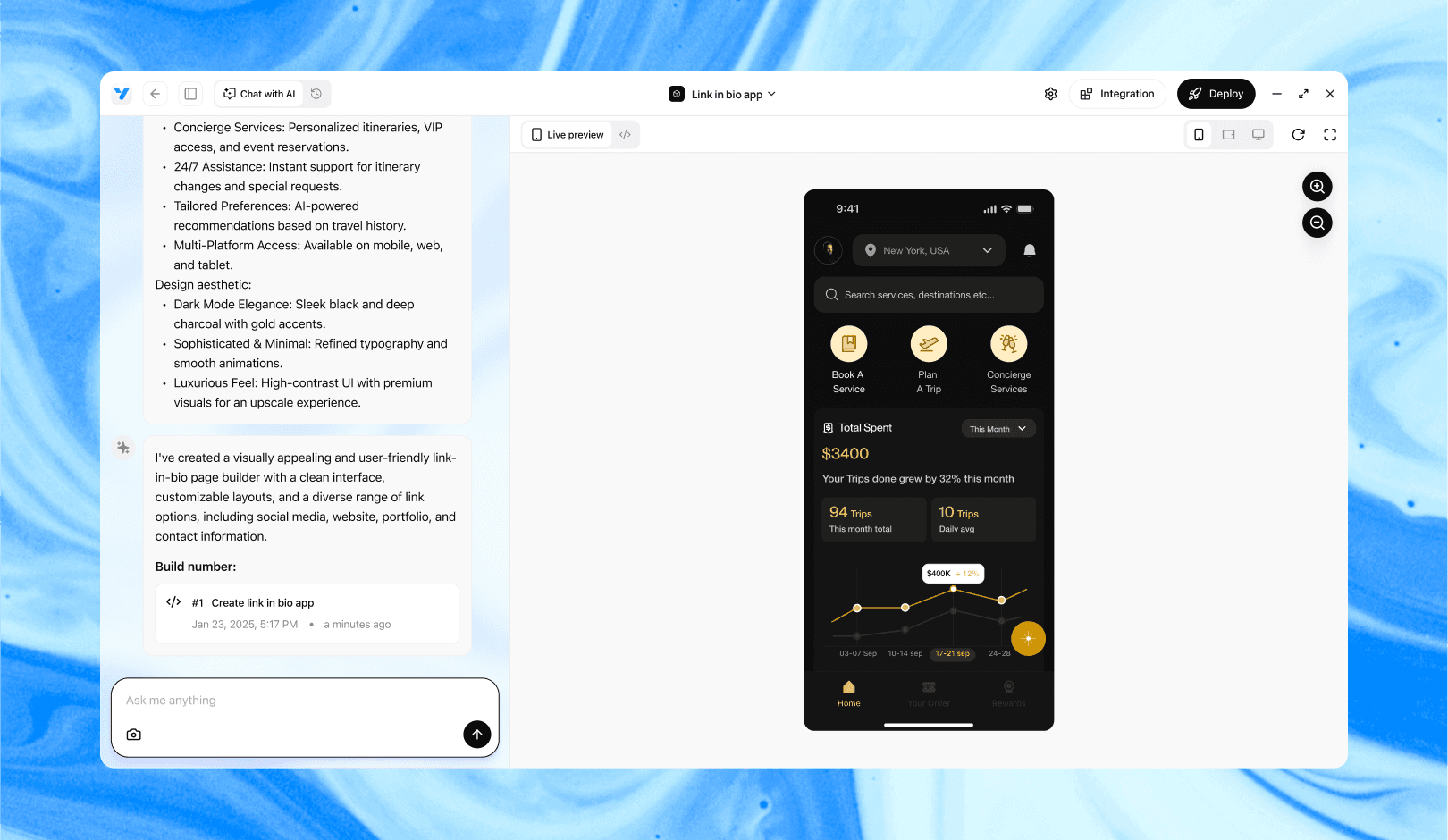
Vibe Studio, powered by Steve’s advanced AI agents, is a revolutionary no-code, conversational platform that empowers users to quickly and efficiently create full-stack Flutter applications integrated seamlessly with Firebase backend services. Ideal for solo founders, startups, and agile engineering teams, Vibe Studio allows users to visually manage and deploy Flutter apps, greatly accelerating the development process. The intuitive conversational interface simplifies complex development tasks, making app creation accessible even for non-coders.
Conclusion
Custom ScrollPhysics unlocks precise control over scrolling behavior in Flutter, enabling snap and paging experiences tailored to your app. Implement createBallisticSimulation to compute targets and return appropriate Simulation objects (springs or flings). Apply your physics to scrollable widgets, tune spring and thresholds for the desired feel, and keep computations lightweight for smooth frame rates. With careful tuning you can create responsive, native-feeling snap and paging interactions for mobile development.