Creating Custom Path Animations With AnimatedBuilder And PathMetrics
Jan 22, 2026


Summary
Summary
Summary
Summary
This tutorial demonstrates leveraging Flutter's PathMetrics and AnimatedBuilder to animate widgets along arbitrary Paths. Learn to extract PathMetric, map normalized animation values to distances, use getTangentForOffset for position and rotation, and integrate everything into an AnimatedBuilder for efficient per-frame updates and smooth motion.
Key insights:
Key insights:
Key insights:
Key insights:
Understanding PathMetrics: PathMetric provides length and getTangentForOffset to derive position and angle along a Path.
Constructing A Path Follower Widget: Convert a normalized animation value to a distance and query the metric once for position and rotation.
Animating With AnimatedBuilder: AnimatedBuilder isolates updates; use Transform.translate/rotate with tangent data for efficient rendering.
Practical Tips And Optimization: Cache metrics, handle multiple contours, and prefer CustomPainter for maximum performance.
Motion Control: Use CurvedAnimation or TweenSequences to vary speed; map curve output to metric.length for non-linear motion.
Introduction
Animating objects along custom vector paths is a common need in Flutter mobile development. The PathMetrics API combined with AnimatedBuilder provides a precise, performant way to drive motion along arbitrary Paths. This tutorial explains how to extract positions and tangents from a Path, build a reusable Path follower widget, and hook it into Flutter’s animation system with AnimatedBuilder for smooth, frame-synced movement.
Understanding PathMetrics
PathMetrics is a collection of PathMetric objects derived from a Path by calling computeMetrics(). Each PathMetric represents one contour of the Path and exposes length, extractPath, and getTangentForOffset. getTangentForOffset(double distance) returns a Tangent containing position and angle for a given distance along the contour. Use these to place and orient widgets precisely. Important points:
computeMetrics() yields an iterable; many paths have a single metric, but compound paths produce several.
Distance is measured in logical pixels along the path; normalize by dividing by path length when driving with a 0.0–1.0 animation value.
When the animation wraps or reverses, clamp or remap the value to the metric length to avoid out-of-range access.
Constructing A Path Follower Widget
Create a dedicated widget that accepts a Path, an Animation from 0 to 1, and a child. This widget resolves the metric, converts the normalized animation value to a distance, queries getTangentForOffset, and positions the child via a Stack/Transform.
Keep work minimal in build() — cache the pathMetric if the Path instance is stable. Calculate position and rotation each frame.
// Extract tangent and position final metric = path.computeMetrics().first; // assumes single contour final distance = (animation.value.clamp(0.0, 1.0)) * metric.length; final tangent = metric.getTangentForOffset(distance); final position = tangent?.position ?? Offset.zero; final angle = tangent?.localAngle ?? 0.0;
This snippet demonstrates converting an animation value to a tangible Offset and angle for rendering. When the Path changes, recompute metrics in didUpdateWidget or similar lifecycle hooks.
Animating With AnimatedBuilder
AnimatedBuilder is ideal because it rebuilds only the part of the tree you need and provides the animation object to the builder callback. Wrap the follower child in an AnimatedBuilder and use Transform.translate and Transform.rotate to apply the metric-derived values. Using Stack with Positioned.fill keeps layout simple; the follower is painted above the path.
Keep heavy math outside the widget tree and use final locals inside the builder. Example:
AnimatedBuilder( animation: animation, builder: (context, child) { final distance = animation.value * metric.length; final tangent = metric.getTangentForOffset(distance); final pos = tangent?.position ?? Offset.zero; return Transform.translate( offset: pos, child: Transform.rotate(angle: tangent?.angle ?? 0, child: child), ); }, child: yourFollowerWidget, )
If the path has multiple contours, decide whether the animation value maps across all metrics (concatenate lengths) or is constrained to a single metric. For concatenation, compute a total length and find the metric that contains the current distance.
Practical Tips And Optimization
Cache computeMetrics result when the Path does not change frequently. Recomputing metrics each frame is unnecessary and costly.
Use Fractional translation for very large offsets by subtracting canvas origin when painting. For widgets, use Stack with Alignment.topLeft and translate to absolute coordinates.
For rotation, prefer tangent.angle or tangent.localAngle depending on which orientation you need.
If you need to animate a Canvas-drawn object (CustomPainter), derive the same tangent data and draw directly; this is even more performant than moving widgets.
Smooth motion: use CurvedAnimation or TweenSequences to vary speed along the path; convert curve output to distance with metric.length * curveValue.
Handle edge cases: if the path is degenerate or metric.getTangentForOffset returns null, fallback gracefully to a default position.
Vibe Studio
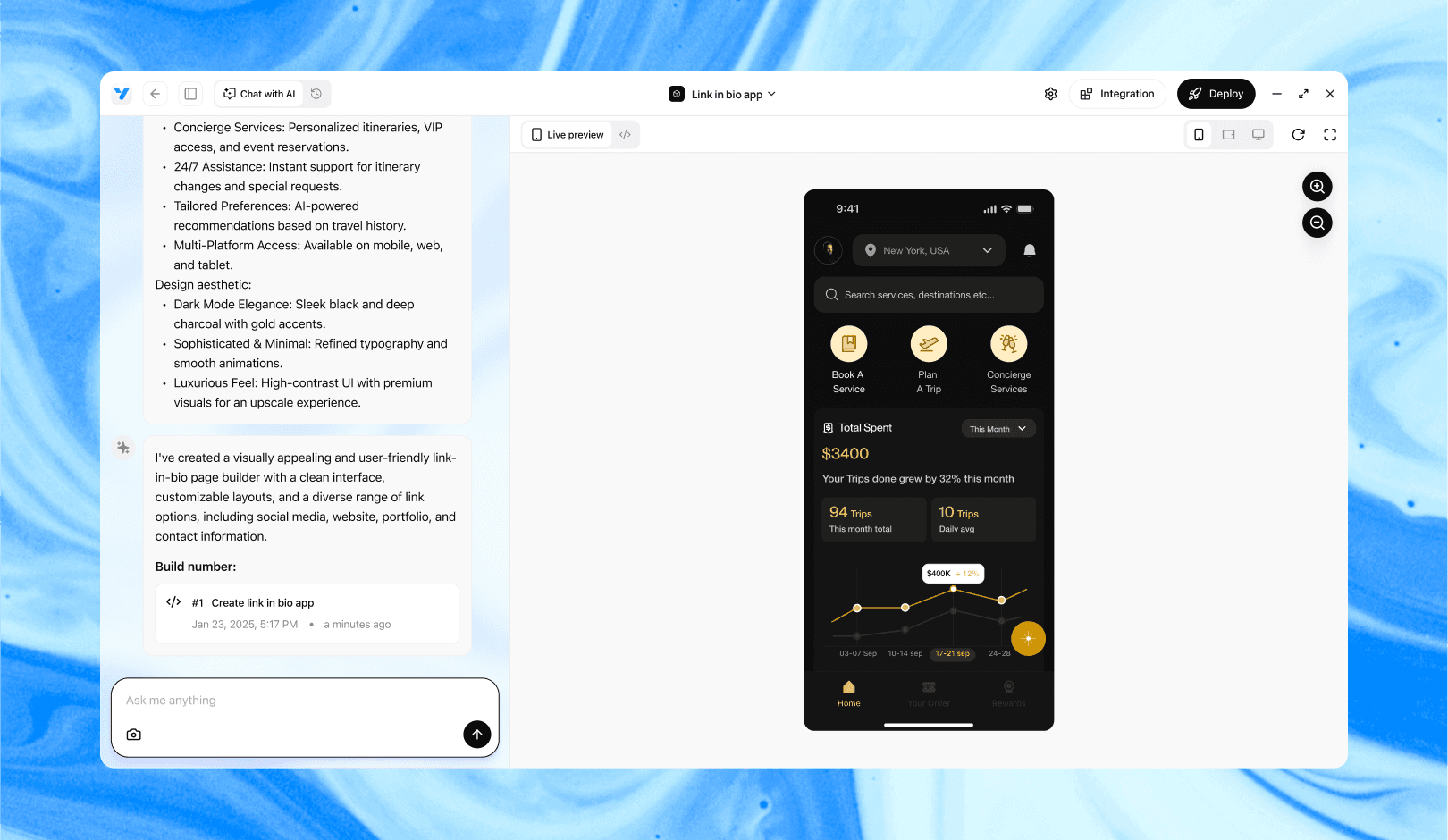
Vibe Studio, powered by Steve’s advanced AI agents, is a revolutionary no-code, conversational platform that empowers users to quickly and efficiently create full-stack Flutter applications integrated seamlessly with Firebase backend services. Ideal for solo founders, startups, and agile engineering teams, Vibe Studio allows users to visually manage and deploy Flutter apps, greatly accelerating the development process. The intuitive conversational interface simplifies complex development tasks, making app creation accessible even for non-coders.
Conclusion
Using PathMetrics with AnimatedBuilder gives precise control over object motion along any Path in Flutter mobile development. Extract the metric once, convert a normalized animation value to distance, and use getTangentForOffset to obtain position and orientation. Wrap the follower in an AnimatedBuilder to keep updates efficient and isolated. These techniques let you build complex motion—vehicles following roads, icons tracing shapes, or custom loaders—while keeping performance predictable.

Introduction
Animating objects along custom vector paths is a common need in Flutter mobile development. The PathMetrics API combined with AnimatedBuilder provides a precise, performant way to drive motion along arbitrary Paths. This tutorial explains how to extract positions and tangents from a Path, build a reusable Path follower widget, and hook it into Flutter’s animation system with AnimatedBuilder for smooth, frame-synced movement.
Understanding PathMetrics
PathMetrics is a collection of PathMetric objects derived from a Path by calling computeMetrics(). Each PathMetric represents one contour of the Path and exposes length, extractPath, and getTangentForOffset. getTangentForOffset(double distance) returns a Tangent containing position and angle for a given distance along the contour. Use these to place and orient widgets precisely. Important points:
computeMetrics() yields an iterable; many paths have a single metric, but compound paths produce several.
Distance is measured in logical pixels along the path; normalize by dividing by path length when driving with a 0.0–1.0 animation value.
When the animation wraps or reverses, clamp or remap the value to the metric length to avoid out-of-range access.
Constructing A Path Follower Widget
Create a dedicated widget that accepts a Path, an Animation from 0 to 1, and a child. This widget resolves the metric, converts the normalized animation value to a distance, queries getTangentForOffset, and positions the child via a Stack/Transform.
Keep work minimal in build() — cache the pathMetric if the Path instance is stable. Calculate position and rotation each frame.
// Extract tangent and position final metric = path.computeMetrics().first; // assumes single contour final distance = (animation.value.clamp(0.0, 1.0)) * metric.length; final tangent = metric.getTangentForOffset(distance); final position = tangent?.position ?? Offset.zero; final angle = tangent?.localAngle ?? 0.0;
This snippet demonstrates converting an animation value to a tangible Offset and angle for rendering. When the Path changes, recompute metrics in didUpdateWidget or similar lifecycle hooks.
Animating With AnimatedBuilder
AnimatedBuilder is ideal because it rebuilds only the part of the tree you need and provides the animation object to the builder callback. Wrap the follower child in an AnimatedBuilder and use Transform.translate and Transform.rotate to apply the metric-derived values. Using Stack with Positioned.fill keeps layout simple; the follower is painted above the path.
Keep heavy math outside the widget tree and use final locals inside the builder. Example:
AnimatedBuilder( animation: animation, builder: (context, child) { final distance = animation.value * metric.length; final tangent = metric.getTangentForOffset(distance); final pos = tangent?.position ?? Offset.zero; return Transform.translate( offset: pos, child: Transform.rotate(angle: tangent?.angle ?? 0, child: child), ); }, child: yourFollowerWidget, )
If the path has multiple contours, decide whether the animation value maps across all metrics (concatenate lengths) or is constrained to a single metric. For concatenation, compute a total length and find the metric that contains the current distance.
Practical Tips And Optimization
Cache computeMetrics result when the Path does not change frequently. Recomputing metrics each frame is unnecessary and costly.
Use Fractional translation for very large offsets by subtracting canvas origin when painting. For widgets, use Stack with Alignment.topLeft and translate to absolute coordinates.
For rotation, prefer tangent.angle or tangent.localAngle depending on which orientation you need.
If you need to animate a Canvas-drawn object (CustomPainter), derive the same tangent data and draw directly; this is even more performant than moving widgets.
Smooth motion: use CurvedAnimation or TweenSequences to vary speed along the path; convert curve output to distance with metric.length * curveValue.
Handle edge cases: if the path is degenerate or metric.getTangentForOffset returns null, fallback gracefully to a default position.
Vibe Studio

Vibe Studio, powered by Steve’s advanced AI agents, is a revolutionary no-code, conversational platform that empowers users to quickly and efficiently create full-stack Flutter applications integrated seamlessly with Firebase backend services. Ideal for solo founders, startups, and agile engineering teams, Vibe Studio allows users to visually manage and deploy Flutter apps, greatly accelerating the development process. The intuitive conversational interface simplifies complex development tasks, making app creation accessible even for non-coders.
Conclusion
Using PathMetrics with AnimatedBuilder gives precise control over object motion along any Path in Flutter mobile development. Extract the metric once, convert a normalized animation value to distance, and use getTangentForOffset to obtain position and orientation. Wrap the follower in an AnimatedBuilder to keep updates efficient and isolated. These techniques let you build complex motion—vehicles following roads, icons tracing shapes, or custom loaders—while keeping performance predictable.
Build Flutter Apps Faster with Vibe Studio
Vibe Studio is your AI-powered Flutter development companion. Skip boilerplate, build in real-time, and deploy without hassle. Start creating apps at lightning speed with zero setup.
Other Insights