Creating Chat Interfaces in Flutter With Stream-Like UI Patterns

Summary
Summary
Summary
Summary

This tutorial shows how to build stream-like chat interfaces in Flutter for mobile development: design a unidirectional stream architecture, render message lists efficiently with ListView.builder and keys, handle typing/presence as separate ephemeral streams, implement optimistic updates, and persist local state for offline resilience.

This tutorial shows how to build stream-like chat interfaces in Flutter for mobile development: design a unidirectional stream architecture, render message lists efficiently with ListView.builder and keys, handle typing/presence as separate ephemeral streams, implement optimistic updates, and persist local state for offline resilience.

This tutorial shows how to build stream-like chat interfaces in Flutter for mobile development: design a unidirectional stream architecture, render message lists efficiently with ListView.builder and keys, handle typing/presence as separate ephemeral streams, implement optimistic updates, and persist local state for offline resilience.

This tutorial shows how to build stream-like chat interfaces in Flutter for mobile development: design a unidirectional stream architecture, render message lists efficiently with ListView.builder and keys, handle typing/presence as separate ephemeral streams, implement optimistic updates, and persist local state for offline resilience.

Key insights:
Key insights:
Key insights:
Key insights:
  • Designing A Stream-Like Architecture: Use Streams for messages and separate streams for ephemeral signals; normalize storage for O(1) edits.

  • Efficient Message List Rendering: Prefer ListView.builder with reverse rendering and per-item keys; use AnimatedList for insert/remove animations.

  • Handling Input, Typing, And Presence: Keep typing/presence separate from message stream; use optimistic updates with client-side IDs.

  • State Management And Offline Handling: Persist to local storage, merge server events by id, and implement pagination and retry strategies.

Introduction

Building chat interfaces in Flutter requires careful attention to UX, performance, and real-time data flow. Emulating a stream-like UI—where messages append, edits propagate, and UI reflects presence or typing—fits naturally with Flutter's reactive paradigm. This tutorial gives a concise, code-oriented guide to structuring a chat interface using stream patterns, efficient list rendering, and resilient state management for mobile development.

Designing A Stream-Like Architecture

At the heart of a stream-like chat UI is a unidirectional flow: events -> state -> UI. Use Streams (or stream-like abstractions such as Rx or Bloc) to push message events (new, edit, delete), presence updates, and typing indicators. Keep the domain model minimal:
Message {id, text, senderId, timestamp, status}.

Design tips:

  • Expose a Stream<List<Message>> for the visible message set. Emit incremental updates rather than full list snapshots if possible.

  • Use separate Streams for low-priority signals (typing, read receipts) to avoid rebuilding the entire list.

  • Normalize message storage (map by id) so edits and deletes are O(1) operations, and stream emissions can be diffs.

A minimal provider might look like:

// Pseudocode: expose a stream of message lists
StreamController<List<Message>> _messagesCtrl = StreamController.broadcast();
void addMessage(Message m) { /* update store */ _messagesCtrl.add(currentMessages); }
Stream<List<Message>> get messagesStream => _messagesCtrl.stream;

Efficient Message List Rendering

Performance is critical on mobile. Use ListView.builder for large histories and reverse rendering for chat UX (newest at bottom). Avoid re-building entire message trees: rely on keys and item-level widgets that only rebuild when the underlying message changes.

Use StreamBuilder at the list level and delegate message rendering to a MessageBubble that relies on immutable data and keys:

StreamBuilder<List<Message>>(stream: messagesStream, builder: (_, snap) {
  final msgs = snap.data ?? [];
  return ListView.builder(
    reverse: true,
    itemCount: msgs.length,
    itemBuilder: (_, i) => MessageBubble(key: ValueKey(msgs[i].id), message: msgs[i]),
  );
});

MessageBubble should be lightweight and avoid internal state where possible. For animations (inserts/removals), wrap with AnimatedSize or use AnimatedList for a more granular approach. AnimatedList requires managing an internal list and executing insert/remove operations that mirror your stream diffs.

Handling Input, Typing, And Presence

Input handling must be debounced and resilient to network latency. Send optimistic UI updates: add a local message with status Sending, then reconcile when the server confirms or rejects.

Typing and presence are ephemerals—treat them as ephemeral streams. Keep them separate to prevent unnecessary list rebuilds. Example pattern:

  • typingStream: Stream<Map<userId, bool>>

  • presenceStream: Stream<Map<userId, PresenceState>>

Show typing indicators as a small overlay or inline widget that listens only to typingStream. Keep UI elements distinct so that message list rendering stays efficient.

For optimistic messages, update message status on confirmation:

  • Assign a temporary clientId.

  • Replace the optimistic message with the server message by ID when confirmed.

  • If failed, mark as failed and show retry affordance.

State Management And Offline Handling

Choose a state-management pattern that maps well to streams: Bloc, Rx, Riverpod, or a simple StreamController-backed repository. Important behaviors:

  • Durable local storage: persist messages to SQLite or Hive. Initialize the stream with local cache immediately, then merge server updates.

  • Merge strategy: apply server events onto local cache using id-based merges to prevent duplication.

  • Backpressure & pagination: implement windowed loading (e.g., load 50 messages at a time) and fetch older pages on scroll-to-top.

Error handling: show inline error markers on messages and surface connection state in the UI. Provide manual sync controls if automatic reconciliation fails.

Vibe Studio
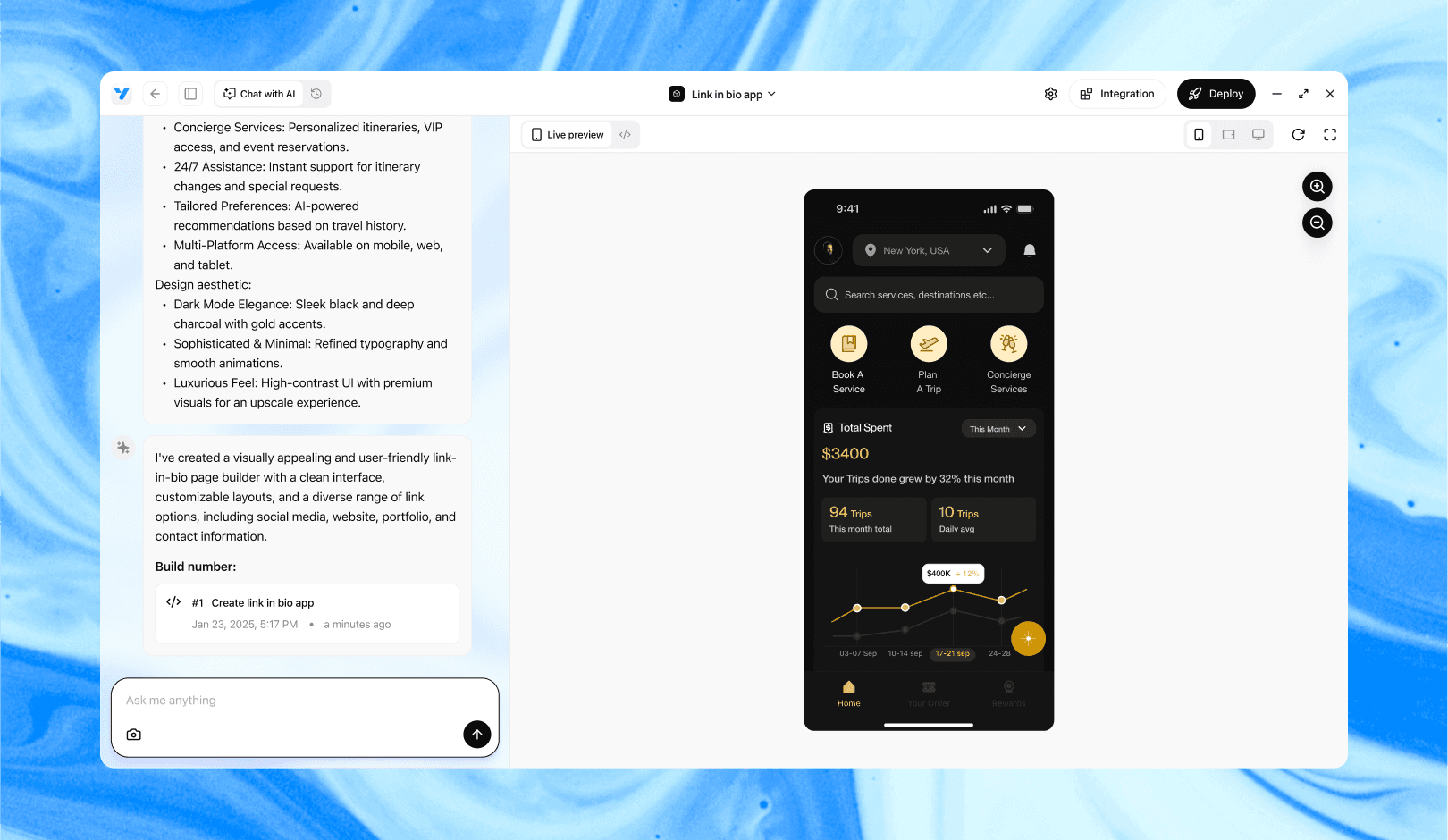
Vibe Studio, powered by Steve’s advanced AI agents, is a revolutionary no-code, conversational platform that empowers users to quickly and efficiently create full-stack Flutter applications integrated seamlessly with Firebase backend services. Ideal for solo founders, startups, and agile engineering teams, Vibe Studio allows users to visually manage and deploy Flutter apps, greatly accelerating the development process. The intuitive conversational interface simplifies complex development tasks, making app creation accessible even for non-coders.

Conclusion

A reliable chat UI in Flutter combines well-structured streams, efficient list rendering, and clear separation of ephemeral signals. Use Streams for core message flow, keep typing/presence separate, use keys and ListView.builder for performant rendering, and implement optimistic updates with durable local storage to bridge offline gaps. These patterns are directly applicable to mobile development in Flutter and scale from simple peer-to-peer chats to complex group messaging systems.


Introduction

Building chat interfaces in Flutter requires careful attention to UX, performance, and real-time data flow. Emulating a stream-like UI—where messages append, edits propagate, and UI reflects presence or typing—fits naturally with Flutter's reactive paradigm. This tutorial gives a concise, code-oriented guide to structuring a chat interface using stream patterns, efficient list rendering, and resilient state management for mobile development.

Designing A Stream-Like Architecture

At the heart of a stream-like chat UI is a unidirectional flow: events -> state -> UI. Use Streams (or stream-like abstractions such as Rx or Bloc) to push message events (new, edit, delete), presence updates, and typing indicators. Keep the domain model minimal:
Message {id, text, senderId, timestamp, status}.

Design tips:

  • Expose a Stream<List<Message>> for the visible message set. Emit incremental updates rather than full list snapshots if possible.

  • Use separate Streams for low-priority signals (typing, read receipts) to avoid rebuilding the entire list.

  • Normalize message storage (map by id) so edits and deletes are O(1) operations, and stream emissions can be diffs.

A minimal provider might look like:

// Pseudocode: expose a stream of message lists
StreamController<List<Message>> _messagesCtrl = StreamController.broadcast();
void addMessage(Message m) { /* update store */ _messagesCtrl.add(currentMessages); }
Stream<List<Message>> get messagesStream => _messagesCtrl.stream;

Efficient Message List Rendering

Performance is critical on mobile. Use ListView.builder for large histories and reverse rendering for chat UX (newest at bottom). Avoid re-building entire message trees: rely on keys and item-level widgets that only rebuild when the underlying message changes.

Use StreamBuilder at the list level and delegate message rendering to a MessageBubble that relies on immutable data and keys:

StreamBuilder<List<Message>>(stream: messagesStream, builder: (_, snap) {
  final msgs = snap.data ?? [];
  return ListView.builder(
    reverse: true,
    itemCount: msgs.length,
    itemBuilder: (_, i) => MessageBubble(key: ValueKey(msgs[i].id), message: msgs[i]),
  );
});

MessageBubble should be lightweight and avoid internal state where possible. For animations (inserts/removals), wrap with AnimatedSize or use AnimatedList for a more granular approach. AnimatedList requires managing an internal list and executing insert/remove operations that mirror your stream diffs.

Handling Input, Typing, And Presence

Input handling must be debounced and resilient to network latency. Send optimistic UI updates: add a local message with status Sending, then reconcile when the server confirms or rejects.

Typing and presence are ephemerals—treat them as ephemeral streams. Keep them separate to prevent unnecessary list rebuilds. Example pattern:

  • typingStream: Stream<Map<userId, bool>>

  • presenceStream: Stream<Map<userId, PresenceState>>

Show typing indicators as a small overlay or inline widget that listens only to typingStream. Keep UI elements distinct so that message list rendering stays efficient.

For optimistic messages, update message status on confirmation:

  • Assign a temporary clientId.

  • Replace the optimistic message with the server message by ID when confirmed.

  • If failed, mark as failed and show retry affordance.

State Management And Offline Handling

Choose a state-management pattern that maps well to streams: Bloc, Rx, Riverpod, or a simple StreamController-backed repository. Important behaviors:

  • Durable local storage: persist messages to SQLite or Hive. Initialize the stream with local cache immediately, then merge server updates.

  • Merge strategy: apply server events onto local cache using id-based merges to prevent duplication.

  • Backpressure & pagination: implement windowed loading (e.g., load 50 messages at a time) and fetch older pages on scroll-to-top.

Error handling: show inline error markers on messages and surface connection state in the UI. Provide manual sync controls if automatic reconciliation fails.

Vibe Studio

Vibe Studio, powered by Steve’s advanced AI agents, is a revolutionary no-code, conversational platform that empowers users to quickly and efficiently create full-stack Flutter applications integrated seamlessly with Firebase backend services. Ideal for solo founders, startups, and agile engineering teams, Vibe Studio allows users to visually manage and deploy Flutter apps, greatly accelerating the development process. The intuitive conversational interface simplifies complex development tasks, making app creation accessible even for non-coders.

Conclusion

A reliable chat UI in Flutter combines well-structured streams, efficient list rendering, and clear separation of ephemeral signals. Use Streams for core message flow, keep typing/presence separate, use keys and ListView.builder for performant rendering, and implement optimistic updates with durable local storage to bridge offline gaps. These patterns are directly applicable to mobile development in Flutter and scale from simple peer-to-peer chats to complex group messaging systems.

Build Flutter Apps Faster with Vibe Studio

Build Flutter Apps Faster with Vibe Studio

Build Flutter Apps Faster with Vibe Studio

Build Flutter Apps Faster with Vibe Studio

Vibe Studio is your AI-powered Flutter development companion. Skip boilerplate, build in real-time, and deploy without hassle. Start creating apps at lightning speed with zero setup.

Vibe Studio is your AI-powered Flutter development companion. Skip boilerplate, build in real-time, and deploy without hassle. Start creating apps at lightning speed with zero setup.

Vibe Studio is your AI-powered Flutter development companion. Skip boilerplate, build in real-time, and deploy without hassle. Start creating apps at lightning speed with zero setup.

Vibe Studio is your AI-powered Flutter development companion. Skip boilerplate, build in real-time, and deploy without hassle. Start creating apps at lightning speed with zero setup.

Other Insights

Other Insights

Other Insights

Other Insights

Join a growing community of builders today

Join a growing community of builders today

Join a growing community of builders today

Join a growing community of builders today

Join a growing community of builders today

28-07 Jackson Ave

Walturn

New York NY 11101 United States

© Steve • All Rights Reserved 2025

28-07 Jackson Ave

Walturn

New York NY 11101 United States

© Steve • All Rights Reserved 2025

28-07 Jackson Ave

Walturn

New York NY 11101 United States

© Steve • All Rights Reserved 2025

28-07 Jackson Ave

Walturn

New York NY 11101 United States

© Steve • All Rights Reserved 2025

28-07 Jackson Ave

Walturn

New York NY 11101 United States

© Steve • All Rights Reserved 2025

28-07 Jackson Ave

Walturn

New York NY 11101 United States

© Steve • All Rights Reserved 2025