Creating Adaptive Flutter UIs for Foldables and Large Screens
Nov 18, 2025


Summary
Summary
Summary
Summary
This tutorial explains practical patterns for creating adaptive Flutter UIs for foldables and large screens. Use MediaQuery and LayoutBuilder to classify modes, apply breakpoints to switch between single- and two-pane layouts, avoid placing interactive elements across hinges, and adapt navigation (NavigationRail, side-by-side detail views). Centralize display-mode logic and optimize performance for larger surfaces.
Key insights:
Key insights:
Key insights:
Key insights:
Understand Screen Modes And Folding Features: Classify the device into compact, expanded, or dual-pane modes and centralize that logic for consistent UI decisions.
Use Adaptive Layouts And Breakpoints: Switch layouts with LayoutBuilder and well-chosen width breakpoints to present master/detail or multi-column UIs.
Handle Hinges And Multiple Display Areas: Treat hinge bounds as non-interactive and split content into independent panes to avoid broken UI elements.
Optimize Input And Navigation For Large Screens: Use NavigationRail, keyboard focus, and side-by-side detail presentation instead of modal mobile navigation on wide surfaces.
Testing And Performance: Test on real foldable hardware or accurate emulators, use lazy builders and const constructors, and minimize large rebuilds.
Introduction
Adaptive design is essential in modern flutter mobile development. Foldable devices and large-screen tablets bring new layout opportunities and constraints: multiple display areas, hinges, and dramatically different aspect ratios. This tutorial shows practical patterns and small code examples to design UIs that adapt reliably across single-pane phones, dual-screen/foldable devices, and large tablets or desktops.
Understand Screen Modes And Folding Features
Start by classifying the display environment at runtime. Use MediaQuery and LayoutBuilder to get size, orientation, and available constraints. For foldables you should also read platform-specific display features (hinge or cutout) when available. The goal is to map device state to a small set of modes your app understands, e.g. compact (phone), expanded (tablet/landscape), and dual-pane (folded open with hinge between panes).
Build a simple enum and helper that returns the mode from constraints. Keep this logic centralized so all routes and widgets can query a single source of truth. In many cases a two-pane layout improves productivity on large surfaces: put a stable navigation or list in the master pane and the content in the detail pane.
Use Adaptive Layouts And Breakpoints
Prefer flexible, composition-based layouts instead of hardcoded pixel values. Use LayoutBuilder to branch on maxWidth and design breakpoints that fit your app's content (common breakpoints: 600, 840, 1024, 1440 logical pixels). For medium and large sizes, switch from stacked navigation to a persistent rail or side sheet.
Example pattern for a responsive scaffold:
class ResponsiveScaffold extends StatelessWidget {
final Widget master, detail;
const ResponsiveScaffold({required this.master, required this.detail});
@override
Widget build(BuildContext context) {
return LayoutBuilder(builder: (context, cs) {
if (cs.maxWidth > 900) {
return Row(children: [Expanded(child: master), VerticalDivider(), Expanded(flex: 2, child: detail)]);
}
return Scaffold(appBar: AppBar(), body: master);
});
}
}Use NavigationRail on wide layouts for consistent app chrome on tablets and foldables. For truly large screens, consider multi-column content and denser information presentation while keeping touch targets large enough for comfortable tap.
Handle Hinges And Multiple Display Areas
Foldables can expose composite display areas separated by a hinge; treat the hinge as unusable space. Where possible, avoid placing interactive controls that span across the hinge. If you detect a hinge or cutout between logical bounds, split content into two independent panes so each pane is fully visible.
On Android and Surface Duo devices, Google and OEMs provide display feature APIs or plugins to surface hinge bounds. When available, read those features and map them into your app mode: single-screen, tablet-like full-screen, or dual-pane separated by hinge. If a reliable display-feature API is not present, fallback heuristics (e.g., very large logical width with a central non-usable region) can help, but prioritize platform APIs for correctness.
Optimize Input And Navigation For Large Screens
Large and foldable screens change how users interact: there is more room for pointer/keyboard input and richer navigation models. Support keyboard navigation, focus traversal, and hover states where appropriate. Provide alternate navigation that leverages available width: persist navigation on the side instead of modal drawers on wide screens.
For lists and master-detail views, avoid reusing mobile-only push navigation on wide surfaces. Present details side-by-side, and make sure route transitions and state handling are shared between single-pane and two-pane modes so nothing gets lost when the user folds or unfolds their device.
Performance: larger UIs often contain more widgets. Use const constructors, lazy builders (ListView.builder), and avoid rebuilding large widget subtrees when only small parts change. Test on real hardware or accurate emulators that expose foldable behaviors to validate transitions.
Vibe Studio
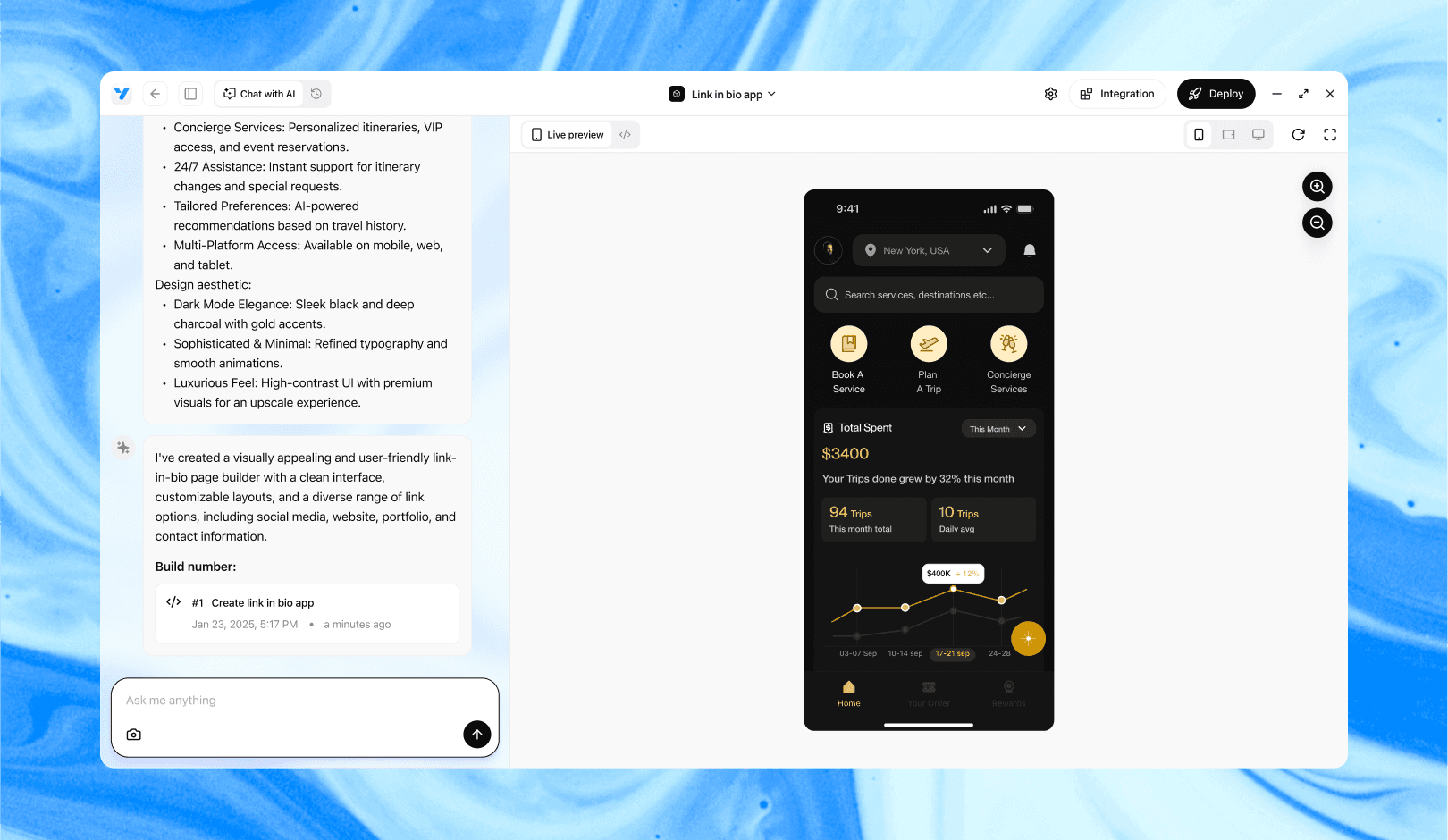
Vibe Studio, powered by Steve’s advanced AI agents, is a revolutionary no-code, conversational platform that empowers users to quickly and efficiently create full-stack Flutter applications integrated seamlessly with Firebase backend services. Ideal for solo founders, startups, and agile engineering teams, Vibe Studio allows users to visually manage and deploy Flutter apps, greatly accelerating the development process. The intuitive conversational interface simplifies complex development tasks, making app creation accessible even for non-coders.
Conclusion
Designing adaptive flutter interfaces for foldables and large screens requires a small set of disciplined patterns: classify the display mode, use breakpoints with LayoutBuilder, treat hinge regions as non-interactive, and adapt navigation and input models for larger surfaces. Centralize the mode detection, build composable two-pane widgets, and test transitions thoroughly. These approaches keep your flutter mobile development flexible and future-proof as device shapes continue to diversify.

Introduction
Adaptive design is essential in modern flutter mobile development. Foldable devices and large-screen tablets bring new layout opportunities and constraints: multiple display areas, hinges, and dramatically different aspect ratios. This tutorial shows practical patterns and small code examples to design UIs that adapt reliably across single-pane phones, dual-screen/foldable devices, and large tablets or desktops.
Understand Screen Modes And Folding Features
Start by classifying the display environment at runtime. Use MediaQuery and LayoutBuilder to get size, orientation, and available constraints. For foldables you should also read platform-specific display features (hinge or cutout) when available. The goal is to map device state to a small set of modes your app understands, e.g. compact (phone), expanded (tablet/landscape), and dual-pane (folded open with hinge between panes).
Build a simple enum and helper that returns the mode from constraints. Keep this logic centralized so all routes and widgets can query a single source of truth. In many cases a two-pane layout improves productivity on large surfaces: put a stable navigation or list in the master pane and the content in the detail pane.
Use Adaptive Layouts And Breakpoints
Prefer flexible, composition-based layouts instead of hardcoded pixel values. Use LayoutBuilder to branch on maxWidth and design breakpoints that fit your app's content (common breakpoints: 600, 840, 1024, 1440 logical pixels). For medium and large sizes, switch from stacked navigation to a persistent rail or side sheet.
Example pattern for a responsive scaffold:
class ResponsiveScaffold extends StatelessWidget {
final Widget master, detail;
const ResponsiveScaffold({required this.master, required this.detail});
@override
Widget build(BuildContext context) {
return LayoutBuilder(builder: (context, cs) {
if (cs.maxWidth > 900) {
return Row(children: [Expanded(child: master), VerticalDivider(), Expanded(flex: 2, child: detail)]);
}
return Scaffold(appBar: AppBar(), body: master);
});
}
}Use NavigationRail on wide layouts for consistent app chrome on tablets and foldables. For truly large screens, consider multi-column content and denser information presentation while keeping touch targets large enough for comfortable tap.
Handle Hinges And Multiple Display Areas
Foldables can expose composite display areas separated by a hinge; treat the hinge as unusable space. Where possible, avoid placing interactive controls that span across the hinge. If you detect a hinge or cutout between logical bounds, split content into two independent panes so each pane is fully visible.
On Android and Surface Duo devices, Google and OEMs provide display feature APIs or plugins to surface hinge bounds. When available, read those features and map them into your app mode: single-screen, tablet-like full-screen, or dual-pane separated by hinge. If a reliable display-feature API is not present, fallback heuristics (e.g., very large logical width with a central non-usable region) can help, but prioritize platform APIs for correctness.
Optimize Input And Navigation For Large Screens
Large and foldable screens change how users interact: there is more room for pointer/keyboard input and richer navigation models. Support keyboard navigation, focus traversal, and hover states where appropriate. Provide alternate navigation that leverages available width: persist navigation on the side instead of modal drawers on wide screens.
For lists and master-detail views, avoid reusing mobile-only push navigation on wide surfaces. Present details side-by-side, and make sure route transitions and state handling are shared between single-pane and two-pane modes so nothing gets lost when the user folds or unfolds their device.
Performance: larger UIs often contain more widgets. Use const constructors, lazy builders (ListView.builder), and avoid rebuilding large widget subtrees when only small parts change. Test on real hardware or accurate emulators that expose foldable behaviors to validate transitions.
Vibe Studio

Vibe Studio, powered by Steve’s advanced AI agents, is a revolutionary no-code, conversational platform that empowers users to quickly and efficiently create full-stack Flutter applications integrated seamlessly with Firebase backend services. Ideal for solo founders, startups, and agile engineering teams, Vibe Studio allows users to visually manage and deploy Flutter apps, greatly accelerating the development process. The intuitive conversational interface simplifies complex development tasks, making app creation accessible even for non-coders.
Conclusion
Designing adaptive flutter interfaces for foldables and large screens requires a small set of disciplined patterns: classify the display mode, use breakpoints with LayoutBuilder, treat hinge regions as non-interactive, and adapt navigation and input models for larger surfaces. Centralize the mode detection, build composable two-pane widgets, and test transitions thoroughly. These approaches keep your flutter mobile development flexible and future-proof as device shapes continue to diversify.
Build Flutter Apps Faster with Vibe Studio
Vibe Studio is your AI-powered Flutter development companion. Skip boilerplate, build in real-time, and deploy without hassle. Start creating apps at lightning speed with zero setup.