Introduction
Creating a Pinterest-style masonry grid on Flutter mobile apps is deceptively simple until you run into jank: uneven column heights, layout thrashing, and stuttered scrolling when images or widgets load. This tutorial focuses on a reliable, performance-first approach: using a column-based masonry algorithm, minimizing layout passes, caching measurements, and deferring expensive work off the UI thread. The result is a visually similar masonry grid that scrolls smoothly on real devices.
Architecture And Layout Choices
A masonry grid is conceptually a multi-column layout that places each item into the shortest column. There are two common implementation routes in Flutter: custom layout using RenderObjects or using high-level packages like flutter_staggered_grid_view. For most apps, prefer sliver-based solutions so the grid integrates with CustomScrollView and benefits from SliverList/SliverGrid lazy behavior.
Key decisions:
Use a Sliver (SliverMasonryGrid or a custom SliverChildBuilderDelegate) to avoid building offscreen children.
Drive layout by known cross-axis counts and spacing; compute column widths once when constraints change.
Avoid intrinsic measurements (IntrinsicHeight/Width) and avoid using Widgets that force full layout of children before painting.
If you need full control, implement a simple column allocator in a stateful widget that keeps track of current column heights, assigns items to columns, and exposes children via ListView.builder per column. Otherwise, a sliver masonry widget from a maintained package will handle this efficiently.
Efficient Measurement And Caching
Expensive layout work happens when children report unknown heights or when images load and change size. Reduce this by stabilizing child sizes with one of these approaches:
Prefer aspect-ratio-aware content. If items are images, pass known aspect ratios (from metadata) and use AspectRatio to reserve layout space before the image loads.
Cache computed heights in memory keyed by item id. When a widget first measures, store its height so subsequent builds reuse it and skip reflow.
When you cannot know exact sizes, approximate with a fixed height placeholder and animate to the final size after loading. Animate size changes with SizeTransition or AnimatedSize to avoid layout spikes.
Small code pattern to reserve image space and avoid re-layout jitter:
Widget reservedImage(String url, double aspect) => AspectRatio(
  aspectRatio: aspect,
  child: Image.network(url, fit: BoxFit.cover),
);
This ensures the layout engine has a fixed space; the image fills it when ready.
Smooth Scrolling And Image Loading
Images are the usual culprit for jank. Use these tactics:
Decode images off the UI thread where possible (Flutter does this for network images, but heavy transformations should use compute).
Use low-resolution placeholders or blurred previews (LQIP) to give the user immediate feedback without forcing new layout.
Use FadeIn only for opacity; avoid animating size during scrollable builds.
Prioritize visible range loading: only start high-resolution fetches for items within a viewport buffer (e.g., 2 screens ahead).
Example lightweight image loader that prevents layout churn:
Widget cachedImage(String url, double aspect) => AspectRatio(
  aspectRatio: aspect,
  child: Image.network(url, fit: BoxFit.cover, loadingBuilder: (c,w,p) => p==null? w : Center(CircularProgressIndicator())),
);
For production, combine with a disk cache (cached_network_image) and an in-memory map of decoded image sizes to avoid repeated expensive decoding.
Putting It Together — Example
Implementation checklist for a production-ready masonry grid:
Use a sliver-based masonry widget or a custom allocator that assigns item indices to columns.
Reserve vertical space per item using aspect ratios or cached heights.
Defer heavy transforms to background isolates and cache results.
Use placeholder content and stable keys to prevent Flutter from rebuilding unrelated children.
Throttle re-layouts: when item heights change, batch updates rather than reassign every change immediately.
A typical structure: CustomScrollView -> SliverPadding -> SliverMasonryGrid (or SliverList of rows containing column stacks). Each item widget uses a reserved height box with a cached aspect ratio. Image decoding and transforms use a disk + memory cache.
This approach avoids forcing the engine to compute intrinsic sizes repeatedly, keeps the number of active widgets small, and ensures scroll remains handed off smoothly to the GPU.
Vibe Studio
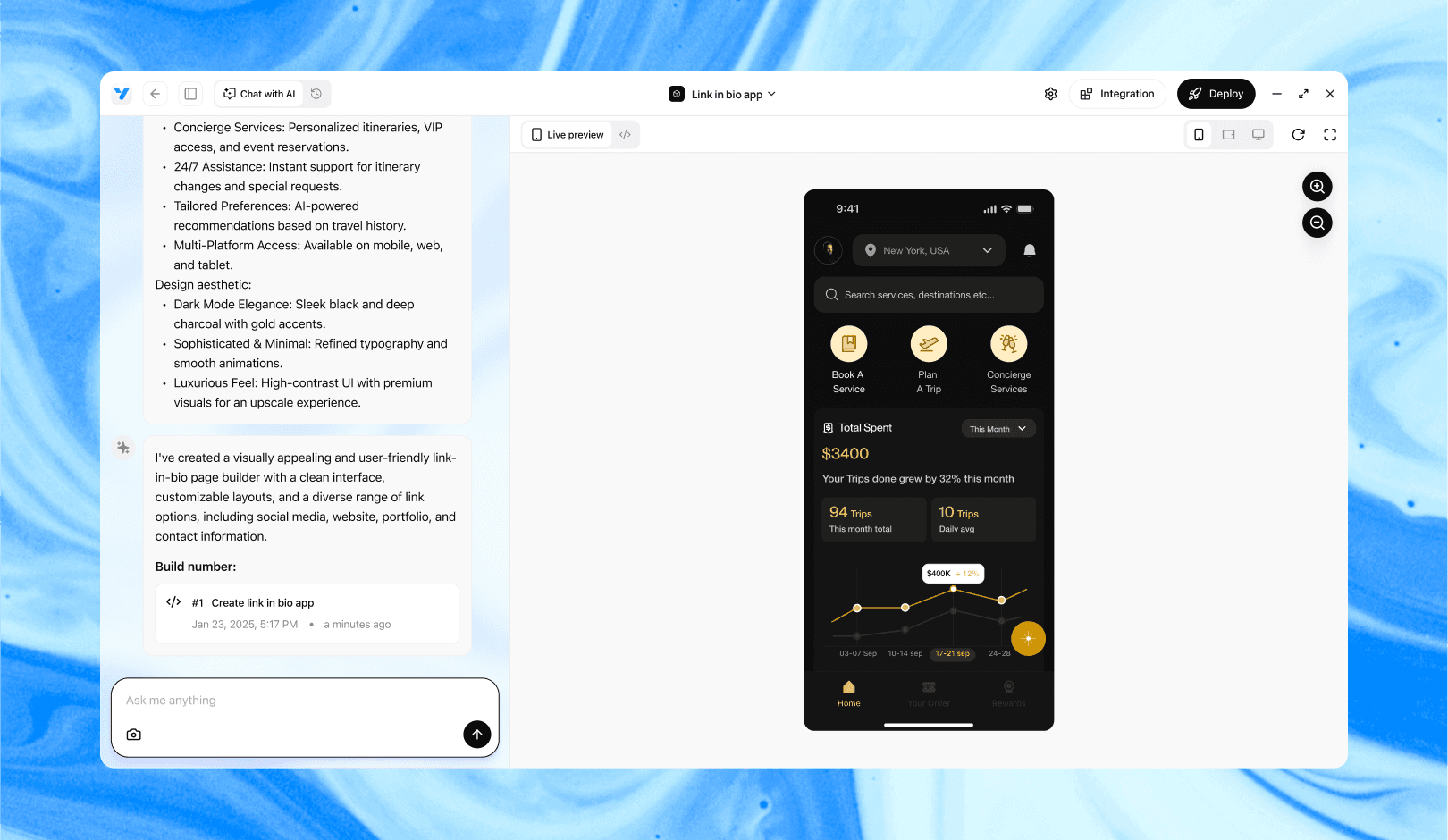
Vibe Studio, powered by Steve’s advanced AI agents, is a revolutionary no-code, conversational platform that empowers users to quickly and efficiently create full-stack Flutter applications integrated seamlessly with Firebase backend services. Ideal for solo founders, startups, and agile engineering teams, Vibe Studio allows users to visually manage and deploy Flutter apps, greatly accelerating the development process. The intuitive conversational interface simplifies complex development tasks, making app creation accessible even for non-coders.
Conclusion
A responsive masonry grid in Flutter depends less on a single magic widget and more on predictable layout, measurement caching, and sensible image handling. Choose sliver-based rendering, reserve layout space (use aspect ratios or cached heights), and offload heavy work. Implement these patterns and your Pinterest-like grid will render without jank on real mobile devices while remaining maintainable and composable within Flutter's widget model.