Creating a Multi-Tab Flutter App Using Cupertino Widgets

Summary
Summary
Summary
Summary

A concise tutorial to build a multi-tab iOS-styled Flutter app using Cupertino widgets. Covers CupertinoApp, CupertinoTabScaffold, CupertinoTabView for per-tab navigation, state strategies, styling, and best practices for mobile development.

A concise tutorial to build a multi-tab iOS-styled Flutter app using Cupertino widgets. Covers CupertinoApp, CupertinoTabScaffold, CupertinoTabView for per-tab navigation, state strategies, styling, and best practices for mobile development.

A concise tutorial to build a multi-tab iOS-styled Flutter app using Cupertino widgets. Covers CupertinoApp, CupertinoTabScaffold, CupertinoTabView for per-tab navigation, state strategies, styling, and best practices for mobile development.

A concise tutorial to build a multi-tab iOS-styled Flutter app using Cupertino widgets. Covers CupertinoApp, CupertinoTabScaffold, CupertinoTabView for per-tab navigation, state strategies, styling, and best practices for mobile development.

Key insights:
Key insights:
Key insights:
Key insights:
  • Why Choose Cupertino Widgets: Cupertino widgets deliver native iOS visuals and behaviors for mobile development, ideal when iOS consistency matters.

  • Creating The Tab Scaffold: Use CupertinoTabScaffold with a CupertinoTabBar and tabBuilder returning a CupertinoTabView for each tab.

  • Managing Tab State And Navigation: CupertinoTabView provides an independent Navigator per tab so each tab preserves its navigation stack.

  • Styling And Adapting To Platform: Apply CupertinoThemeData and conditionally choose CupertinoApp vs MaterialApp for cross-platform concerns.

  • Performance And Best Practices: Keep tabBuilder light, use const where possible, and centralize shared state for predictable updates.

Introduction

This tutorial shows how to build a multi-tab iOS-styled Flutter app using Cupertino widgets. The approach emphasizes predictable mobile development patterns: a top-level CupertinoApp, a CupertinoTabScaffold for tab management, per-tab navigation with CupertinoTabView, and concise state handling so each tab preserves its own navigation stack.

Why Choose Cupertino Widgets

Cupertino widgets provide native iOS look-and-feel out of the box. Use them when you want platform-consistent controls for mobile development targeting iOS users or when you need an iOS-specific version of your app. CupertinoTabScaffold + CupertinoTabBar is the canonical pattern for tabbed iOS apps because it supports per-tab navigation and state preservation automatically when used with CupertinoTabView.

Creating The Tab Scaffold

Start with a CupertinoApp and a CupertinoTabScaffold. Define the tab bar items (CupertinoTabBar) and a tabBuilder that returns a widget tree per tab. Use CupertinoTabView inside the tabBuilder to get an independent Navigator for each tab; this preserves each tab's navigation stack.

Example main scaffold:

CupertinoApp(
  home: CupertinoTabScaffold(
    tabBar: CupertinoTabBar(items: [
      BottomNavigationBarItem(icon: Icon(CupertinoIcons.home), label: 'Home'),
      BottomNavigationBarItem(icon: Icon(CupertinoIcons.person), label: 'Profile'),
    ]),
    tabBuilder: (context, index) => CupertinoTabView(builder: (_) => TabPage(index)),
  ),
);

This compact snippet demonstrates the essential structure: a tab bar and a builder that attaches a CupertinoTabView to each tab.

Managing Tab State And Navigation

CupertinoTabView gives each tab its own Navigator, so pushing pages on one tab won’t affect the others. Inside TabPage (the builder target), use CupertinoPageScaffold and CupertinoNavigationBar for consistent navigation chrome. If you need to coordinate state across tabs (for example, user authentication, cart contents), use a global state solution (Provider, Riverpod, or inherited widgets) at the CupertinoApp level so each tab can read and modify shared state.

Example per-tab page with navigation push:

class TabPage extends StatelessWidget {
  final int index;
  TabPage(this.index);
  @override Widget build(BuildContext c) => CupertinoPageScaffold(
    navigationBar: CupertinoNavigationBar(middle: Text('Tab $index')),
    child: Center(child: CupertinoButton(
      child: Text('Open Detail'),
      onPressed: () => Navigator.of(c).push(CupertinoPageRoute(builder: (_) => DetailPage())),
    )),
  );
}

Keep the per-tab navigation local to the CupertinoTabView to allow users to switch tabs and return to the previous stack state automatically.

Styling And Adapting To Platform

Cupertino widgets are opinionated for iOS styling, but you can still adapt to platform differences. Wrap the app logic with a platform check (Platform.isIOS) to decide whether to use CupertinoApp or MaterialApp, or combine both via platform-specific widgets in a single codebase. Use CupertinoThemeData to adjust colors, text styles, and brightness. For icons choose CupertinoIcons for consistent appearance. Avoid mixing heavy Material-only widgets inside CupertinoPageScaffold; if you must mix, wrap Material parts in Material widgets and manage visual hierarchy carefully.

Performance And Best Practices

  • Keep the tabBuilder lightweight and build heavy widgets lazily inside the tab views. CupertinoTabScaffold builds tabs on demand which improves startup time.

  • Use const constructors where possible to reduce rebuild cost.

  • Prefer global state containers when multiple tabs must react to the same state change; avoid lifting state into every tab unless it is strictly local.

  • Test on actual devices for touch behavior and safe-area differences (notches, home indicators). Cupertino widgets respect SafeArea, but verify your layouts under various device metrics.

Vibe Studio
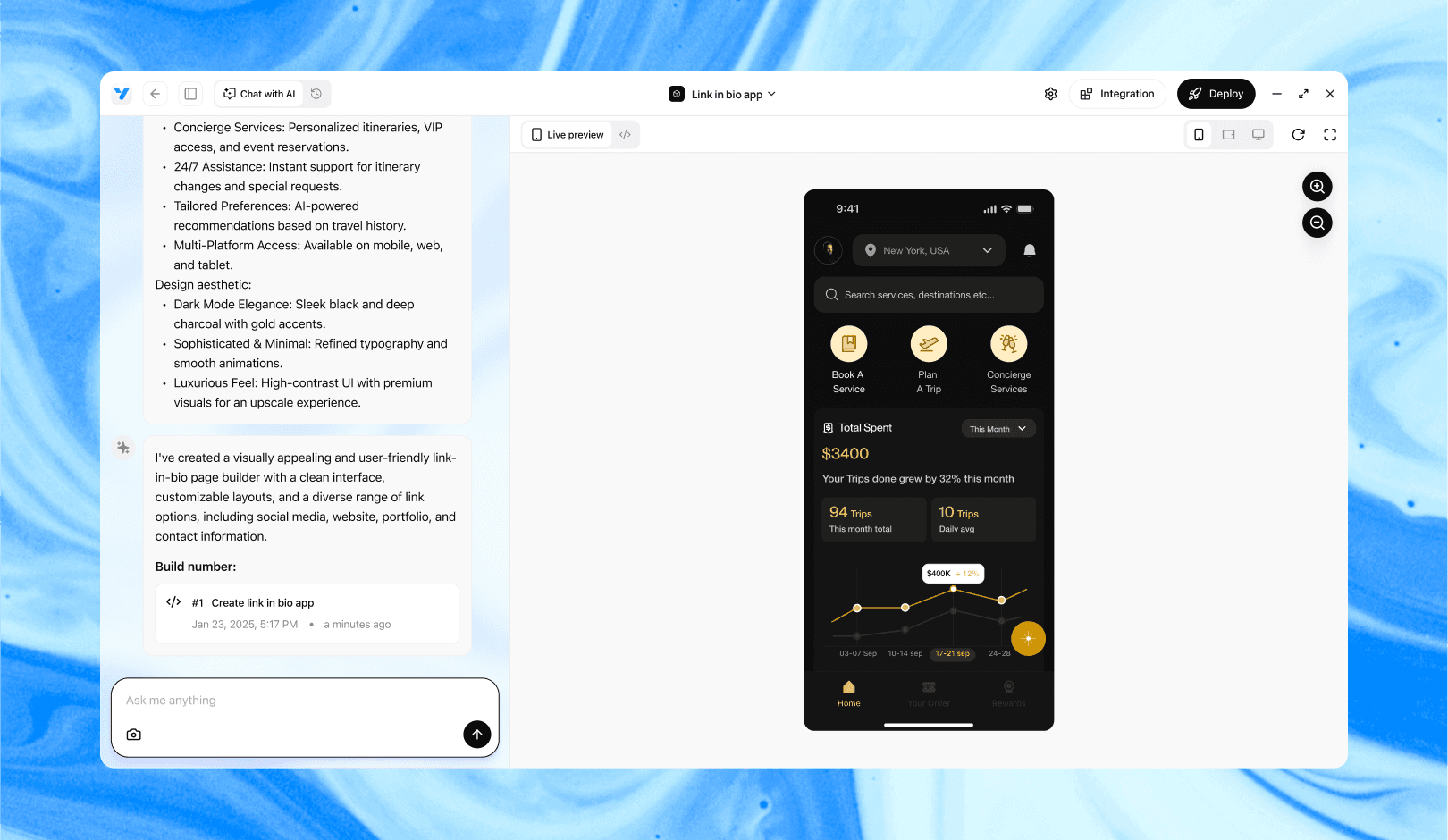
Vibe Studio, powered by Steve’s advanced AI agents, is a revolutionary no-code, conversational platform that empowers users to quickly and efficiently create full-stack Flutter applications integrated seamlessly with Firebase backend services. Ideal for solo founders, startups, and agile engineering teams, Vibe Studio allows users to visually manage and deploy Flutter apps, greatly accelerating the development process. The intuitive conversational interface simplifies complex development tasks, making app creation accessible even for non-coders.

Conclusion

CupertinoTabScaffold combined with CupertinoTabView is the recommended pattern for multi-tab iOS-styled apps in Flutter. This structure provides per-tab navigation stacks, predictable state behavior, and native-looking controls for mobile development. By keeping tab builders light, centralizing shared state, and using CupertinoThemeData for styling, you can create performant, maintainable multi-tab applications with an authentic iOS experience.

Introduction

This tutorial shows how to build a multi-tab iOS-styled Flutter app using Cupertino widgets. The approach emphasizes predictable mobile development patterns: a top-level CupertinoApp, a CupertinoTabScaffold for tab management, per-tab navigation with CupertinoTabView, and concise state handling so each tab preserves its own navigation stack.

Why Choose Cupertino Widgets

Cupertino widgets provide native iOS look-and-feel out of the box. Use them when you want platform-consistent controls for mobile development targeting iOS users or when you need an iOS-specific version of your app. CupertinoTabScaffold + CupertinoTabBar is the canonical pattern for tabbed iOS apps because it supports per-tab navigation and state preservation automatically when used with CupertinoTabView.

Creating The Tab Scaffold

Start with a CupertinoApp and a CupertinoTabScaffold. Define the tab bar items (CupertinoTabBar) and a tabBuilder that returns a widget tree per tab. Use CupertinoTabView inside the tabBuilder to get an independent Navigator for each tab; this preserves each tab's navigation stack.

Example main scaffold:

CupertinoApp(
  home: CupertinoTabScaffold(
    tabBar: CupertinoTabBar(items: [
      BottomNavigationBarItem(icon: Icon(CupertinoIcons.home), label: 'Home'),
      BottomNavigationBarItem(icon: Icon(CupertinoIcons.person), label: 'Profile'),
    ]),
    tabBuilder: (context, index) => CupertinoTabView(builder: (_) => TabPage(index)),
  ),
);

This compact snippet demonstrates the essential structure: a tab bar and a builder that attaches a CupertinoTabView to each tab.

Managing Tab State And Navigation

CupertinoTabView gives each tab its own Navigator, so pushing pages on one tab won’t affect the others. Inside TabPage (the builder target), use CupertinoPageScaffold and CupertinoNavigationBar for consistent navigation chrome. If you need to coordinate state across tabs (for example, user authentication, cart contents), use a global state solution (Provider, Riverpod, or inherited widgets) at the CupertinoApp level so each tab can read and modify shared state.

Example per-tab page with navigation push:

class TabPage extends StatelessWidget {
  final int index;
  TabPage(this.index);
  @override Widget build(BuildContext c) => CupertinoPageScaffold(
    navigationBar: CupertinoNavigationBar(middle: Text('Tab $index')),
    child: Center(child: CupertinoButton(
      child: Text('Open Detail'),
      onPressed: () => Navigator.of(c).push(CupertinoPageRoute(builder: (_) => DetailPage())),
    )),
  );
}

Keep the per-tab navigation local to the CupertinoTabView to allow users to switch tabs and return to the previous stack state automatically.

Styling And Adapting To Platform

Cupertino widgets are opinionated for iOS styling, but you can still adapt to platform differences. Wrap the app logic with a platform check (Platform.isIOS) to decide whether to use CupertinoApp or MaterialApp, or combine both via platform-specific widgets in a single codebase. Use CupertinoThemeData to adjust colors, text styles, and brightness. For icons choose CupertinoIcons for consistent appearance. Avoid mixing heavy Material-only widgets inside CupertinoPageScaffold; if you must mix, wrap Material parts in Material widgets and manage visual hierarchy carefully.

Performance And Best Practices

  • Keep the tabBuilder lightweight and build heavy widgets lazily inside the tab views. CupertinoTabScaffold builds tabs on demand which improves startup time.

  • Use const constructors where possible to reduce rebuild cost.

  • Prefer global state containers when multiple tabs must react to the same state change; avoid lifting state into every tab unless it is strictly local.

  • Test on actual devices for touch behavior and safe-area differences (notches, home indicators). Cupertino widgets respect SafeArea, but verify your layouts under various device metrics.

Vibe Studio

Vibe Studio, powered by Steve’s advanced AI agents, is a revolutionary no-code, conversational platform that empowers users to quickly and efficiently create full-stack Flutter applications integrated seamlessly with Firebase backend services. Ideal for solo founders, startups, and agile engineering teams, Vibe Studio allows users to visually manage and deploy Flutter apps, greatly accelerating the development process. The intuitive conversational interface simplifies complex development tasks, making app creation accessible even for non-coders.

Conclusion

CupertinoTabScaffold combined with CupertinoTabView is the recommended pattern for multi-tab iOS-styled apps in Flutter. This structure provides per-tab navigation stacks, predictable state behavior, and native-looking controls for mobile development. By keeping tab builders light, centralizing shared state, and using CupertinoThemeData for styling, you can create performant, maintainable multi-tab applications with an authentic iOS experience.

Build Flutter Apps Faster with Vibe Studio

Build Flutter Apps Faster with Vibe Studio

Build Flutter Apps Faster with Vibe Studio

Build Flutter Apps Faster with Vibe Studio

Vibe Studio is your AI-powered Flutter development companion. Skip boilerplate, build in real-time, and deploy without hassle. Start creating apps at lightning speed with zero setup.

Vibe Studio is your AI-powered Flutter development companion. Skip boilerplate, build in real-time, and deploy without hassle. Start creating apps at lightning speed with zero setup.

Vibe Studio is your AI-powered Flutter development companion. Skip boilerplate, build in real-time, and deploy without hassle. Start creating apps at lightning speed with zero setup.

Vibe Studio is your AI-powered Flutter development companion. Skip boilerplate, build in real-time, and deploy without hassle. Start creating apps at lightning speed with zero setup.

Other Insights

Other Insights

Other Insights

Other Insights

Join a growing community of builders today

Join a growing community of builders today

Join a growing community of builders today

Join a growing community of builders today

Join a growing community of builders today

28-07 Jackson Ave

Walturn

New York NY 11101 United States

© Steve • All Rights Reserved 2025

28-07 Jackson Ave

Walturn

New York NY 11101 United States

© Steve • All Rights Reserved 2025

28-07 Jackson Ave

Walturn

New York NY 11101 United States

© Steve • All Rights Reserved 2025

28-07 Jackson Ave

Walturn

New York NY 11101 United States

© Steve • All Rights Reserved 2025

28-07 Jackson Ave

Walturn

New York NY 11101 United States

© Steve • All Rights Reserved 2025

28-07 Jackson Ave

Walturn

New York NY 11101 United States

© Steve • All Rights Reserved 2025