Crafting Beautiful Mobile Dashboards Using Flutter and Charts
Nov 26, 2025


Summary
Summary
Summary
Summary
This article shows how to craft mobile dashboards in Flutter using chart libraries like fl_chart. It covers design principles, library choice, responsive chart implementation, animation and interaction patterns, and data-handling best practices—focusing on performance, accessibility, and maintainable architecture.
Key insights:
Key insights:
Key insights:
Key insights:
Design Principles: Prioritize clarity, modular card layout, accessibility, and spacing to maximize at-a-glance comprehension.
Choosing Chart Library: Select a library (fl_chart for flexibility, charts_flutter for higher-level constructs) based on customization needs.
Implementing Responsive Charts: Use LayoutBuilder, size charts relative to constraints, and downsample series for mobile screens.
Polishing With Animations & Interactivity: Add subtle animations and in-place interactions (tooltips, scrubbing) to surface context without heavy navigation.
Data Handling & Performance: Pre-process data in providers, debounce live updates, downsample points, and use RepaintBoundary to limit repaints.
Introduction
Mobile dashboards must be fast, legible, and visually compelling. In Flutter, you can combine layout precision, rich gestures, and a mature ecosystem of chart libraries to build dashboards that feel native and polished. This tutorial explains practical design choices and implementation patterns for crafting beautiful mobile dashboards using Flutter and charts, with focused examples on responsive layout, data handling, and interaction.
Design Principles
Start with clarity. Dashboards are about at-a-glance comprehension: prioritize typography, spacing, and color contrast. Use a modular card system—each card is a single responsibility (e.g., KPI, trend, distribution). Keep charts simple: sparing use of axes, clear legends, and accent colors for highlighted series.
Accessibility matters: scale text using MediaQuery.textScaleFactor and respect platform brightness to adapt palettes. Performance matters more on mobile: limit drawn points, reuse chart widgets, and debounce updates when streaming data.
Choosing Chart Library
For Flutter, two popular choices are fl_chart and charts_flutter. fl_chart gives more custom drawing flexibility and polished animations; charts_flutter implements Google Charts patterns and offers higher-level constructs. Pick based on the level of customization you need. For mobile dashboards where custom tooltips, animated transitions, and lightweight bundles matter, fl_chart is a strong default.
Add dependency (example):
// pubspec.yaml
dependencies:
flutter:
sdk: flutter
fl_chart: ^0.60.0Implementing Responsive Charts
Responsive dashboards adapt layout rather than simply scale widgets. Use LayoutBuilder to choose between single-column and multi-column arrangements depending on constraints.maxWidth. For charts, set point density relative to available width and reduce tick labels on narrow views.
Keep chart widgets stateless and feed them pre-processed series. Pre-compute min/max and downsample arrays to avoid expensive work during build. Example: a simple sparkline widget using fl_chart that adapts height and baseline:
import 'package:fl_chart/fl_chart.dart';
Widget sparkline(List<double> values, double width) => SizedBox(
height: width * 0.25,
child: LineChart(LineChartData(
lineBarsData: [LineChartBarData(spots: List.generate(values.length, (i) => FlSpot(i.toDouble(), values[i])))])));This snippet demonstrates computing spots and sizing the chart relative to container width.
Polishing With Animations & Interactivity
Subtle animations give feedback without distraction. Animate between datasets using AnimatedSwitcher or by leveraging chart library animation properties. For fl_chart, animateRawData or providing updated LineChartData with different point sets triggers smooth transitions.
Interactivity should reveal context: tapping a data point should show a transient tooltip or expand the card for detail. Keep gestures lightweight—use GestureDetector or InkWell on cards, and show lightweight overlays using OverlayEntry or a small anchored Tooltip-like widget. Avoid entering heavy navigation for secondary detail—use in-place expansion for context.
Example interaction patterns:
Tap a KPI card to cycle through comparative ranges (day/week/month).
Long-press a chart to freeze live updates and inspect points.
Drag horizontally to scrub time-series with a live vertical indicator.
Data Handling & Performance
Good dashboards separate presentation from data. Use a simple provider pattern or Riverpod to supply processed series to chart widgets. Transform raw data once (aggregation, downsampling) in the provider layer, not inside build methods.
Techniques for performance:
Downsample with 200–400 points for a full-screen trend; mobile displays rarely need >1000 points.
Use const constructors where possible and mark chart cards as RepaintBoundary to limit paint scope.
Debounce live feeds to 1–2 updates per second when animating.
Also, cache computed color palettes and gradients. For large tables or grids, use SliverList and lazy builders.
Vibe Studio
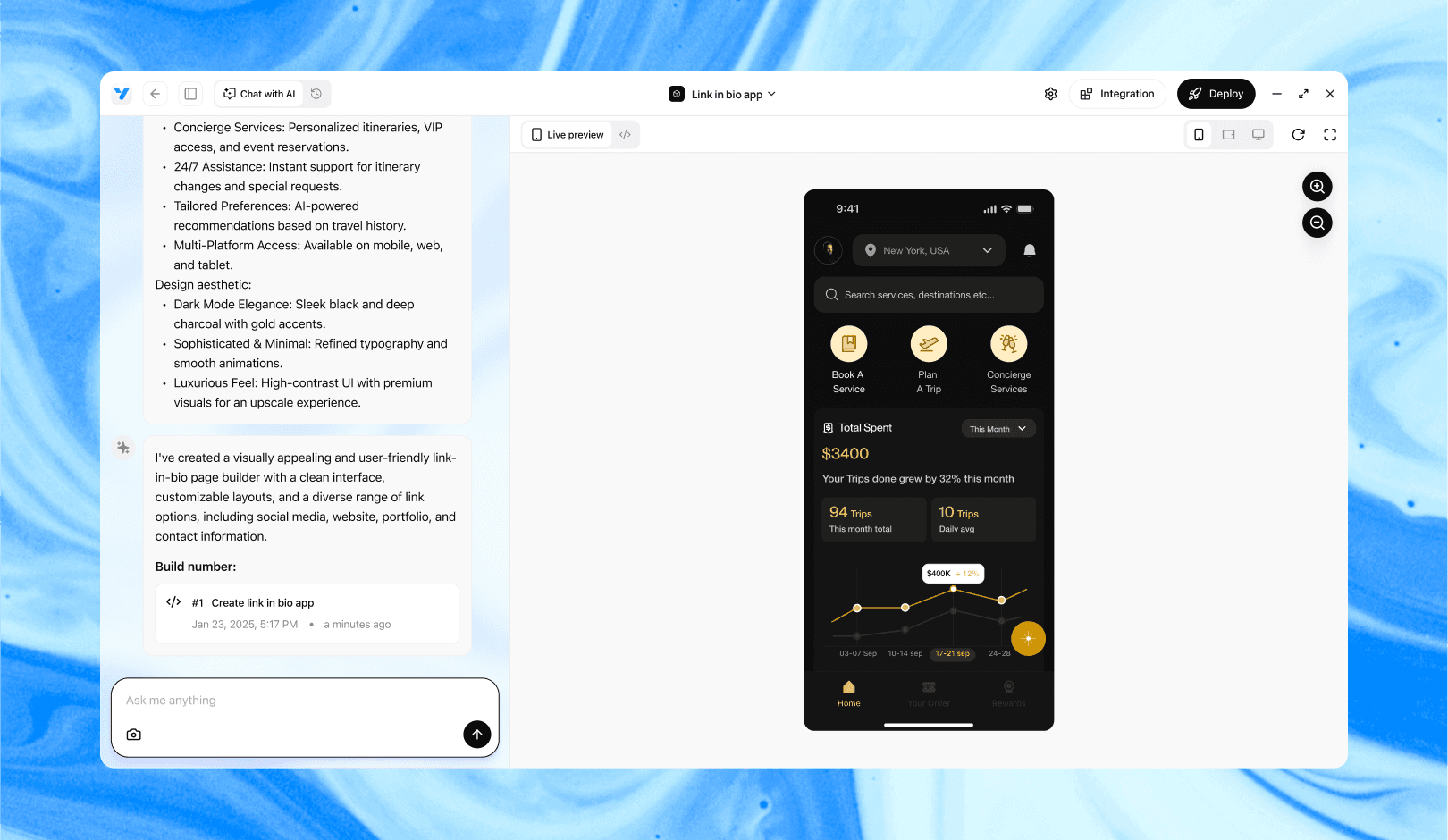
Vibe Studio, powered by Steve’s advanced AI agents, is a revolutionary no-code, conversational platform that empowers users to quickly and efficiently create full-stack Flutter applications integrated seamlessly with Firebase backend services. Ideal for solo founders, startups, and agile engineering teams, Vibe Studio allows users to visually manage and deploy Flutter apps, greatly accelerating the development process. The intuitive conversational interface simplifies complex development tasks, making app creation accessible even for non-coders.
Conclusion
Building beautiful mobile dashboards in Flutter is a practical blend of design discipline and efficient engineering. Use modular cards, responsive layouts, and a chart library that matches your customization needs. Keep data processing outside the build pipeline, prioritize accessibility and performance, and layer subtle animations and interactions to guide users. With these patterns you can create dashboards that are informative, fast, and delightful on mobile.

Introduction
Mobile dashboards must be fast, legible, and visually compelling. In Flutter, you can combine layout precision, rich gestures, and a mature ecosystem of chart libraries to build dashboards that feel native and polished. This tutorial explains practical design choices and implementation patterns for crafting beautiful mobile dashboards using Flutter and charts, with focused examples on responsive layout, data handling, and interaction.
Design Principles
Start with clarity. Dashboards are about at-a-glance comprehension: prioritize typography, spacing, and color contrast. Use a modular card system—each card is a single responsibility (e.g., KPI, trend, distribution). Keep charts simple: sparing use of axes, clear legends, and accent colors for highlighted series.
Accessibility matters: scale text using MediaQuery.textScaleFactor and respect platform brightness to adapt palettes. Performance matters more on mobile: limit drawn points, reuse chart widgets, and debounce updates when streaming data.
Choosing Chart Library
For Flutter, two popular choices are fl_chart and charts_flutter. fl_chart gives more custom drawing flexibility and polished animations; charts_flutter implements Google Charts patterns and offers higher-level constructs. Pick based on the level of customization you need. For mobile dashboards where custom tooltips, animated transitions, and lightweight bundles matter, fl_chart is a strong default.
Add dependency (example):
// pubspec.yaml
dependencies:
flutter:
sdk: flutter
fl_chart: ^0.60.0Implementing Responsive Charts
Responsive dashboards adapt layout rather than simply scale widgets. Use LayoutBuilder to choose between single-column and multi-column arrangements depending on constraints.maxWidth. For charts, set point density relative to available width and reduce tick labels on narrow views.
Keep chart widgets stateless and feed them pre-processed series. Pre-compute min/max and downsample arrays to avoid expensive work during build. Example: a simple sparkline widget using fl_chart that adapts height and baseline:
import 'package:fl_chart/fl_chart.dart';
Widget sparkline(List<double> values, double width) => SizedBox(
height: width * 0.25,
child: LineChart(LineChartData(
lineBarsData: [LineChartBarData(spots: List.generate(values.length, (i) => FlSpot(i.toDouble(), values[i])))])));This snippet demonstrates computing spots and sizing the chart relative to container width.
Polishing With Animations & Interactivity
Subtle animations give feedback without distraction. Animate between datasets using AnimatedSwitcher or by leveraging chart library animation properties. For fl_chart, animateRawData or providing updated LineChartData with different point sets triggers smooth transitions.
Interactivity should reveal context: tapping a data point should show a transient tooltip or expand the card for detail. Keep gestures lightweight—use GestureDetector or InkWell on cards, and show lightweight overlays using OverlayEntry or a small anchored Tooltip-like widget. Avoid entering heavy navigation for secondary detail—use in-place expansion for context.
Example interaction patterns:
Tap a KPI card to cycle through comparative ranges (day/week/month).
Long-press a chart to freeze live updates and inspect points.
Drag horizontally to scrub time-series with a live vertical indicator.
Data Handling & Performance
Good dashboards separate presentation from data. Use a simple provider pattern or Riverpod to supply processed series to chart widgets. Transform raw data once (aggregation, downsampling) in the provider layer, not inside build methods.
Techniques for performance:
Downsample with 200–400 points for a full-screen trend; mobile displays rarely need >1000 points.
Use const constructors where possible and mark chart cards as RepaintBoundary to limit paint scope.
Debounce live feeds to 1–2 updates per second when animating.
Also, cache computed color palettes and gradients. For large tables or grids, use SliverList and lazy builders.
Vibe Studio

Vibe Studio, powered by Steve’s advanced AI agents, is a revolutionary no-code, conversational platform that empowers users to quickly and efficiently create full-stack Flutter applications integrated seamlessly with Firebase backend services. Ideal for solo founders, startups, and agile engineering teams, Vibe Studio allows users to visually manage and deploy Flutter apps, greatly accelerating the development process. The intuitive conversational interface simplifies complex development tasks, making app creation accessible even for non-coders.
Conclusion
Building beautiful mobile dashboards in Flutter is a practical blend of design discipline and efficient engineering. Use modular cards, responsive layouts, and a chart library that matches your customization needs. Keep data processing outside the build pipeline, prioritize accessibility and performance, and layer subtle animations and interactions to guide users. With these patterns you can create dashboards that are informative, fast, and delightful on mobile.
Build Flutter Apps Faster with Vibe Studio
Vibe Studio is your AI-powered Flutter development companion. Skip boilerplate, build in real-time, and deploy without hassle. Start creating apps at lightning speed with zero setup.