Building Your First Flutter App With Hot Reload And Widgets
Summary
Summary
Summary
Summary

This tutorial guides you through installing Flutter, creating a new project, understanding widgets and the build method, and using Hot Reload to iterate quickly. It includes concise code examples for a counter app and practical tips for when to use Hot Reload versus Hot Restart during mobile development.

This tutorial guides you through installing Flutter, creating a new project, understanding widgets and the build method, and using Hot Reload to iterate quickly. It includes concise code examples for a counter app and practical tips for when to use Hot Reload versus Hot Restart during mobile development.

This tutorial guides you through installing Flutter, creating a new project, understanding widgets and the build method, and using Hot Reload to iterate quickly. It includes concise code examples for a counter app and practical tips for when to use Hot Reload versus Hot Restart during mobile development.

This tutorial guides you through installing Flutter, creating a new project, understanding widgets and the build method, and using Hot Reload to iterate quickly. It includes concise code examples for a counter app and practical tips for when to use Hot Reload versus Hot Restart during mobile development.

Key insights:
Key insights:
Key insights:
Key insights:
  • Set Up Your Environment: Install Flutter, configure your IDE, and verify with flutter doctor to prepare for mobile development.

  • Create A New Flutter Project: Use flutter create to scaffold an app; study the template to learn runApp, root widgets, and project layout.

  • Understand Widgets And The Build Method: Widgets are immutable UI descriptions; StatefulWidget and setState manage transient UI state.

  • Use Hot Reload During Development: Hot Reload injects updated Dart code into the running app, preserving state and accelerating iteration.

  • Widget Composition: Small, focused widgets and const constructors improve performance and make incremental Hot Reload changes predictable.

Introduction

Flutter is a modern UI toolkit for building native compiled applications for mobile, web, and desktop from a single codebase. For mobile development, Flutter’s combination of widgets and a fast development cycle makes it an excellent choice for beginners. This tutorial walks you through creating your first Flutter app, explains widgets and the build method, and demonstrates how Hot Reload accelerates iteration.

Set Up Your Environment

Install Flutter SDK from flutter.dev and add it to your PATH. Confirm installation with flutter doctor and fix any issues reported for Android Studio or Xcode. Connect a physical device or set up an emulator/simulator.

Commands you will use frequently:

  • flutter doctor

  • flutter create my_app

  • flutter run -d

Keep an IDE with Flutter support (VS Code or Android Studio). Install the Flutter and Dart plugins for syntax highlighting, debugging, and Hot Reload support.

Create A New Flutter Project

Create a project with flutter create. Open the project in your IDE. The template contains lib/main.dart with a simple counter app. Replace the template only to experiment; otherwise, study it to learn structure: main(), runApp(), a root widget (MyApp), and a home scaffold.

A minimal app structure (stateless root and stateful counter) looks like:

import 'package:flutter/material.dart';

void main() => runApp(MyApp());

class MyApp extends StatelessWidget {
  @override
  Widget build(BuildContext context) {
    return MaterialApp(home: CounterPage());
  }
}

class CounterPage extends StatefulWidget {
  @override
  _CounterPageState createState() => _CounterPageState();
}

This establishes runApp and shows how widgets nest. Keep files small and focus on composition as you add features.

Understand Widgets And The Build Method

Widgets are immutable descriptions of part of the UI. There are two main categories: StatelessWidget (no internal mutable state) and StatefulWidget (separate State object holds mutable data). The build method returns a widget tree; Flutter compares the previous and new trees and updates the rendered UI efficiently.

Key points:

  • Treat widgets as configuration. They describe what the UI should look like, not how to change it.

  • Move logic into smaller widgets. Composition beats large monolithic widgets.

  • Use const constructors where possible; this improves performance and reduces rebuilds.

Example state handling for a counter increment live in the State class’s setState call:

class _CounterPageState extends State<CounterPage> {
  int _count = 0;

  void _increment() => setState(() => _count++);

  @override
  Widget build(BuildContext context) {
    return Scaffold(
      appBar: AppBar(title: Text('Counter')),
      body: Center(child: Text('Count: $_count')),
      floatingActionButton: FloatingActionButton(onPressed: _increment),
    );
  }
}

This small pattern—state variable + setState—remains the simplest way to manage local UI updates. For larger apps, adopt state management solutions, but for learning, setState is ideal.

Use Hot Reload During Development

Hot Reload is one of Flutter’s killer features. It updates the Dart VM with modified source code and rebuilds widget trees while preserving state. Use it to iterate UI, tweak layout, colors, and text without restarting the app.

How to use Hot Reload:

  • In your IDE: press the Hot Reload button (lightning icon) or use the keyboard shortcut (usually r in the terminal running flutter run for a full restart, or R for hot restart; in IDEs, dedicated hot reload action exists).

  • Modify build methods, widget properties, or add new widgets.

  • Hot Reload injects updated source into the running app; current State objects are preserved.

When Hot Reload does not pick up changes:

  • Changes to global state, main() structure, or initializers sometimes require Hot Restart (which restarts the app but is faster than a full rebuild).

  • If you add a new field to a StatefulWidget’s State or change constructors dramatically, perform a restart.

Practical tips:

  • Keep the build method lean. Hot Reload is fast, but a minimal build reduces cognitive load when iterating.

  • Use const where possible so Hot Reload can be more predictable.

  • Test Hot Reload on real devices in addition to emulators; behavior is consistent but performance varies.

Vibe Studio
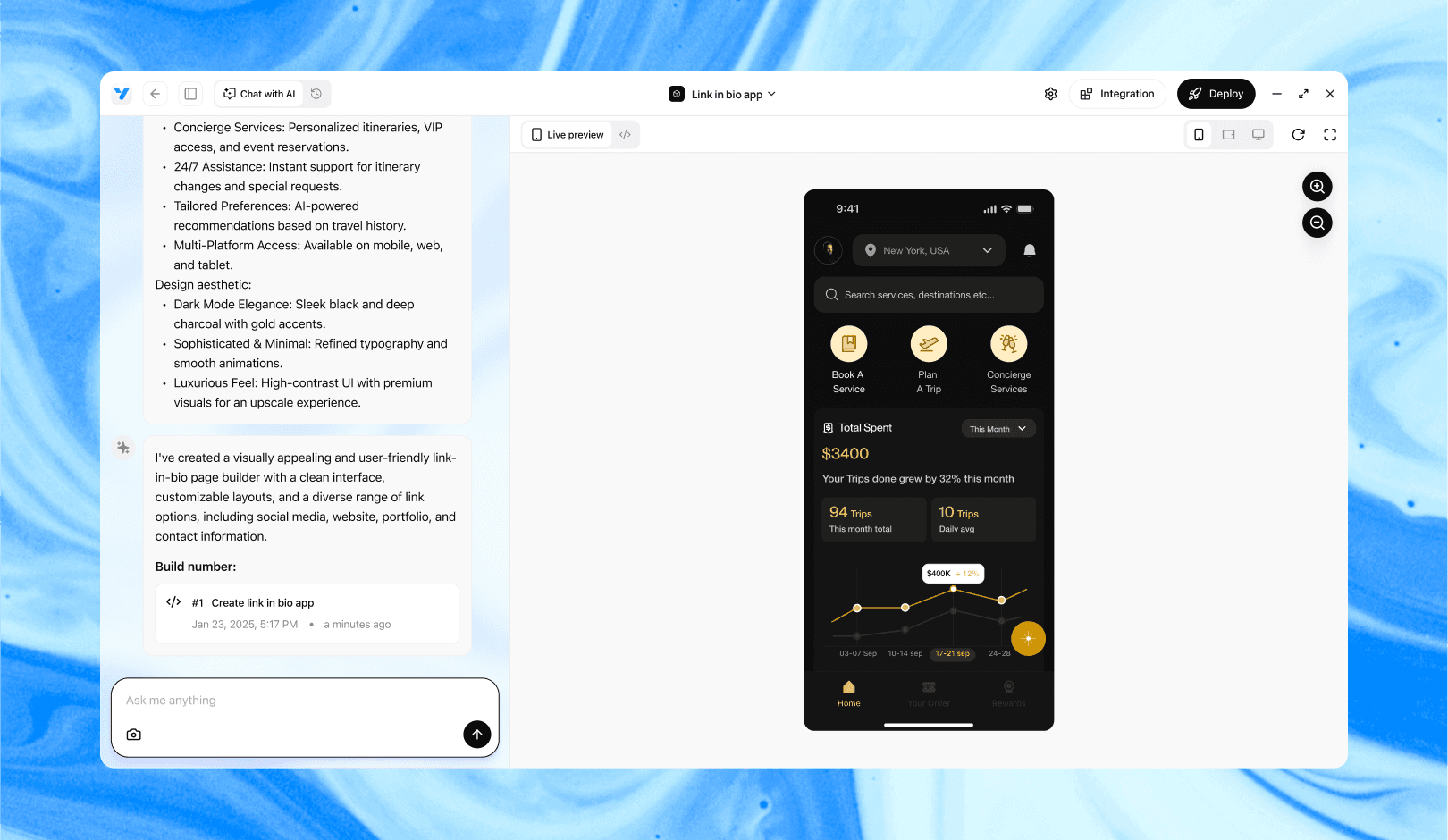
Vibe Studio, powered by Steve’s advanced AI agents, is a revolutionary no-code, conversational platform that empowers users to quickly and efficiently create full-stack Flutter applications integrated seamlessly with Firebase backend services. Ideal for solo founders, startups, and agile engineering teams, Vibe Studio allows users to visually manage and deploy Flutter apps, greatly accelerating the development process. The intuitive conversational interface simplifies complex development tasks, making app creation accessible even for non-coders.

Conclusion

You’ve created a new Flutter project, examined the widget model, and learned how Hot Reload accelerates development. Start small: compose widgets, use StatefulWidget and setState for local interactions, and iterate rapidly with Hot Reload. As you grow the app, adopt more advanced state management and app architecture, but rely on these fundamentals to move quickly when building mobile development projects with Flutter.

Introduction

Flutter is a modern UI toolkit for building native compiled applications for mobile, web, and desktop from a single codebase. For mobile development, Flutter’s combination of widgets and a fast development cycle makes it an excellent choice for beginners. This tutorial walks you through creating your first Flutter app, explains widgets and the build method, and demonstrates how Hot Reload accelerates iteration.

Set Up Your Environment

Install Flutter SDK from flutter.dev and add it to your PATH. Confirm installation with flutter doctor and fix any issues reported for Android Studio or Xcode. Connect a physical device or set up an emulator/simulator.

Commands you will use frequently:

  • flutter doctor

  • flutter create my_app

  • flutter run -d

Keep an IDE with Flutter support (VS Code or Android Studio). Install the Flutter and Dart plugins for syntax highlighting, debugging, and Hot Reload support.

Create A New Flutter Project

Create a project with flutter create. Open the project in your IDE. The template contains lib/main.dart with a simple counter app. Replace the template only to experiment; otherwise, study it to learn structure: main(), runApp(), a root widget (MyApp), and a home scaffold.

A minimal app structure (stateless root and stateful counter) looks like:

import 'package:flutter/material.dart';

void main() => runApp(MyApp());

class MyApp extends StatelessWidget {
  @override
  Widget build(BuildContext context) {
    return MaterialApp(home: CounterPage());
  }
}

class CounterPage extends StatefulWidget {
  @override
  _CounterPageState createState() => _CounterPageState();
}

This establishes runApp and shows how widgets nest. Keep files small and focus on composition as you add features.

Understand Widgets And The Build Method

Widgets are immutable descriptions of part of the UI. There are two main categories: StatelessWidget (no internal mutable state) and StatefulWidget (separate State object holds mutable data). The build method returns a widget tree; Flutter compares the previous and new trees and updates the rendered UI efficiently.

Key points:

  • Treat widgets as configuration. They describe what the UI should look like, not how to change it.

  • Move logic into smaller widgets. Composition beats large monolithic widgets.

  • Use const constructors where possible; this improves performance and reduces rebuilds.

Example state handling for a counter increment live in the State class’s setState call:

class _CounterPageState extends State<CounterPage> {
  int _count = 0;

  void _increment() => setState(() => _count++);

  @override
  Widget build(BuildContext context) {
    return Scaffold(
      appBar: AppBar(title: Text('Counter')),
      body: Center(child: Text('Count: $_count')),
      floatingActionButton: FloatingActionButton(onPressed: _increment),
    );
  }
}

This small pattern—state variable + setState—remains the simplest way to manage local UI updates. For larger apps, adopt state management solutions, but for learning, setState is ideal.

Use Hot Reload During Development

Hot Reload is one of Flutter’s killer features. It updates the Dart VM with modified source code and rebuilds widget trees while preserving state. Use it to iterate UI, tweak layout, colors, and text without restarting the app.

How to use Hot Reload:

  • In your IDE: press the Hot Reload button (lightning icon) or use the keyboard shortcut (usually r in the terminal running flutter run for a full restart, or R for hot restart; in IDEs, dedicated hot reload action exists).

  • Modify build methods, widget properties, or add new widgets.

  • Hot Reload injects updated source into the running app; current State objects are preserved.

When Hot Reload does not pick up changes:

  • Changes to global state, main() structure, or initializers sometimes require Hot Restart (which restarts the app but is faster than a full rebuild).

  • If you add a new field to a StatefulWidget’s State or change constructors dramatically, perform a restart.

Practical tips:

  • Keep the build method lean. Hot Reload is fast, but a minimal build reduces cognitive load when iterating.

  • Use const where possible so Hot Reload can be more predictable.

  • Test Hot Reload on real devices in addition to emulators; behavior is consistent but performance varies.

Vibe Studio

Vibe Studio, powered by Steve’s advanced AI agents, is a revolutionary no-code, conversational platform that empowers users to quickly and efficiently create full-stack Flutter applications integrated seamlessly with Firebase backend services. Ideal for solo founders, startups, and agile engineering teams, Vibe Studio allows users to visually manage and deploy Flutter apps, greatly accelerating the development process. The intuitive conversational interface simplifies complex development tasks, making app creation accessible even for non-coders.

Conclusion

You’ve created a new Flutter project, examined the widget model, and learned how Hot Reload accelerates development. Start small: compose widgets, use StatefulWidget and setState for local interactions, and iterate rapidly with Hot Reload. As you grow the app, adopt more advanced state management and app architecture, but rely on these fundamentals to move quickly when building mobile development projects with Flutter.

Build Flutter Apps Faster with Vibe Studio

Vibe Studio is your AI-powered Flutter development companion. Skip boilerplate, build in real-time, and deploy without hassle. Start creating apps at lightning speed with zero setup.

Other Insights

Join a growing community of builders today

Join a growing community of builders today

Join a growing community of builders today

Join a growing community of builders today

Join a growing community of builders today

28-07 Jackson Ave

Walturn

New York NY 11101 United States

© Steve • All Rights Reserved 2025

28-07 Jackson Ave

Walturn

New York NY 11101 United States

© Steve • All Rights Reserved 2025

28-07 Jackson Ave

Walturn

New York NY 11101 United States

© Steve • All Rights Reserved 2025

28-07 Jackson Ave

Walturn

New York NY 11101 United States

© Steve • All Rights Reserved 2025

28-07 Jackson Ave

Walturn

New York NY 11101 United States

© Steve • All Rights Reserved 2025

28-07 Jackson Ave

Walturn

New York NY 11101 United States

© Steve • All Rights Reserved 2025