Building Real-Time Features In Flutter With WebSockets
Nov 26, 2025


Summary
Summary
Summary
Summary
This tutorial explains how to build real-time features in Flutter using WebSockets. It covers when to use WebSockets, how to connect with package:web_socket_channel, patterns for exposing Streams to the UI, handling messages, and best practices like reconnection, heartbeats, authentication, and testing strategies for resilient mobile development.
Key insights:
Key insights:
Key insights:
Key insights:
Why Use WebSockets In Flutter: WebSockets provide low-latency, bidirectional communication ideal for chat and live updates in flutter mobile development.
Connecting To A WebSocket Server: Use package:web_socket_channel (IO for mobile) and isolate connection logic in a service for lifecycle control and testability.
Handling Messages And Streams: Expose socket events as Streams, map JSON to typed models, and consume with StreamBuilder or state management solutions.
Best Practices And Performance: Implement exponential backoff, heartbeats, backpressure handling, token-based auth, and always use wss:// in production.
Troubleshooting And Debugging: Simulate servers with test doubles, verify CORS and certificates, and use device logs and local test servers for integration tests.
Introduction
Real-time features are increasingly essential in mobile apps: chat, live notifications, collaborative editing, and live feeds all require low-latency two-way communication. WebSockets provide a persistent TCP connection that enables bi-directional, full-duplex communication between client and server, making them a strong choice for real-time behavior in Flutter mobile development. This article walks through practical patterns for connecting, listening, sending, and managing WebSocket streams in Flutter with concise, production-minded examples.
Why Use WebSockets In Flutter
HTTP is request/response oriented and introduces overhead for frequent updates. WebSockets keep a single connection open, reducing latency and protocol overhead. For Flutter — targeting Android and iOS — use the dart:io WebSocket or the package:web_socket_channel to get a unified API that also works with Flutter web when you choose the right channel implementation.
When to use WebSockets:
Frequent, low-latency messages (chat, live telemetry).
Server-initiated pushes that must arrive immediately.
Interactive collaboration where both client and server send state updates.
When not to use WebSockets:
Occasional notifications (use push notifications).
Large file transfers (use HTTP/HTTPS or dedicated protocols).
Connecting To A WebSocket Server
Use package:web_socket_channel for a consistent API. For mobile use IOWebSocketChannel; for web use WebSocketChannel from the browser implementation. Keep the connection logic separate from UI (service or repository layer) so you can reconnect, mock in tests, and manage lifecycle cleanly.
Example connection and basic lifecycle management:
import 'package:web_socket_channel/io.dart';
final channel = IOWebSocketChannel.connect('ws://example.com/socket');
channel.stream.listen((message) {
print('Received: $message');
}, onDone: () => print('Socket closed'), onError: (e) => print('Error: $e'));
channel.sink.add('Hello server');
// When done:
channel.sink.close();Wrap this inside a service class to control reconnection and expose a Stream for the UI.
Handling Messages And Streams
In Flutter, UI should consume a Stream or a ChangeNotifier that forwards WebSocket events. Avoid handling raw sockets in widgets. Map incoming JSON to typed models, debounce or batch updates if messages are frequent, and always validate before applying state.
A compact service example that exposes a stream and a send method:
import 'package:web_socket_channel/io.dart';
class SocketService {
final _channel = IOWebSocketChannel.connect('ws://example.com/socket');
Stream get messages => _channel.stream;
void send(String text) => _channel.sink.add(text);
void dispose() => _channel.sink.close();
}In the UI, use StreamBuilder or provider/riverpod to listen to messages. Use isolate-safe parsing for heavy JSON workloads and prefer immutable models to reduce subtle state bugs.
Best Practices And Performance
Reconnection Strategy: Implement exponential backoff with jitter. Detect network connectivity changes (connectivity_plus) and avoid aggressive reconnection loops when offline.
Heartbeats and Timeouts: Send ping/pong or application-level heartbeats to detect dead peers. Close and reconnect on stale connections.
Backpressure Handling: If the server floods messages, throttle or sample updates on the client. Use Rx-style operators or simple timer-based batching.
Authentication: Prefer token-based auth over query parameters. If tokens expire, implement token refresh then re-authenticate the WebSocket connection.
Resource Management: Close sockets in dispose() and when the app goes to background if appropriate. Minimize memory usage by keeping message history bounded.
Security note: Use wss:// for encrypted transport in production and validate server certificates when applicable.
Troubleshooting And Debugging
Connection Failures: Check server reachability (telnet, websocat) and verify CORS on web targets. For mobile, inspect device logs and confirm that wss is permitted.
Message Encoding Issues: Agree on JSON schema and include versioning fields so clients can gracefully handle new formats.
Testability: Abstract the channel interface so tests can inject a fake stream. Use integration tests with a local test server to validate end-to-end behavior.
A simple test double can be a StreamController that simulates incoming messages and records outgoing ones.
Vibe Studio
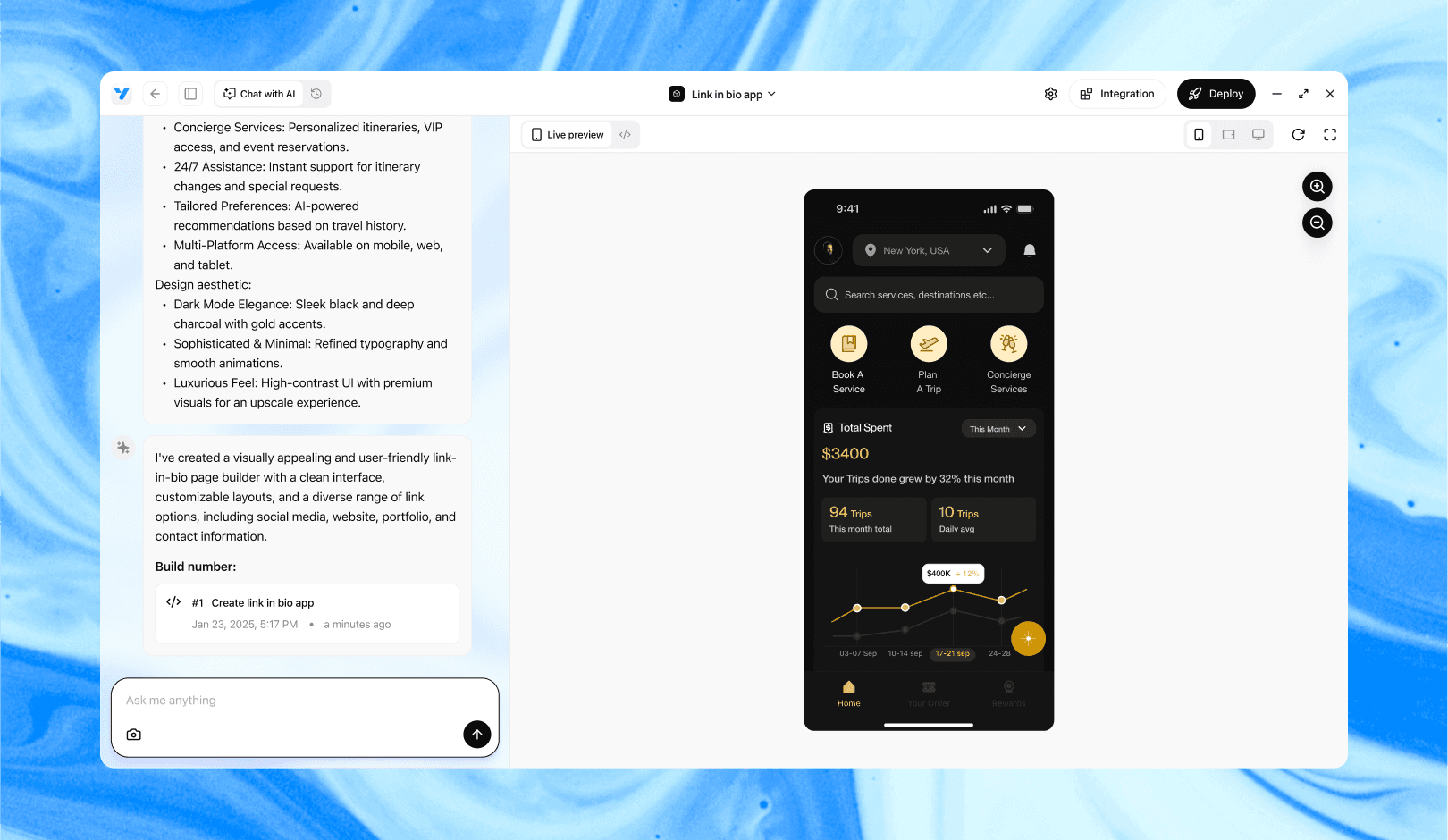
Vibe Studio, powered by Steve’s advanced AI agents, is a revolutionary no-code, conversational platform that empowers users to quickly and efficiently create full-stack Flutter applications integrated seamlessly with Firebase backend services. Ideal for solo founders, startups, and agile engineering teams, Vibe Studio allows users to visually manage and deploy Flutter apps, greatly accelerating the development process. The intuitive conversational interface simplifies complex development tasks, making app creation accessible even for non-coders.
Conclusion
WebSockets unlock responsive, low-latency experiences in flutter mobile development when used appropriately. Keep socket logic out of widgets, use a well-defined service layer, and adopt robust reconnection, heartbeat, and backpressure strategies. With these patterns you’ll build resilient real-time features: chat, live updates, and collaborative tools that feel immediate and reliable on mobile platforms.

Introduction
Real-time features are increasingly essential in mobile apps: chat, live notifications, collaborative editing, and live feeds all require low-latency two-way communication. WebSockets provide a persistent TCP connection that enables bi-directional, full-duplex communication between client and server, making them a strong choice for real-time behavior in Flutter mobile development. This article walks through practical patterns for connecting, listening, sending, and managing WebSocket streams in Flutter with concise, production-minded examples.
Why Use WebSockets In Flutter
HTTP is request/response oriented and introduces overhead for frequent updates. WebSockets keep a single connection open, reducing latency and protocol overhead. For Flutter — targeting Android and iOS — use the dart:io WebSocket or the package:web_socket_channel to get a unified API that also works with Flutter web when you choose the right channel implementation.
When to use WebSockets:
Frequent, low-latency messages (chat, live telemetry).
Server-initiated pushes that must arrive immediately.
Interactive collaboration where both client and server send state updates.
When not to use WebSockets:
Occasional notifications (use push notifications).
Large file transfers (use HTTP/HTTPS or dedicated protocols).
Connecting To A WebSocket Server
Use package:web_socket_channel for a consistent API. For mobile use IOWebSocketChannel; for web use WebSocketChannel from the browser implementation. Keep the connection logic separate from UI (service or repository layer) so you can reconnect, mock in tests, and manage lifecycle cleanly.
Example connection and basic lifecycle management:
import 'package:web_socket_channel/io.dart';
final channel = IOWebSocketChannel.connect('ws://example.com/socket');
channel.stream.listen((message) {
print('Received: $message');
}, onDone: () => print('Socket closed'), onError: (e) => print('Error: $e'));
channel.sink.add('Hello server');
// When done:
channel.sink.close();Wrap this inside a service class to control reconnection and expose a Stream for the UI.
Handling Messages And Streams
In Flutter, UI should consume a Stream or a ChangeNotifier that forwards WebSocket events. Avoid handling raw sockets in widgets. Map incoming JSON to typed models, debounce or batch updates if messages are frequent, and always validate before applying state.
A compact service example that exposes a stream and a send method:
import 'package:web_socket_channel/io.dart';
class SocketService {
final _channel = IOWebSocketChannel.connect('ws://example.com/socket');
Stream get messages => _channel.stream;
void send(String text) => _channel.sink.add(text);
void dispose() => _channel.sink.close();
}In the UI, use StreamBuilder or provider/riverpod to listen to messages. Use isolate-safe parsing for heavy JSON workloads and prefer immutable models to reduce subtle state bugs.
Best Practices And Performance
Reconnection Strategy: Implement exponential backoff with jitter. Detect network connectivity changes (connectivity_plus) and avoid aggressive reconnection loops when offline.
Heartbeats and Timeouts: Send ping/pong or application-level heartbeats to detect dead peers. Close and reconnect on stale connections.
Backpressure Handling: If the server floods messages, throttle or sample updates on the client. Use Rx-style operators or simple timer-based batching.
Authentication: Prefer token-based auth over query parameters. If tokens expire, implement token refresh then re-authenticate the WebSocket connection.
Resource Management: Close sockets in dispose() and when the app goes to background if appropriate. Minimize memory usage by keeping message history bounded.
Security note: Use wss:// for encrypted transport in production and validate server certificates when applicable.
Troubleshooting And Debugging
Connection Failures: Check server reachability (telnet, websocat) and verify CORS on web targets. For mobile, inspect device logs and confirm that wss is permitted.
Message Encoding Issues: Agree on JSON schema and include versioning fields so clients can gracefully handle new formats.
Testability: Abstract the channel interface so tests can inject a fake stream. Use integration tests with a local test server to validate end-to-end behavior.
A simple test double can be a StreamController that simulates incoming messages and records outgoing ones.
Vibe Studio

Vibe Studio, powered by Steve’s advanced AI agents, is a revolutionary no-code, conversational platform that empowers users to quickly and efficiently create full-stack Flutter applications integrated seamlessly with Firebase backend services. Ideal for solo founders, startups, and agile engineering teams, Vibe Studio allows users to visually manage and deploy Flutter apps, greatly accelerating the development process. The intuitive conversational interface simplifies complex development tasks, making app creation accessible even for non-coders.
Conclusion
WebSockets unlock responsive, low-latency experiences in flutter mobile development when used appropriately. Keep socket logic out of widgets, use a well-defined service layer, and adopt robust reconnection, heartbeat, and backpressure strategies. With these patterns you’ll build resilient real-time features: chat, live updates, and collaborative tools that feel immediate and reliable on mobile platforms.

Build Flutter Apps Faster with Vibe Studio
Vibe Studio is your AI-powered Flutter development companion. Skip boilerplate, build in real-time, and deploy without hassle. Start creating apps at lightning speed with zero setup.