Building Lightweight Flutter Dashboards For IoT
Nov 13, 2025


Summary
Summary
Summary
Summary
This tutorial shows how to build lightweight Flutter dashboards for IoT by applying small-memory architecture, efficient network patterns, granular UI composition, and deployment strategies. It covers data modeling, stream-driven updates, rendering optimizations, offline caching, and practical code examples to keep mobile development responsive and resource-efficient.
Key insights:
Key insights:
Key insights:
Key insights:
Architectural Principles: Use a thin UI layer, immutable DTOs, and keep business logic out of widgets to reduce memory pressure and rebuilds.
Data Efficiency And Network: Send delta updates, batch non-critical telemetry, and implement client-side sampling to lower bandwidth and parse costs.
UI Composition And Performance: Employ const constructors, granular widgets, lazy lists, and lightweight custom painters instead of heavy chart libraries.
Deployment And Offline Strategies: Cache last-known values, queue actions for sync, shrink release bundles, and test on low-end devices.
Testing And Monitoring: Measure memory and render costs, enable remote-config toggles, and collect lightweight app health metrics to guide optimizations.
Introduction
IoT dashboards on mobile must be lightweight, responsive, and network-aware. Flutter's compact runtime and single-codebase approach make it ideal for building mobile development solutions that visualize device telemetry without heavy CPU or memory footprints. This tutorial focuses on architecture, data handling, UI composition, and deployment strategies to build efficient Flutter dashboards for constrained IoT scenarios.
Architectural Principles
Design for small memory budgets and intermittent connectivity. Prefer a thin UI layer that subscribes to a minimal data model. Use immutable DTOs and keep business logic outside widgets. Adopt a simple three-layer approach: Device Connector (MQTT/HTTP/WebSocket), Data Store (lightweight in-memory cache with optional persistence), and Presentation (stateless widgets with small local state). Avoid heavy packages; prefer platform-neutral protocols (WebSocket, MQTT over WebSocket) and keep binary payloads compact (CBOR or protobuf if needed).
State management should be minimal: Riverpod or Provider are fine, but avoid complex BLoC streams unless you need them. Use explicit update notifications for changed sensors only to reduce redraws. Leverage const constructors and rebuild-scope reduction to keep rendering cheap.
Data Efficiency And Network
IoT dashboards must minimize bandwidth and parse costs. Push configuration to the device side: aggregate or downsample raw telemetry before sending. On the client, use delta updates instead of full object replacement. Design a small transport envelope that includes a topic, timestamp, value, and optional CRC. Batch non-critical updates and decompress or decode only when the visible UI needs them.
Use StreamBuilders or value notifiers that only emit when data changes. Backpressure is important; implement a windowing policy on the client to sample high-frequency streams (e.g., show one update per second). When using MQTT or WebSocket, enable Last Will and Retain features sparingly and handle reconnection with exponential backoff.
Sample: a lightweight stream consumer that updates a single sensor tile.
class SensorTile extends StatelessWidget {
final Stream<double> valueStream;
const SensorTile({required this.valueStream});
@override
Widget build(BuildContext context) => StreamBuilder<double>(
stream: valueStream,
builder: (c,s) {
final v = s.data ?? 0.0;
return ListTile(title: Text('Temp'), subtitle: Text('${v.toStringAsFixed(1)}°C'));
},
);
}UI Composition And Performance
Keep widgets granular and rebuild only the smallest subtree necessary. Use const everywhere possible. Prefer ListView.builder for lists, and use RepaintBoundary around complex charts. For charts, prefer canvas-based lightweight libraries or implement simple custom painters that draw sparse lines rather than full-featured chart packages that bundle heavy dependencies.
Limit animation work—use implicit animations with low frame-churn. When showing many tiles, lazy-load details and use placeholders for off-screen content. Avoid storing large history arrays in memory; paginate or store compressed segments to disk using sqflite or hive for occasional access.
Example: small immutable data model and a memoized widget factory pattern to reduce rebuilds.
@immutable
class Telemetry { final String id; final double v; const Telemetry(this.id,this.v); }
Widget tileFor(Telemetry t) => ListTile(key: ValueKey(t.id), title: Text(t.id), trailing: Text(t.v.toString()));Deployment And Offline Strategies
Cross-compile and test on low-end devices; emulators won't show memory patterns precisely. Build release artifacts with tree shaking and split debug info. Reduce bundle size by excluding unused platform plugins. Use platform channels only when necessary.
Support offline operation: cache last-known values and show stale indicators with timestamps. For critical control paths, queue user actions locally and sync when connectivity is restored. Use device-specific settings to limit background network use and reduce battery drain.
Monitor and measure: integrate lightweight telemetry of app health (crash-free users, memory usage) and remote-config toggles to reduce feature surface on constrained clients.
Vibe Studio
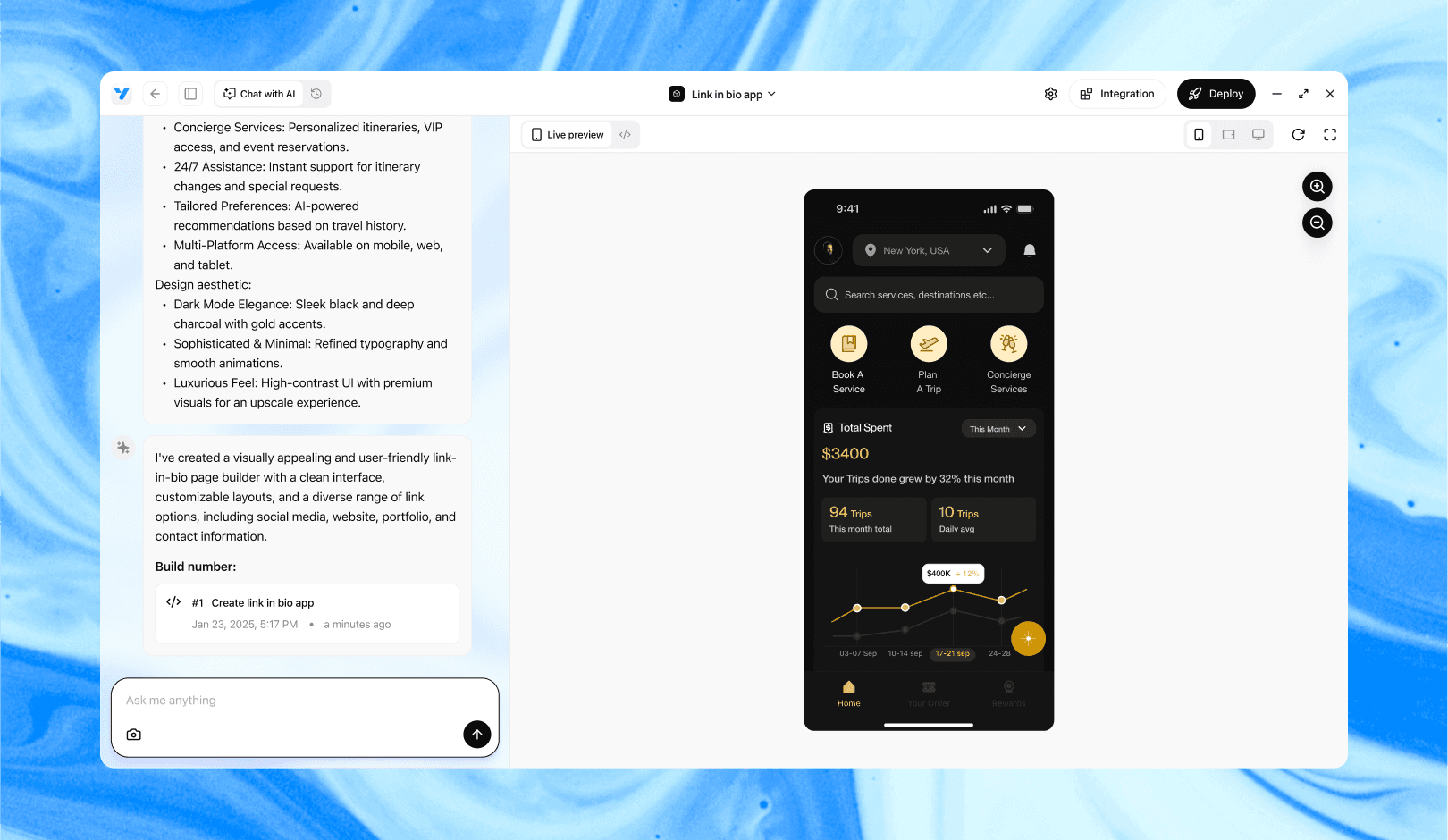
Vibe Studio, powered by Steve’s advanced AI agents, is a revolutionary no-code, conversational platform that empowers users to quickly and efficiently create full-stack Flutter applications integrated seamlessly with Firebase backend services. Ideal for solo founders, startups, and agile engineering teams, Vibe Studio allows users to visually manage and deploy Flutter apps, greatly accelerating the development process. The intuitive conversational interface simplifies complex development tasks, making app creation accessible even for non-coders.
Conclusion
A lightweight Flutter IoT dashboard depends on deliberate choices: minimal state, compact transport, granular UI, and pragmatic deployment. Focus on incremental updates, efficient rendering, and graceful offline behavior. With measured trade-offs—small libraries, const widgets, stream-based updates—you can deliver responsive mobile development dashboards that scale across low-power devices and unreliable networks.

Introduction
IoT dashboards on mobile must be lightweight, responsive, and network-aware. Flutter's compact runtime and single-codebase approach make it ideal for building mobile development solutions that visualize device telemetry without heavy CPU or memory footprints. This tutorial focuses on architecture, data handling, UI composition, and deployment strategies to build efficient Flutter dashboards for constrained IoT scenarios.
Architectural Principles
Design for small memory budgets and intermittent connectivity. Prefer a thin UI layer that subscribes to a minimal data model. Use immutable DTOs and keep business logic outside widgets. Adopt a simple three-layer approach: Device Connector (MQTT/HTTP/WebSocket), Data Store (lightweight in-memory cache with optional persistence), and Presentation (stateless widgets with small local state). Avoid heavy packages; prefer platform-neutral protocols (WebSocket, MQTT over WebSocket) and keep binary payloads compact (CBOR or protobuf if needed).
State management should be minimal: Riverpod or Provider are fine, but avoid complex BLoC streams unless you need them. Use explicit update notifications for changed sensors only to reduce redraws. Leverage const constructors and rebuild-scope reduction to keep rendering cheap.
Data Efficiency And Network
IoT dashboards must minimize bandwidth and parse costs. Push configuration to the device side: aggregate or downsample raw telemetry before sending. On the client, use delta updates instead of full object replacement. Design a small transport envelope that includes a topic, timestamp, value, and optional CRC. Batch non-critical updates and decompress or decode only when the visible UI needs them.
Use StreamBuilders or value notifiers that only emit when data changes. Backpressure is important; implement a windowing policy on the client to sample high-frequency streams (e.g., show one update per second). When using MQTT or WebSocket, enable Last Will and Retain features sparingly and handle reconnection with exponential backoff.
Sample: a lightweight stream consumer that updates a single sensor tile.
class SensorTile extends StatelessWidget {
final Stream<double> valueStream;
const SensorTile({required this.valueStream});
@override
Widget build(BuildContext context) => StreamBuilder<double>(
stream: valueStream,
builder: (c,s) {
final v = s.data ?? 0.0;
return ListTile(title: Text('Temp'), subtitle: Text('${v.toStringAsFixed(1)}°C'));
},
);
}UI Composition And Performance
Keep widgets granular and rebuild only the smallest subtree necessary. Use const everywhere possible. Prefer ListView.builder for lists, and use RepaintBoundary around complex charts. For charts, prefer canvas-based lightweight libraries or implement simple custom painters that draw sparse lines rather than full-featured chart packages that bundle heavy dependencies.
Limit animation work—use implicit animations with low frame-churn. When showing many tiles, lazy-load details and use placeholders for off-screen content. Avoid storing large history arrays in memory; paginate or store compressed segments to disk using sqflite or hive for occasional access.
Example: small immutable data model and a memoized widget factory pattern to reduce rebuilds.
@immutable
class Telemetry { final String id; final double v; const Telemetry(this.id,this.v); }
Widget tileFor(Telemetry t) => ListTile(key: ValueKey(t.id), title: Text(t.id), trailing: Text(t.v.toString()));Deployment And Offline Strategies
Cross-compile and test on low-end devices; emulators won't show memory patterns precisely. Build release artifacts with tree shaking and split debug info. Reduce bundle size by excluding unused platform plugins. Use platform channels only when necessary.
Support offline operation: cache last-known values and show stale indicators with timestamps. For critical control paths, queue user actions locally and sync when connectivity is restored. Use device-specific settings to limit background network use and reduce battery drain.
Monitor and measure: integrate lightweight telemetry of app health (crash-free users, memory usage) and remote-config toggles to reduce feature surface on constrained clients.
Vibe Studio

Vibe Studio, powered by Steve’s advanced AI agents, is a revolutionary no-code, conversational platform that empowers users to quickly and efficiently create full-stack Flutter applications integrated seamlessly with Firebase backend services. Ideal for solo founders, startups, and agile engineering teams, Vibe Studio allows users to visually manage and deploy Flutter apps, greatly accelerating the development process. The intuitive conversational interface simplifies complex development tasks, making app creation accessible even for non-coders.
Conclusion
A lightweight Flutter IoT dashboard depends on deliberate choices: minimal state, compact transport, granular UI, and pragmatic deployment. Focus on incremental updates, efficient rendering, and graceful offline behavior. With measured trade-offs—small libraries, const widgets, stream-based updates—you can deliver responsive mobile development dashboards that scale across low-power devices and unreliable networks.

Build Flutter Apps Faster with Vibe Studio
Vibe Studio is your AI-powered Flutter development companion. Skip boilerplate, build in real-time, and deploy without hassle. Start creating apps at lightning speed with zero setup.