Building Interactive Maps in Flutter Using Google Maps
Dec 4, 2025


Summary
Summary
Summary
Summary
This tutorial explains how to set up Google Maps in Flutter, display maps with GoogleMap and a controller, add interactive markers, handle user location and camera movement, and apply performance best practices for mobile development.
Key insights:
Key insights:
Key insights:
Key insights:
Setting Up Google Maps In Flutter: Configure API keys on Android/iOS, request location permissions, and keep keys out of source control.
Displaying Maps And Controllers: Use GoogleMap with a GoogleMapController to manage camera moves and avoid rebuilding the widget frequently.
Adding Markers And Interactivity: Maintain a Set, use MarkerId, handle onTap for markers, and prefer bottom sheets/routes for rich detail views.
Handling User Location And Camera: Request runtime permissions, debounce location streams, and only auto-follow the user when appropriate.
Performance And Best Practices: Batch marker updates, cache custom icons, throttle camera/location updates, and test on real devices.
Introduction
Building interactive maps is a common requirement in modern mobile development. Flutter provides a first-class way to embed Google Maps using the official google_maps_flutter plugin. This tutorial walks through setup, creating a map widget, adding markers and interactivity, handling user location and camera movement, and practical tips for performance and reliability.
Setting Up Google Maps In Flutter
Add the plugin to pubspec.yaml: google_maps_flutter. On Android, add your API key to android/app/src/main/AndroidManifest.xml inside the application tag with a meta-data element. On iOS, add the API key in ios/Runner/AppDelegate.swift (or AppDelegate.m) via GMSServices.provideAPIKey('YOUR_KEY') and add the required keys to Info.plist.
Request the Maps SDK (Maps SDK for Android and iOS) enablement in the Google Cloud Console and set billing if required. For permissions (location), include ACCESS_FINE_LOCATION on Android and NSLocationWhenInUseUsageDescription on iOS.
Keep keys out of version control by loading them from native environment variables or secure storage rather than hard-coding.
Displaying Maps And Controllers
Use the GoogleMap widget to display a map. Create a GoogleMapController to programmatically move the camera and update map state. Keep the controller in a State object and avoid rebuilding the map widget unnecessarily.
Example: minimal map with initial camera and controller callback.
GoogleMap(
initialCameraPosition: CameraPosition(target: LatLng(37.7749, -122.4194), zoom: 12),
onMapCreated: (GoogleMapController controller) => _mapController = controller,
myLocationEnabled: false,
)Use CameraPosition and CameraUpdate to animate or move the camera. For frequent updates (for example following a moving object), use animateCamera sparingly and consider throttling updates.
Adding Markers And Interactivity
Markers are the primary interactive elements. Use a Set and Immutable Marker objects identified by MarkerId. Update the set via setState to add, remove, or change markers. Provide onTap callbacks on markers and onTap / onLongPress on the map for user-driven interactions (like dropping pins).
Create custom marker icons with BitmapDescriptor.fromAssetImage or fromBytes for dynamic icons. For info windows, use onTap on the marker or the infoWindow parameter to display text. For richer interactions, open a bottom sheet or a new route when a marker is tapped rather than relying solely on the default info window.
Example: add a marker and move the camera to it.
final marker = Marker(markerId: MarkerId('m1'), position: LatLng(37.78, -122.41), infoWindow: InfoWindow(title: 'Place'));
setState(() => markers.add(marker));
_mapController?.animateCamera(CameraUpdate.newLatLng(marker.position));Consider clustering for many markers: google_maps_flutter doesn't provide built-in clustering; use packages like google_maps_cluster_manager or implement server-side bucketing for large data sets.
Handling User Location And Camera
To show user location, request runtime permission and set myLocationEnabled: true. Use a location plugin (location or geolocator) to obtain precise coordinates, then update the map camera with animateCamera. When following the user, maintain a boolean followUser and only move the camera automatically when enabled.
Example approach: listen to a position stream, debounce location updates, then call animateCamera with CameraUpdate.newLatLng or CameraUpdate.newLatLngZoom. Always check that the controller is mounted and not null.
Remember platform differences: Android may require runtime permission handling and background location settings; iOS requires usage descriptions and optionally enabling location background modes if necessary.
Performance And Best Practices
Minimize rebuilds: keep the GoogleMap widget outside of frequently rebuilding widgets and pass only the changing Sets (markers, polylines) via const where possible.
Batch updates: update markers in bulk rather than calling setState per marker.
Throttle camera and location updates to reduce work and avoid janky animations.
Use custom tiles or tile overlays for very large data sets rather than drawing everything as markers.
Cache custom marker bitmaps to avoid repeated decoding.
Test on real devices: emulator GPU differences can hide performance issues.
Security and privacy: do not embed API keys in public repos, and request the minimum location permission necessary for your feature.
Vibe Studio
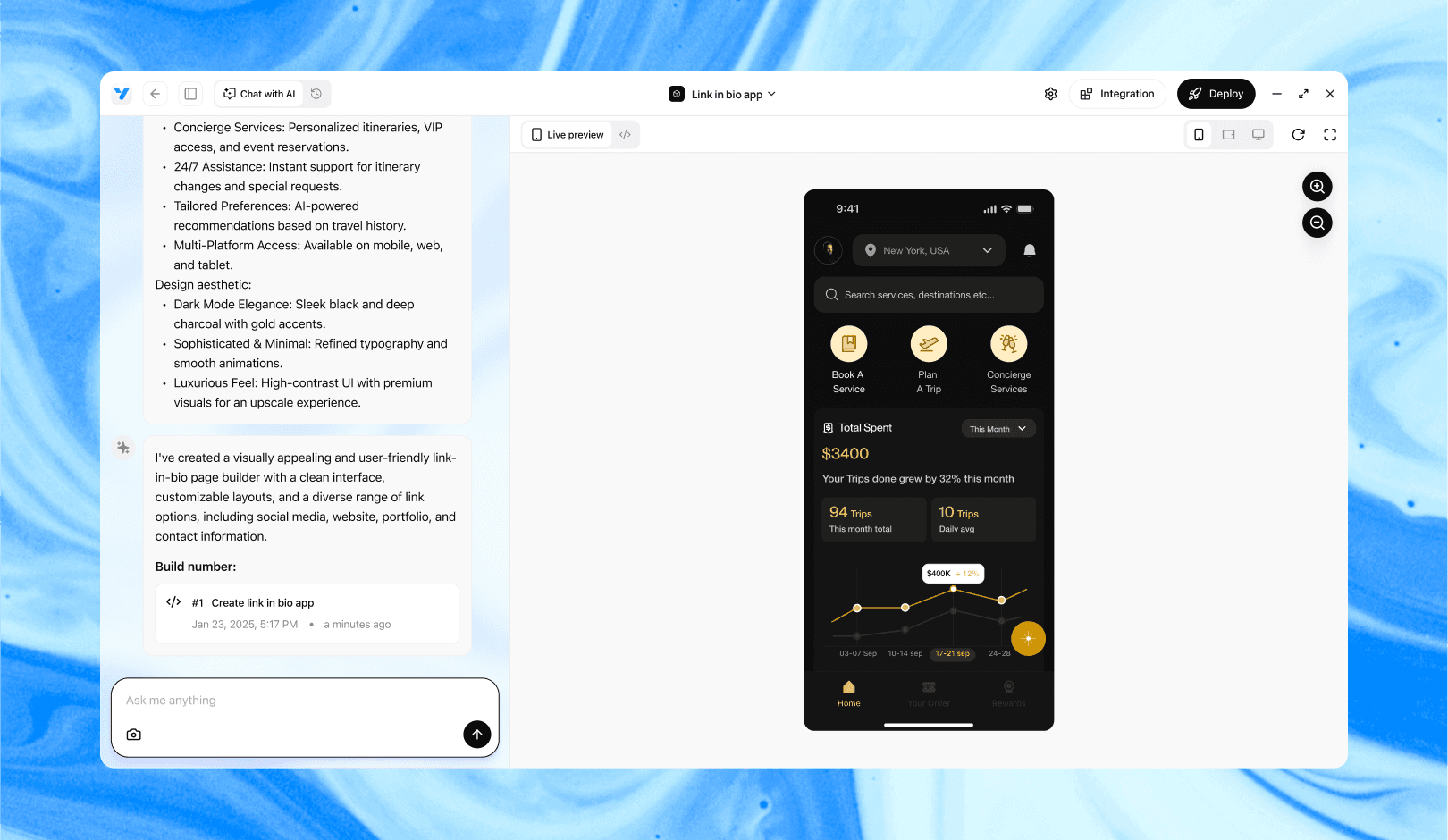
Vibe Studio, powered by Steve’s advanced AI agents, is a revolutionary no-code, conversational platform that empowers users to quickly and efficiently create full-stack Flutter applications integrated seamlessly with Firebase backend services. Ideal for solo founders, startups, and agile engineering teams, Vibe Studio allows users to visually manage and deploy Flutter apps, greatly accelerating the development process. The intuitive conversational interface simplifies complex development tasks, making app creation accessible even for non-coders.
Conclusion
Integrating Google Maps in Flutter is straightforward but requires careful setup and attention to lifecycle, permissions, and performance. Use google_maps_flutter for native-feeling maps, manage map state via a controller, implement marker interactions with clear UX (bottom sheets or routes for details), and optimize for mobile development constraints by throttling updates and batching state changes. With these patterns you'll deliver responsive, interactive maps for Flutter apps.

Introduction
Building interactive maps is a common requirement in modern mobile development. Flutter provides a first-class way to embed Google Maps using the official google_maps_flutter plugin. This tutorial walks through setup, creating a map widget, adding markers and interactivity, handling user location and camera movement, and practical tips for performance and reliability.
Setting Up Google Maps In Flutter
Add the plugin to pubspec.yaml: google_maps_flutter. On Android, add your API key to android/app/src/main/AndroidManifest.xml inside the application tag with a meta-data element. On iOS, add the API key in ios/Runner/AppDelegate.swift (or AppDelegate.m) via GMSServices.provideAPIKey('YOUR_KEY') and add the required keys to Info.plist.
Request the Maps SDK (Maps SDK for Android and iOS) enablement in the Google Cloud Console and set billing if required. For permissions (location), include ACCESS_FINE_LOCATION on Android and NSLocationWhenInUseUsageDescription on iOS.
Keep keys out of version control by loading them from native environment variables or secure storage rather than hard-coding.
Displaying Maps And Controllers
Use the GoogleMap widget to display a map. Create a GoogleMapController to programmatically move the camera and update map state. Keep the controller in a State object and avoid rebuilding the map widget unnecessarily.
Example: minimal map with initial camera and controller callback.
GoogleMap(
initialCameraPosition: CameraPosition(target: LatLng(37.7749, -122.4194), zoom: 12),
onMapCreated: (GoogleMapController controller) => _mapController = controller,
myLocationEnabled: false,
)Use CameraPosition and CameraUpdate to animate or move the camera. For frequent updates (for example following a moving object), use animateCamera sparingly and consider throttling updates.
Adding Markers And Interactivity
Markers are the primary interactive elements. Use a Set and Immutable Marker objects identified by MarkerId. Update the set via setState to add, remove, or change markers. Provide onTap callbacks on markers and onTap / onLongPress on the map for user-driven interactions (like dropping pins).
Create custom marker icons with BitmapDescriptor.fromAssetImage or fromBytes for dynamic icons. For info windows, use onTap on the marker or the infoWindow parameter to display text. For richer interactions, open a bottom sheet or a new route when a marker is tapped rather than relying solely on the default info window.
Example: add a marker and move the camera to it.
final marker = Marker(markerId: MarkerId('m1'), position: LatLng(37.78, -122.41), infoWindow: InfoWindow(title: 'Place'));
setState(() => markers.add(marker));
_mapController?.animateCamera(CameraUpdate.newLatLng(marker.position));Consider clustering for many markers: google_maps_flutter doesn't provide built-in clustering; use packages like google_maps_cluster_manager or implement server-side bucketing for large data sets.
Handling User Location And Camera
To show user location, request runtime permission and set myLocationEnabled: true. Use a location plugin (location or geolocator) to obtain precise coordinates, then update the map camera with animateCamera. When following the user, maintain a boolean followUser and only move the camera automatically when enabled.
Example approach: listen to a position stream, debounce location updates, then call animateCamera with CameraUpdate.newLatLng or CameraUpdate.newLatLngZoom. Always check that the controller is mounted and not null.
Remember platform differences: Android may require runtime permission handling and background location settings; iOS requires usage descriptions and optionally enabling location background modes if necessary.
Performance And Best Practices
Minimize rebuilds: keep the GoogleMap widget outside of frequently rebuilding widgets and pass only the changing Sets (markers, polylines) via const where possible.
Batch updates: update markers in bulk rather than calling setState per marker.
Throttle camera and location updates to reduce work and avoid janky animations.
Use custom tiles or tile overlays for very large data sets rather than drawing everything as markers.
Cache custom marker bitmaps to avoid repeated decoding.
Test on real devices: emulator GPU differences can hide performance issues.
Security and privacy: do not embed API keys in public repos, and request the minimum location permission necessary for your feature.
Vibe Studio

Vibe Studio, powered by Steve’s advanced AI agents, is a revolutionary no-code, conversational platform that empowers users to quickly and efficiently create full-stack Flutter applications integrated seamlessly with Firebase backend services. Ideal for solo founders, startups, and agile engineering teams, Vibe Studio allows users to visually manage and deploy Flutter apps, greatly accelerating the development process. The intuitive conversational interface simplifies complex development tasks, making app creation accessible even for non-coders.
Conclusion
Integrating Google Maps in Flutter is straightforward but requires careful setup and attention to lifecycle, permissions, and performance. Use google_maps_flutter for native-feeling maps, manage map state via a controller, implement marker interactions with clear UX (bottom sheets or routes for details), and optimize for mobile development constraints by throttling updates and batching state changes. With these patterns you'll deliver responsive, interactive maps for Flutter apps.

Build Flutter Apps Faster with Vibe Studio
Vibe Studio is your AI-powered Flutter development companion. Skip boilerplate, build in real-time, and deploy without hassle. Start creating apps at lightning speed with zero setup.