Building Flutter Widgets Using Composition Over Inheritance

Summary
Summary
Summary
Summary

This tutorial shows how to build Flutter widgets using composition instead of inheritance: create small stateless widgets, encapsulate state in controllers or notifiers, inject behavior via constructors or builders, and combine pieces to form complex UI. Composition improves reuse, testability, and maintainability in mobile development.

This tutorial shows how to build Flutter widgets using composition instead of inheritance: create small stateless widgets, encapsulate state in controllers or notifiers, inject behavior via constructors or builders, and combine pieces to form complex UI. Composition improves reuse, testability, and maintainability in mobile development.

This tutorial shows how to build Flutter widgets using composition instead of inheritance: create small stateless widgets, encapsulate state in controllers or notifiers, inject behavior via constructors or builders, and combine pieces to form complex UI. Composition improves reuse, testability, and maintainability in mobile development.

This tutorial shows how to build Flutter widgets using composition instead of inheritance: create small stateless widgets, encapsulate state in controllers or notifiers, inject behavior via constructors or builders, and combine pieces to form complex UI. Composition improves reuse, testability, and maintainability in mobile development.

Key insights:
Key insights:
Key insights:
Key insights:
  • Why Composition Beats Inheritance: Composition reduces coupling and makes widgets easier to change and reuse than deep subclass hierarchies.

  • Composing Widgets From Primitives: Build focused, small widgets (layout, label, icon) and combine them rather than extending large base widgets.

  • Managing State With Composition: Keep state in controllers (ValueNotifier/ChangeNotifier) and pass them into stateless widgets for clearer separation.

  • Testing And Reuse: Test controllers independently and widget-renderers with injected fakes; composition enables broader reuse and simpler tests.

  • Constructor Injection And Builders: Pass callbacks, controllers, and builder functions to add behavior without subclassing, enabling flexible composition.

Introduction

In Flutter mobile development, widgets are the primary building blocks. Two common design approaches are inheritance (extending classes) and composition (building behavior by combining small widgets and objects). This tutorial explains why composition usually leads to clearer, more reusable, and testable Flutter widgets, and shows practical patterns to implement it.

Why Composition Beats Inheritance

Inheritance can feel convenient: extend a base widget, override a method, and reuse behavior. But it creates tight coupling: subclasses depend on parent implementations, making changes risky and reuse limited. In contrast, composition encourages small, focused widgets and functions that are combined to form complex UIs. Composition reduces surface area for bugs, avoids deep hierarchies, and aligns with Flutter’s declarative approach where UI is described by combining widgets.

Key principles:

  • Prefer small single-purpose widgets over large base classes.

  • Expose behavior via parameters (callbacks, builders, controllers) rather than subclass hooks.

  • Keep state local or encapsulated and pass it down via constructors or ValueListenable/Provider.

Composing Widgets From Primitives

Start by identifying the smallest pieces that represent UI or behavior: a label, an icon, a badge, a tappable row. Build those independently, then compose them in higher-level widgets.

Example: a simple reusable row that composes an icon, title, and optional trailing widget.

class IconTitleRow extends StatelessWidget {
  final Widget icon; final String title; final Widget? trailing;
  const IconTitleRow({required this.icon, required this.title, this.trailing});
  @override Widget build(BuildContext c) => Row(children: [icon, SizedBox(width:8), Expanded(child: Text(title)), if (trailing!=null) trailing!]);
}

This widget focuses on layout only. You can reuse it anywhere, styling it externally or wrapping it in GestureDetector to add interaction. Avoid adding complex logic into IconTitleRow — composition means behavior is added by higher-level widgets.

Managing State With Composition

State is often the reason developers reach for inheritance. Instead, encapsulate state in dedicated objects (ChangeNotifier, ValueNotifier, or simple stateful widgets) and combine them with small stateless widgets.

Use ValueListenableBuilder or ChangeNotifier with Provider to keep widgets simple and testable. For transient UI state, ValueNotifier is lightweight and composes cleanly:

class CounterController { final ValueNotifier<int> value = ValueNotifier(0); void inc() => value.value++; }

// Usage in a parent: ValueListenableBuilder(valueListenable: controller.value, builder: ...) 

The UI widgets read from the controller but do not own business logic. This separation lets you test controllers independently from widgets and swap implementations without changing descendants.

Avoid monolithic StatefulWidgets that mix presentation with business logic. Instead, compose a StatefulWidget that manages controllers or listenables and exposes them to stateless children via constructor parameters or an InheritedWidget/Provider.

Testing And Reuse

Composition improves testability and reuse. Test small widgets as pure renderers (pumpWidget and verify render tree) and test controllers or services independently using unit tests.

Patterns that help:

  • Constructor injection: pass controllers and callbacks into widgets so tests can provide fakes.

  • Builder parameters: expose builder callbacks so callers can inject custom child widgets or behavior.

  • Stateless renderers: keep widgets stateless when possible so snapshot-like tests are deterministic.

Example testing workflow:

  1. Unit-test a controller's logic (increment, validation) without Flutter.

  2. Widget-test the composed UI with a fake controller to verify the widget reacts to changes.

Composition also increases reuse: a small badge widget can be used in many contexts without modification. If style needs to be different, wrap it in a theme-aware parent rather than subclassing.

Vibe Studio
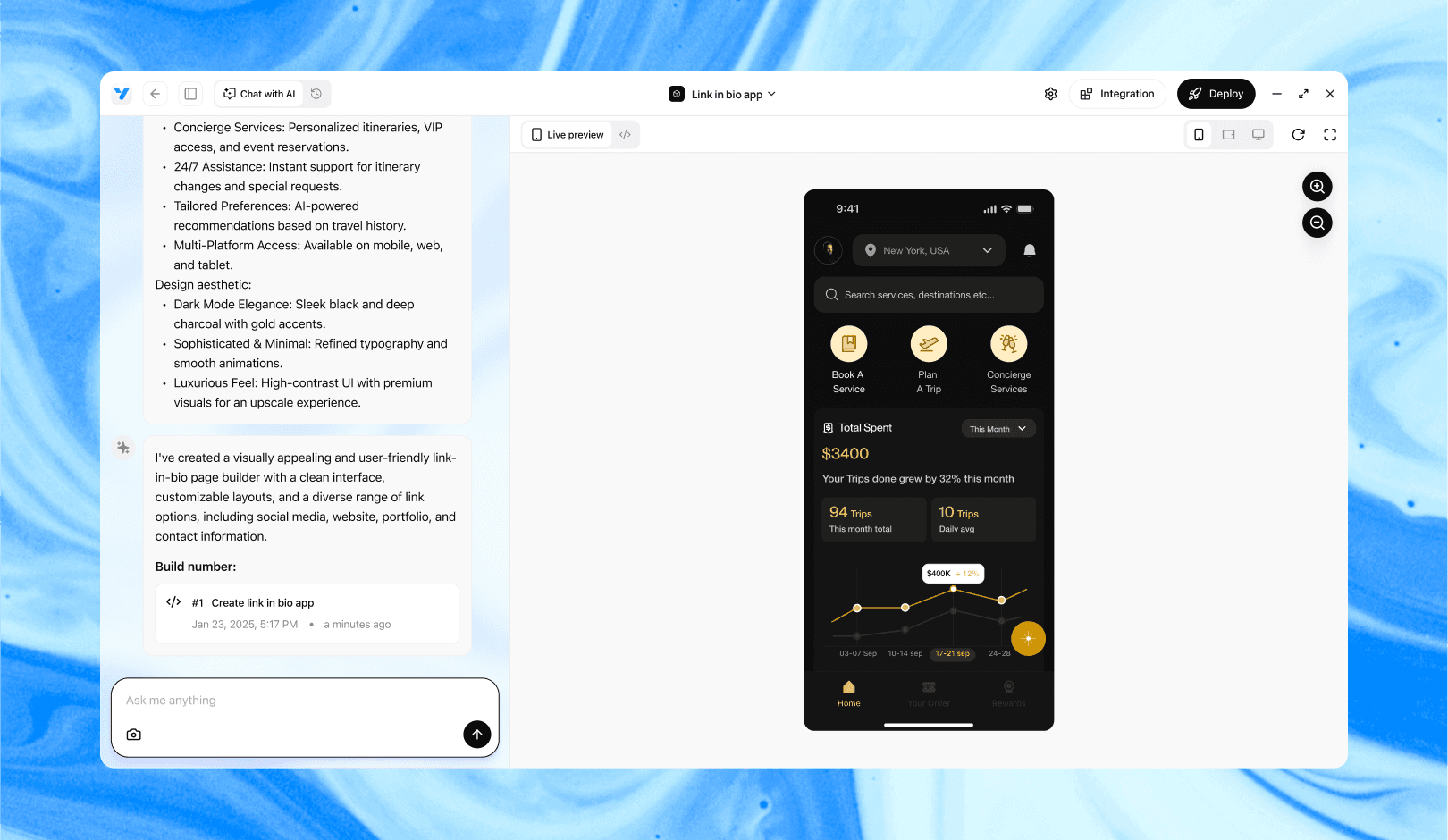
Vibe Studio, powered by Steve’s advanced AI agents, is a revolutionary no-code, conversational platform that empowers users to quickly and efficiently create full-stack Flutter applications integrated seamlessly with Firebase backend services. Ideal for solo founders, startups, and agile engineering teams, Vibe Studio allows users to visually manage and deploy Flutter apps, greatly accelerating the development process. The intuitive conversational interface simplifies complex development tasks, making app creation accessible even for non-coders.

Conclusion

Composition over inheritance is not an absolute ban on subclassing, but a pragmatic default for Flutter mobile development. Compose small stateless widgets, separate state and logic into controllers or providers, and combine pieces at higher levels. This approach yields widgets that are easier to reason about, reuse, test, and evolve. Start by breaking large widgets into focused primitives, inject behavior via parameters, and let Flutter’s declarative model handle composition. The result is more maintainable, modular mobile UI code.


Introduction

In Flutter mobile development, widgets are the primary building blocks. Two common design approaches are inheritance (extending classes) and composition (building behavior by combining small widgets and objects). This tutorial explains why composition usually leads to clearer, more reusable, and testable Flutter widgets, and shows practical patterns to implement it.

Why Composition Beats Inheritance

Inheritance can feel convenient: extend a base widget, override a method, and reuse behavior. But it creates tight coupling: subclasses depend on parent implementations, making changes risky and reuse limited. In contrast, composition encourages small, focused widgets and functions that are combined to form complex UIs. Composition reduces surface area for bugs, avoids deep hierarchies, and aligns with Flutter’s declarative approach where UI is described by combining widgets.

Key principles:

  • Prefer small single-purpose widgets over large base classes.

  • Expose behavior via parameters (callbacks, builders, controllers) rather than subclass hooks.

  • Keep state local or encapsulated and pass it down via constructors or ValueListenable/Provider.

Composing Widgets From Primitives

Start by identifying the smallest pieces that represent UI or behavior: a label, an icon, a badge, a tappable row. Build those independently, then compose them in higher-level widgets.

Example: a simple reusable row that composes an icon, title, and optional trailing widget.

class IconTitleRow extends StatelessWidget {
  final Widget icon; final String title; final Widget? trailing;
  const IconTitleRow({required this.icon, required this.title, this.trailing});
  @override Widget build(BuildContext c) => Row(children: [icon, SizedBox(width:8), Expanded(child: Text(title)), if (trailing!=null) trailing!]);
}

This widget focuses on layout only. You can reuse it anywhere, styling it externally or wrapping it in GestureDetector to add interaction. Avoid adding complex logic into IconTitleRow — composition means behavior is added by higher-level widgets.

Managing State With Composition

State is often the reason developers reach for inheritance. Instead, encapsulate state in dedicated objects (ChangeNotifier, ValueNotifier, or simple stateful widgets) and combine them with small stateless widgets.

Use ValueListenableBuilder or ChangeNotifier with Provider to keep widgets simple and testable. For transient UI state, ValueNotifier is lightweight and composes cleanly:

class CounterController { final ValueNotifier<int> value = ValueNotifier(0); void inc() => value.value++; }

// Usage in a parent: ValueListenableBuilder(valueListenable: controller.value, builder: ...) 

The UI widgets read from the controller but do not own business logic. This separation lets you test controllers independently from widgets and swap implementations without changing descendants.

Avoid monolithic StatefulWidgets that mix presentation with business logic. Instead, compose a StatefulWidget that manages controllers or listenables and exposes them to stateless children via constructor parameters or an InheritedWidget/Provider.

Testing And Reuse

Composition improves testability and reuse. Test small widgets as pure renderers (pumpWidget and verify render tree) and test controllers or services independently using unit tests.

Patterns that help:

  • Constructor injection: pass controllers and callbacks into widgets so tests can provide fakes.

  • Builder parameters: expose builder callbacks so callers can inject custom child widgets or behavior.

  • Stateless renderers: keep widgets stateless when possible so snapshot-like tests are deterministic.

Example testing workflow:

  1. Unit-test a controller's logic (increment, validation) without Flutter.

  2. Widget-test the composed UI with a fake controller to verify the widget reacts to changes.

Composition also increases reuse: a small badge widget can be used in many contexts without modification. If style needs to be different, wrap it in a theme-aware parent rather than subclassing.

Vibe Studio

Vibe Studio, powered by Steve’s advanced AI agents, is a revolutionary no-code, conversational platform that empowers users to quickly and efficiently create full-stack Flutter applications integrated seamlessly with Firebase backend services. Ideal for solo founders, startups, and agile engineering teams, Vibe Studio allows users to visually manage and deploy Flutter apps, greatly accelerating the development process. The intuitive conversational interface simplifies complex development tasks, making app creation accessible even for non-coders.

Conclusion

Composition over inheritance is not an absolute ban on subclassing, but a pragmatic default for Flutter mobile development. Compose small stateless widgets, separate state and logic into controllers or providers, and combine pieces at higher levels. This approach yields widgets that are easier to reason about, reuse, test, and evolve. Start by breaking large widgets into focused primitives, inject behavior via parameters, and let Flutter’s declarative model handle composition. The result is more maintainable, modular mobile UI code.

Build Flutter Apps Faster with Vibe Studio

Build Flutter Apps Faster with Vibe Studio

Build Flutter Apps Faster with Vibe Studio

Build Flutter Apps Faster with Vibe Studio

Vibe Studio is your AI-powered Flutter development companion. Skip boilerplate, build in real-time, and deploy without hassle. Start creating apps at lightning speed with zero setup.

Vibe Studio is your AI-powered Flutter development companion. Skip boilerplate, build in real-time, and deploy without hassle. Start creating apps at lightning speed with zero setup.

Vibe Studio is your AI-powered Flutter development companion. Skip boilerplate, build in real-time, and deploy without hassle. Start creating apps at lightning speed with zero setup.

Vibe Studio is your AI-powered Flutter development companion. Skip boilerplate, build in real-time, and deploy without hassle. Start creating apps at lightning speed with zero setup.

Other Insights

Other Insights

Other Insights

Other Insights

Join a growing community of builders today

Join a growing community of builders today

Join a growing community of builders today

Join a growing community of builders today

Join a growing community of builders today

28-07 Jackson Ave

Walturn

New York NY 11101 United States

© Steve • All Rights Reserved 2025

28-07 Jackson Ave

Walturn

New York NY 11101 United States

© Steve • All Rights Reserved 2025

28-07 Jackson Ave

Walturn

New York NY 11101 United States

© Steve • All Rights Reserved 2025

28-07 Jackson Ave

Walturn

New York NY 11101 United States

© Steve • All Rights Reserved 2025

28-07 Jackson Ave

Walturn

New York NY 11101 United States

© Steve • All Rights Reserved 2025

28-07 Jackson Ave

Walturn

New York NY 11101 United States

© Steve • All Rights Reserved 2025