Building Flutter Web Apps with Server Components

Summary
Summary
Summary
Summary

Server components deliver compact UI models from the server that a thin Flutter web client hydrates into interactive widgets. Design a versioned contract, implement a small deterministic renderer, stream or cache payloads for performance, and reuse endpoints for mobile development to centralize logic and improve load times.

Server components deliver compact UI models from the server that a thin Flutter web client hydrates into interactive widgets. Design a versioned contract, implement a small deterministic renderer, stream or cache payloads for performance, and reuse endpoints for mobile development to centralize logic and improve load times.

Server components deliver compact UI models from the server that a thin Flutter web client hydrates into interactive widgets. Design a versioned contract, implement a small deterministic renderer, stream or cache payloads for performance, and reuse endpoints for mobile development to centralize logic and improve load times.

Server components deliver compact UI models from the server that a thin Flutter web client hydrates into interactive widgets. Design a versioned contract, implement a small deterministic renderer, stream or cache payloads for performance, and reuse endpoints for mobile development to centralize logic and improve load times.

Key insights:
Key insights:
Key insights:
Key insights:
  • Architecture And Patterns: Server components should return a compact, versioned UI model that the Flutter client maps to widgets for faster initial render.

  • Implementing Server Components: Keep the client renderer small and pure; map server node types to widgets and route events explicitly to the server when needed.

  • Data Fetching And Hydration: Send above-the-fold data inline, hydrate progressively with Futures/Streams, and use background fetches for non-critical content.

  • Deploying And Performance Tips: Minimize JSON size, use caching and streaming, and tailor payloads per client to optimize web and mobile performance.

  • Reusability For Mobile: The same server endpoints can serve Flutter mobile clients with smaller or larger payloads via hints, enabling shared business logic.

Introduction

Server components are an architectural pattern: move stateful or heavy rendering logic to the server and deliver a compact payload that a thin client (Flutter web) hydrates into interactive UI. For Flutter teams focused on fast load, predictable performance, and shared logic across web and mobile development, server components let you centralize business rules and minimize client work while keeping the declarative Flutter widget model.

This article explains practical patterns to build Flutter web apps that consume server components, how to design the JSON/contract between server and client, and how to reuse the same server-driven approach for mobile clients.

Architecture And Patterns

Treat a server component as a service that returns a lightweight UI model (JSON) and optionally initial data. The client maps that model to widgets. Benefits:

  • Smaller JavaScript bundle and quicker first paint for web.

  • Centralized validation, feature flags, and A/B testing on the server.

  • Reuse of the same APIs for Flutter mobile and other clients.

Common patterns:

  • UI Model: server returns a tree of nodes (type, props, children). The client is responsible for rendering these nodes to native widgets.

  • Data First: server returns data + a small template hint; the client uses native widgets and fetches additional data lazily.

  • Streaming: server streams partial components for faster incremental rendering.

Design the contract deliberately: type names, prop keys, and supported widget set must be versioned. Keep the model small; send identifiers for large assets instead of binary blobs.

Implementing Server Components

Server work: implement endpoints that return a compact UI description. Example JSON node:

{
  "type": "Card",
  "props": {"title": "Welcome", "subtitle": "Today"},
  "children": []
 }

On the Flutter side implement a small renderer that maps types to Widgets. This keeps the Flutter app thin and deterministic.

Example Dart: fetch and render a component tree.

import 'dart:convert';
import 'package:http/http.dart' as http;

Future<dynamic> fetchComponent(String uri) async {
  final res = await http.get(Uri.parse(uri));
  return json.decode(res.body);
}

Then write a renderer that converts nodes to Widgets. Keep mapping logic small and testable. Use keys or ids for interactive elements to route events back to the server when necessary.

Data Fetching And Hydration

Hydration here means: server sends initial model + data; Flutter web consumes that model, constructs widgets, and attaches client-side behavior. Steps:

  • Server returns JSON model with inline data for above-the-fold UI.

  • Client renders immediately, then issues background fetches for non-critical data.

  • For interactive events (forms, taps), either handle on the client or perform a server round-trip depending on latency tolerance.

Code-forward tips:

  • Use Futures and StreamBuilders for progressive hydration.

  • Cache server responses to reduce duplicate fetches across navigation.

  • If the server streams partial components, pipe the stream to the UI using StreamBuilder and apply each chunk as it arrives.

Example: simple renderer helper (sketch):

Widget buildNode(Map node) {
  switch (node['type']) {
    case 'Text': return Text(node['props']['text'] ?? '');
    case 'Button': return ElevatedButton(
      onPressed: () {/* post event */},
      child: Text(node['props']['label'] ?? ''),
    );
    default: return SizedBox.shrink();
  }
}

Keep rendering deterministic and side-effect free; perform side effects (analytics, network events) outside the pure renderer.

Deploying And Performance Tips

Optimize both server and Flutter web client:

  • Minimize JSON size: compress, trim unnecessary keys. Use IDs instead of repeating strings.

  • CDN static assets and leverage HTTP/2 or gRPC for lower-latency fetches.

  • Use coarse-grained server components for initial load and fine-grained lazy components for interactions.

  • Cache server component responses on the client and server. Consider ETags and conditional requests to avoid transferring unchanged payloads.

  • For mobile development reuse the same endpoints but tailor payload sizes: mobile clients can request smaller or larger models using query hints.

Measure time-to-interactive and network payloads. Prefer streaming or progressive rendering for slower networks. Monitor error modes: always provide a fallback widget when the server model is invalid or missing.

Vibe Studio
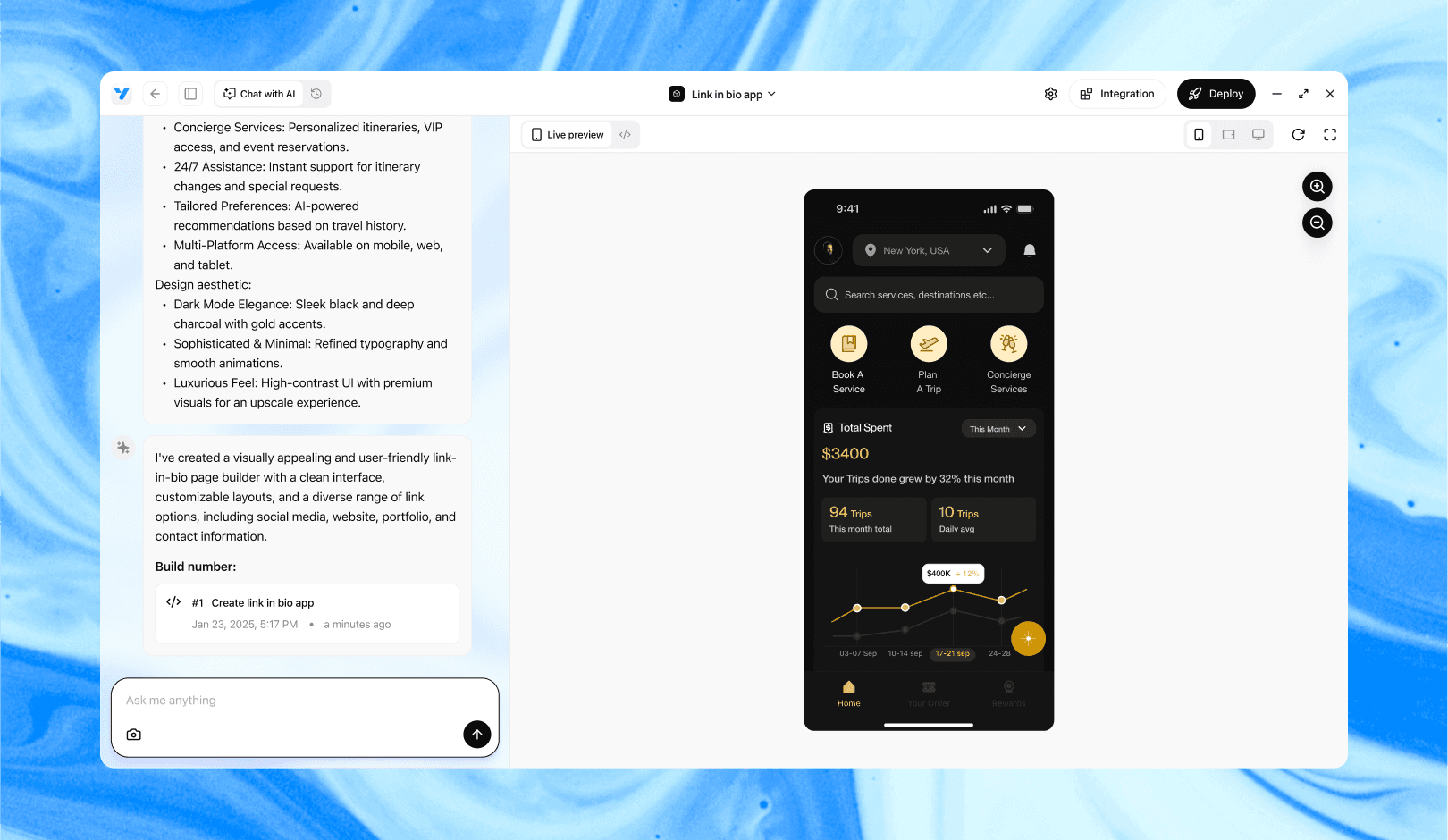
Vibe Studio, powered by Steve’s advanced AI agents, is a revolutionary no-code, conversational platform that empowers users to quickly and efficiently create full-stack Flutter applications integrated seamlessly with Firebase backend services. Ideal for solo founders, startups, and agile engineering teams, Vibe Studio allows users to visually manage and deploy Flutter apps, greatly accelerating the development process. The intuitive conversational interface simplifies complex development tasks, making app creation accessible even for non-coders.

Conclusion

Server components are a pragmatic way to offload rendering complexity from the Flutter web client while keeping a consistent platform across web and mobile development. By standardizing a compact UI model, implementing a small client renderer, and using progressive hydration, you get faster loads, centralized business logic, and reusable APIs for mobile. Start small: create a single server component for a high-impact screen, iterate on the contract, and expand the system as you validate performance gains and developer ergonomics.


Introduction

Server components are an architectural pattern: move stateful or heavy rendering logic to the server and deliver a compact payload that a thin client (Flutter web) hydrates into interactive UI. For Flutter teams focused on fast load, predictable performance, and shared logic across web and mobile development, server components let you centralize business rules and minimize client work while keeping the declarative Flutter widget model.

This article explains practical patterns to build Flutter web apps that consume server components, how to design the JSON/contract between server and client, and how to reuse the same server-driven approach for mobile clients.

Architecture And Patterns

Treat a server component as a service that returns a lightweight UI model (JSON) and optionally initial data. The client maps that model to widgets. Benefits:

  • Smaller JavaScript bundle and quicker first paint for web.

  • Centralized validation, feature flags, and A/B testing on the server.

  • Reuse of the same APIs for Flutter mobile and other clients.

Common patterns:

  • UI Model: server returns a tree of nodes (type, props, children). The client is responsible for rendering these nodes to native widgets.

  • Data First: server returns data + a small template hint; the client uses native widgets and fetches additional data lazily.

  • Streaming: server streams partial components for faster incremental rendering.

Design the contract deliberately: type names, prop keys, and supported widget set must be versioned. Keep the model small; send identifiers for large assets instead of binary blobs.

Implementing Server Components

Server work: implement endpoints that return a compact UI description. Example JSON node:

{
  "type": "Card",
  "props": {"title": "Welcome", "subtitle": "Today"},
  "children": []
 }

On the Flutter side implement a small renderer that maps types to Widgets. This keeps the Flutter app thin and deterministic.

Example Dart: fetch and render a component tree.

import 'dart:convert';
import 'package:http/http.dart' as http;

Future<dynamic> fetchComponent(String uri) async {
  final res = await http.get(Uri.parse(uri));
  return json.decode(res.body);
}

Then write a renderer that converts nodes to Widgets. Keep mapping logic small and testable. Use keys or ids for interactive elements to route events back to the server when necessary.

Data Fetching And Hydration

Hydration here means: server sends initial model + data; Flutter web consumes that model, constructs widgets, and attaches client-side behavior. Steps:

  • Server returns JSON model with inline data for above-the-fold UI.

  • Client renders immediately, then issues background fetches for non-critical data.

  • For interactive events (forms, taps), either handle on the client or perform a server round-trip depending on latency tolerance.

Code-forward tips:

  • Use Futures and StreamBuilders for progressive hydration.

  • Cache server responses to reduce duplicate fetches across navigation.

  • If the server streams partial components, pipe the stream to the UI using StreamBuilder and apply each chunk as it arrives.

Example: simple renderer helper (sketch):

Widget buildNode(Map node) {
  switch (node['type']) {
    case 'Text': return Text(node['props']['text'] ?? '');
    case 'Button': return ElevatedButton(
      onPressed: () {/* post event */},
      child: Text(node['props']['label'] ?? ''),
    );
    default: return SizedBox.shrink();
  }
}

Keep rendering deterministic and side-effect free; perform side effects (analytics, network events) outside the pure renderer.

Deploying And Performance Tips

Optimize both server and Flutter web client:

  • Minimize JSON size: compress, trim unnecessary keys. Use IDs instead of repeating strings.

  • CDN static assets and leverage HTTP/2 or gRPC for lower-latency fetches.

  • Use coarse-grained server components for initial load and fine-grained lazy components for interactions.

  • Cache server component responses on the client and server. Consider ETags and conditional requests to avoid transferring unchanged payloads.

  • For mobile development reuse the same endpoints but tailor payload sizes: mobile clients can request smaller or larger models using query hints.

Measure time-to-interactive and network payloads. Prefer streaming or progressive rendering for slower networks. Monitor error modes: always provide a fallback widget when the server model is invalid or missing.

Vibe Studio

Vibe Studio, powered by Steve’s advanced AI agents, is a revolutionary no-code, conversational platform that empowers users to quickly and efficiently create full-stack Flutter applications integrated seamlessly with Firebase backend services. Ideal for solo founders, startups, and agile engineering teams, Vibe Studio allows users to visually manage and deploy Flutter apps, greatly accelerating the development process. The intuitive conversational interface simplifies complex development tasks, making app creation accessible even for non-coders.

Conclusion

Server components are a pragmatic way to offload rendering complexity from the Flutter web client while keeping a consistent platform across web and mobile development. By standardizing a compact UI model, implementing a small client renderer, and using progressive hydration, you get faster loads, centralized business logic, and reusable APIs for mobile. Start small: create a single server component for a high-impact screen, iterate on the contract, and expand the system as you validate performance gains and developer ergonomics.

Build Flutter Apps Faster with Vibe Studio

Build Flutter Apps Faster with Vibe Studio

Build Flutter Apps Faster with Vibe Studio

Build Flutter Apps Faster with Vibe Studio

Vibe Studio is your AI-powered Flutter development companion. Skip boilerplate, build in real-time, and deploy without hassle. Start creating apps at lightning speed with zero setup.

Vibe Studio is your AI-powered Flutter development companion. Skip boilerplate, build in real-time, and deploy without hassle. Start creating apps at lightning speed with zero setup.

Vibe Studio is your AI-powered Flutter development companion. Skip boilerplate, build in real-time, and deploy without hassle. Start creating apps at lightning speed with zero setup.

Vibe Studio is your AI-powered Flutter development companion. Skip boilerplate, build in real-time, and deploy without hassle. Start creating apps at lightning speed with zero setup.

Other Insights

Other Insights

Other Insights

Other Insights

Join a growing community of builders today

Join a growing community of builders today

Join a growing community of builders today

Join a growing community of builders today

Join a growing community of builders today

28-07 Jackson Ave

Walturn

New York NY 11101 United States

© Steve • All Rights Reserved 2025

28-07 Jackson Ave

Walturn

New York NY 11101 United States

© Steve • All Rights Reserved 2025

28-07 Jackson Ave

Walturn

New York NY 11101 United States

© Steve • All Rights Reserved 2025

28-07 Jackson Ave

Walturn

New York NY 11101 United States

© Steve • All Rights Reserved 2025

28-07 Jackson Ave

Walturn

New York NY 11101 United States

© Steve • All Rights Reserved 2025

28-07 Jackson Ave

Walturn

New York NY 11101 United States

© Steve • All Rights Reserved 2025