Building Flutter Dashboards for AI Model Monitoring

Summary
Summary
Summary
Summary

This tutorial explains how to build Flutter dashboards for AI model monitoring: design lightweight telemetry pipelines, integrate real-time transport (WebSocket/gRPC/MQTT), render efficient charts with StreamBuilder and isolates, implement offline buffering and reconnection policies, and secure telemetry with encryption and minimal PII. Includes short Dart snippets for reactive updates and local telemetry queueing.

This tutorial explains how to build Flutter dashboards for AI model monitoring: design lightweight telemetry pipelines, integrate real-time transport (WebSocket/gRPC/MQTT), render efficient charts with StreamBuilder and isolates, implement offline buffering and reconnection policies, and secure telemetry with encryption and minimal PII. Includes short Dart snippets for reactive updates and local telemetry queueing.

This tutorial explains how to build Flutter dashboards for AI model monitoring: design lightweight telemetry pipelines, integrate real-time transport (WebSocket/gRPC/MQTT), render efficient charts with StreamBuilder and isolates, implement offline buffering and reconnection policies, and secure telemetry with encryption and minimal PII. Includes short Dart snippets for reactive updates and local telemetry queueing.

This tutorial explains how to build Flutter dashboards for AI model monitoring: design lightweight telemetry pipelines, integrate real-time transport (WebSocket/gRPC/MQTT), render efficient charts with StreamBuilder and isolates, implement offline buffering and reconnection policies, and secure telemetry with encryption and minimal PII. Includes short Dart snippets for reactive updates and local telemetry queueing.

Key insights:
Key insights:
Key insights:
Key insights:
  • Data Pipeline Integration: Use compact telemetry (protobuf/JSON), batch on-device, and prefer gRPC/WebSocket/MQTT depending on latency and scale.

  • UI Components For Metrics: Keep widget trees shallow, use StreamBuilder for reactivity, and precompute heavy layouts in isolates to avoid jank.

  • Real-Time Updates And Offline Handling: Debounce high-frequency signals, implement reconnection policies, and persist a local queue to flush telemetry when online.

  • Security And Deployment Considerations: Encrypt transport, avoid storing PII, use certificate pinning and feature flags, and profile with Flutter DevTools.

  • Performance Patterns: Prefer binary encodings, AOT compilation, and optimized chart libraries; batch updates and offload serialization to isolates.

Introduction

Monitoring AI models from a mobile dashboard requires balancing timely visibility with constrained resources. Flutter is an excellent choice for mobile development here because it delivers native performance, flexible UI composition, and a single codebase for iOS and Android. This tutorial focuses on practical patterns: ingesting telemetry, rendering metrics efficiently, enabling real-time updates, and handling offline behavior. You will learn architecture choices and see short Dart examples you can drop into a project.

Data Pipeline Integration

Start by designing a lightweight telemetry pipeline. Models running on edge devices or backend servers should emit compact messages: prediction metadata, latency, confidence, and sample feature hashes. Prefer structured binary (protobuf) for high-throughput streams and JSON for readability during development. Transport options:

  • gRPC or HTTP/2 for telemetry ingestion from mobile to backend.

  • WebSocket or Server-Sent Events for pushing server-side updates into the mobile dashboard.

  • MQTT when you need scalable pub/sub with low overhead.

Batch telemetry on the device: collect short bursts and upload when on Wi-Fi or when the device is idle. Use isolates to perform serialization/deserialization to avoid jank in the UI thread. Always sign and encrypt telemetry; include a short-lived token and rotate it from a secure backend endpoint.

UI Components For Metrics

Design a hierarchy of reusable widgets for KPI cards, sparklines, latency histograms, confusion matrices (small multiples), and alert lists. Choose charting packages that optimize for mobile rendering—fl_chart and syncfusion_flutter_charts are performant but test memory cost for many series.

Use StreamBuilder or ValueListenable for reactive updates. Keep widget trees shallow and extract immutable subtrees to avoid rebuilds. For large tables, use ListView.builder with pagination and virtualization.

Example: a minimal StreamBuilder wiring metric updates to a chart widget.

StreamBuilder<List<double>>(
  stream: metricsStream, // emits recent error rates
  builder: (context, snapshot) {
    final values = snapshot.data ?? [];
    return SizedBox(height: 120, child: SimpleSparkline(values));
  },
)

When rendering histograms or confusion matrices, precompute layouts in an isolate and send lightweight display instructions (positions, colors) back to the main isolate.

Real-Time Updates And Offline Handling

Real-time dashboards are only useful if they handle intermittent connectivity gracefully. Implement a reconnection policy with exponential backoff and jitter for WebSocket or MQTT clients. Debounce high-frequency signals: don't update the UI for every micro-burst; sample at a rate the user can comprehend (e.g., 1s updates for KPIs, 100ms for live traces).

For offline resilience, buffer telemetry and user actions in a local queue. Persist queue items in a small local store (Hive or sqflite) so the app can recover after termination. Use background fetch (platform APIs or WorkManager) to flush the buffer when connectivity returns.

Keep storage compact: store summarized aggregates rather than raw feature vectors unless raw samples are essential. For debugging, implement a conditional raw-sample upload gated by developer mode and user consent.

class TelemetryQueue {
  final List<Map<String, dynamic>> _queue = [];
  void enqueue(Map<String, dynamic> item) => _queue.add(item);
  Future<void> flush(Future<void> Function(Map) send) async {
    while (_queue.isNotEmpty) {
      final 

Security And Deployment Considerations

Protect telemetry and model outputs. Use HTTPS/TLS and consider certificate pinning in Flutter via the http client or native plugins. Avoid storing PII on-device; if model inputs are sensitive, send only feature hashes or aggregated statistics. Apply rate limits and anomaly detection on the backend to avoid exfiltration attacks.

When deploying, use code obfuscation and split AOT compilation to reduce APK size for Flutter. Profile the dashboard with Flutter DevTools—identify expensive builds and repaint regions. For high-frequency analytics, prefer binary encodings and bulk endpoints to reduce CPU cost on mobile.

Rollouts: gate new dashboard features with feature flags and perform canary releases to a small set of devices. This reduces the risk of UI or telemetry regressions impacting a broad user base.

Vibe Studio
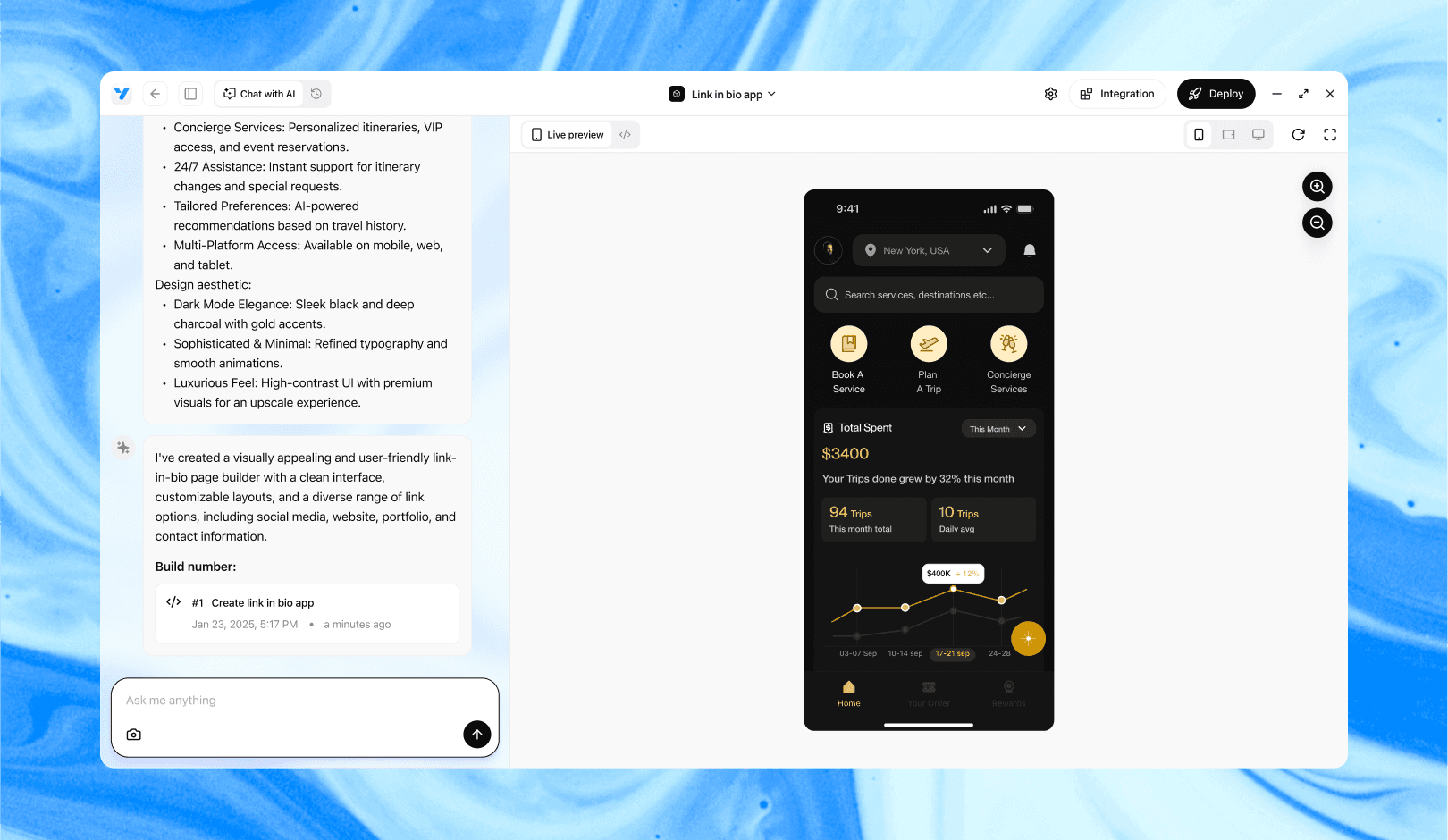
Vibe Studio, powered by Steve’s advanced AI agents, is a revolutionary no-code, conversational platform that empowers users to quickly and efficiently create full-stack Flutter applications integrated seamlessly with Firebase backend services. Ideal for solo founders, startups, and agile engineering teams, Vibe Studio allows users to visually manage and deploy Flutter apps, greatly accelerating the development process. The intuitive conversational interface simplifies complex development tasks, making app creation accessible even for non-coders.

Conclusion

Building Flutter dashboards for AI model monitoring combines mobile development constraints with real-time analytics needs. Focus on a compact telemetry schema, reactive yet efficient UI components, robust offline buffering, and strict security practices. Use isolates and background tasks to offload heavy work from the UI thread, and choose transports and charting libraries that match your scale. With these patterns you can deliver actionable, performant mobile dashboards that keep stakeholders informed about model health without overloading device resources.


Introduction

Monitoring AI models from a mobile dashboard requires balancing timely visibility with constrained resources. Flutter is an excellent choice for mobile development here because it delivers native performance, flexible UI composition, and a single codebase for iOS and Android. This tutorial focuses on practical patterns: ingesting telemetry, rendering metrics efficiently, enabling real-time updates, and handling offline behavior. You will learn architecture choices and see short Dart examples you can drop into a project.

Data Pipeline Integration

Start by designing a lightweight telemetry pipeline. Models running on edge devices or backend servers should emit compact messages: prediction metadata, latency, confidence, and sample feature hashes. Prefer structured binary (protobuf) for high-throughput streams and JSON for readability during development. Transport options:

  • gRPC or HTTP/2 for telemetry ingestion from mobile to backend.

  • WebSocket or Server-Sent Events for pushing server-side updates into the mobile dashboard.

  • MQTT when you need scalable pub/sub with low overhead.

Batch telemetry on the device: collect short bursts and upload when on Wi-Fi or when the device is idle. Use isolates to perform serialization/deserialization to avoid jank in the UI thread. Always sign and encrypt telemetry; include a short-lived token and rotate it from a secure backend endpoint.

UI Components For Metrics

Design a hierarchy of reusable widgets for KPI cards, sparklines, latency histograms, confusion matrices (small multiples), and alert lists. Choose charting packages that optimize for mobile rendering—fl_chart and syncfusion_flutter_charts are performant but test memory cost for many series.

Use StreamBuilder or ValueListenable for reactive updates. Keep widget trees shallow and extract immutable subtrees to avoid rebuilds. For large tables, use ListView.builder with pagination and virtualization.

Example: a minimal StreamBuilder wiring metric updates to a chart widget.

StreamBuilder<List<double>>(
  stream: metricsStream, // emits recent error rates
  builder: (context, snapshot) {
    final values = snapshot.data ?? [];
    return SizedBox(height: 120, child: SimpleSparkline(values));
  },
)

When rendering histograms or confusion matrices, precompute layouts in an isolate and send lightweight display instructions (positions, colors) back to the main isolate.

Real-Time Updates And Offline Handling

Real-time dashboards are only useful if they handle intermittent connectivity gracefully. Implement a reconnection policy with exponential backoff and jitter for WebSocket or MQTT clients. Debounce high-frequency signals: don't update the UI for every micro-burst; sample at a rate the user can comprehend (e.g., 1s updates for KPIs, 100ms for live traces).

For offline resilience, buffer telemetry and user actions in a local queue. Persist queue items in a small local store (Hive or sqflite) so the app can recover after termination. Use background fetch (platform APIs or WorkManager) to flush the buffer when connectivity returns.

Keep storage compact: store summarized aggregates rather than raw feature vectors unless raw samples are essential. For debugging, implement a conditional raw-sample upload gated by developer mode and user consent.

class TelemetryQueue {
  final List<Map<String, dynamic>> _queue = [];
  void enqueue(Map<String, dynamic> item) => _queue.add(item);
  Future<void> flush(Future<void> Function(Map) send) async {
    while (_queue.isNotEmpty) {
      final 

Security And Deployment Considerations

Protect telemetry and model outputs. Use HTTPS/TLS and consider certificate pinning in Flutter via the http client or native plugins. Avoid storing PII on-device; if model inputs are sensitive, send only feature hashes or aggregated statistics. Apply rate limits and anomaly detection on the backend to avoid exfiltration attacks.

When deploying, use code obfuscation and split AOT compilation to reduce APK size for Flutter. Profile the dashboard with Flutter DevTools—identify expensive builds and repaint regions. For high-frequency analytics, prefer binary encodings and bulk endpoints to reduce CPU cost on mobile.

Rollouts: gate new dashboard features with feature flags and perform canary releases to a small set of devices. This reduces the risk of UI or telemetry regressions impacting a broad user base.

Vibe Studio

Vibe Studio, powered by Steve’s advanced AI agents, is a revolutionary no-code, conversational platform that empowers users to quickly and efficiently create full-stack Flutter applications integrated seamlessly with Firebase backend services. Ideal for solo founders, startups, and agile engineering teams, Vibe Studio allows users to visually manage and deploy Flutter apps, greatly accelerating the development process. The intuitive conversational interface simplifies complex development tasks, making app creation accessible even for non-coders.

Conclusion

Building Flutter dashboards for AI model monitoring combines mobile development constraints with real-time analytics needs. Focus on a compact telemetry schema, reactive yet efficient UI components, robust offline buffering, and strict security practices. Use isolates and background tasks to offload heavy work from the UI thread, and choose transports and charting libraries that match your scale. With these patterns you can deliver actionable, performant mobile dashboards that keep stakeholders informed about model health without overloading device resources.

Build Flutter Apps Faster with Vibe Studio

Build Flutter Apps Faster with Vibe Studio

Build Flutter Apps Faster with Vibe Studio

Build Flutter Apps Faster with Vibe Studio

Vibe Studio is your AI-powered Flutter development companion. Skip boilerplate, build in real-time, and deploy without hassle. Start creating apps at lightning speed with zero setup.

Vibe Studio is your AI-powered Flutter development companion. Skip boilerplate, build in real-time, and deploy without hassle. Start creating apps at lightning speed with zero setup.

Vibe Studio is your AI-powered Flutter development companion. Skip boilerplate, build in real-time, and deploy without hassle. Start creating apps at lightning speed with zero setup.

Vibe Studio is your AI-powered Flutter development companion. Skip boilerplate, build in real-time, and deploy without hassle. Start creating apps at lightning speed with zero setup.

Other Insights

Other Insights

Other Insights

Other Insights

Join a growing community of builders today

Join a growing community of builders today

Join a growing community of builders today

Join a growing community of builders today

Join a growing community of builders today

28-07 Jackson Ave

Walturn

New York NY 11101 United States

© Steve • All Rights Reserved 2025

28-07 Jackson Ave

Walturn

New York NY 11101 United States

© Steve • All Rights Reserved 2025

28-07 Jackson Ave

Walturn

New York NY 11101 United States

© Steve • All Rights Reserved 2025

28-07 Jackson Ave

Walturn

New York NY 11101 United States

© Steve • All Rights Reserved 2025

28-07 Jackson Ave

Walturn

New York NY 11101 United States

© Steve • All Rights Reserved 2025

28-07 Jackson Ave

Walturn

New York NY 11101 United States

© Steve • All Rights Reserved 2025