Building Flutter Apps for Wearables and Smart Devices
Dec 9, 2025


Summary
Summary
Summary
Summary
This tutorial explains how to target wearables with Flutter: pick appropriate build flavors, design adaptive UI for circular and small screens, handle sensors and companion connectivity via plugins or MethodChannel, and apply performance and battery optimizations. Emphasize profiling, minimal assets, and platform-specific background execution patterns.
Key insights:
Key insights:
Key insights:
Key insights:
Platform Targets And Constraints: Choose device families and configure lightweight, target-specific builds to respect memory and binary-size limits.
Designing Adaptive UI: Use LayoutBuilder and responsive patterns to adapt layouts for circular vs rectangular screens and prioritize glanceable interactions.
Input, Sensors, And Connectivity: Prefer existing plugins, and use MethodChannel for platform services; offload heavy sensing to native code and coalesce updates.
Performance And Battery Optimization: Minimize rebuilds, batch I/O, use isolates sparingly, and follow platform background execution models to conserve power.
Cross-Platform Tooling: Maintain separate flavors and CI artifacts for wearable vs mobile builds, and profile on physical devices to validate real-world constraints.
Introduction
Flutter has matured into a strong option for mobile development beyond phones and tablets. Wearables and smart devices (watches, fitness trackers, smart displays) demand smaller screens, different input methods, tight battery budgets, and often platform-specific services. This tutorial focuses on practical patterns for building Flutter apps that run well on wearables and smart devices: choosing targets, designing adaptive UI, handling sensors and connectivity, and optimizing performance and battery life.
Platform Targets And Constraints
Start by choosing the device family and OS: Wear OS, Tizen, watchOS (via platform-specific embedding), or custom Linux-based smart displays. Each target imposes constraints: limited CPU, lower memory, fewer background execution guarantees, and custom vendor UI conventions. Mobile development with Flutter gives you a shared codebase, but plan for platform-specific plugins and small native bridges for OS services not covered by pub.dev packages.
Key considerations:
Build variants: keep a separate flavor/config for watch vs phone to include only necessary assets and dependencies.
Minimal binary size: remove unused fonts, images, and Dart obfuscation symbols in release builds.
Native capabilities: use platform channels for sensors, health services, companion-phone sync, or background tasks not supported by existing plugins.
Designing Adaptive UI
A wearable-first UI focuses on glanceability and quick interactions. Use constrained layouts, large tappable targets, and prioritize single-screen flows. Rely on responsive widgets (LayoutBuilder, MediaQuery) and flexible typography scaled for small screens.
Detect shape and adapt layout. Circular devices need different padding and cropping than rectangular ones. Use LayoutBuilder to adapt to the available width and height:
import 'package:flutter/widgets.dart';
class WearableScaffold extends StatelessWidget {
final Widget child;
const WearableScaffold({this.child});
@override
Widget build(BuildContext context) {
return LayoutBuilder(builder: (c, constraints) {
final isCircular = constraints.maxWidth == constraints.maxHeight;
return Padding(padding: EdgeInsets.all(isCircular ? 12 : 8), child: child);
});
}
}Use single-column lists, large icons, and gestures optimized for short interactions. Minimize text; prefer icons with concise labels. For accessibility, expose semantics and consider voice interactions where available.
Input, Sensors, And Connectivity
Wearables rely on sensors and companion devices for richer experiences. Common patterns:
Use plugins like sensors_plus and connectivity_plus where possible; fallback to MethodChannel for platform-specific services (heart rate, step counters, companion sync).
Offload heavy sensing to native services and expose a lightweight stream to Flutter to reduce Dart-side overhead.
For companion-phone communication, choose the vendor-supported channel (Wear OS messaging, platform channels, Bluetooth LE) and implement robust retry and queuing logic.
A simple MethodChannel example to request a sensor value:
import 'package:flutter/services.dart';
final _channel = MethodChannel('com.example.wear/sensor');
Future<double> getHeartRate() async {
final result = await _channel.invokeMethod('getHeartRate');
return result as double;
}Keep sensor sampling low by default and expose explicit user toggles for high-frequency modes.
Performance And Battery Optimization
Battery is the first-class constraint. Optimize CPU, I/O, and network use:
Use const widgets and avoid rebuilding large subtrees. Profile with DevTools timeline and the Flutter performance overlay.
Batch sensor and network operations; prefer coalesced updates rather than frequent small updates.
Use isolates for CPU-bound work, but avoid spawning many short-lived isolates which add overhead.
Reduce paint complexity: prefer simple shapes, avoid excessive shadows and layers. Cache bitmaps and use precached images where possible.
Background processing: follow the platform's recommended mechanisms (background services on Android/Wear OS, companion syncing patterns on other platforms). Use WorkManager or platform equivalents for periodic work, and keep background execution short.
Deployment tips: produce a wear-specific APK or package with only necessary assets. Test under low-power and low-memory conditions on physical devices or emulators configured with constrained resources.
Vibe Studio
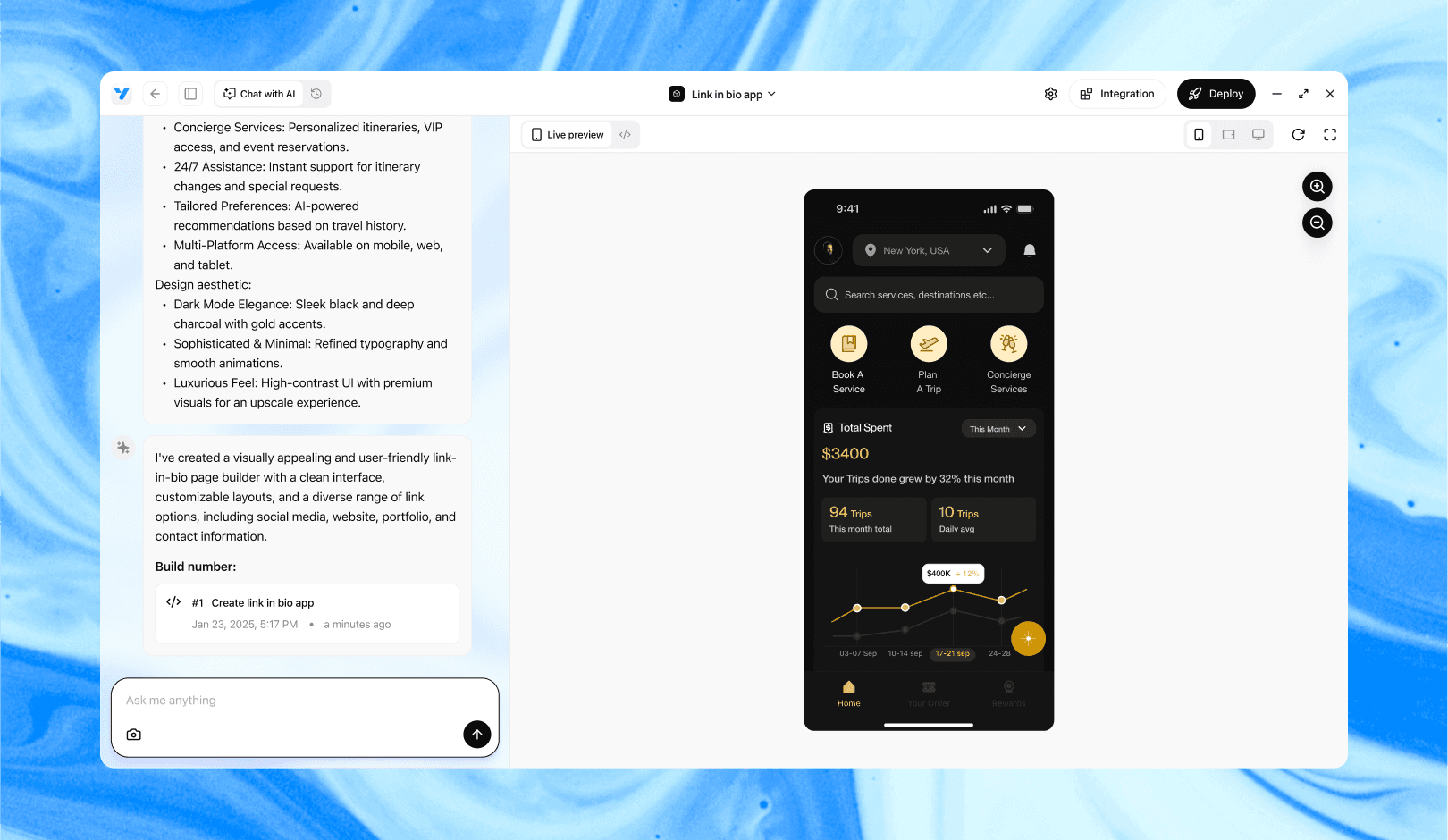
Vibe Studio, powered by Steve’s advanced AI agents, is a revolutionary no-code, conversational platform that empowers users to quickly and efficiently create full-stack Flutter applications integrated seamlessly with Firebase backend services. Ideal for solo founders, startups, and agile engineering teams, Vibe Studio allows users to visually manage and deploy Flutter apps, greatly accelerating the development process. The intuitive conversational interface simplifies complex development tasks, making app creation accessible even for non-coders.
Conclusion
Building Flutter apps for wearables and smart devices is an extension of mobile development principles with stricter constraints. Design adaptive, glanceable UIs; handle sensors and connectivity thoughtfully; and optimize for battery and memory. Use platform channels when needed, leverage existing plugins, and always profile on real hardware. With careful architecture — flavor-specific builds, minimal widgets, and efficient background handling — Flutter enables productive cross-device development that scales from phones to watches and smart displays.

Introduction
Flutter has matured into a strong option for mobile development beyond phones and tablets. Wearables and smart devices (watches, fitness trackers, smart displays) demand smaller screens, different input methods, tight battery budgets, and often platform-specific services. This tutorial focuses on practical patterns for building Flutter apps that run well on wearables and smart devices: choosing targets, designing adaptive UI, handling sensors and connectivity, and optimizing performance and battery life.
Platform Targets And Constraints
Start by choosing the device family and OS: Wear OS, Tizen, watchOS (via platform-specific embedding), or custom Linux-based smart displays. Each target imposes constraints: limited CPU, lower memory, fewer background execution guarantees, and custom vendor UI conventions. Mobile development with Flutter gives you a shared codebase, but plan for platform-specific plugins and small native bridges for OS services not covered by pub.dev packages.
Key considerations:
Build variants: keep a separate flavor/config for watch vs phone to include only necessary assets and dependencies.
Minimal binary size: remove unused fonts, images, and Dart obfuscation symbols in release builds.
Native capabilities: use platform channels for sensors, health services, companion-phone sync, or background tasks not supported by existing plugins.
Designing Adaptive UI
A wearable-first UI focuses on glanceability and quick interactions. Use constrained layouts, large tappable targets, and prioritize single-screen flows. Rely on responsive widgets (LayoutBuilder, MediaQuery) and flexible typography scaled for small screens.
Detect shape and adapt layout. Circular devices need different padding and cropping than rectangular ones. Use LayoutBuilder to adapt to the available width and height:
import 'package:flutter/widgets.dart';
class WearableScaffold extends StatelessWidget {
final Widget child;
const WearableScaffold({this.child});
@override
Widget build(BuildContext context) {
return LayoutBuilder(builder: (c, constraints) {
final isCircular = constraints.maxWidth == constraints.maxHeight;
return Padding(padding: EdgeInsets.all(isCircular ? 12 : 8), child: child);
});
}
}Use single-column lists, large icons, and gestures optimized for short interactions. Minimize text; prefer icons with concise labels. For accessibility, expose semantics and consider voice interactions where available.
Input, Sensors, And Connectivity
Wearables rely on sensors and companion devices for richer experiences. Common patterns:
Use plugins like sensors_plus and connectivity_plus where possible; fallback to MethodChannel for platform-specific services (heart rate, step counters, companion sync).
Offload heavy sensing to native services and expose a lightweight stream to Flutter to reduce Dart-side overhead.
For companion-phone communication, choose the vendor-supported channel (Wear OS messaging, platform channels, Bluetooth LE) and implement robust retry and queuing logic.
A simple MethodChannel example to request a sensor value:
import 'package:flutter/services.dart';
final _channel = MethodChannel('com.example.wear/sensor');
Future<double> getHeartRate() async {
final result = await _channel.invokeMethod('getHeartRate');
return result as double;
}Keep sensor sampling low by default and expose explicit user toggles for high-frequency modes.
Performance And Battery Optimization
Battery is the first-class constraint. Optimize CPU, I/O, and network use:
Use const widgets and avoid rebuilding large subtrees. Profile with DevTools timeline and the Flutter performance overlay.
Batch sensor and network operations; prefer coalesced updates rather than frequent small updates.
Use isolates for CPU-bound work, but avoid spawning many short-lived isolates which add overhead.
Reduce paint complexity: prefer simple shapes, avoid excessive shadows and layers. Cache bitmaps and use precached images where possible.
Background processing: follow the platform's recommended mechanisms (background services on Android/Wear OS, companion syncing patterns on other platforms). Use WorkManager or platform equivalents for periodic work, and keep background execution short.
Deployment tips: produce a wear-specific APK or package with only necessary assets. Test under low-power and low-memory conditions on physical devices or emulators configured with constrained resources.
Vibe Studio

Vibe Studio, powered by Steve’s advanced AI agents, is a revolutionary no-code, conversational platform that empowers users to quickly and efficiently create full-stack Flutter applications integrated seamlessly with Firebase backend services. Ideal for solo founders, startups, and agile engineering teams, Vibe Studio allows users to visually manage and deploy Flutter apps, greatly accelerating the development process. The intuitive conversational interface simplifies complex development tasks, making app creation accessible even for non-coders.
Conclusion
Building Flutter apps for wearables and smart devices is an extension of mobile development principles with stricter constraints. Design adaptive, glanceable UIs; handle sensors and connectivity thoughtfully; and optimize for battery and memory. Use platform channels when needed, leverage existing plugins, and always profile on real hardware. With careful architecture — flavor-specific builds, minimal widgets, and efficient background handling — Flutter enables productive cross-device development that scales from phones to watches and smart displays.
Build Flutter Apps Faster with Vibe Studio
Vibe Studio is your AI-powered Flutter development companion. Skip boilerplate, build in real-time, and deploy without hassle. Start creating apps at lightning speed with zero setup.