Building Flutter Apps for Smart TVs and Large Displays
Summary
Summary
Summary
Summary

This tutorial explains how to adapt Flutter mobile development skills for smart TVs and large displays. It covers large-screen design, remote and focus-based input, responsive layout strategies, performance optimizations, and testing/deployment best practices to build accessible, efficient TV apps.

This tutorial explains how to adapt Flutter mobile development skills for smart TVs and large displays. It covers large-screen design, remote and focus-based input, responsive layout strategies, performance optimizations, and testing/deployment best practices to build accessible, efficient TV apps.

This tutorial explains how to adapt Flutter mobile development skills for smart TVs and large displays. It covers large-screen design, remote and focus-based input, responsive layout strategies, performance optimizations, and testing/deployment best practices to build accessible, efficient TV apps.

This tutorial explains how to adapt Flutter mobile development skills for smart TVs and large displays. It covers large-screen design, remote and focus-based input, responsive layout strategies, performance optimizations, and testing/deployment best practices to build accessible, efficient TV apps.

Key insights:
Key insights:
Key insights:
Key insights:
  • Designing For Large Screens: Use larger typographic scales, grid-based layouts, and breakpoints to adapt mobile widgets for distant viewing.

  • Input And Remote Control: Implement focus-based navigation (Focus, Actions) and handle DPAD/keyboard events rather than touch-only gestures.

  • Layout And Responsiveness: Favor flexible widgets (Flex, GridView, AspectRatio) and centralized size tokens to manage multiple display densities.

  • Performance And Asset Management: Optimize for weaker GPUs: use const widgets, lazy-load assets, and provide scaled image variants.

  • Testing And Deployment: Test on real TV hardware, ensure accessibility for remote users, and configure TV-specific packaging and launcher entries.

Introduction

Flutter is no longer limited to phones and tablets. With modern smart TVs and large displays adopting Android TV, Google TV, and custom Linux-based platforms, Flutter offers a powerful way to repurpose mobile development skills for big-screen apps. This tutorial focuses on practical patterns for designing, navigating, and optimizing Flutter apps for televisions and other large displays.

Designing For Large Screens

Large displays change UI priorities: distant viewing, simplified navigation, and scalable typography. Start by adopting a larger baseline — increase font sizes, spacing, and hit targets. Design with a grid system that stretches instead of cluttering; consider 4–6 column layouts for landscape displays and fluid single-column scaling for very wide screens.

Use MediaQuery and LayoutBuilder to derive breakpoints rather than fixed widths. Treat the TV as a different platform tier in your responsive logic; reuse widgets from mobile development but swap values for padding, font, and image resolution.

// Example: simple breakpoint logic
Widget build(BuildContext context) {
  final width = MediaQuery.of(context).size.width;
  final isWide = width > 1200; // tv breakpoint
  return GridView.count(crossAxisCount: isWide ? 6 : 2);
}

Input And Remote Control

Touch-first patterns fail on TVs. Remotes provide D-pad directional events, select/back buttons, and sometimes pointer input. Implement focus-based navigation using Focus, FocusTraversalGroup, and Actions instead of relying on taps. Make every interactive element focusable, provide visible focus indicators, and support keyboard events for debugging and physical keyboards.

For Android TV, RawKeyboard and FocusNodes capture DPAD and MEDIA keys. Use semantic labels and announce focus changes for accessibility and remote users.

// Focusable button reacting to key events
Focus(
  canRequestFocus: true,
  child: Builder(builder: (context) {
    return GestureDetector(
      onTap: () {},
      child: FocusableActionDetector(
        onShowFocusHighlight: (_) {},
        child: Container(width: 200, height: 80),
      ),
    );
  }),
)

Layout And Responsiveness

Avoid pixel-perfect layouts. Favor flexible containers: Flex, Expanded, FractionallySizedBox, and GridView. Use AspectRatio for media tiles and cache scaled images for multiple densities. Create a centralized style system (Theme extensions or an inherited widget) to switch size tokens based on screen class (phone, tablet, large, tv).

Consider multiple content densities: lean layouts for media browsing, dense layouts for admin dashboards, and ultra-dense for information walls. Provide a predictable navigation model: a primary left rail or top bar with large, focusable targets is common on TV.

Performance And Asset Management

Performance constraints differ: many TVs have weaker GPUs and limited memory. Optimize by:

  • Using const widgets where possible to reduce rebuilds.

  • Prefetching and caching images in appropriate sizes (use low-res thumbnails and lazy-load full-res on selection).

  • Minimizing overdraw and complex shader effects; avoid heavy animations that run continuously.

  • Using compute or isolates for CPU-heavy tasks and conserving texture memory.

Bundle multiple asset variants and select them at runtime using screen size and device pixel ratio. For video-heavy apps, offload playback to platform-native players via platform channels or use plugins optimized for TV players.

Testing And Deployment

Test on real hardware early. Emulators rarely reproduce remote latency, network conditions, or memory constraints. Configure CI to include smoke tests that run on a headless device farm if possible. Validate accessibility: remote-only navigation, TalkBack on Android TV, and font legibility from typical viewing distances.

Deployment considerations: target Android TV APKs or custom Linux packaging as required. Keep an eye on input mappings and manifest entries (lean-back intents, TV categories) so the OS exposes the app in the TV launcher.

Vibe Studio
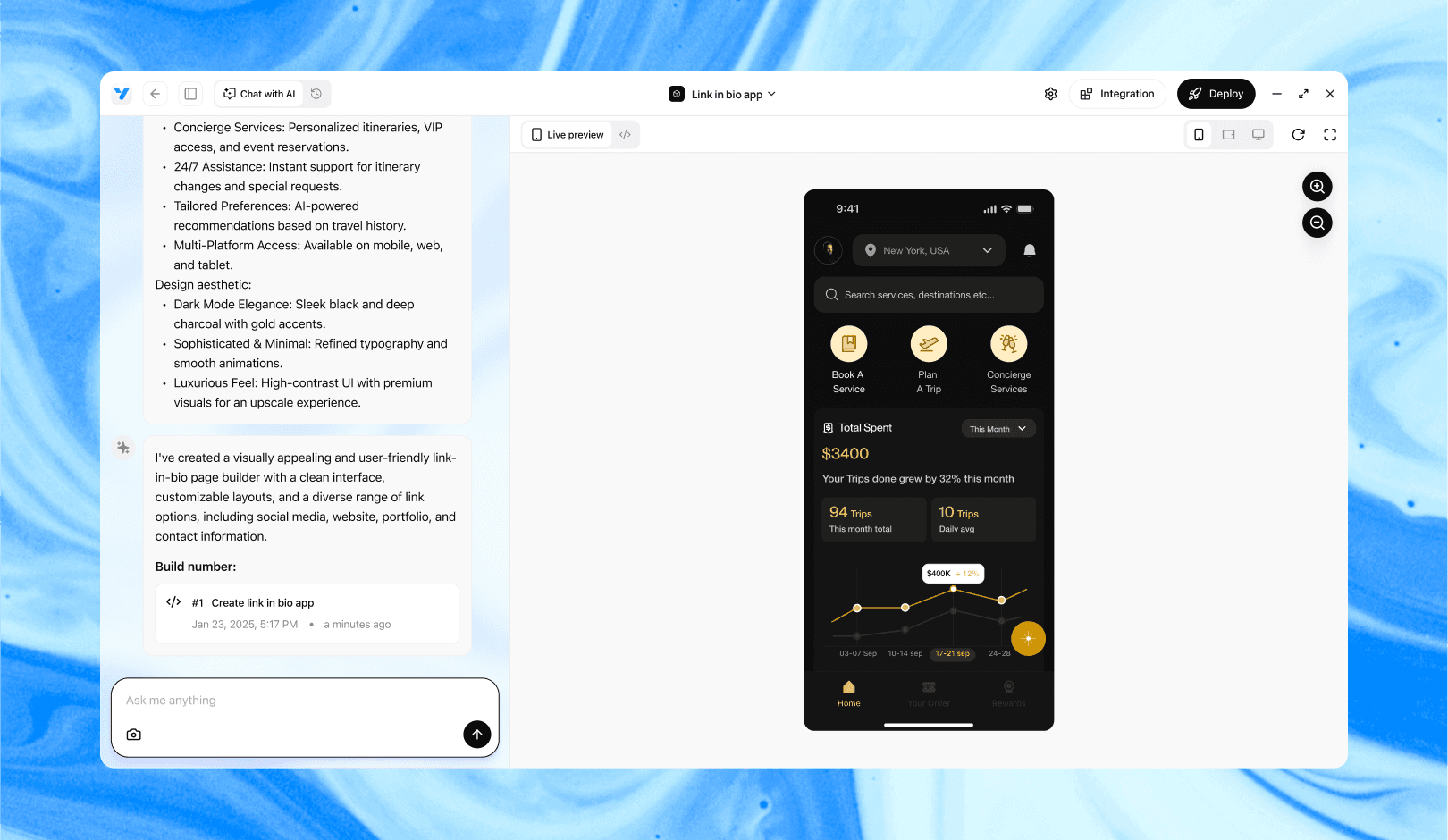
Vibe Studio, powered by Steve’s advanced AI agents, is a revolutionary no-code, conversational platform that empowers users to quickly and efficiently create full-stack Flutter applications integrated seamlessly with Firebase backend services. Ideal for solo founders, startups, and agile engineering teams, Vibe Studio allows users to visually manage and deploy Flutter apps, greatly accelerating the development process. The intuitive conversational interface simplifies complex development tasks, making app creation accessible even for non-coders.

Conclusion

Converting mobile development skills to big-screen Flutter apps is mostly about adjusting interaction and scale. Use responsive tokens, focus-driven navigation, and conservative performance practices. With a focus on accessibility and remote-first input, Flutter lets you build polished, maintainable TV apps while reusing much of your existing mobile development knowledge.


Introduction

Flutter is no longer limited to phones and tablets. With modern smart TVs and large displays adopting Android TV, Google TV, and custom Linux-based platforms, Flutter offers a powerful way to repurpose mobile development skills for big-screen apps. This tutorial focuses on practical patterns for designing, navigating, and optimizing Flutter apps for televisions and other large displays.

Designing For Large Screens

Large displays change UI priorities: distant viewing, simplified navigation, and scalable typography. Start by adopting a larger baseline — increase font sizes, spacing, and hit targets. Design with a grid system that stretches instead of cluttering; consider 4–6 column layouts for landscape displays and fluid single-column scaling for very wide screens.

Use MediaQuery and LayoutBuilder to derive breakpoints rather than fixed widths. Treat the TV as a different platform tier in your responsive logic; reuse widgets from mobile development but swap values for padding, font, and image resolution.

// Example: simple breakpoint logic
Widget build(BuildContext context) {
  final width = MediaQuery.of(context).size.width;
  final isWide = width > 1200; // tv breakpoint
  return GridView.count(crossAxisCount: isWide ? 6 : 2);
}

Input And Remote Control

Touch-first patterns fail on TVs. Remotes provide D-pad directional events, select/back buttons, and sometimes pointer input. Implement focus-based navigation using Focus, FocusTraversalGroup, and Actions instead of relying on taps. Make every interactive element focusable, provide visible focus indicators, and support keyboard events for debugging and physical keyboards.

For Android TV, RawKeyboard and FocusNodes capture DPAD and MEDIA keys. Use semantic labels and announce focus changes for accessibility and remote users.

// Focusable button reacting to key events
Focus(
  canRequestFocus: true,
  child: Builder(builder: (context) {
    return GestureDetector(
      onTap: () {},
      child: FocusableActionDetector(
        onShowFocusHighlight: (_) {},
        child: Container(width: 200, height: 80),
      ),
    );
  }),
)

Layout And Responsiveness

Avoid pixel-perfect layouts. Favor flexible containers: Flex, Expanded, FractionallySizedBox, and GridView. Use AspectRatio for media tiles and cache scaled images for multiple densities. Create a centralized style system (Theme extensions or an inherited widget) to switch size tokens based on screen class (phone, tablet, large, tv).

Consider multiple content densities: lean layouts for media browsing, dense layouts for admin dashboards, and ultra-dense for information walls. Provide a predictable navigation model: a primary left rail or top bar with large, focusable targets is common on TV.

Performance And Asset Management

Performance constraints differ: many TVs have weaker GPUs and limited memory. Optimize by:

  • Using const widgets where possible to reduce rebuilds.

  • Prefetching and caching images in appropriate sizes (use low-res thumbnails and lazy-load full-res on selection).

  • Minimizing overdraw and complex shader effects; avoid heavy animations that run continuously.

  • Using compute or isolates for CPU-heavy tasks and conserving texture memory.

Bundle multiple asset variants and select them at runtime using screen size and device pixel ratio. For video-heavy apps, offload playback to platform-native players via platform channels or use plugins optimized for TV players.

Testing And Deployment

Test on real hardware early. Emulators rarely reproduce remote latency, network conditions, or memory constraints. Configure CI to include smoke tests that run on a headless device farm if possible. Validate accessibility: remote-only navigation, TalkBack on Android TV, and font legibility from typical viewing distances.

Deployment considerations: target Android TV APKs or custom Linux packaging as required. Keep an eye on input mappings and manifest entries (lean-back intents, TV categories) so the OS exposes the app in the TV launcher.

Vibe Studio

Vibe Studio, powered by Steve’s advanced AI agents, is a revolutionary no-code, conversational platform that empowers users to quickly and efficiently create full-stack Flutter applications integrated seamlessly with Firebase backend services. Ideal for solo founders, startups, and agile engineering teams, Vibe Studio allows users to visually manage and deploy Flutter apps, greatly accelerating the development process. The intuitive conversational interface simplifies complex development tasks, making app creation accessible even for non-coders.

Conclusion

Converting mobile development skills to big-screen Flutter apps is mostly about adjusting interaction and scale. Use responsive tokens, focus-driven navigation, and conservative performance practices. With a focus on accessibility and remote-first input, Flutter lets you build polished, maintainable TV apps while reusing much of your existing mobile development knowledge.

Build Flutter Apps Faster with Vibe Studio

Vibe Studio is your AI-powered Flutter development companion. Skip boilerplate, build in real-time, and deploy without hassle. Start creating apps at lightning speed with zero setup.

Other Insights

Join a growing community of builders today

Join a growing community of builders today

Join a growing community of builders today

Join a growing community of builders today

Join a growing community of builders today

28-07 Jackson Ave

Walturn

New York NY 11101 United States

© Steve • All Rights Reserved 2025

28-07 Jackson Ave

Walturn

New York NY 11101 United States

© Steve • All Rights Reserved 2025

28-07 Jackson Ave

Walturn

New York NY 11101 United States

© Steve • All Rights Reserved 2025

28-07 Jackson Ave

Walturn

New York NY 11101 United States

© Steve • All Rights Reserved 2025

28-07 Jackson Ave

Walturn

New York NY 11101 United States

© Steve • All Rights Reserved 2025

28-07 Jackson Ave

Walturn

New York NY 11101 United States

© Steve • All Rights Reserved 2025