Building Firebase Analytics Dashboards in Flutter
Dec 11, 2025


Summary
Summary
Summary
Summary
This tutorial shows how to build Firebase Analytics dashboards in Flutter by logging events with firebase_analytics, exporting raw events to BigQuery, precomputing aggregates via scheduled queries or server-side SQL, and exposing a secure REST API that Flutter fetches to render lightweight charts and KPIs. Emphasizes event design, performance, security, and offline-friendly UI patterns for mobile development.
Key insights:
Key insights:
Key insights:
Key insights:
Setting Up Firebase Analytics: Use firebase_analytics for semantic client-side event logging and enable BigQuery export for raw event storage.
Structuring Events And Parameters: Design a stable event taxonomy with fixed parameters to make BigQuery SQL efficient and reliable.
Fetching And Aggregating Analytics Data: Precompute aggregates in BigQuery and expose them via a small authenticated REST API rather than querying BigQuery directly from the app.
Building The Dashboard UI: Keep the Flutter UI lightweight—fetch compact JSON, cache snapshots, and render with charts or sparklines optimized for mobile.
Performance And Privacy Considerations: Limit cardinality, anonymize identifiers, cache results, and protect endpoints to control costs and respect user privacy.
Introduction
Building analytics dashboards inside Flutter apps gives product teams immediate, contextual insight into user behavior on mobile. For mobile development with Flutter, the recommended pattern is to use firebase_analytics to record events, export raw events to BigQuery, run scheduled aggregations or on-demand queries, and surface the pre-aggregated metrics through a lightweight REST API consumed by your Flutter dashboard UI. This article covers setup, event design, data aggregation, and the Flutter-side display patterns you’ll use to ship reliable dashboards.
Setting Up Firebase Analytics
Start by adding firebase_analytics to your Flutter project and initializing Firebase in main(). Use the official plugin to log screen views and custom events. Keep client-side logging lightweight — the device should only emit semantic events (e.g., select_item, purchase, screen_view) with well-defined parameter schemas.
Example: logging an event with firebase_analytics
import 'package:firebase_analytics/firebase_analytics.dart';
final analytics = FirebaseAnalytics.instance;
await analytics.logEvent(
name: 'select_item',
parameters: {'item_id': 'sku_123', 'category': 'onboarding'},
);Enable BigQuery export in the Firebase console for your project. BigQuery stores raw events with timestamps and user identifiers (if enabled); you’ll use it as the canonical source for reporting and aggregation.
Structuring Events and Parameters
Design a compact event taxonomy before launch. Good properties:
Short, stable event names (snake_case).
A fixed set of parameters per event; avoid free-form strings for analytics keys.
A versioning plan for evolving parameters.
Example conventions:
screen_view: {screen_name}
signup_complete: {method, success}
purchase: {amount, currency, item_category}
These conventions let you write efficient SQL in BigQuery to produce time-series metrics, funnels, and retention cohorts.
Fetching and Aggregating Analytics Data
You should not query BigQuery directly from the app. Instead, create a backend aggregator (Cloud Function, Cloud Run, or a small server) that runs SQL over your exported analytics tables and returns summarized results as JSON. Typical endpoints:
/metrics/daily_active_users?days=30
/metrics/events?event=select_item&start=2025-01-01
Example architecture:
BigQuery export (raw events)
Scheduled queries or materialized tables to precompute daily/hourly aggregates
A REST endpoint that returns JSON aggregates
Pre-aggregation examples:
Daily active users (DAU) by date
Event counts by event_name and date
Conversion rate (funnel completion) for onboarding flows
By precomputing offline, you keep mobile responses fast, reduce cost, and avoid sending heavy payloads over cellular networks.
Building The Dashboard UI
On Flutter side, build a lightweight client that calls your aggregator endpoints and renders charts and cards. Use packages like flutter_charts, fl_chart, or build custom painter charts for compact visuals. Focus on these views:
Overview cards (DAU, new users, retention)
Time series (sparkline or line chart for last 30 days)
Event breakdown (bar chart by category)
Funnels (list with completion percentages)
Keep the UI reactive: call your API on pull-to-refresh and implement simple caching with shared_preferences or a local DB to preserve the last snapshot when offline.
Example: fetch JSON metrics and render (simplified)
final resp = await http.get(Uri.parse('https://api.example.com/metrics/dau?days=14'));
final data = jsonDecode(resp.body) as Map<String, dynamic>;
// data['series'] -> list of {date, value}Security considerations: protect your endpoints with authentication (Firebase Auth tokens or API keys) and limit rate to prevent abuse. Never embed admin keys into the Flutter binary.
Performance And Privacy Considerations
Sample and limit event cardinality: high-cardinality parameters increase BigQuery cost.
Respect privacy: anonymize identifiers and surface only aggregated metrics in the mobile dashboard.
Use caching and pagination to avoid large payloads on slow networks.
Monitor query costs and shift more aggregation into scheduled jobs if interactive latency is not required.
Vibe Studio
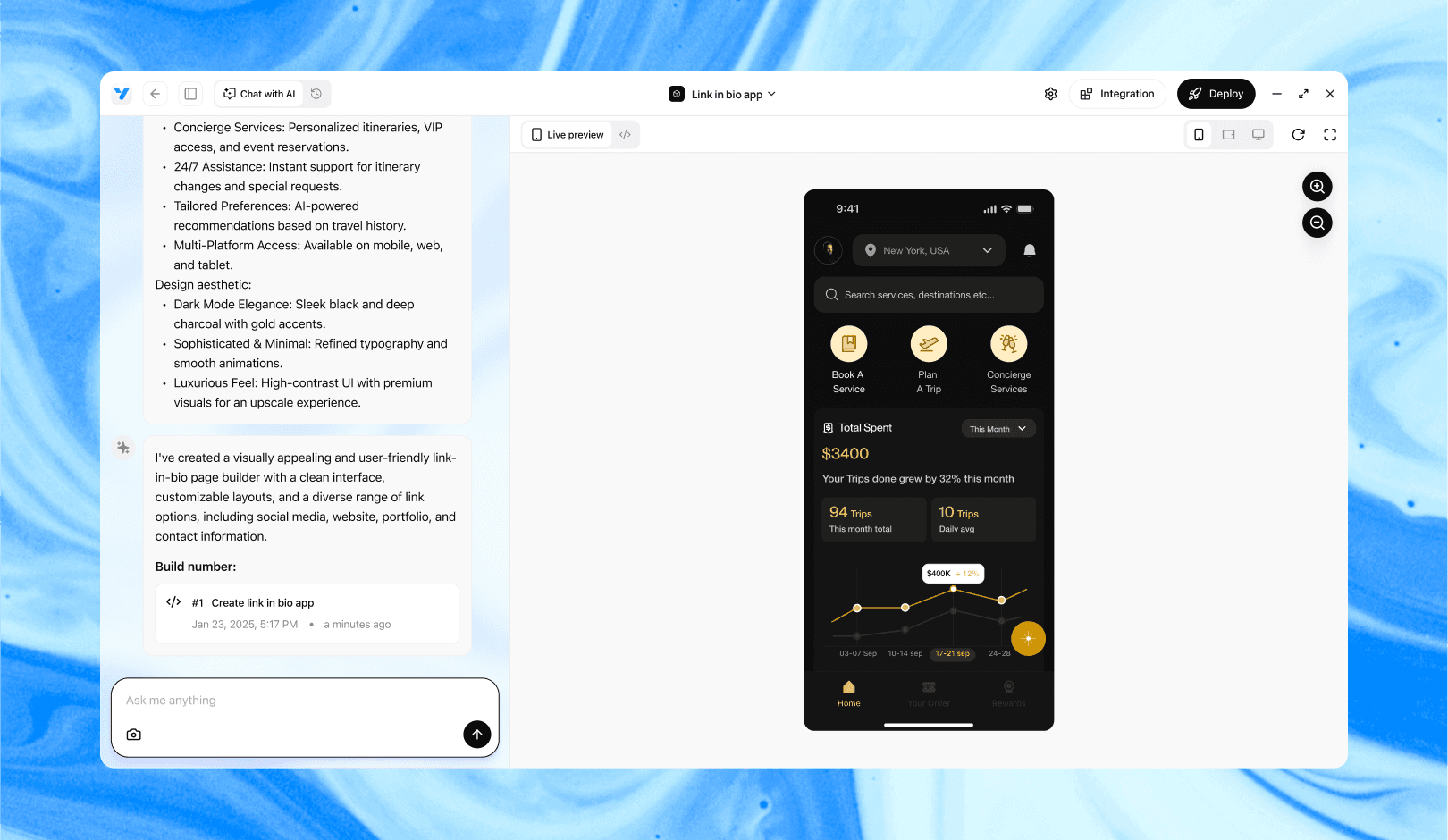
Vibe Studio, powered by Steve’s advanced AI agents, is a revolutionary no-code, conversational platform that empowers users to quickly and efficiently create full-stack Flutter applications integrated seamlessly with Firebase backend services. Ideal for solo founders, startups, and agile engineering teams, Vibe Studio allows users to visually manage and deploy Flutter apps, greatly accelerating the development process. The intuitive conversational interface simplifies complex development tasks, making app creation accessible even for non-coders.
Conclusion
A solid Flutter analytics dashboard separates concerns: client-side event logging, server-side aggregation, and client-side visualization. Use firebase_analytics for consistent event capture, BigQuery for raw storage and SQL-based aggregations, and a small authenticated REST layer to deliver compact JSON to your Flutter UI. This pattern keeps your mobile dashboards fast, secure, and cost-effective while preserving flexibility for evolving metrics in mobile development.

Introduction
Building analytics dashboards inside Flutter apps gives product teams immediate, contextual insight into user behavior on mobile. For mobile development with Flutter, the recommended pattern is to use firebase_analytics to record events, export raw events to BigQuery, run scheduled aggregations or on-demand queries, and surface the pre-aggregated metrics through a lightweight REST API consumed by your Flutter dashboard UI. This article covers setup, event design, data aggregation, and the Flutter-side display patterns you’ll use to ship reliable dashboards.
Setting Up Firebase Analytics
Start by adding firebase_analytics to your Flutter project and initializing Firebase in main(). Use the official plugin to log screen views and custom events. Keep client-side logging lightweight — the device should only emit semantic events (e.g., select_item, purchase, screen_view) with well-defined parameter schemas.
Example: logging an event with firebase_analytics
import 'package:firebase_analytics/firebase_analytics.dart';
final analytics = FirebaseAnalytics.instance;
await analytics.logEvent(
name: 'select_item',
parameters: {'item_id': 'sku_123', 'category': 'onboarding'},
);Enable BigQuery export in the Firebase console for your project. BigQuery stores raw events with timestamps and user identifiers (if enabled); you’ll use it as the canonical source for reporting and aggregation.
Structuring Events and Parameters
Design a compact event taxonomy before launch. Good properties:
Short, stable event names (snake_case).
A fixed set of parameters per event; avoid free-form strings for analytics keys.
A versioning plan for evolving parameters.
Example conventions:
screen_view: {screen_name}
signup_complete: {method, success}
purchase: {amount, currency, item_category}
These conventions let you write efficient SQL in BigQuery to produce time-series metrics, funnels, and retention cohorts.
Fetching and Aggregating Analytics Data
You should not query BigQuery directly from the app. Instead, create a backend aggregator (Cloud Function, Cloud Run, or a small server) that runs SQL over your exported analytics tables and returns summarized results as JSON. Typical endpoints:
/metrics/daily_active_users?days=30
/metrics/events?event=select_item&start=2025-01-01
Example architecture:
BigQuery export (raw events)
Scheduled queries or materialized tables to precompute daily/hourly aggregates
A REST endpoint that returns JSON aggregates
Pre-aggregation examples:
Daily active users (DAU) by date
Event counts by event_name and date
Conversion rate (funnel completion) for onboarding flows
By precomputing offline, you keep mobile responses fast, reduce cost, and avoid sending heavy payloads over cellular networks.
Building The Dashboard UI
On Flutter side, build a lightweight client that calls your aggregator endpoints and renders charts and cards. Use packages like flutter_charts, fl_chart, or build custom painter charts for compact visuals. Focus on these views:
Overview cards (DAU, new users, retention)
Time series (sparkline or line chart for last 30 days)
Event breakdown (bar chart by category)
Funnels (list with completion percentages)
Keep the UI reactive: call your API on pull-to-refresh and implement simple caching with shared_preferences or a local DB to preserve the last snapshot when offline.
Example: fetch JSON metrics and render (simplified)
final resp = await http.get(Uri.parse('https://api.example.com/metrics/dau?days=14'));
final data = jsonDecode(resp.body) as Map<String, dynamic>;
// data['series'] -> list of {date, value}Security considerations: protect your endpoints with authentication (Firebase Auth tokens or API keys) and limit rate to prevent abuse. Never embed admin keys into the Flutter binary.
Performance And Privacy Considerations
Sample and limit event cardinality: high-cardinality parameters increase BigQuery cost.
Respect privacy: anonymize identifiers and surface only aggregated metrics in the mobile dashboard.
Use caching and pagination to avoid large payloads on slow networks.
Monitor query costs and shift more aggregation into scheduled jobs if interactive latency is not required.
Vibe Studio

Vibe Studio, powered by Steve’s advanced AI agents, is a revolutionary no-code, conversational platform that empowers users to quickly and efficiently create full-stack Flutter applications integrated seamlessly with Firebase backend services. Ideal for solo founders, startups, and agile engineering teams, Vibe Studio allows users to visually manage and deploy Flutter apps, greatly accelerating the development process. The intuitive conversational interface simplifies complex development tasks, making app creation accessible even for non-coders.
Conclusion
A solid Flutter analytics dashboard separates concerns: client-side event logging, server-side aggregation, and client-side visualization. Use firebase_analytics for consistent event capture, BigQuery for raw storage and SQL-based aggregations, and a small authenticated REST layer to deliver compact JSON to your Flutter UI. This pattern keeps your mobile dashboards fast, secure, and cost-effective while preserving flexibility for evolving metrics in mobile development.

Build Flutter Apps Faster with Vibe Studio
Vibe Studio is your AI-powered Flutter development companion. Skip boilerplate, build in real-time, and deploy without hassle. Start creating apps at lightning speed with zero setup.