Building Desktop Apps with Flutter and Tauri

Summary
Summary
Summary
Summary

Build desktop apps by compiling Flutter to web, serving the build via Tauri's webview, and invoking native Rust commands through a small JavaScript bridge callable from Dart. Use CanvasKit for rendering parity, limit Tauri APIs, and package with tauri build for compact binaries.

Build desktop apps by compiling Flutter to web, serving the build via Tauri's webview, and invoking native Rust commands through a small JavaScript bridge callable from Dart. Use CanvasKit for rendering parity, limit Tauri APIs, and package with tauri build for compact binaries.

Build desktop apps by compiling Flutter to web, serving the build via Tauri's webview, and invoking native Rust commands through a small JavaScript bridge callable from Dart. Use CanvasKit for rendering parity, limit Tauri APIs, and package with tauri build for compact binaries.

Build desktop apps by compiling Flutter to web, serving the build via Tauri's webview, and invoking native Rust commands through a small JavaScript bridge callable from Dart. Use CanvasKit for rendering parity, limit Tauri APIs, and package with tauri build for compact binaries.

Key insights:
Key insights:
Key insights:
Key insights:
  • Why Combine Flutter And Tauri: Leverage Flutter's UI strengths and mobile development patterns while using Tauri for a lightweight native shell and native APIs.

  • Project Setup And Build Flow: Build Flutter Web (use CanvasKit for Skia parity), point Tauri's distDir at build/web, and use tauri dev/build for lifecycle.

  • Bridging Flutter And Tauri (Rust): Add a tiny JS global that calls window.__TAURI__.invoke and use dart:js_util.promiseToFuture to call Rust commands from Dart.

  • Packaging And Distribution: Use tauri build to create platform installers; configure signing/notarization and choose the right installer formats per OS.

  • Security And Performance: Restrict Tauri allowlist, enforce a strict CSP, offload heavy work to Rust, and prefer CanvasKit when visual fidelity matters.

Introduction

Flutter started as a UI toolkit for mobile development but has grown into a capable cross-platform framework that targets web and desktop. Tauri is a lightweight toolkit for building tiny, secure desktop apps using a web frontend and a Rust backend. Combining Flutter's expressive UI with Tauri's small native shell lets you deliver performant desktop apps while reusing knowledge from mobile development. This tutorial covers the practical setup, bridging strategy, and packaging recommendations for a Flutter+Tauri desktop workflow.

Why Combine Flutter And Tauri

  • Reuse mobile development skills: Flutter developers can reuse Dart app logic and UI patterns by targeting Flutter Web and packaging it with Tauri.

  • Smaller native binary: Tauri apps often produce significantly smaller binaries than full Chromium-based wrappers because Tauri uses the system webview and a compact Rust runtime.

  • Native capabilities: Tauri's Rust backend enables access to native APIs (file I/O, notifications, system dialogs) with explicit, audit-friendly commands.

When to use this approach: choose Flutter+Tauri if you want Flutter’s UI and animation model but need a small, secure desktop shell and direct native integrations via Rust. If you require maximum Flutter-native desktop fidelity (embedding Flutter engine per OS), use Flutter desktop builds instead.

Project Setup And Build Flow

Prerequisites: Flutter SDK (with web enabled), Rust toolchain (cargo), Node.js and npm/yarn for Tauri's CLI.

  1. Create a Flutter app and verify web target works:

flutter create my_app 
cd my_app
flutter run -d

  1. Build a production web bundle. For closer parity with mobile rendering, use CanvasKit:

flutter build web --web-renderer canvaskit --base-href ./

This produces build/web which contains index.html, main.dart.js, and assets.

  1. Initialize a Tauri project in a sibling folder or inside the Flutter project. Configure Tauri's distDir to point to the Flutter build/web directory in tauri.conf.json:

"build": { 
  "distDir": "../my_app/build/web",
  "devPath": "http://localhost:5000"
 }

During development you can run a local web server serving Flutter's build or use flutter run with web; in production Tauri will load files from the distDir.

Bridging Flutter And Tauri (Rust)

Flutter Web runs inside the Tauri webview as static HTML/JS. To call Rust commands you need a small JavaScript bridge. Add a global helper to Tauri's index.html (or tauri.conf.json template):

In Flutter, use dart:js_util to call that global function and convert the returned JS Promise into a Dart Future. Example interop helper:

import 'dart:js_util' as js_util;

Future<dynamic> invokeRust(String cmd, [Map? args]) {
  final fn = js_util.getProperty(js_util.globalThis, 'invokeRust');
  final jsPromise = js_util.callMethod(fn, 'call', [js_util.globalThis, cmd, args ?? {}]);
  return js_util.promiseToFuture(jsPromise);
}

Use that helper inside your widgets to request native operations (file pickers, reading/writing files, platform info) which you implement as Tauri commands in Rust.

Example Flutter button calling a native command:

ElevatedButton(
  onPressed: () async {
    final result = await invokeRust('read_config');
    print(result);
  },
  child: Text('Load Config'),
)

On the Rust side, expose a command in src-tauri/src/main.rs using #[tauri::command] that returns JSON-compatible data.

Packaging And Distribution

  • Development loop: run a local web server (e.g., python -m http.server) or use flutter run for hot reload; run tauri dev to start the Rust backend and webview pointing at your dev URL.

  • Build for release: run flutter build web --web-renderer canvaskit && cd src-tauri && cargo build --release or use npm run tauri build which orchestrates the native packaging process.

  • Tauri supports creating installers for Windows (MSI/EXE), macOS (DMG), and Linux (AppImage/Deb/RPM). Configure signing and notarization as needed for your distribution targets.

Security And Performance Considerations

  • CSP and allowlist: limit Tauri APIs to only the functions you need. Enable Rust-side allowlist and audit commands. Set a strict Content-Security-Policy in index.html.

  • Use CanvasKit for better visual fidelity if your app relies on Flutter’s Skia features; this increases bundle size but improves parity with mobile development visuals.

  • Native-heavy tasks: offload CPU-bound work to Rust commands to keep the UI thread responsive.

Vibe Studio
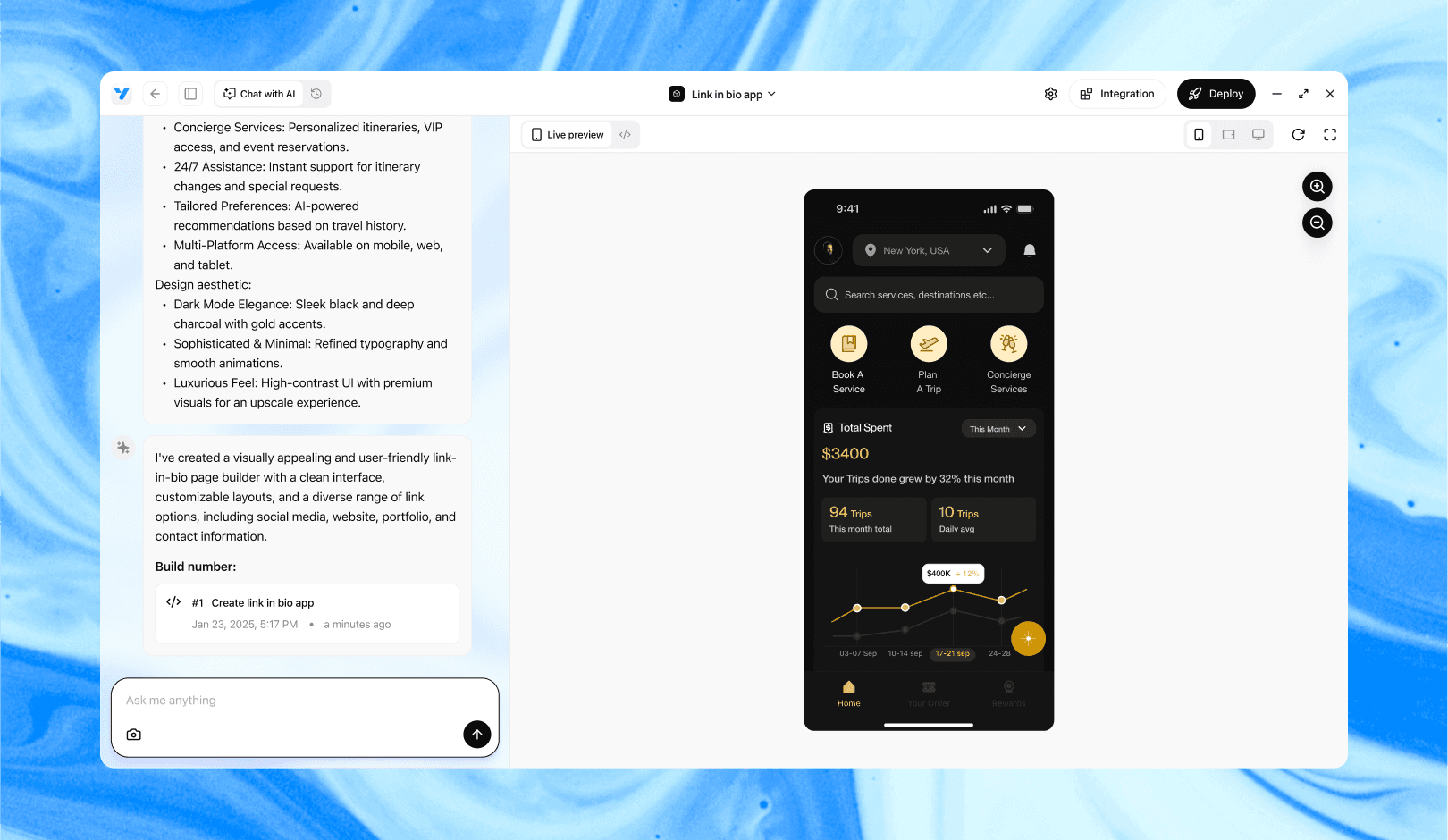
Vibe Studio, powered by Steve’s advanced AI agents, is a revolutionary no-code, conversational platform that empowers users to quickly and efficiently create full-stack Flutter applications integrated seamlessly with Firebase backend services. Ideal for solo founders, startups, and agile engineering teams, Vibe Studio allows users to visually manage and deploy Flutter apps, greatly accelerating the development process. The intuitive conversational interface simplifies complex development tasks, making app creation accessible even for non-coders.

Conclusion

Combining Flutter and Tauri is a pragmatic path for teams with mobile development expertise who want polished cross-platform desktop UIs while keeping native binaries small and secure. The pattern is straightforward: build a Flutter web frontend, add a tiny JS bridge exposed to Dart, implement native features in Tauri’s Rust backend, and use Tauri to package and sign your app. This gives you the expressive power of Flutter UI with the compact, native Rust-based shell of Tauri—ideal for desktop apps that must feel modern without shipping an entire browser runtime.


Introduction

Flutter started as a UI toolkit for mobile development but has grown into a capable cross-platform framework that targets web and desktop. Tauri is a lightweight toolkit for building tiny, secure desktop apps using a web frontend and a Rust backend. Combining Flutter's expressive UI with Tauri's small native shell lets you deliver performant desktop apps while reusing knowledge from mobile development. This tutorial covers the practical setup, bridging strategy, and packaging recommendations for a Flutter+Tauri desktop workflow.

Why Combine Flutter And Tauri

  • Reuse mobile development skills: Flutter developers can reuse Dart app logic and UI patterns by targeting Flutter Web and packaging it with Tauri.

  • Smaller native binary: Tauri apps often produce significantly smaller binaries than full Chromium-based wrappers because Tauri uses the system webview and a compact Rust runtime.

  • Native capabilities: Tauri's Rust backend enables access to native APIs (file I/O, notifications, system dialogs) with explicit, audit-friendly commands.

When to use this approach: choose Flutter+Tauri if you want Flutter’s UI and animation model but need a small, secure desktop shell and direct native integrations via Rust. If you require maximum Flutter-native desktop fidelity (embedding Flutter engine per OS), use Flutter desktop builds instead.

Project Setup And Build Flow

Prerequisites: Flutter SDK (with web enabled), Rust toolchain (cargo), Node.js and npm/yarn for Tauri's CLI.

  1. Create a Flutter app and verify web target works:

flutter create my_app 
cd my_app
flutter run -d

  1. Build a production web bundle. For closer parity with mobile rendering, use CanvasKit:

flutter build web --web-renderer canvaskit --base-href ./

This produces build/web which contains index.html, main.dart.js, and assets.

  1. Initialize a Tauri project in a sibling folder or inside the Flutter project. Configure Tauri's distDir to point to the Flutter build/web directory in tauri.conf.json:

"build": { 
  "distDir": "../my_app/build/web",
  "devPath": "http://localhost:5000"
 }

During development you can run a local web server serving Flutter's build or use flutter run with web; in production Tauri will load files from the distDir.

Bridging Flutter And Tauri (Rust)

Flutter Web runs inside the Tauri webview as static HTML/JS. To call Rust commands you need a small JavaScript bridge. Add a global helper to Tauri's index.html (or tauri.conf.json template):

In Flutter, use dart:js_util to call that global function and convert the returned JS Promise into a Dart Future. Example interop helper:

import 'dart:js_util' as js_util;

Future<dynamic> invokeRust(String cmd, [Map? args]) {
  final fn = js_util.getProperty(js_util.globalThis, 'invokeRust');
  final jsPromise = js_util.callMethod(fn, 'call', [js_util.globalThis, cmd, args ?? {}]);
  return js_util.promiseToFuture(jsPromise);
}

Use that helper inside your widgets to request native operations (file pickers, reading/writing files, platform info) which you implement as Tauri commands in Rust.

Example Flutter button calling a native command:

ElevatedButton(
  onPressed: () async {
    final result = await invokeRust('read_config');
    print(result);
  },
  child: Text('Load Config'),
)

On the Rust side, expose a command in src-tauri/src/main.rs using #[tauri::command] that returns JSON-compatible data.

Packaging And Distribution

  • Development loop: run a local web server (e.g., python -m http.server) or use flutter run for hot reload; run tauri dev to start the Rust backend and webview pointing at your dev URL.

  • Build for release: run flutter build web --web-renderer canvaskit && cd src-tauri && cargo build --release or use npm run tauri build which orchestrates the native packaging process.

  • Tauri supports creating installers for Windows (MSI/EXE), macOS (DMG), and Linux (AppImage/Deb/RPM). Configure signing and notarization as needed for your distribution targets.

Security And Performance Considerations

  • CSP and allowlist: limit Tauri APIs to only the functions you need. Enable Rust-side allowlist and audit commands. Set a strict Content-Security-Policy in index.html.

  • Use CanvasKit for better visual fidelity if your app relies on Flutter’s Skia features; this increases bundle size but improves parity with mobile development visuals.

  • Native-heavy tasks: offload CPU-bound work to Rust commands to keep the UI thread responsive.

Vibe Studio

Vibe Studio, powered by Steve’s advanced AI agents, is a revolutionary no-code, conversational platform that empowers users to quickly and efficiently create full-stack Flutter applications integrated seamlessly with Firebase backend services. Ideal for solo founders, startups, and agile engineering teams, Vibe Studio allows users to visually manage and deploy Flutter apps, greatly accelerating the development process. The intuitive conversational interface simplifies complex development tasks, making app creation accessible even for non-coders.

Conclusion

Combining Flutter and Tauri is a pragmatic path for teams with mobile development expertise who want polished cross-platform desktop UIs while keeping native binaries small and secure. The pattern is straightforward: build a Flutter web frontend, add a tiny JS bridge exposed to Dart, implement native features in Tauri’s Rust backend, and use Tauri to package and sign your app. This gives you the expressive power of Flutter UI with the compact, native Rust-based shell of Tauri—ideal for desktop apps that must feel modern without shipping an entire browser runtime.

Build Flutter Apps Faster with Vibe Studio

Build Flutter Apps Faster with Vibe Studio

Build Flutter Apps Faster with Vibe Studio

Build Flutter Apps Faster with Vibe Studio

Vibe Studio is your AI-powered Flutter development companion. Skip boilerplate, build in real-time, and deploy without hassle. Start creating apps at lightning speed with zero setup.

Vibe Studio is your AI-powered Flutter development companion. Skip boilerplate, build in real-time, and deploy without hassle. Start creating apps at lightning speed with zero setup.

Vibe Studio is your AI-powered Flutter development companion. Skip boilerplate, build in real-time, and deploy without hassle. Start creating apps at lightning speed with zero setup.

Vibe Studio is your AI-powered Flutter development companion. Skip boilerplate, build in real-time, and deploy without hassle. Start creating apps at lightning speed with zero setup.

Other Insights

Other Insights

Other Insights

Other Insights

Join a growing community of builders today

Join a growing community of builders today

Join a growing community of builders today

Join a growing community of builders today

Join a growing community of builders today

28-07 Jackson Ave

Walturn

New York NY 11101 United States

© Steve • All Rights Reserved 2025

28-07 Jackson Ave

Walturn

New York NY 11101 United States

© Steve • All Rights Reserved 2025

28-07 Jackson Ave

Walturn

New York NY 11101 United States

© Steve • All Rights Reserved 2025

28-07 Jackson Ave

Walturn

New York NY 11101 United States

© Steve • All Rights Reserved 2025

28-07 Jackson Ave

Walturn

New York NY 11101 United States

© Steve • All Rights Reserved 2025

28-07 Jackson Ave

Walturn

New York NY 11101 United States

© Steve • All Rights Reserved 2025