Building Cross-Platform Media Players In Flutter
Jan 13, 2026


Summary
Summary
Summary
Summary
This tutorial shows how to build cross-platform audio and video players in Flutter by choosing appropriate packages (just_audio, audio_service, video_player), structuring playback as a platform-agnostic service, designing responsive UI that subscribes to player streams, and integrating background playback and platform-specific features for iOS and Android. It covers testing and performance tips for mobile development.
Key insights:
Key insights:
Key insights:
Key insights:
Heading 1: Use mature plugins like just_audio and video_player to minimize platform-specific code.
Heading 2: Isolate playback logic in a Dart service so UI can remain reactive and platform-agnostic.
Heading 3: Design responsive controls that subscribe to position, buffering, and state streams for smooth UX.
Heading 4: Implement background playback with media sessions and notifications for full mobile platform integration.
Heading 5: Test playback logic with mocks and profile memory/CPU to avoid leaks and performance regressions.
Introduction
Building a media player that runs reliably across iOS and Android is a common requirement in flutter mobile development. Flutter’s plugin ecosystem and its single codebase make it possible to craft audio and video players that share UI and business logic while still integrating with platform features like background playback, lock screen controls, and notifications. This tutorial focuses on pragmatic choices, architecture patterns, and concrete code examples to get a cross-platform media player production-ready.
Choosing Packages
Pick battle-tested packages that separate playback core from platform integration. For audio, use just_audio for playback and optionally just_audio_background or audio_service for background and notification integration. For video, the official video_player package is lightweight; Chewie or better_player add higher-level controls and adaptive UI. Key selection criteria:
Platform parity: plugin supports Android and iOS feature sets you need.
Background support: if you need lock-screen controls, pick audio_service or just_audio_background.
Streaming and formats: HLS and DASH support, progressive download, and seamless playlist handling.
Extensibility: access to low-level events, buffering status, and position streams.
Dependency example (pubspec.yaml):
just_audio
audio_service or just_audio_background
video_player
cached_network_image (for artwork caching on mobile)
Implementing Cross-Platform Playback
Keep playback logic in a platform-agnostic service (a Dart class or a Bloc/Cubit). That isolates state and lets UI subscribe to streams. For simple audio playback with just_audio:
import 'package:just_audio/just_audio.dart'; final player = AudioPlayer(); await player.setUrl('https://example.com/stream.mp3'); player.play(); // listen to positionStream, playerStateStream for UI updates
For background audio, register a background task or use just_audio_background which handles media session integration for Android and AVAudioSession for iOS. Configure audio session categories (playback, ambient) appropriately to avoid unwanted interruptions.
For video, use video_player and expose controllers from the same service so you can reuse play/pause logic across platforms. Handle app lifecycle events to pause on app background unless background playback is explicitly supported.
Designing Responsive UI And Controls
Design the UI with responsive layouts so the same widgets work on small phones and tablets. Separate concerns:
Presentation: Widgets for play/pause, seek bar, artwork, and metadata.
State: Streams from your playback service (current position, duration, buffered position).
Interaction: Commands that call into the service (seek, skip, setVolume).
Use StreamBuilder or ValueListenableBuilder for efficient updates. Buffering and network errors should be surfaced to the user with minimal friction. Cache artwork with cached_network_image to reduce network calls in mobile development scenarios.
Seek bars should show buffered ranges and support drag gestures. For adaptive bitrate streaming (HLS), expose bitrate or quality selection when available.
Background Playback And Platform Integration
Background playback requires registering a media session and responding to remote commands (play/pause/seek/skip). On Android, this integrates with a ForegroundService and notification. On iOS, it uses MPNowPlayingInfoCenter and remote command center. Use existing plugins to abstract these details.
Handle permissions and audio interruptions:
Request and declare background modes in Info.plist (audio) for iOS.
Declare FOREGROUND_SERVICE permission for Android if using a persistent notification.
Respond to audio focus changes to duck or pause playback.
If you need deep platform features (e.g., custom codecs, DRM), consider a platform channel implementation for that specific feature while keeping UI and most logic in Dart.
Testing And Performance
Automate unit tests for your playback service by mocking the player interface. Widget tests can verify UI reacts to streams. For performance in mobile development:
Monitor memory during long-play sessions (leaked controllers often cause issues).
Reuse player instances when possible to avoid repeated native allocations.
Use content caching for frequently accessed media to reduce startup latency.
Profile CPU during playback with platform tools; background services and notification updates should be lightweight.
Vibe Studio
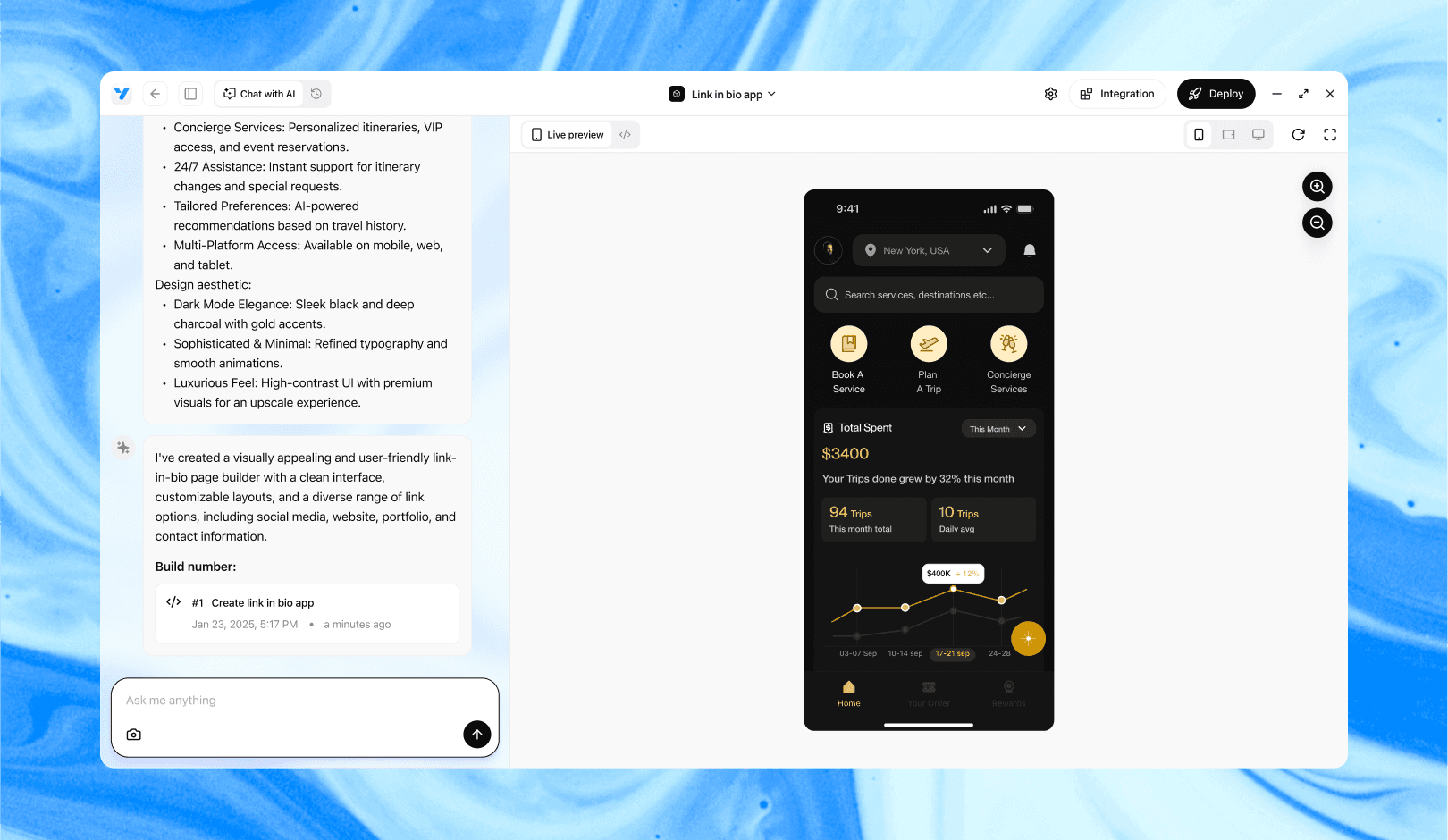
Vibe Studio, powered by Steve’s advanced AI agents, is a revolutionary no-code, conversational platform that empowers users to quickly and efficiently create full-stack Flutter applications integrated seamlessly with Firebase backend services. Ideal for solo founders, startups, and agile engineering teams, Vibe Studio allows users to visually manage and deploy Flutter apps, greatly accelerating the development process. The intuitive conversational interface simplifies complex development tasks, making app creation accessible even for non-coders.
Conclusion
A robust cross-platform media player in flutter comes down to architecture: isolate playback in a service, pick the right plugins (just_audio, audio_service/just_audio_background, video_player), and implement platform integrations for background playback and notifications. Keep the UI reactive to player streams, reuse controllers to avoid native overhead, and test behavior across network conditions and interruptions. With these practices, you can deliver feature-rich media experiences across iOS and Android while keeping most code in Dart.

Introduction
Building a media player that runs reliably across iOS and Android is a common requirement in flutter mobile development. Flutter’s plugin ecosystem and its single codebase make it possible to craft audio and video players that share UI and business logic while still integrating with platform features like background playback, lock screen controls, and notifications. This tutorial focuses on pragmatic choices, architecture patterns, and concrete code examples to get a cross-platform media player production-ready.
Choosing Packages
Pick battle-tested packages that separate playback core from platform integration. For audio, use just_audio for playback and optionally just_audio_background or audio_service for background and notification integration. For video, the official video_player package is lightweight; Chewie or better_player add higher-level controls and adaptive UI. Key selection criteria:
Platform parity: plugin supports Android and iOS feature sets you need.
Background support: if you need lock-screen controls, pick audio_service or just_audio_background.
Streaming and formats: HLS and DASH support, progressive download, and seamless playlist handling.
Extensibility: access to low-level events, buffering status, and position streams.
Dependency example (pubspec.yaml):
just_audio
audio_service or just_audio_background
video_player
cached_network_image (for artwork caching on mobile)
Implementing Cross-Platform Playback
Keep playback logic in a platform-agnostic service (a Dart class or a Bloc/Cubit). That isolates state and lets UI subscribe to streams. For simple audio playback with just_audio:
import 'package:just_audio/just_audio.dart'; final player = AudioPlayer(); await player.setUrl('https://example.com/stream.mp3'); player.play(); // listen to positionStream, playerStateStream for UI updates
For background audio, register a background task or use just_audio_background which handles media session integration for Android and AVAudioSession for iOS. Configure audio session categories (playback, ambient) appropriately to avoid unwanted interruptions.
For video, use video_player and expose controllers from the same service so you can reuse play/pause logic across platforms. Handle app lifecycle events to pause on app background unless background playback is explicitly supported.
Designing Responsive UI And Controls
Design the UI with responsive layouts so the same widgets work on small phones and tablets. Separate concerns:
Presentation: Widgets for play/pause, seek bar, artwork, and metadata.
State: Streams from your playback service (current position, duration, buffered position).
Interaction: Commands that call into the service (seek, skip, setVolume).
Use StreamBuilder or ValueListenableBuilder for efficient updates. Buffering and network errors should be surfaced to the user with minimal friction. Cache artwork with cached_network_image to reduce network calls in mobile development scenarios.
Seek bars should show buffered ranges and support drag gestures. For adaptive bitrate streaming (HLS), expose bitrate or quality selection when available.
Background Playback And Platform Integration
Background playback requires registering a media session and responding to remote commands (play/pause/seek/skip). On Android, this integrates with a ForegroundService and notification. On iOS, it uses MPNowPlayingInfoCenter and remote command center. Use existing plugins to abstract these details.
Handle permissions and audio interruptions:
Request and declare background modes in Info.plist (audio) for iOS.
Declare FOREGROUND_SERVICE permission for Android if using a persistent notification.
Respond to audio focus changes to duck or pause playback.
If you need deep platform features (e.g., custom codecs, DRM), consider a platform channel implementation for that specific feature while keeping UI and most logic in Dart.
Testing And Performance
Automate unit tests for your playback service by mocking the player interface. Widget tests can verify UI reacts to streams. For performance in mobile development:
Monitor memory during long-play sessions (leaked controllers often cause issues).
Reuse player instances when possible to avoid repeated native allocations.
Use content caching for frequently accessed media to reduce startup latency.
Profile CPU during playback with platform tools; background services and notification updates should be lightweight.
Vibe Studio

Vibe Studio, powered by Steve’s advanced AI agents, is a revolutionary no-code, conversational platform that empowers users to quickly and efficiently create full-stack Flutter applications integrated seamlessly with Firebase backend services. Ideal for solo founders, startups, and agile engineering teams, Vibe Studio allows users to visually manage and deploy Flutter apps, greatly accelerating the development process. The intuitive conversational interface simplifies complex development tasks, making app creation accessible even for non-coders.
Conclusion
A robust cross-platform media player in flutter comes down to architecture: isolate playback in a service, pick the right plugins (just_audio, audio_service/just_audio_background, video_player), and implement platform integrations for background playback and notifications. Keep the UI reactive to player streams, reuse controllers to avoid native overhead, and test behavior across network conditions and interruptions. With these practices, you can deliver feature-rich media experiences across iOS and Android while keeping most code in Dart.

Build Flutter Apps Faster with Vibe Studio
Vibe Studio is your AI-powered Flutter development companion. Skip boilerplate, build in real-time, and deploy without hassle. Start creating apps at lightning speed with zero setup.
Other Insights