Building Complex Layouts With CustomMultiChildLayout

Summary
Summary
Summary
Summary

CustomMultiChildLayout gives Flutter developers explicit control over measuring and positioning multiple children via a MultiChildLayoutDelegate. Use layoutChild and positionChild to build precise, performant mobile UI patterns—toolbars, overlays, and anchored badges—while minimizing rebuilds with shouldRelayout and respecting BoxConstraints.

CustomMultiChildLayout gives Flutter developers explicit control over measuring and positioning multiple children via a MultiChildLayoutDelegate. Use layoutChild and positionChild to build precise, performant mobile UI patterns—toolbars, overlays, and anchored badges—while minimizing rebuilds with shouldRelayout and respecting BoxConstraints.

CustomMultiChildLayout gives Flutter developers explicit control over measuring and positioning multiple children via a MultiChildLayoutDelegate. Use layoutChild and positionChild to build precise, performant mobile UI patterns—toolbars, overlays, and anchored badges—while minimizing rebuilds with shouldRelayout and respecting BoxConstraints.

CustomMultiChildLayout gives Flutter developers explicit control over measuring and positioning multiple children via a MultiChildLayoutDelegate. Use layoutChild and positionChild to build precise, performant mobile UI patterns—toolbars, overlays, and anchored badges—while minimizing rebuilds with shouldRelayout and respecting BoxConstraints.

Key insights:
Key insights:
Key insights:
Key insights:
  • Understanding CustomMultiChildLayout: The delegate-based API uses layoutChild and positionChild to measure and place children explicitly.

  • Implementing a Layout Delegate: performLayout(Size) orchestrates measurements; override getSize when you need intrinsic sizing and implement shouldRelayout carefully.

  • Practical Patterns: Ideal for responsive toolbars, overlays, and anchored badges where relational placement is required.

  • Tips and Best Practices: Respect BoxConstraints, minimize delegate work, and use shouldRelayout to avoid unnecessary relayouts.

  • When to Use: Prefer CustomMultiChildLayout when composition with Row/Column/Stack cannot express the required measurement or positional relationships.

Introduction

Building complex, precise UI layouts in Flutter often pushes beyond what Row, Column, Stack, or Flex provide. CustomMultiChildLayout is a powerful, lower-level widget that gives you explicit control over how multiple children are measured and positioned. For mobile development, where precise arrangement and performance matter, understanding this API unlocks custom toolbars, overlay systems, and adaptive compositions without resorting to brittle hacks.

Understanding CustomMultiChildLayout

CustomMultiChildLayout composes children identified by LayoutId widgets and defers layout logic to a MultiChildLayoutDelegate. The delegate receives a Size representing the incoming constraints and exposes helper methods: hasChild(id), layoutChild(id, constraints), and positionChild(id, offset). The common flow is:

  • Decide available size and child constraints.

  • Call layoutChild for each child you need sized.

  • Calculate positions and call positionChild to place them.

This explicit approach is ideal for UIs that require relational placement (e.g., place badge at a computed offset from an icon) or when children must share computation (e.g., distribute remaining space between dynamic widgets).

Implementing a Layout Delegate

A delegate implements performLayout(Size size) to measure and position children. Keep shouldRelayout old/new comparisons minimal — return true only when layout-relevant fields change. You can also override getSize to provide an intrinsic size for the overall widget when needed.

Example delegate that lays out a header, body and footer with the footer pinned to the bottom:

class _MyDelegate extends MultiChildLayoutDelegate {
  @override
  void performLayout(Size size) {
    final header = hasChild('header')
      ? layoutChild('header', BoxConstraints.loose(size))
      : null;
    final footer = hasChild('footer')
      ? layoutChild('footer', BoxConstraints.loose(size))
      : null;
    final bodyHeight = size.height - (header?.height ?? 0) - (footer?.height ?? 0);
    if (hasChild('body')) layoutChild('body', BoxConstraints.tight(Size(size.width, bodyHeight)));
    if (header != null) positionChild('header', Offset(0, 0));
    if (footer != null) positionChild('footer', Offset(0, size.height - footer.height));
  }
  @override
  bool shouldRelayout(covariant MultiChildLayoutDelegate oldDelegate) => false;
}

Practical Patterns

Responsive Toolbars: Use layoutChild with flexible constraints for a central title that truncates while allocating fixed space for leading/trailing actions. Overlay Widgets: Stack-like overlays that must remain centered regardless of underlying sizes can be built by measuring the background and then placing overlays with computed offsets. Badges and Anchors: For badges anchored to a child (say top-right of an avatar), measure the anchor child first and position the badge relative to its measured rect.

A concise usage example in the widget tree:

CustomMultiChildLayout(
  delegate: _MyDelegate(),
  children: [
    LayoutId(id: 'header', child: HeaderWidget()),
    LayoutId(id: 'body', child: BodyWidget()),
    LayoutId(id: 'footer', child: FooterWidget()),
  ],
)

Tips and Best Practices

Respect Constraints: Always use BoxConstraints from layoutChild to avoid overflow. When sizing children, prefer tight constraints for fixed-size elements and loose for flexible ones. Minimize Rebuilds: Implement shouldRelayout to compare fields that affect layout (for example, spacing or alignment params) to avoid unnecessary re-layout on setState calls. Performance: Keep measurement logic O(n) where n is number of children; avoid nested expensive operations. Debugging: Use assert statements and Flutter's layout inspection tools (Flutter DevTools) to visualize measured sizes and placements.

When to Prefer CustomMultiChildLayout

Use this widget when your layout demands measurements and positional relationships that cannot be expressed with compositional widgets (Row/Column/Stack). For many UIs, combination of Flex and Stack suffice and will be simpler. Choose CustomMultiChildLayout for precision, predictable performance, and when implementing reusable layout primitives in libraries.

Vibe Studio
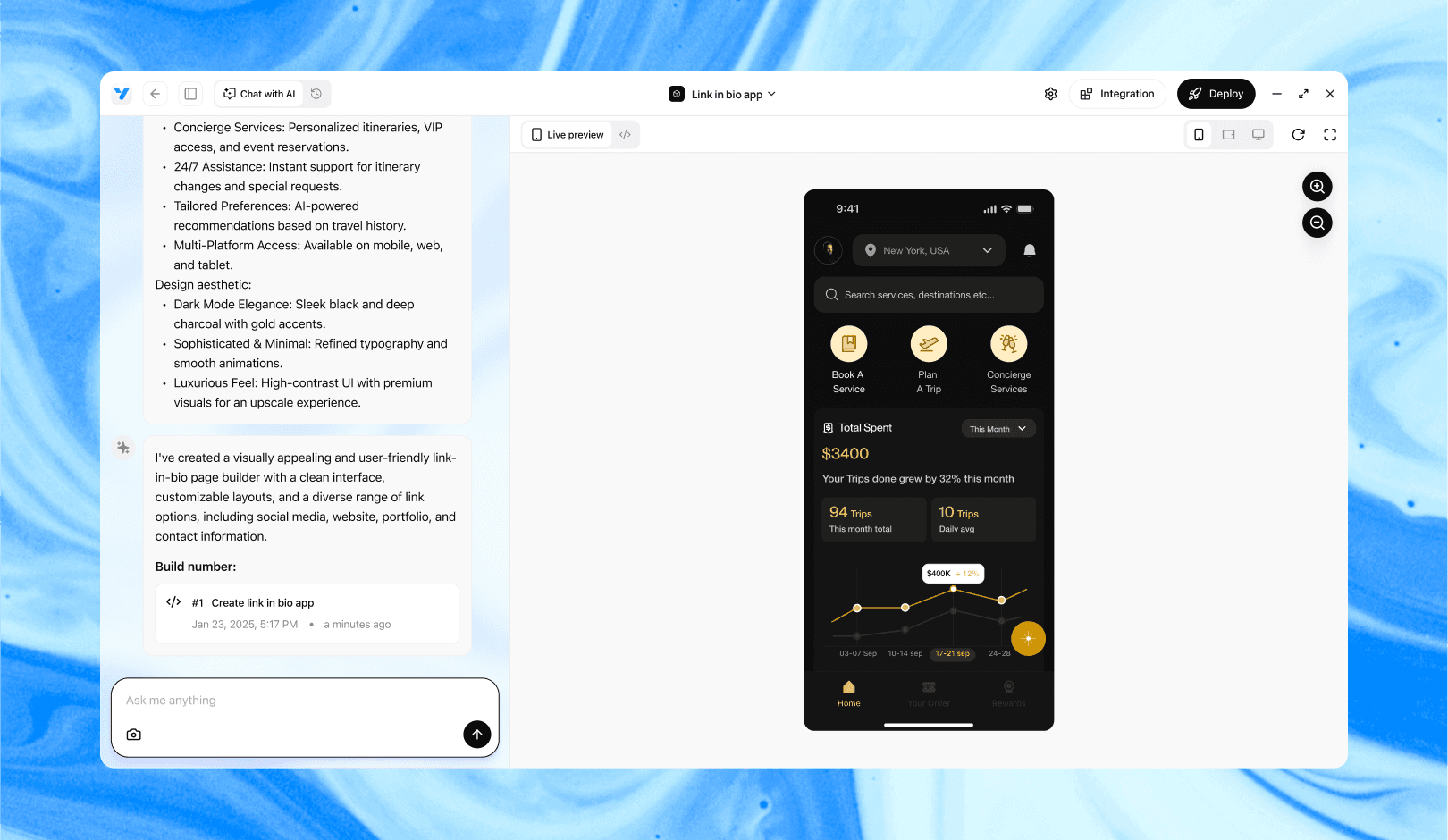
Vibe Studio, powered by Steve’s advanced AI agents, is a revolutionary no-code, conversational platform that empowers users to quickly and efficiently create full-stack Flutter applications integrated seamlessly with Firebase backend services. Ideal for solo founders, startups, and agile engineering teams, Vibe Studio allows users to visually manage and deploy Flutter apps, greatly accelerating the development process. The intuitive conversational interface simplifies complex development tasks, making app creation accessible even for non-coders.

Conclusion

CustomMultiChildLayout is a precise, performant building block for complex Flutter UIs in mobile development. By mastering MultiChildLayoutDelegate, layoutChild, and positionChild, you can implement sophisticated, responsive arrangements—toolbars, anchored badges, overlays—without compromising performance. Keep delegate logic simple, honor constraints, and use shouldRelayout prudently to get the best results.


Introduction

Building complex, precise UI layouts in Flutter often pushes beyond what Row, Column, Stack, or Flex provide. CustomMultiChildLayout is a powerful, lower-level widget that gives you explicit control over how multiple children are measured and positioned. For mobile development, where precise arrangement and performance matter, understanding this API unlocks custom toolbars, overlay systems, and adaptive compositions without resorting to brittle hacks.

Understanding CustomMultiChildLayout

CustomMultiChildLayout composes children identified by LayoutId widgets and defers layout logic to a MultiChildLayoutDelegate. The delegate receives a Size representing the incoming constraints and exposes helper methods: hasChild(id), layoutChild(id, constraints), and positionChild(id, offset). The common flow is:

  • Decide available size and child constraints.

  • Call layoutChild for each child you need sized.

  • Calculate positions and call positionChild to place them.

This explicit approach is ideal for UIs that require relational placement (e.g., place badge at a computed offset from an icon) or when children must share computation (e.g., distribute remaining space between dynamic widgets).

Implementing a Layout Delegate

A delegate implements performLayout(Size size) to measure and position children. Keep shouldRelayout old/new comparisons minimal — return true only when layout-relevant fields change. You can also override getSize to provide an intrinsic size for the overall widget when needed.

Example delegate that lays out a header, body and footer with the footer pinned to the bottom:

class _MyDelegate extends MultiChildLayoutDelegate {
  @override
  void performLayout(Size size) {
    final header = hasChild('header')
      ? layoutChild('header', BoxConstraints.loose(size))
      : null;
    final footer = hasChild('footer')
      ? layoutChild('footer', BoxConstraints.loose(size))
      : null;
    final bodyHeight = size.height - (header?.height ?? 0) - (footer?.height ?? 0);
    if (hasChild('body')) layoutChild('body', BoxConstraints.tight(Size(size.width, bodyHeight)));
    if (header != null) positionChild('header', Offset(0, 0));
    if (footer != null) positionChild('footer', Offset(0, size.height - footer.height));
  }
  @override
  bool shouldRelayout(covariant MultiChildLayoutDelegate oldDelegate) => false;
}

Practical Patterns

Responsive Toolbars: Use layoutChild with flexible constraints for a central title that truncates while allocating fixed space for leading/trailing actions. Overlay Widgets: Stack-like overlays that must remain centered regardless of underlying sizes can be built by measuring the background and then placing overlays with computed offsets. Badges and Anchors: For badges anchored to a child (say top-right of an avatar), measure the anchor child first and position the badge relative to its measured rect.

A concise usage example in the widget tree:

CustomMultiChildLayout(
  delegate: _MyDelegate(),
  children: [
    LayoutId(id: 'header', child: HeaderWidget()),
    LayoutId(id: 'body', child: BodyWidget()),
    LayoutId(id: 'footer', child: FooterWidget()),
  ],
)

Tips and Best Practices

Respect Constraints: Always use BoxConstraints from layoutChild to avoid overflow. When sizing children, prefer tight constraints for fixed-size elements and loose for flexible ones. Minimize Rebuilds: Implement shouldRelayout to compare fields that affect layout (for example, spacing or alignment params) to avoid unnecessary re-layout on setState calls. Performance: Keep measurement logic O(n) where n is number of children; avoid nested expensive operations. Debugging: Use assert statements and Flutter's layout inspection tools (Flutter DevTools) to visualize measured sizes and placements.

When to Prefer CustomMultiChildLayout

Use this widget when your layout demands measurements and positional relationships that cannot be expressed with compositional widgets (Row/Column/Stack). For many UIs, combination of Flex and Stack suffice and will be simpler. Choose CustomMultiChildLayout for precision, predictable performance, and when implementing reusable layout primitives in libraries.

Vibe Studio

Vibe Studio, powered by Steve’s advanced AI agents, is a revolutionary no-code, conversational platform that empowers users to quickly and efficiently create full-stack Flutter applications integrated seamlessly with Firebase backend services. Ideal for solo founders, startups, and agile engineering teams, Vibe Studio allows users to visually manage and deploy Flutter apps, greatly accelerating the development process. The intuitive conversational interface simplifies complex development tasks, making app creation accessible even for non-coders.

Conclusion

CustomMultiChildLayout is a precise, performant building block for complex Flutter UIs in mobile development. By mastering MultiChildLayoutDelegate, layoutChild, and positionChild, you can implement sophisticated, responsive arrangements—toolbars, anchored badges, overlays—without compromising performance. Keep delegate logic simple, honor constraints, and use shouldRelayout prudently to get the best results.

Build Flutter Apps Faster with Vibe Studio

Build Flutter Apps Faster with Vibe Studio

Build Flutter Apps Faster with Vibe Studio

Build Flutter Apps Faster with Vibe Studio

Vibe Studio is your AI-powered Flutter development companion. Skip boilerplate, build in real-time, and deploy without hassle. Start creating apps at lightning speed with zero setup.

Vibe Studio is your AI-powered Flutter development companion. Skip boilerplate, build in real-time, and deploy without hassle. Start creating apps at lightning speed with zero setup.

Vibe Studio is your AI-powered Flutter development companion. Skip boilerplate, build in real-time, and deploy without hassle. Start creating apps at lightning speed with zero setup.

Vibe Studio is your AI-powered Flutter development companion. Skip boilerplate, build in real-time, and deploy without hassle. Start creating apps at lightning speed with zero setup.

Other Insights

Other Insights

Other Insights

Other Insights

Join a growing community of builders today

Join a growing community of builders today

Join a growing community of builders today

Join a growing community of builders today

Join a growing community of builders today

28-07 Jackson Ave

Walturn

New York NY 11101 United States

© Steve • All Rights Reserved 2025

28-07 Jackson Ave

Walturn

New York NY 11101 United States

© Steve • All Rights Reserved 2025

28-07 Jackson Ave

Walturn

New York NY 11101 United States

© Steve • All Rights Reserved 2025

28-07 Jackson Ave

Walturn

New York NY 11101 United States

© Steve • All Rights Reserved 2025

28-07 Jackson Ave

Walturn

New York NY 11101 United States

© Steve • All Rights Reserved 2025

28-07 Jackson Ave

Walturn

New York NY 11101 United States

© Steve • All Rights Reserved 2025