Introduction
Building an offline-first notes app in Flutter for mobile development means accepting that users often work without network access, then reconciling divergent edits later. This tutorial outlines a pragmatic architecture: local storage + operation queue, deterministic conflict resolution, and a minimal UI strategy for unavoidable merges. It focuses on reliability, small code snippets, and patterns you can apply to any Flutter app.
Data Modeling And Versioning
Model notes explicitly for synchronization. Each note should carry an id (UUID), a content payload, a logical version counter, a deviceId (actor), an updatedAt timestamp, and a tombstone flag for deletions. Use an integer version incremented on each local edit. When syncing, compare (version, deviceId) tuples to decide authoritative state deterministically.
Example model:
class Note {
final String id;
String content;
int version;
final String deviceId;
DateTime updatedAt;
bool deleted;
}This keeps conflicts detectable: when two devices edit the same version concurrently, the server or client can detect the same base version with different edits.
Local Storage And Sync
Choose a robust local store: sqflite, sembast, or Hive all work for Flutter. Keep two tables/collections: notes and outbox. The outbox stores operations (create/update/delete) in order. Local edits update the notes immediately and append an operation to the outbox — this is optimistic UI.
Sync loop (daemon):
If network available, push outbox operations to server in sequence.
Apply server responses to local store: the server should return the merged note and its authoritative version.
On failure, retry with exponential backoff but preserve the outbox.
Always accept server authoritative responses to avoid divergent permanent states. The outbox ensures durable retries and consistent ordering.
Conflict Detection And Resolution
There are two practical conflict strategies for mobile notes apps:
Last-writer-wins (LWW) with deterministic tiebreaker: compare version then deviceId. If server assigns versions monotonic per note, simply accept the highest version. If versions are equal (concurrent), use deviceId as tiebreaker.
Field-level merge + manual resolution: decompose note into fields (title, body, tags). For body, consider a simple merge like preferring the longer edit or concatenating changes with separators. When automatic merge cannot safely preserve intent, flag a conflict and present the two versions for manual resolution.
A simple deterministic merge function example:
Note merge(Note local, Note remote) {
if (remote.version > local.version) return remote;
if (local.version > remote.version) return local;
return (local.deviceId.compareTo(remote.deviceId) >= 0) ? local : remote;
}This function keeps merges predictable across clients and server.
UI And UX Considerations
Make conflicts visible but not intrusive. Preferred UX:
Automatic resolution for the majority of cases (LWW or safe field-merge).
If a manual merge is required, show side-by-side diffs of the two versions and let the user pick or edit a final merge.
Provide an undo for recent local edits while the outbox still contains the operation.
Offline indicators and sync status are important: show sync in progress, last synced time, and retry state. For mobile development in Flutter, use a state management solution (Provider, Riverpod, Bloc) to reflect local store state and outbox status in the UI.
Testing And Edge Cases
Test these scenarios:
Concurrent edits on two devices starting from same base version.
Delete vs update races: deletions should use tombstones and respect version ordering.
Network flaps during sync: ensure idempotency of operations. Include operation ids or sequence numbers to make retries safe.
Server cooperation matters: server should accept operation metadata (version, deviceId) and either apply, reject, or return a merged representation. Designing the server to be deterministic simplifies client logic.
Vibe Studio
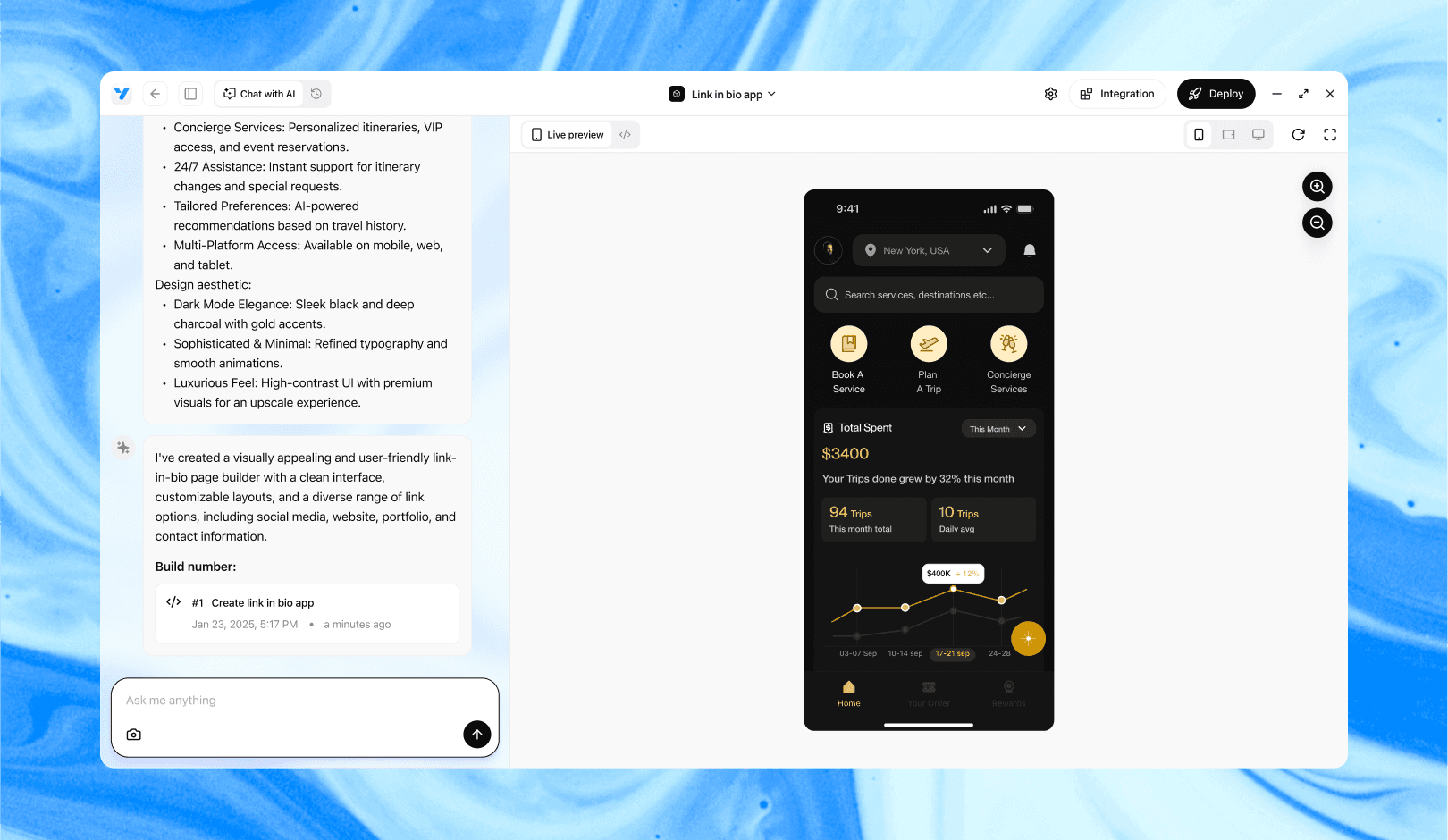
Vibe Studio, powered by Steve’s advanced AI agents, is a revolutionary no-code, conversational platform that empowers users to quickly and efficiently create full-stack Flutter applications integrated seamlessly with Firebase backend services. Ideal for solo founders, startups, and agile engineering teams, Vibe Studio allows users to visually manage and deploy Flutter apps, greatly accelerating the development process. The intuitive conversational interface simplifies complex development tasks, making app creation accessible even for non-coders.
Conclusion
An offline-first notes app in Flutter relies on clear local modeling, a reliable outbox pattern, and deterministic conflict resolution with a manual fallback. Start with a simple versioning and LWW+tiebreaker approach for predictability, add field-level merges for better UX, and expose manual conflict resolution only when necessary. These patterns deliver a fast offline experience for mobile development while keeping synchronization robust and debuggable.