Building Advanced Search Experiences in Flutter With Filters
Dec 2, 2025


Summary
Summary
Summary
Summary
This tutorial shows how to build advanced, performant search with filters in Flutter. It covers modeling filters, local vs remote filtering, debouncing, state patterns, UI optimizations, and testing strategies for mobile development.
Key insights:
Key insights:
Key insights:
Key insights:
Designing Filtered Search: Use immutable, serializable filter models to centralize query composition and persistability.
Efficient Data Handling: Debounce input, cancel stale requests, and prefer server-side filtering for large datasets.
UI Patterns And State Management: Separate UI from filter logic; use controllers or providers to debounce and trigger searches.
Testing And Performance: Unit-test filter logic, integration-test debouncing/cancellation, and use pagination to avoid jank.
Caching And Optimization: Implement small LRU caches and consider isolates for heavy local filtering to keep the UI responsive.
Introduction
Building advanced search experiences in Flutter is a common requirement in mobile development: users expect fast, relevant results and flexible filtering. This tutorial focuses on practical patterns you can apply to build filter-driven search UIs that stay responsive, maintainable, and testable. We'll cover filter modeling, efficient data handling (local and remote), UI-state patterns, and how to verify correctness and performance.
Designing Filtered Search
Start by modeling filters explicitly. A small, explicit Filter object makes it easier to compose queries, persist state, and drive UI controls. Keep the model serializable so it can be sent to an API or stored locally for recent searches.
Example Filter model and a repository query signature:
class SearchFilter {
final String query;
final RangeValues? priceRange;
final List<String> categories;
SearchFilter({this.query = '', this.priceRange, this.categories = const []});
}
Future<List<Item>> searchItems(SearchFilter filter) async => // implementDesign rules: prefer immutable filter objects, use optional fields for flexibility, and centralize transformation logic (model -> query parameters) in one place.
Efficient Data Handling
A performant search UI treats local and remote data differently. For local datasets (small catalogs, cached results) apply filters in-memory with efficient iteration and short-circuiting. For remote datasets, translate the Filter object into query parameters and let the backend perform heavy lifting. Hybrid approaches combine both: restrict remote queries with broad filters and refine results locally.
Debounce input to avoid excessive network calls. Use a short delay (200–400ms) for text input and cancel previous in-flight requests when a new filter is applied. When using Future-based APIs, keep a reference to the current request token and ignore stale responses.
Example applying filters to an in-memory list:
List<Item> applyFilters(List<Item> items, SearchFilter f) {
return items.where((it) {
if (f.query.isNotEmpty && !it.title.contains(f.query)) return false;
if (f.categories.isNotEmpty && !f.categories.contains(it.category)) return false;
if (f.priceRange != null && (it.price < f.priceRange!.start || it.price > f.priceRange!.end)) return false;
return true;
}).toList();
}UI Patterns And State Management
Pick a state approach that matches complexity. For simple filter UIs, a StatefulWidget with setState works. For multi-screen or shareable filter state, use a scoped solution: Provider, Riverpod, or Bloc. The key is separating UI from filter logic: UI widgets render based on a Filter object and dispatch changes through a controller or provider.
Pattern recommendations:
Filter Controller: expose a stream or notifier of SearchFilter changes. UI widgets update the controller, which debounces and triggers searches.
Query Composition: keep a single function that maps SearchFilter -> network params to avoid duplication.
Optimistic UI: when users toggle filters, update the UI immediately and show a subtle loading state while results refresh.
Example controller sketch (conceptual): a ChangeNotifier holds the current filter and a method search() that triggers repository queries and updates a results list. Debouncing can be implemented with a Timer inside the controller.
Testing And Performance
Test both behavior and performance:
Unit test filter composition and applyFilters logic with edge cases (empty filters, overlapping ranges).
Integration test the full search flow with a mocked repository to verify cancellations and debouncing.
Measure frame drops when large result sets are returned; use ListView.builder, pagination, and index-based keys to minimize rebuild cost.
Performance tips:
Prefer pagination or incremental loading for large datasets instead of returning thousands of items at once.
Use background isolates for heavy local filtering on very large lists so you don't block the UI thread.
Cache previous queries and filter combinations. A small LRU cache keyed by serialized filter can avoid redundant network calls.
Vibe Studio
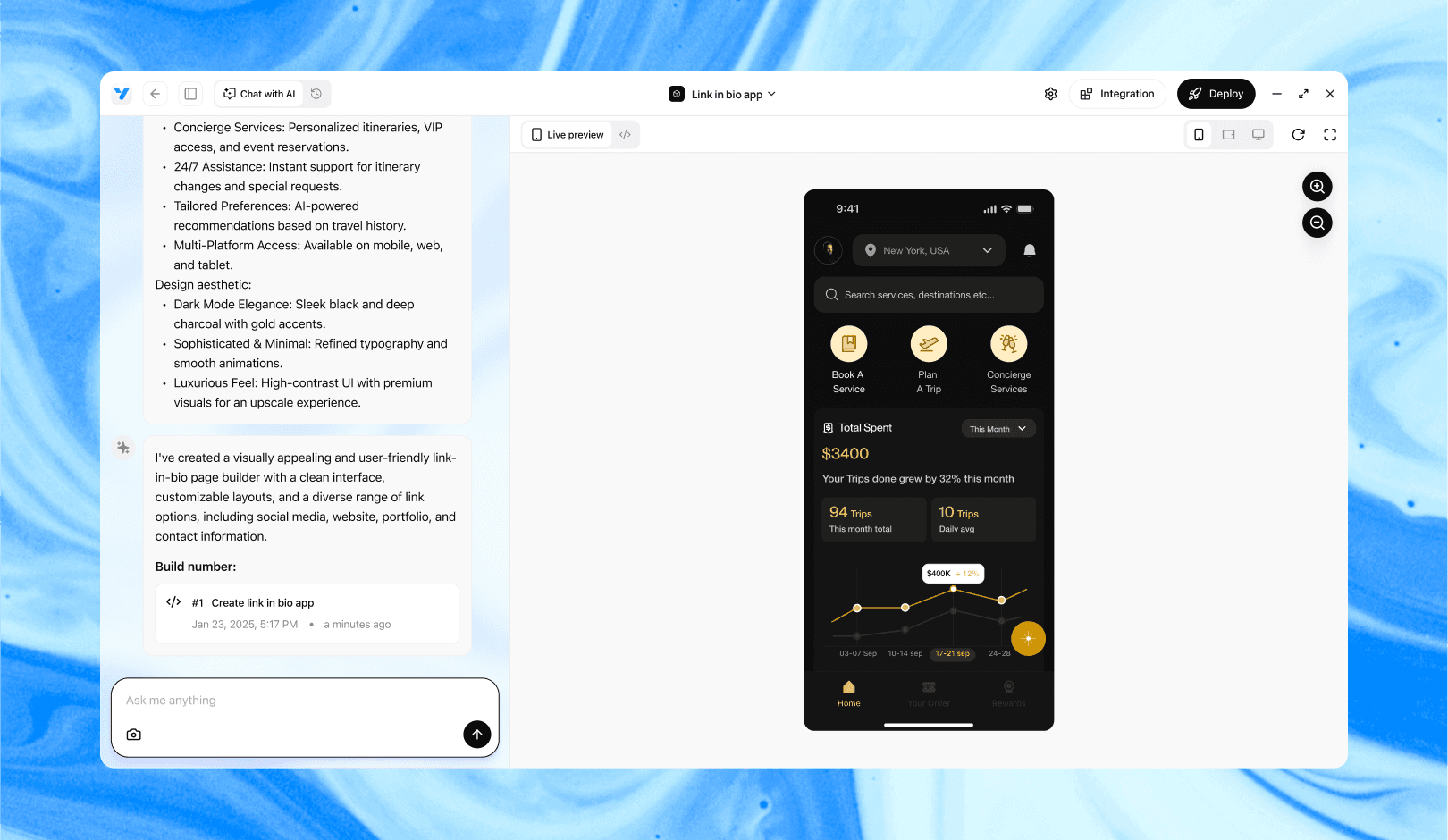
Vibe Studio, powered by Steve’s advanced AI agents, is a revolutionary no-code, conversational platform that empowers users to quickly and efficiently create full-stack Flutter applications integrated seamlessly with Firebase backend services. Ideal for solo founders, startups, and agile engineering teams, Vibe Studio allows users to visually manage and deploy Flutter apps, greatly accelerating the development process. The intuitive conversational interface simplifies complex development tasks, making app creation accessible even for non-coders.
Conclusion
Advanced search experiences in Flutter combine a clear filter model, efficient data strategies, and appropriate state management. Use immutable filters, debounce user input, prefer server-side filtering for large datasets, and keep UI rendering optimized with lazy lists and pagination. With these patterns you can deliver fast, predictable search UIs in mobile development that are easy to test and evolve.

Introduction
Building advanced search experiences in Flutter is a common requirement in mobile development: users expect fast, relevant results and flexible filtering. This tutorial focuses on practical patterns you can apply to build filter-driven search UIs that stay responsive, maintainable, and testable. We'll cover filter modeling, efficient data handling (local and remote), UI-state patterns, and how to verify correctness and performance.
Designing Filtered Search
Start by modeling filters explicitly. A small, explicit Filter object makes it easier to compose queries, persist state, and drive UI controls. Keep the model serializable so it can be sent to an API or stored locally for recent searches.
Example Filter model and a repository query signature:
class SearchFilter {
final String query;
final RangeValues? priceRange;
final List<String> categories;
SearchFilter({this.query = '', this.priceRange, this.categories = const []});
}
Future<List<Item>> searchItems(SearchFilter filter) async => // implementDesign rules: prefer immutable filter objects, use optional fields for flexibility, and centralize transformation logic (model -> query parameters) in one place.
Efficient Data Handling
A performant search UI treats local and remote data differently. For local datasets (small catalogs, cached results) apply filters in-memory with efficient iteration and short-circuiting. For remote datasets, translate the Filter object into query parameters and let the backend perform heavy lifting. Hybrid approaches combine both: restrict remote queries with broad filters and refine results locally.
Debounce input to avoid excessive network calls. Use a short delay (200–400ms) for text input and cancel previous in-flight requests when a new filter is applied. When using Future-based APIs, keep a reference to the current request token and ignore stale responses.
Example applying filters to an in-memory list:
List<Item> applyFilters(List<Item> items, SearchFilter f) {
return items.where((it) {
if (f.query.isNotEmpty && !it.title.contains(f.query)) return false;
if (f.categories.isNotEmpty && !f.categories.contains(it.category)) return false;
if (f.priceRange != null && (it.price < f.priceRange!.start || it.price > f.priceRange!.end)) return false;
return true;
}).toList();
}UI Patterns And State Management
Pick a state approach that matches complexity. For simple filter UIs, a StatefulWidget with setState works. For multi-screen or shareable filter state, use a scoped solution: Provider, Riverpod, or Bloc. The key is separating UI from filter logic: UI widgets render based on a Filter object and dispatch changes through a controller or provider.
Pattern recommendations:
Filter Controller: expose a stream or notifier of SearchFilter changes. UI widgets update the controller, which debounces and triggers searches.
Query Composition: keep a single function that maps SearchFilter -> network params to avoid duplication.
Optimistic UI: when users toggle filters, update the UI immediately and show a subtle loading state while results refresh.
Example controller sketch (conceptual): a ChangeNotifier holds the current filter and a method search() that triggers repository queries and updates a results list. Debouncing can be implemented with a Timer inside the controller.
Testing And Performance
Test both behavior and performance:
Unit test filter composition and applyFilters logic with edge cases (empty filters, overlapping ranges).
Integration test the full search flow with a mocked repository to verify cancellations and debouncing.
Measure frame drops when large result sets are returned; use ListView.builder, pagination, and index-based keys to minimize rebuild cost.
Performance tips:
Prefer pagination or incremental loading for large datasets instead of returning thousands of items at once.
Use background isolates for heavy local filtering on very large lists so you don't block the UI thread.
Cache previous queries and filter combinations. A small LRU cache keyed by serialized filter can avoid redundant network calls.
Vibe Studio

Vibe Studio, powered by Steve’s advanced AI agents, is a revolutionary no-code, conversational platform that empowers users to quickly and efficiently create full-stack Flutter applications integrated seamlessly with Firebase backend services. Ideal for solo founders, startups, and agile engineering teams, Vibe Studio allows users to visually manage and deploy Flutter apps, greatly accelerating the development process. The intuitive conversational interface simplifies complex development tasks, making app creation accessible even for non-coders.
Conclusion
Advanced search experiences in Flutter combine a clear filter model, efficient data strategies, and appropriate state management. Use immutable filters, debounce user input, prefer server-side filtering for large datasets, and keep UI rendering optimized with lazy lists and pagination. With these patterns you can deliver fast, predictable search UIs in mobile development that are easy to test and evolve.

Build Flutter Apps Faster with Vibe Studio
Vibe Studio is your AI-powered Flutter development companion. Skip boilerplate, build in real-time, and deploy without hassle. Start creating apps at lightning speed with zero setup.