Introduction
A settings screen is small surface area with outsized complexity: many data types, persistence layers, toggles, navigation, and localization. In Flutter mobile development, approaching settings as a one-off widget quickly becomes unmanageable. This tutorial presents an architecture that scales: separate concerns, model the domain, choose a resilient state strategy, and compose UI from small, testable widgets.
Design Principles
Start with principles that guide every decision: single responsibility, explicit state, immutable models where practical, and dependency inversion for persistence. Treat settings like a feature module. Each setting is a first-class object with metadata (id, type, title, description) and behavior hooks (onChange validation, navigation target). This enables dynamic rendering (e.g., feature flags or server-driven settings) and simplifies testing.
Keep UI as declarative views of state. Avoid coupling the widget tree to storage APIs. Widgets should consume a plain Dart model or a state object supplied through an InheritedWidget, Provider, or Riverpod. This separation lets you change persistence (local file, shared_preferences, sqflite, or remote sync) without touching the UI.
Data Modeling
Design small, composable models. Use a sealed approach to represent different control types: toggle, option list, slider, text input, navigation link. Each model contains the minimum required data and optional presentation hints (icon, group, order).
Example SettingItem model:
class SettingItem {
  final String id;
  final String title;
  final String? subtitle;
  final SettingType type;
  final dynamic value;

  SettingItem(this.id, this.title, {this.subtitle, required this.type, this.value});
}

enum SettingType { toggle, option, slider, text, navigation }
Store lists of SettingItem grouped into sections. Persist values in a repository that exposes typed getters/setters. Keep the repository simple and testable by depending on an abstract storage interface.
State Management & Persistence
Select a state strategy that matches app complexity. For small apps, Provider with ChangeNotifier or ValueNotifier is adequate. For larger apps, Riverpod or Bloc provides better scaling and testability. The important part is to keep state transitions explicit and to debounce expensive writes.
Repository pattern with a local cache works well: load persisted values into memory on startup, let widgets read/write to the in-memory state, and flush diffs to disk after a debounce interval. This minimizes I/O and simplifies offline handling.
Example of a simple notifier that mediates repository access:
class SettingsNotifier extends ChangeNotifier {
  final SettingsRepository repo;
  Map<String, dynamic> _values = {};
  SettingsNotifier(this.repo) { _load(); }
  Future<void> _load() async => _values = await repo.loadAll();
  dynamic get(String id) => _values[id];
  void set(String id, dynamic value) { _values[id] = value; notifyListeners(); repo.save(id, value); }
}
Add validation and transformation at the notifier layer. For example, clamp slider values, normalize input, or trigger side effects like analytics events or remote sync. Use dependency injection for the repository so tests can inject an in-memory store.
UI Composition
Build UI from atomic widgets mapped to model types: ToggleTile, OptionTile, SliderTile, InputTile, NavTile. Each tile should accept a SettingItem and a callback (onChanged). Avoid logic inside tiles beyond simple input validation and display adaptation. Composition rules:
SectionWidget renders a header and a list of tiles.
Tiles request changes through callbacks tied to your state layer (not directly to persistence).
Use ListView.separated for large lists and consider lazy building for hundreds of items.
For theming and localization, keep presentation hints in the model (e.g., localized keys) and resolve them at the widget level using Flutter's BuildContext. For platform differences, inject a PlatformAdapter to the widget tree to adapt UI touches (e.g., Cupertino switches on iOS).
Testing UI is straightforward when the state layer is injected: pump widgets with a fake SettingsNotifier and assert tile interactions produce expected calls to the notifier.
Vibe Studio
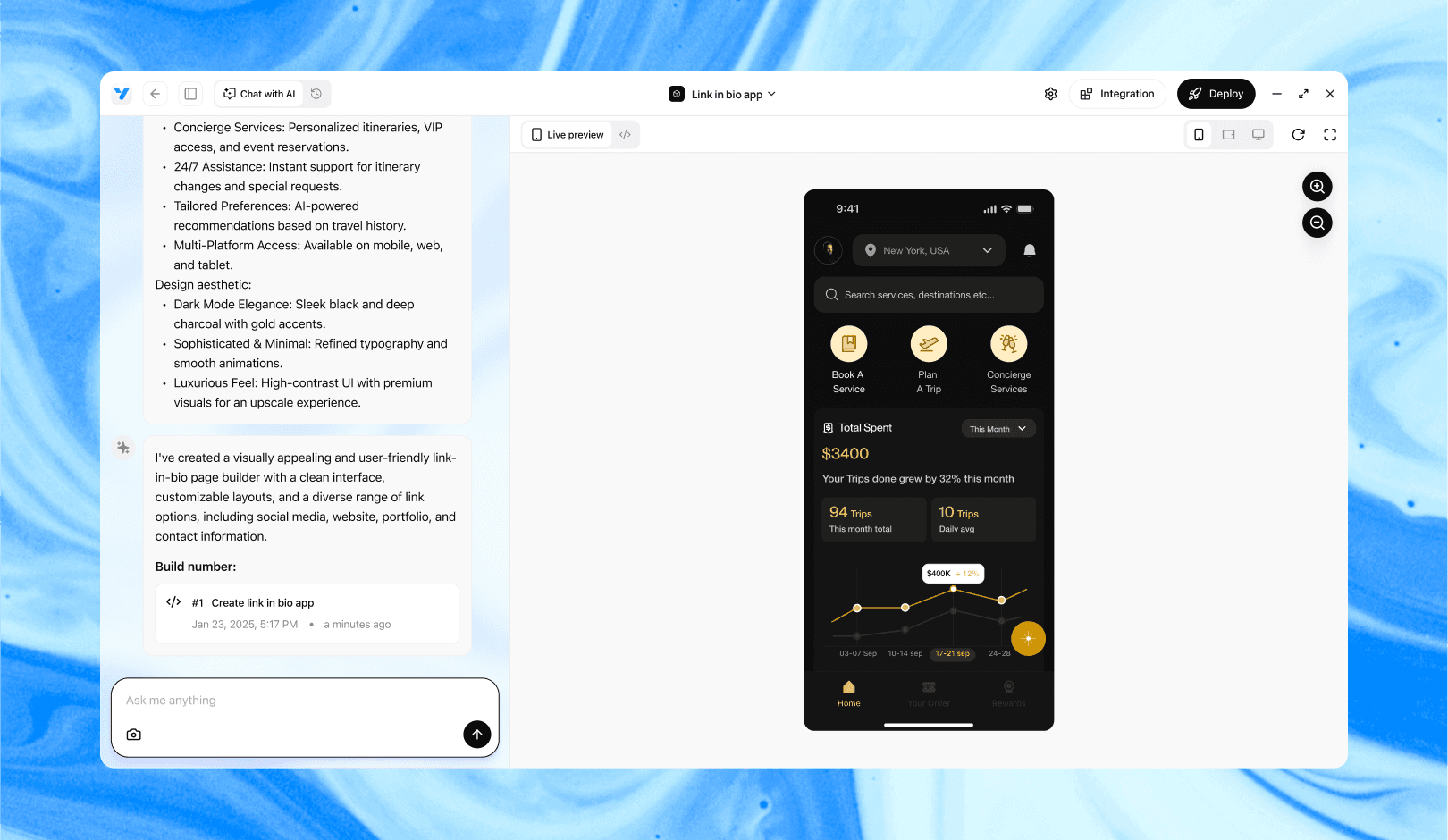
Vibe Studio, powered by Steve’s advanced AI agents, is a revolutionary no-code, conversational platform that empowers users to quickly and efficiently create full-stack Flutter applications integrated seamlessly with Firebase backend services. Ideal for solo founders, startups, and agile engineering teams, Vibe Studio allows users to visually manage and deploy Flutter apps, greatly accelerating the development process. The intuitive conversational interface simplifies complex development tasks, making app creation accessible even for non-coders.
Conclusion
A scalable settings architecture in Flutter relies on clear separation: model the settings domain, centralize state and persistence behind a repository and notifier, and build small, stateless tiles that render models. This pattern supports dynamic settings, remote configuration, feature gating, and easier testing. Start by extracting models and a repository from any ad-hoc screen, then iterate by introducing a notifier or Riverpod provider. The payoff: predictable behavior, maintainable code, and a settings screen that scales with your product.