Building a Reusable Design System in Flutter With Theme Extensions
Nov 24, 2025


Summary
Summary
Summary
Summary
This tutorial shows how to build a reusable design system in Flutter using ThemeExtension. It covers token modeling, implementing ThemeExtension with copyWith and lerp, injecting extensions into ThemeData, and consuming them in widgets for consistent, animatable mobile development themes.
Key insights:
Key insights:
Key insights:
Key insights:
Why Use Theme Extensions: Theme extensions provide strong typing and enable design tokens to live with ThemeData for consistent theming.
Design Tokens And Models: Define small immutable token classes with copyWith and lerp to support theme animations and maintainability.
Implementing Theme Extensions In Flutter: Add extension instances to ThemeData.extensions for light/dark variants and centralized theme creation.
Using Extensions Across Widgets: Consume extensions with Theme.of(context).extension() and apply values to component styles.
Best Practices And Scaling: Group tokens semantically, document them, provide fallbacks, and consider generation from a single source of truth.
Introduction
A reusable design system is essential for scalable Flutter applications and consistent mobile development experiences. Flutter's ThemeData covers many base needs (colors, typography), but complex, domain-specific tokens—brand spacing, component radii, custom elevations, semantic variants—need a flexible extension mechanism. ThemeExtension lets you add strongly typed theme objects that travel with ThemeData, enabling a single source of truth for design tokens and easing theme switching (light/dark, platform variations) without scattering constants.
This tutorial is code-forward: you will define tokens, implement a ThemeExtension, inject it into ThemeData, and consume it in widgets. The examples emphasize clarity, immutability, and lerp support for animated theme changes.
Why Use Theme Extensions
Theme extensions keep style related to Flutter's inherited Theme system. Advantages:
Strong typing: avoid loose maps and global constants.
Composition: keep ThemeData focused while adding structured tokens.
Runtime switching: extensions participate in theme animations and rebuilds.
Use extensions when you have design tokens not represented by ThemeData (for example: brand radii, semantic elevations, or a set of custom color roles). This approach is ideal for teams building reusable components and libraries in mobile development environments where theme consistency is critical.
Design Tokens And Models
Design tokens should be small, immutable, and composable. Group related tokens into a single extension when they belong to the same domain. Example domain: button styles. Define a model that extends ThemeExtension and implements copyWith and lerp for animation compatibility.
class ButtonTokens extends ThemeExtension<ButtonTokens> {
final double radius;
final double elevation;
ButtonTokens({required this.radius, required this.elevation});
@override
ButtonTokens copyWith({double? radius, double? elevation}) =>
ButtonTokens(radius: radius ?? this.radius, elevation: elevation ?? this.elevation);
@override
ButtonTokens lerp(ThemeExtension<ButtonTokens>? other, double t) =>
other is ButtonTokens
? ButtonTokens(radius: lerpDouble(radius, other.radius, t)!, elevation: lerpDouble(elevation, other.elevation, t)!)
: this;
}Keep implementations minimal and deterministic. Prefer primitive types or small value classes; avoid embedding BuildContext or widget references in tokens.
Implementing Theme Extensions In Flutter
Add your extension instances to ThemeData.extensions. Provide both light and dark variants in your theme definitions so Theme.of(context).extensions returns correct values for the current brightness.
final lightTheme = ThemeData.light().copyWith(
extensions: <ThemeExtension<dynamic>>[
ButtonTokens(radius: 8, elevation: 2),
],
);
final darkTheme = ThemeData.dark().copyWith(
extensions: <ThemeExtension<dynamic>>[
ButtonTokens(radius: 8, elevation: 3),
],
);For apps targeting multiple platforms or product lines, create a factory or a ThemeRepository that returns ThemeData variants. Keep token creation centralized so component libraries consume the same objects.
Using Extensions Across Widgets
Consume extensions in widgets via Theme.of(context).extension(). This yields the strongly typed model or null if missing—handle null defensively, but in well-controlled apps you can assert presence at development time.
Example of a custom Button that uses ButtonTokens:
Read tokens once in build.
Use values directly for styling (shape, elevation).
Allow local overrides through widget parameters.
A minimal usage:
final tokens = Theme.of(context).extension<ButtonTokens>()!;
return ElevatedButton(
style: ElevatedButton.styleFrom(elevation: tokens.elevation, shape: RoundedRectangleBorder(borderRadius: BorderRadius.circular(tokens.radius))),
onPressed: onPressed,
child: child,
);When you animate theme changes (for example, toggle dark mode), Flutter interpolates ThemeData and calls lerp on each extension—hence the importance of implementing lerp for smooth transitions.
Best Practices And Scaling
Group tokens by intent, not by component (semantic grouping). This makes tokens reusable across components.
Keep tokens atomic and immutable; prefer small value objects.
Provide default fallbacks for backwards compatibility and library consumers.
Document tokens and map them to your design spec (Figma tokens) so designers and engineers align.
Test theme variants: use widget tests to assert that components pick up the extension values.
For large apps, consider generating token classes from a single source (JSON, YAML) to avoid drift between design and implementation.
Vibe Studio
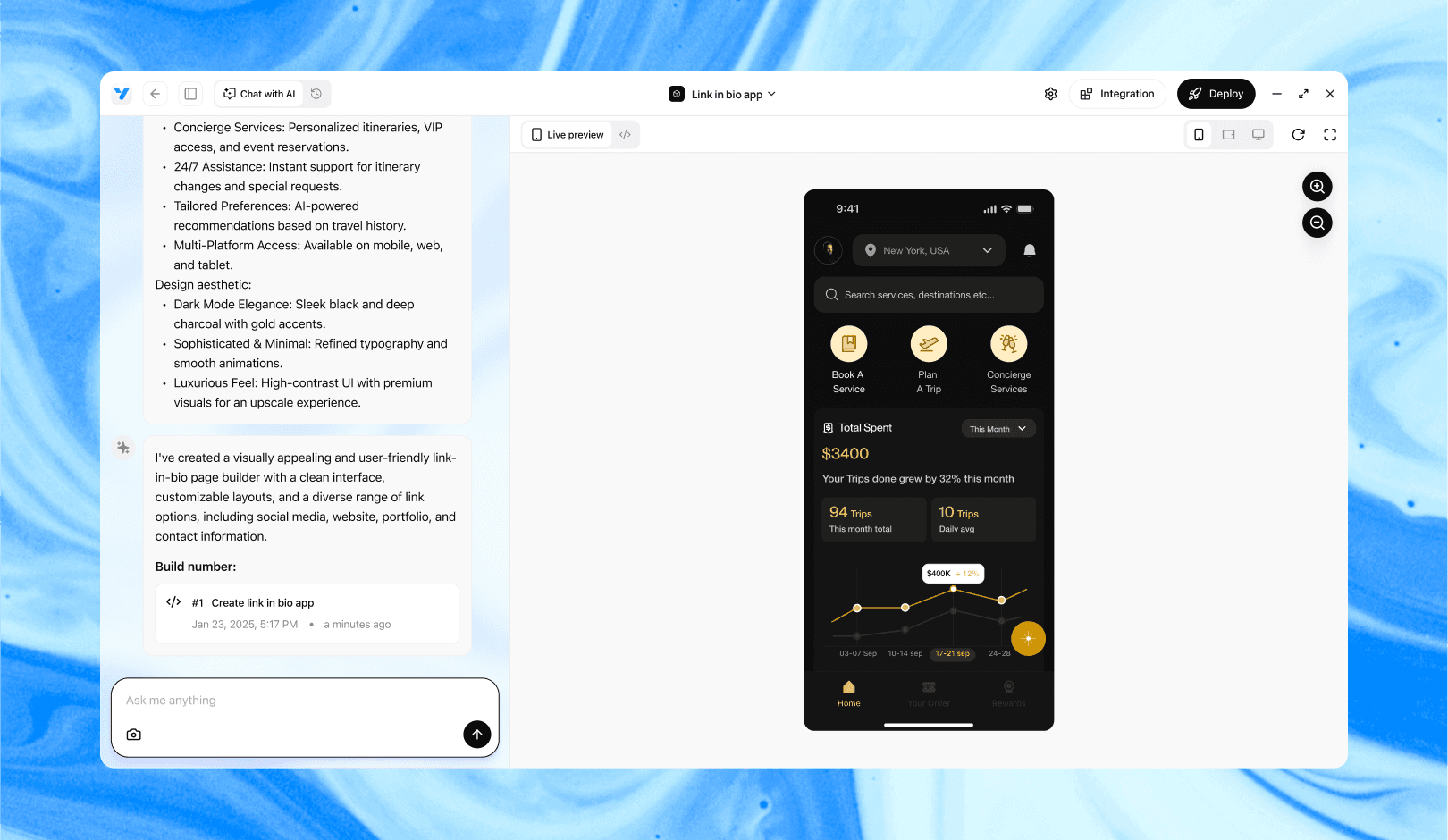
Vibe Studio, powered by Steve’s advanced AI agents, is a revolutionary no-code, conversational platform that empowers users to quickly and efficiently create full-stack Flutter applications integrated seamlessly with Firebase backend services. Ideal for solo founders, startups, and agile engineering teams, Vibe Studio allows users to visually manage and deploy Flutter apps, greatly accelerating the development process. The intuitive conversational interface simplifies complex development tasks, making app creation accessible even for non-coders.
Conclusion
Theme extensions are a robust, type-safe way to build a reusable design system in Flutter. They integrate with ThemeData, support animated transitions, and promote a single source of truth for custom tokens. By modeling tokens as small immutable classes, providing light/dark variants, and consuming them consistently in widgets, you create predictable, maintainable styling for mobile development. Start by extracting a single domain (buttons, cards, spacing), implement an extension with copyWith and lerp, wire it into ThemeData, and migrate components incrementally.

Introduction
A reusable design system is essential for scalable Flutter applications and consistent mobile development experiences. Flutter's ThemeData covers many base needs (colors, typography), but complex, domain-specific tokens—brand spacing, component radii, custom elevations, semantic variants—need a flexible extension mechanism. ThemeExtension lets you add strongly typed theme objects that travel with ThemeData, enabling a single source of truth for design tokens and easing theme switching (light/dark, platform variations) without scattering constants.
This tutorial is code-forward: you will define tokens, implement a ThemeExtension, inject it into ThemeData, and consume it in widgets. The examples emphasize clarity, immutability, and lerp support for animated theme changes.
Why Use Theme Extensions
Theme extensions keep style related to Flutter's inherited Theme system. Advantages:
Strong typing: avoid loose maps and global constants.
Composition: keep ThemeData focused while adding structured tokens.
Runtime switching: extensions participate in theme animations and rebuilds.
Use extensions when you have design tokens not represented by ThemeData (for example: brand radii, semantic elevations, or a set of custom color roles). This approach is ideal for teams building reusable components and libraries in mobile development environments where theme consistency is critical.
Design Tokens And Models
Design tokens should be small, immutable, and composable. Group related tokens into a single extension when they belong to the same domain. Example domain: button styles. Define a model that extends ThemeExtension and implements copyWith and lerp for animation compatibility.
class ButtonTokens extends ThemeExtension<ButtonTokens> {
final double radius;
final double elevation;
ButtonTokens({required this.radius, required this.elevation});
@override
ButtonTokens copyWith({double? radius, double? elevation}) =>
ButtonTokens(radius: radius ?? this.radius, elevation: elevation ?? this.elevation);
@override
ButtonTokens lerp(ThemeExtension<ButtonTokens>? other, double t) =>
other is ButtonTokens
? ButtonTokens(radius: lerpDouble(radius, other.radius, t)!, elevation: lerpDouble(elevation, other.elevation, t)!)
: this;
}Keep implementations minimal and deterministic. Prefer primitive types or small value classes; avoid embedding BuildContext or widget references in tokens.
Implementing Theme Extensions In Flutter
Add your extension instances to ThemeData.extensions. Provide both light and dark variants in your theme definitions so Theme.of(context).extensions returns correct values for the current brightness.
final lightTheme = ThemeData.light().copyWith(
extensions: <ThemeExtension<dynamic>>[
ButtonTokens(radius: 8, elevation: 2),
],
);
final darkTheme = ThemeData.dark().copyWith(
extensions: <ThemeExtension<dynamic>>[
ButtonTokens(radius: 8, elevation: 3),
],
);For apps targeting multiple platforms or product lines, create a factory or a ThemeRepository that returns ThemeData variants. Keep token creation centralized so component libraries consume the same objects.
Using Extensions Across Widgets
Consume extensions in widgets via Theme.of(context).extension(). This yields the strongly typed model or null if missing—handle null defensively, but in well-controlled apps you can assert presence at development time.
Example of a custom Button that uses ButtonTokens:
Read tokens once in build.
Use values directly for styling (shape, elevation).
Allow local overrides through widget parameters.
A minimal usage:
final tokens = Theme.of(context).extension<ButtonTokens>()!;
return ElevatedButton(
style: ElevatedButton.styleFrom(elevation: tokens.elevation, shape: RoundedRectangleBorder(borderRadius: BorderRadius.circular(tokens.radius))),
onPressed: onPressed,
child: child,
);When you animate theme changes (for example, toggle dark mode), Flutter interpolates ThemeData and calls lerp on each extension—hence the importance of implementing lerp for smooth transitions.
Best Practices And Scaling
Group tokens by intent, not by component (semantic grouping). This makes tokens reusable across components.
Keep tokens atomic and immutable; prefer small value objects.
Provide default fallbacks for backwards compatibility and library consumers.
Document tokens and map them to your design spec (Figma tokens) so designers and engineers align.
Test theme variants: use widget tests to assert that components pick up the extension values.
For large apps, consider generating token classes from a single source (JSON, YAML) to avoid drift between design and implementation.
Vibe Studio

Vibe Studio, powered by Steve’s advanced AI agents, is a revolutionary no-code, conversational platform that empowers users to quickly and efficiently create full-stack Flutter applications integrated seamlessly with Firebase backend services. Ideal for solo founders, startups, and agile engineering teams, Vibe Studio allows users to visually manage and deploy Flutter apps, greatly accelerating the development process. The intuitive conversational interface simplifies complex development tasks, making app creation accessible even for non-coders.
Conclusion
Theme extensions are a robust, type-safe way to build a reusable design system in Flutter. They integrate with ThemeData, support animated transitions, and promote a single source of truth for custom tokens. By modeling tokens as small immutable classes, providing light/dark variants, and consuming them consistently in widgets, you create predictable, maintainable styling for mobile development. Start by extracting a single domain (buttons, cards, spacing), implement an extension with copyWith and lerp, wire it into ThemeData, and migrate components incrementally.
Build Flutter Apps Faster with Vibe Studio
Vibe Studio is your AI-powered Flutter development companion. Skip boilerplate, build in real-time, and deploy without hassle. Start creating apps at lightning speed with zero setup.