Introduction
Realtime dashboards are indispensable in modern mobile development: feeds, metrics, and alerts require low-latency updates. WebSockets provide a persistent channel ideal for streaming, but uncontrolled message rates can overwhelm a mobile client. This tutorial shows how to build a Flutter realtime dashboard that maintains responsiveness by combining WebSocket streaming with explicit backpressure control, buffering, and graceful reconnects.
Setting Up The WebSocket Client
In Flutter, use web_socket_channel (IO for mobile) to open a WebSocket and expose its stream to your app. Keep the connection logic separated from UI code. Maintain a single source of truth for incoming events and a small, observable buffer that your widgets consume.
Minimal connection example:
import 'package:web_socket_channel/io.dart';
final channel = IOWebSocketChannel.connect('wss://example.com/stream');
Create a manager class that owns the StreamSubscription so you can pause and resume consumption when backpressure is required. Avoid processing directly on the raw stream; instead, funnel messages into a controlled pipeline.
Backpressure Control Strategies
Backpressure is the mechanism by which the consumer tells the producer to slow down or pauses consumption when it cannot keep up. On mobile, typical signals are high CPU, UI jank, or large unprocessed message queues. There are three practical strategies:
Pause/Resume Subscription: Use StreamSubscription.pause() and resume() to stop the incoming stream temporarily.
Buffer With Bounds: Collect messages in a bounded queue and drop or coalesce when capacity is reached.
Server-Side Flow Control: If protocol supports it, send a control frame to request a lower rate.
Example: pause the subscription when our pending queue exceeds a threshold and resume once it drains below a lower watermark.
StreamSubscription sub;
final pending = <dynamic>[];
const highWatermark = 100, lowWatermark = 50;
sub = channel.stream.listen((msg) {
pending.add(msg);
if (pending.length > highWatermark) sub.pause();
processPending();
});
void processPending() async {
while (pending.isNotEmpty) {
final item = pending.removeAt(0);
await handle(item); // CPU/IO bound processing
if (pending.length < lowWatermark
This approach keeps the mobile app responsive by giving processing a chance to catch up. Tune watermarks to your device capabilities and message cost.
Buffering And Throttling
Choose how to treat overflow: drop-oldest, drop-newest, or coalesce messages. For metric dashboards, coalescing (merge multiple updates into one) usually preserves value while reducing work. For event streams where every message matters, dropping is not acceptable — prefer server-side flow control or paged retrieval.
Throttling at the UI layer reduces redraw frequency. Convert raw events into a rate-limited stream for widgets using debounce or sample operators so the UI repaints at 16–60 fps bounds instead of per message.
Example pattern: maintain a separate StreamController that publishes aggregated updates at a fixed tick (e.g., 250ms) while the incoming pipeline continues to collect data.
Integrating With Flutter Widgets
Expose a ValueNotifier or Stream to widgets. Avoid calling setState for every incoming message. Instead:
Use ValueNotifier for small state (latest metric) and call notify only when UI-relevant changes happen.
Use StreamBuilder with a deliberately throttled stream for lists or charts.
Offload heavy processing to isolates if parsing or computation is expensive.
Keep memory in check: cap historical data retained by the dashboard and purge stale entries periodically. When the app backgrounds, pause the WebSocket subscription to conserve battery and resume on foreground.
Vibe Studio
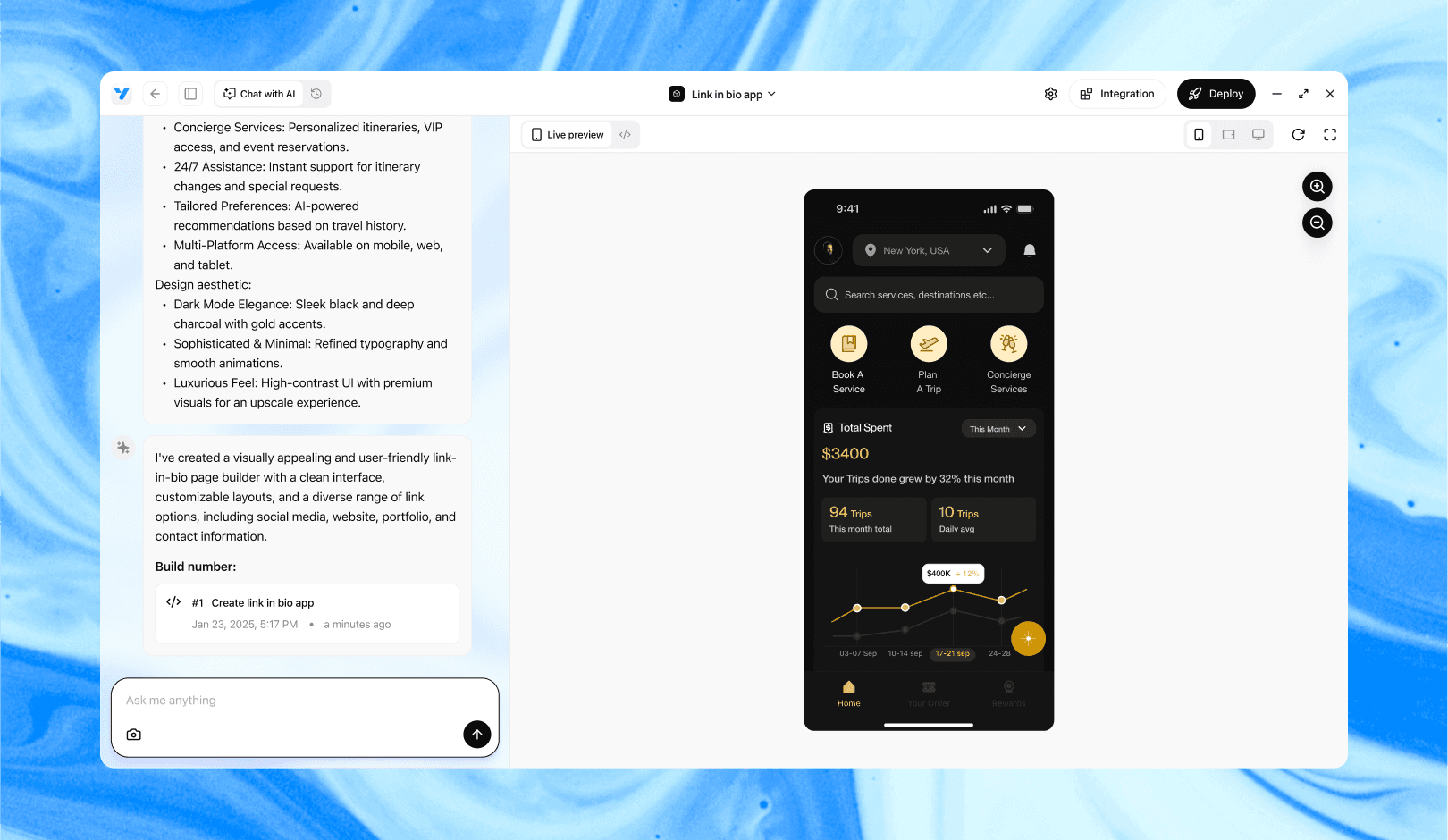
Vibe Studio, powered by Steve’s advanced AI agents, is a revolutionary no-code, conversational platform that empowers users to quickly and efficiently create full-stack Flutter applications integrated seamlessly with Firebase backend services. Ideal for solo founders, startups, and agile engineering teams, Vibe Studio allows users to visually manage and deploy Flutter apps, greatly accelerating the development process. The intuitive conversational interface simplifies complex development tasks, making app creation accessible even for non-coders.
Conclusion
Building a robust realtime dashboard in Flutter requires both a reliable WebSocket client and explicit backpressure control. Use subscription pause/resume, bounded buffering, coalescing, and UI-side throttling to avoid overwhelm. Separate connection management from UI, tune watermarks to device profiles, and prefer server-level flow control when semantics demand no-loss delivery. With controlled ingestion and thoughtful integration into Flutter widgets, your mobile dashboard can remain responsive even under heavy streams.