Building A Realtime Chat UI With Typing Indicators And Read Receipts
Jan 22, 2026


Summary
Summary
Summary
Summary
This tutorial shows how to build a realtime chat UI in Flutter for mobile development: organize transport, state, and UI layers; render a reversed message list; implement debounced typing indicators; and synchronize read receipts. Use Streams or reactive state management, update only affected widgets, and batch read events to minimize network traffic.
Key insights:
Key insights:
Key insights:
Key insights:
Architecture Overview: Separate transport, state, and UI with a single source of truth for predictable realtime updates.
UI Building Blocks: Use a reversed ListView, keyed message widgets, and stream-driven updates to avoid full rebuilds.
Real-Time Presence And Typing Indicators: Send debounced start/stop typing events and expire stale indicators server-side.
Read Receipts And State Sync: Emit read events when messages are visible, reconcile optimistic updates with server broadcasts.
Performance Considerations: Batch read events, use fine-grained updates, and prefer const widgets to reduce rebuild cost.
Introduction
Building a realtime chat UI in Flutter for mobile development requires more than message lists: presence, typing indicators, and read receipts are essential to a polished experience. This tutorial focuses on structure and code patterns you can reuse with any realtime backend (WebSocket, Socket.IO, Firebase Realtime/Firestore, or a custom socket server). We'll implement a responsive message list, show who is typing, and manage read receipts with minimal UI-state complexity.
Architecture Overview
Design your chat as three cooperating layers: transport, state, and UI. Transport sends/receives events (message, typing, read). State maps those events to immutable models (Message, TypingStatus, ReadReceipt). UI subscribes to state changes (Streams, ChangeNotifier, or Bloc).
Use a single source of truth for message state to avoid divergent UIs. For mobile development with Flutter, Streams or a reactive state manager (Bloc, Riverpod) are ideal because realtime events arrive asynchronously. Each event should include a message id, sender id, event type, and timestamp. For typing indicators, include a TTL or send explicit stop-typing events to avoid stale indicators.
UI Building Blocks
Keep the widget tree simple: a reversed ListView for messages, a small typing row, and an input area. Reversed ListView ensures newest messages appear at the bottom and allows scroll to bottom behavior. Use ListView.builder and map your state messages to MessageBubble widgets that carry metadata (delivered, read, timestamp).
Example stream-driven list update pattern:
// Simplified StreamBuilder pattern StreamBuilder<List<Message>>(stream: chatBloc.messagesStream, builder: (ctx, snap) { final messages = snap.data ?? []; return ListView.builder(reverse: true, itemCount: messages.length, itemBuilder: (_, i) => MessageBubble(messages[i])); });
When displaying read receipts, render a small icon or avatar cluster aligned with the message bubble. Keep receipt rendering idempotent: show the highest state (read > delivered > sent). For performance, prefer const widgets and avoid rebuilding the entire list when a single message's receipt changes — update the item via keyed widgets or fine-grained state lookup.
Real-Time Presence And Typing Indicators
Typing indicators are ephemeral presence events. Choose one of two strategies: broadcast typing start/stop events or send heartbeat TTLs. For mobile development and battery friendliness, prefer explicit start/stop with a short debounce on the client to avoid spamming the network.
Client flow: when the user begins editing, send a typing:start event; debounce and send typing:stop after a short idle period (e.g., 2s). Server should broadcast typing status to other participants.
On the UI side, maintain a small Set of userIds currently typing. Render a compact row above the input field showing "Alice is typing..." or an animated ellipsis if multiple users type. Example of handling incoming typing events:
// Update typing set on events void handleTypingEvent(TypingEvent e) { if (e.type == TypingType.start) typingSet.add(e.userId); else typingSet.remove(e.userId); typingStreamController.add(typingSet.toList()); }
Be robust against race conditions: if a user disconnects without sending stop, server TTL should expire their typing state.
Read Receipts And State Sync
Read receipts require careful synchronization to avoid marking messages read prematurely. Common approach: when the recipient's viewport includes the message and its timestamp is older than any locally pending writes, emit a read event for that message id. The server persists the read timestamp and broadcasts updates.
Important rules:
Sender shows "delivered" when server acknowledges storage or delivery to device.
Sender shows "read" when the server reports at least one recipient marked the message read.
Use per-message read maps if you need per-user receipts; otherwise a highest-read timestamp suffices for one-to-one chats.
Implement optimistic UI updates for local reads but reconcile with server events to correct mismatches. Use message keys to update only the affected widgets when receipts change:
// Minimal model update (pseudo) void markAsRead(String messageId, String readerId) { final msg = messagesById[messageId]; msg.readBy.add(readerId); messagesController.add(currentMessages); // stream updates targeted listeners }
For group chats, display small avatars of users who have read a message, or show a count. Keep network traffic reasonable by batching read events (e.g., send read markers for contiguous messages rather than each message).
Vibe Studio
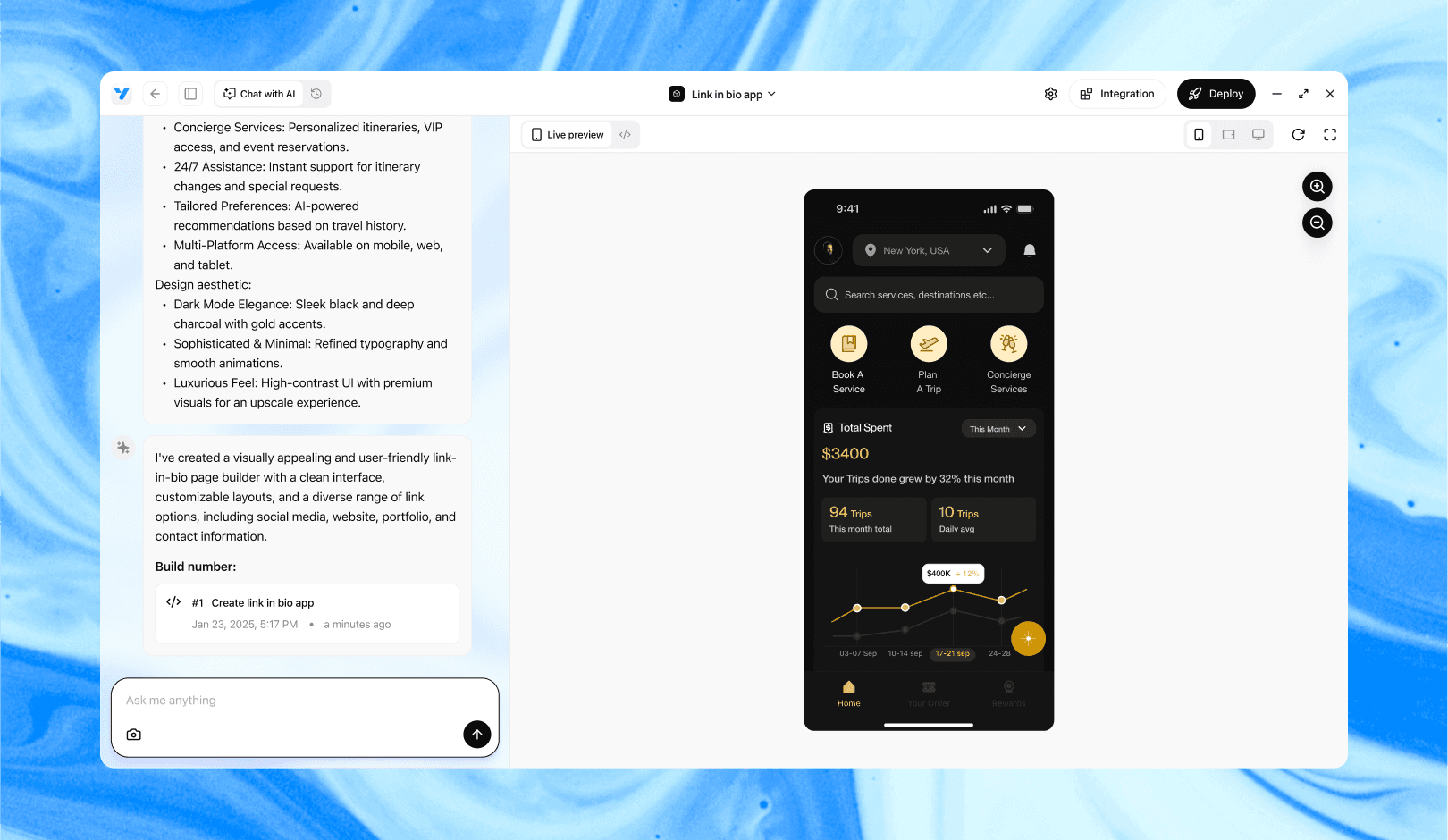
Vibe Studio, powered by Steve’s advanced AI agents, is a revolutionary no-code, conversational platform that empowers users to quickly and efficiently create full-stack Flutter applications integrated seamlessly with Firebase backend services. Ideal for solo founders, startups, and agile engineering teams, Vibe Studio allows users to visually manage and deploy Flutter apps, greatly accelerating the development process. The intuitive conversational interface simplifies complex development tasks, making app creation accessible even for non-coders.
Conclusion
A robust realtime chat UI in Flutter combines clear architecture with small, focused primitives: a single source of truth for message state, reactive updates (Streams/Bloc), debounced typing events, and reliable read receipt rules. These patterns keep UI updates predictable and efficient for mobile development, and they adapt whether you use Firebase, WebSockets, or a custom backend. Start with a simple model, add fine-grained updates for receipts, and test across real network conditions to avoid stale typing indicators and incorrect read states.

Introduction
Building a realtime chat UI in Flutter for mobile development requires more than message lists: presence, typing indicators, and read receipts are essential to a polished experience. This tutorial focuses on structure and code patterns you can reuse with any realtime backend (WebSocket, Socket.IO, Firebase Realtime/Firestore, or a custom socket server). We'll implement a responsive message list, show who is typing, and manage read receipts with minimal UI-state complexity.
Architecture Overview
Design your chat as three cooperating layers: transport, state, and UI. Transport sends/receives events (message, typing, read). State maps those events to immutable models (Message, TypingStatus, ReadReceipt). UI subscribes to state changes (Streams, ChangeNotifier, or Bloc).
Use a single source of truth for message state to avoid divergent UIs. For mobile development with Flutter, Streams or a reactive state manager (Bloc, Riverpod) are ideal because realtime events arrive asynchronously. Each event should include a message id, sender id, event type, and timestamp. For typing indicators, include a TTL or send explicit stop-typing events to avoid stale indicators.
UI Building Blocks
Keep the widget tree simple: a reversed ListView for messages, a small typing row, and an input area. Reversed ListView ensures newest messages appear at the bottom and allows scroll to bottom behavior. Use ListView.builder and map your state messages to MessageBubble widgets that carry metadata (delivered, read, timestamp).
Example stream-driven list update pattern:
// Simplified StreamBuilder pattern StreamBuilder<List<Message>>(stream: chatBloc.messagesStream, builder: (ctx, snap) { final messages = snap.data ?? []; return ListView.builder(reverse: true, itemCount: messages.length, itemBuilder: (_, i) => MessageBubble(messages[i])); });
When displaying read receipts, render a small icon or avatar cluster aligned with the message bubble. Keep receipt rendering idempotent: show the highest state (read > delivered > sent). For performance, prefer const widgets and avoid rebuilding the entire list when a single message's receipt changes — update the item via keyed widgets or fine-grained state lookup.
Real-Time Presence And Typing Indicators
Typing indicators are ephemeral presence events. Choose one of two strategies: broadcast typing start/stop events or send heartbeat TTLs. For mobile development and battery friendliness, prefer explicit start/stop with a short debounce on the client to avoid spamming the network.
Client flow: when the user begins editing, send a typing:start event; debounce and send typing:stop after a short idle period (e.g., 2s). Server should broadcast typing status to other participants.
On the UI side, maintain a small Set of userIds currently typing. Render a compact row above the input field showing "Alice is typing..." or an animated ellipsis if multiple users type. Example of handling incoming typing events:
// Update typing set on events void handleTypingEvent(TypingEvent e) { if (e.type == TypingType.start) typingSet.add(e.userId); else typingSet.remove(e.userId); typingStreamController.add(typingSet.toList()); }
Be robust against race conditions: if a user disconnects without sending stop, server TTL should expire their typing state.
Read Receipts And State Sync
Read receipts require careful synchronization to avoid marking messages read prematurely. Common approach: when the recipient's viewport includes the message and its timestamp is older than any locally pending writes, emit a read event for that message id. The server persists the read timestamp and broadcasts updates.
Important rules:
Sender shows "delivered" when server acknowledges storage or delivery to device.
Sender shows "read" when the server reports at least one recipient marked the message read.
Use per-message read maps if you need per-user receipts; otherwise a highest-read timestamp suffices for one-to-one chats.
Implement optimistic UI updates for local reads but reconcile with server events to correct mismatches. Use message keys to update only the affected widgets when receipts change:
// Minimal model update (pseudo) void markAsRead(String messageId, String readerId) { final msg = messagesById[messageId]; msg.readBy.add(readerId); messagesController.add(currentMessages); // stream updates targeted listeners }
For group chats, display small avatars of users who have read a message, or show a count. Keep network traffic reasonable by batching read events (e.g., send read markers for contiguous messages rather than each message).
Vibe Studio

Vibe Studio, powered by Steve’s advanced AI agents, is a revolutionary no-code, conversational platform that empowers users to quickly and efficiently create full-stack Flutter applications integrated seamlessly with Firebase backend services. Ideal for solo founders, startups, and agile engineering teams, Vibe Studio allows users to visually manage and deploy Flutter apps, greatly accelerating the development process. The intuitive conversational interface simplifies complex development tasks, making app creation accessible even for non-coders.
Conclusion
A robust realtime chat UI in Flutter combines clear architecture with small, focused primitives: a single source of truth for message state, reactive updates (Streams/Bloc), debounced typing events, and reliable read receipt rules. These patterns keep UI updates predictable and efficient for mobile development, and they adapt whether you use Firebase, WebSockets, or a custom backend. Start with a simple model, add fine-grained updates for receipts, and test across real network conditions to avoid stale typing indicators and incorrect read states.

Build Flutter Apps Faster with Vibe Studio
Vibe Studio is your AI-powered Flutter development companion. Skip boilerplate, build in real-time, and deploy without hassle. Start creating apps at lightning speed with zero setup.
Other Insights