Building A Production Ready Folder Structure For Flutter Apps
Jan 19, 2026


Summary
Summary
Summary
Summary
Use a feature-based folder structure with a small core, explicit domain-data boundaries, and module-level DI. Mirror tests to code, run CI stages for analysis and tests, and keep UI thin by depending on domain abstractions—this setup improves scalability and maintainability for Flutter mobile development.
Key insights:
Key insights:
Key insights:
Key insights:
Core Folder Layout: Keep a minimal core (utilities, network, widgets) and central app bootstrap files to avoid global state and encourage reuse.
Feature-Based Organization: Encapsulate each feature with data, domain, and presentation folders and expose a single module for DI registration.
Dependency Boundaries: Define repository interfaces in domain and implement them in data to enable easy mocking and swapping of implementations.
Testing And CI: Mirror tests to the lib tree, run static analysis, unit/widget/integration tests, and isolate integration tests in CI.
Module Wiring: Use small feature module factories to register dependencies in main.dart, keeping app bootstrap simple and explicit.
Introduction
A predictable, scalable folder structure is essential for building production-ready Flutter apps. As projects grow, ad-hoc layouts become technical debt: hard-to-test code, brittle feature additions, and onboarding friction. This tutorial presents a practical, opinionated folder structure and explains why it works for mobile development with Flutter. Examples focus on boundaries, testability, and deployment readiness.
Why Folder Structure Matters
A good structure enforces single responsibility and explicit dependencies. It helps you:
Keep UI thin and business logic isolated.
Swap implementations (APIs, local caches) without touching UI code.
Write unit and integration tests per feature.
Folder conventions are not rules; they are contracts between developers. The structure below favors feature-based organization because mobile apps evolve by adding features, not layers.
Core Folder Layout
A compact, production-ready root layout:
lib/
core/ (shared utilities, error handling, constants)
features/ (feature folders; each contains model, data, domain, ui)
app.dart (App widget, routing setup)
main.dart (bootstrapper with DI and environment config)
env/ (flavor-specific configs)
l10n/ (localization files)
generated/ (auto-generated files)
Core folder responsibilities:
core/error: custom exceptions, failure types.
core/network: HTTP clients, interceptors, connectivity utilities.
core/widgets: app-wide reusable widgets (small, tested).
Keep global state minimal. Prefer passing repositories or service references into feature entry points using dependency injection.
Feature-Based Organization
Each feature is a self-contained module. Example tree for a profile feature:
lib/features/profile/
data/
models/
datasources/
repositories/
domain/
entities/
repositories/
usecases/
presentation/
pages/
widgets/
bloc/ (or provider/controllers)
profile_module.dart (wires feature DI)
Principles:
Data layer implements abstract repository interfaces defined in domain. This enables test doubles and separation of concerns.
Presentation layer depends only on domain abstractions, not data implementations.
Each feature module exposes a single factory to register its dependencies (profile_module.dart). This keeps main.dart simple.
Example repository abstraction and implementation:
// lib/features/profile/domain/repositories/profile_repository.dart abstract class ProfileRepository { Future<User> fetchProfile(String id); } // lib/features/profile/data/repositories/profile_repository_impl.dart class ProfileRepositoryImpl implements ProfileRepository { final HttpClient client; ProfileRepositoryImpl(this.client); Future<User> fetchProfile(String id) async => // call API throw UnimplementedError(); }
With this pattern, tests can inject a mock ProfileRepository while UI code remains unchanged.
Testing, CI, And Deployment
Organize tests mirroring the lib folder: test/features/profile/... This makes it trivial to run targeted tests during CI. Recommended pipeline steps:
Static analysis (flutter analyze)
Unit tests (flutter test)
Widget tests for critical screens
Integration tests (flutter drive or integration_test) behind a separate stage
Code coverage and artifact publishing
Keep CI scripts under .github/workflows or a dedicated ci/ directory. Use flavor-specific env files under lib/env to configure endpoints for staging and production. Avoid hardcoding secrets—use CI secrets or platform-specific secure storage.
Practical tips:
Use small, focused modules for shared widgets in core/widgets so they remain reusable and testable.
Keep generated files out of version control but track generation commands in README to ensure reproducible builds.
Prefer composition over inheritance for widgets to make UI easier to test.
Vibe Studio
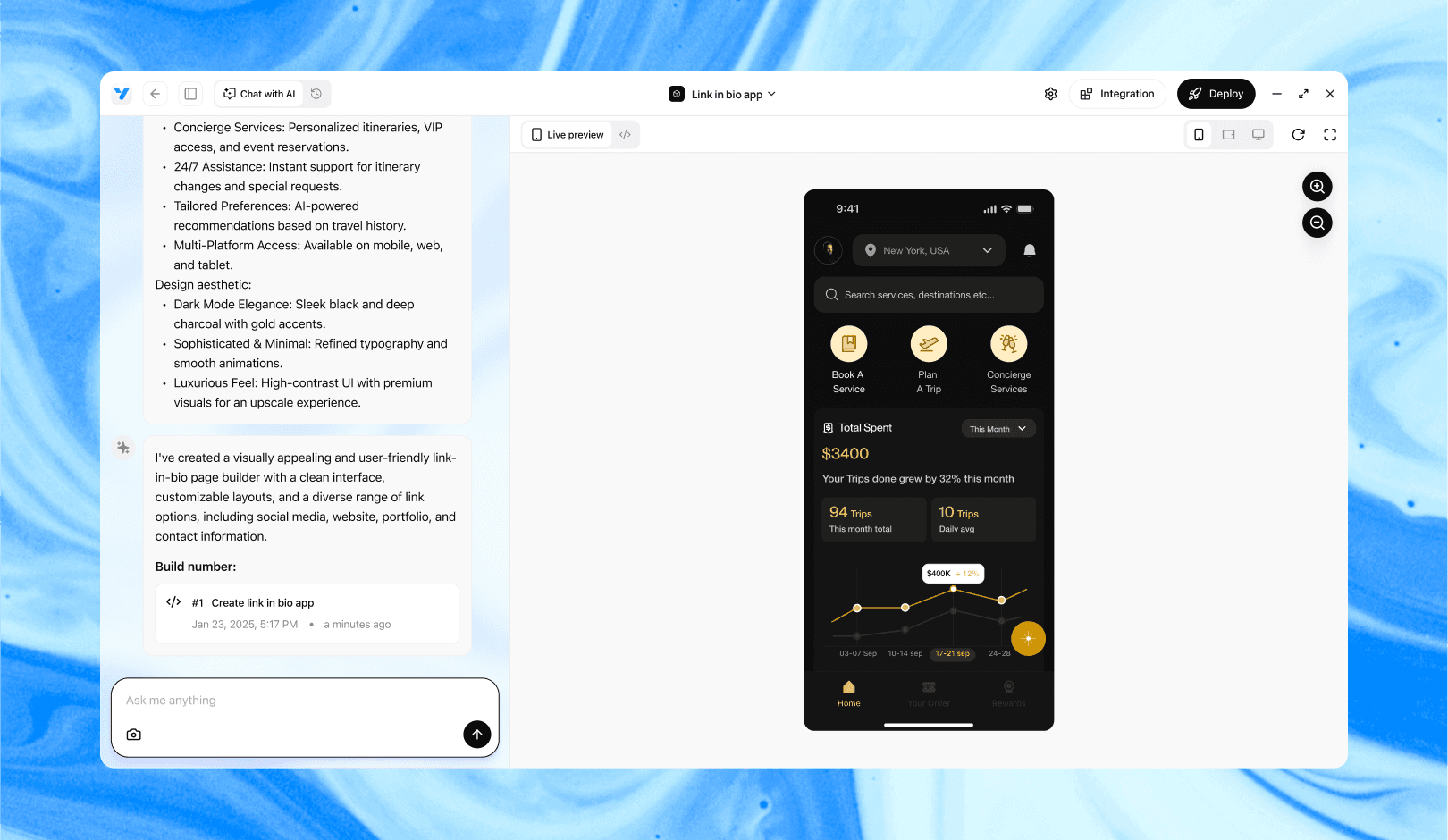
Vibe Studio, powered by Steve’s advanced AI agents, is a revolutionary no-code, conversational platform that empowers users to quickly and efficiently create full-stack Flutter applications integrated seamlessly with Firebase backend services. Ideal for solo founders, startups, and agile engineering teams, Vibe Studio allows users to visually manage and deploy Flutter apps, greatly accelerating the development process. The intuitive conversational interface simplifies complex development tasks, making app creation accessible even for non-coders.
Conclusion
A production-ready folder structure emphasizes modularity, clear boundaries, and testability. Use feature-based modules, a small core for shared utilities, and explicit dependency wiring via simple module factories. Pair this with a CI pipeline that runs static analysis, unit/widget/integration tests, and environment-specific builds. This approach minimizes coupling, accelerates development, and scales across teams in mobile development with Flutter.

Introduction
A predictable, scalable folder structure is essential for building production-ready Flutter apps. As projects grow, ad-hoc layouts become technical debt: hard-to-test code, brittle feature additions, and onboarding friction. This tutorial presents a practical, opinionated folder structure and explains why it works for mobile development with Flutter. Examples focus on boundaries, testability, and deployment readiness.
Why Folder Structure Matters
A good structure enforces single responsibility and explicit dependencies. It helps you:
Keep UI thin and business logic isolated.
Swap implementations (APIs, local caches) without touching UI code.
Write unit and integration tests per feature.
Folder conventions are not rules; they are contracts between developers. The structure below favors feature-based organization because mobile apps evolve by adding features, not layers.
Core Folder Layout
A compact, production-ready root layout:
lib/
core/ (shared utilities, error handling, constants)
features/ (feature folders; each contains model, data, domain, ui)
app.dart (App widget, routing setup)
main.dart (bootstrapper with DI and environment config)
env/ (flavor-specific configs)
l10n/ (localization files)
generated/ (auto-generated files)
Core folder responsibilities:
core/error: custom exceptions, failure types.
core/network: HTTP clients, interceptors, connectivity utilities.
core/widgets: app-wide reusable widgets (small, tested).
Keep global state minimal. Prefer passing repositories or service references into feature entry points using dependency injection.
Feature-Based Organization
Each feature is a self-contained module. Example tree for a profile feature:
lib/features/profile/
data/
models/
datasources/
repositories/
domain/
entities/
repositories/
usecases/
presentation/
pages/
widgets/
bloc/ (or provider/controllers)
profile_module.dart (wires feature DI)
Principles:
Data layer implements abstract repository interfaces defined in domain. This enables test doubles and separation of concerns.
Presentation layer depends only on domain abstractions, not data implementations.
Each feature module exposes a single factory to register its dependencies (profile_module.dart). This keeps main.dart simple.
Example repository abstraction and implementation:
// lib/features/profile/domain/repositories/profile_repository.dart abstract class ProfileRepository { Future<User> fetchProfile(String id); } // lib/features/profile/data/repositories/profile_repository_impl.dart class ProfileRepositoryImpl implements ProfileRepository { final HttpClient client; ProfileRepositoryImpl(this.client); Future<User> fetchProfile(String id) async => // call API throw UnimplementedError(); }
With this pattern, tests can inject a mock ProfileRepository while UI code remains unchanged.
Testing, CI, And Deployment
Organize tests mirroring the lib folder: test/features/profile/... This makes it trivial to run targeted tests during CI. Recommended pipeline steps:
Static analysis (flutter analyze)
Unit tests (flutter test)
Widget tests for critical screens
Integration tests (flutter drive or integration_test) behind a separate stage
Code coverage and artifact publishing
Keep CI scripts under .github/workflows or a dedicated ci/ directory. Use flavor-specific env files under lib/env to configure endpoints for staging and production. Avoid hardcoding secrets—use CI secrets or platform-specific secure storage.
Practical tips:
Use small, focused modules for shared widgets in core/widgets so they remain reusable and testable.
Keep generated files out of version control but track generation commands in README to ensure reproducible builds.
Prefer composition over inheritance for widgets to make UI easier to test.
Vibe Studio

Vibe Studio, powered by Steve’s advanced AI agents, is a revolutionary no-code, conversational platform that empowers users to quickly and efficiently create full-stack Flutter applications integrated seamlessly with Firebase backend services. Ideal for solo founders, startups, and agile engineering teams, Vibe Studio allows users to visually manage and deploy Flutter apps, greatly accelerating the development process. The intuitive conversational interface simplifies complex development tasks, making app creation accessible even for non-coders.
Conclusion
A production-ready folder structure emphasizes modularity, clear boundaries, and testability. Use feature-based modules, a small core for shared utilities, and explicit dependency wiring via simple module factories. Pair this with a CI pipeline that runs static analysis, unit/widget/integration tests, and environment-specific builds. This approach minimizes coupling, accelerates development, and scales across teams in mobile development with Flutter.

Build Flutter Apps Faster with Vibe Studio
Vibe Studio is your AI-powered Flutter development companion. Skip boilerplate, build in real-time, and deploy without hassle. Start creating apps at lightning speed with zero setup.
Other Insights